Archives for September 2011

Melvyn Bragg's In Our Time Newsletter: The Etruscan Civilisation

Blog comments are currently unavailable. Find out more.

Post categories: , 

Melvyn BraggMelvyn Bragg17:30, Friday, 30 September 2011

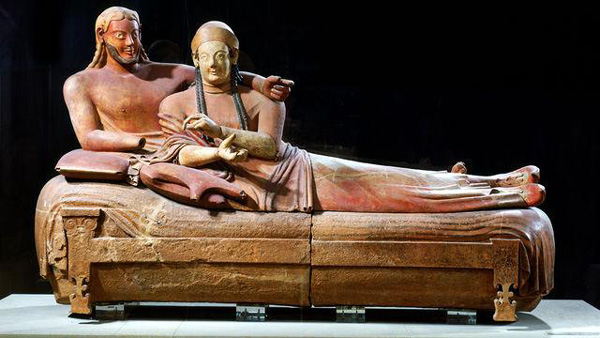
Etruscan image

Ed's note: We're running the In Our Time newsletter weekly on the Radio 4 blog. You can hear this episode (and the huge archive of previous episodes) on the In Our Time website - PM.

Immediately the programme finished, David Ridgway pressed into my hand a pamphlet for a lecture which will be given at the British Museum on Friday 14 October.

There you have it. Advertising in the newsletter!

But it is germane. It's about the Etruscan book of omens, and called Foretold by Thunder. This book of thunder omens, translated into English, reveals the dynamic and perilous world that was ancient Etruria, from famine to slave revolts. The lecture touches on a supernatural prophet, Mesopotamian astrology, Ashurbanipal, King of Assyria, cosmic rays, epidemics, serpents, snide remarks by Cicero and more.

Clearly there's another programme in Etruria. David also unlocked the key to this business of thunder. If it thunders today there will be a drought. If you predict thunder tomorrow things will change for the better. Seems to me, in present circumstances, a very sound bet.

They discussed Herodotus (I'm trying to dictate this while on a stationary train in Euston and the man is repeating instructions for the third time) and Herodotus's now discredited observation that the Etruscans came from Turkey. David said that recently a five hundred page book with about two million footnotes has emerged justifying the statements of Herodotus. This is a territory where there is great knowledge through archaeology and artworks, but huge gaps because of the lack of books.

We failed to get to the matter of cheese-grating. The Etruscans did so into their wine. It turns out that the cheese was Parmesan, and the grater used was the same as graters used today. David had tried this, or rather had tried on him by certain students, each one of whom (there were quite a lot) grated cheese on to wine and asked him to quaff. He didn't like it one bit.

Corinna Riva was worried that we had not dwelt enough on the viticulture, nor on the development of the olive oil industry with the special dates grown in Etruria.

Of course we discussed where the manuscripts or documents might have gone. One of the contributors said that we only have Linear B (Minoan) documents because of an accident. They were written on unbaked clay. The house burned down. The clay baked. The words remained.

And the best we have from the Etruscans is again an accident. It comes from words on a cloth which was wrapped around a mummy.

Back to the language. There's some talk that the Etruscan language is the remains of a Neolithic language, maybe the first European language.

I asked them what they thought of DH Lawrence and his observations and there was much shaking of heads, and then there was quite a lot of agreement that he had got to the quick, as he might say, of the matter. Although David could not refrain from saying that one of his students had written that DH Lawrence's Etruscan writings are as reliable a guide to Etruscan life as Lady Chatterley is to gamekeeping (I haven't read it recently but the gamekeeper, as I remember, was quite convincing and Lawrence in a few sentences could certainly sketch in what a gamekeeper did outside the house).

The thing they liked most about Lawrence was the photographs which he put in his book. These were provided him by his wife Frieda, who was friends with German archaeologists who had got to key places before everyone else, and so it seems these photographs are amazingly useful and resonant. David, though, also had the good nature to say that his late Sardinian father-in-law had read DH Lawrence on Sardinia and found that he had been absolutely right about that place.

I might say that once when I was rather marooned in a remote place in Mexico, I thought that his description of Mexicans and the intensity of the Mexican-Indian culture was all around me.

And so out into the boiling sunshine, carrying two cases on my way this evening to Cumbria, hence on this train in Euston, by way of the office and the studios (the train DJ has started up again), by way of Dean Street where I made a guest appearance for Listen Against, on to lunch to discuss a book on the history of television news, and then to see a rough cut of the first part of the class and culture documentaries I'm doing for BBC Two.

And now to Carlisle, listening with delight to every station along the way and the precise time we're supposed to arrive there, but remembering the other night, back on this same train, I was four hours late.

Melvyn Bragg presents In Our Time

Feedback: In Touch's 50th anniversary

Blog comments are currently unavailable. Find out more.

Post categories: , , 

Roger BoltonRoger Bolton16:00, Friday, 30 September 2011

Radio 4's In Touch programme, which presents "news, views and information for people who are blind or partially sighted", celebrates its 50th anniversary on the 7th October with a special one-hour programme.

Peter White

Peter White, the presenter of In Touch and the BBC's disability affairs correspondent

It is presented of course by the peerless Peter White, but is there still a need for such programmes or do they run the danger of ghettoising the disabled?

That is one of the issues we discussed in this week's Feedback and to be honest I felt a little bit uncomfortable during the discussion.

Opposite me was Peter who, although blind, thinks nothing of travelling alone on the London tube, and Liz Carr, who presents the BBC's Ouch! podcast and who is a wheelchair user.

You can't help but admire them, but as they made clear, politely but firmly, they did not want to be admired or praised, or routinely referred to as disabled.

That was just one part of their lives and not necessarily the most important.

A listener, Tracy Proudlock , said she was fed up with only hearing disabled people on "stuff like health and right to die debates rather than on business for example".

Also joining the discussion was Radio 4's network manager Denis Nowlan, who is the "diversity champion" for BBC radio.

The Corporation has what it calls "Diversity Targets" for those it employs, in the case of disabled people that is 5.5% of the workforce by the end of 2012. It has some way to go.

Mind you, given that around one in five of the population is said to have some sort of disability, it doesn't seem to be an unreasonable target.

Liz Carr conducted a whistle-stop tour of Radios 1, 2, 4 and 5 to find out how each of them was reflecting the lives of their disabled listeners. Some better than others it seems.

She then joined us in the discussion. I hope you enjoy it. (Ed's note: You can hear it online) I certainly learned a lot, including the fact that the BBC has no intention of cancelling In Touch, so it will be a happy birthday.

By the way the special In Touch programme will be broadcast on Friday 7 October at 12 noon on Radio 4.

Roger Bolton presents Feedback

BBC National Short Story Award winner: DW Wilson

Blog comments are currently unavailable. Find out more.

Post categories: , 

Sue MacGregorSue MacGregor16:40, Thursday, 29 September 2011

Ed's note: If you're quick you can still download this year's winner DW Wilson for free from the Radio 4 podcast page as it's due to expire tomorrow - PM.

DW Wilson, Alison MacLeod, KJ Orr, MJ Hyland and Jon McGregor

The 2011 shortlist (l to r): DW Wilson (winner), Alison MacLeod, KJ Orr, MJ Hyland and Jon McGregor

I'm not how many of us judges were conscious of the age or the gender of our five finalists in the BBC National Short Story Award when we read their stories for the first time.

Three of the writers chose to disguise their sex through the use of initials. Only later did I discover that MJ Hyland's name is Maria, KJ Orr's is Katherine, and DW Wilson is David.

We winnowed them out - and also Jon McGregor and Alison MacLeod - from a long list of over forty, picking their stories as the most intriguing, impressive and memorable. And perhaps as the freshest too - two of the finalists are strictly speaking still students.

DW and Sue

DW Wilson receiving the award from Sue MacGregor

I won't easily forget the look of joy on the face of David Wilson when he heard his name announced live on Front Row on Radio 4 on Monday evening in the Free Word Centre in Farringdon - or the burst of delighted approval from our young and enthusiastic audience.

It was a great evening out for all of us. As I think you may notice from the pictures.

Sue MacGregor is chair of judges, BBC National Short Story award

James Corden on Front Row

Blog comments are currently unavailable. Find out more.

Post categories:

Paul MurphyPaul Murphy15:20, Thursday, 29 September 2011

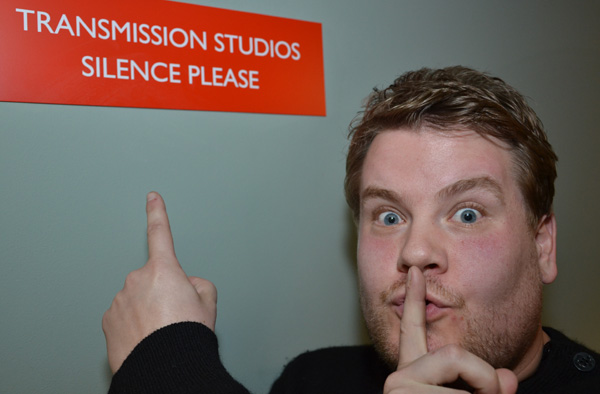
James Corden

James Corden in the Front Row studio (picture by Jerome Weatherald)

You can hear actor James Corden on tonight's Front Row talking to Mark Lawson. In May this year Mark Lawson reviewed One Man, Two Guvnors, starring Corden and now on tour before a West End run, and said it was "the single funniest production I've ever seen".

Paul Murphy is the editor of the Radio 4 blog

Will Self on taking over A Point of View

Blog comments are currently unavailable. Find out more.

Post categories:

Will SelfWill Self10:30, Thursday, 29 September 2011

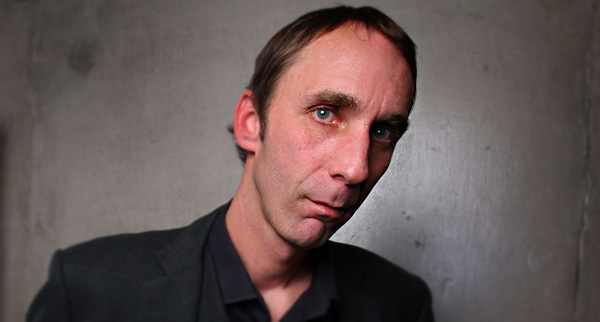
Will Self

Will Self

I grew up listening to Alistair Cooke's Letter from America which used to be scheduled in the spot now occupied by A Point of View - why? Because my insufferably bien-pensant parents had got rid of our television because they thought it was a terrible influence on children, making them distracted and functionally illiterate.

Well, if they were alive today I expect they'd be just a little bit pleased with themselves upon hearing my lugubrious tones flute out of the set as I deliver the first of what I hope will be many Points of View.

I'd like to adopt Cook's own chirpily-austere trademark salutation "Good-morning", but of course this wouldn't scan for the repeat and plenty of listeners might feel I was traducing the late, great meliorist. Instead, I will hope to complement not only the sort of broadcasting that he so effectively did, but also to be a worthy stablemate for such excellent views-makers as John Gray.

What will I bring to it?

Well, rather like Kenneth Williams in his Round the Horne guise as Gruntfuttock, I'm afraid I may not be able to restrain myself from doing "the voices".

It seems to me that POV is a spot that while ostensibly mandating a monologue, nonetheless allows for opening-out into an entire playlet, complete with a dramatic arc.

Opinion is everywhere in the contemporary world, and I suspect some listeners may feel a little blase when they're offered still more of it.

I hope to insinuate really rather radical ideas into those nodding heads and closed ears by couching them in contexts - humorous, anecdotal, amusing - before hitting them with the sucker-punch of wanton irreverence. I hope Cook would, if not approve, understand: needs must...

Will Self presents A Point of View from this Friday, 30 September on Radio 4

  • A Point of View is on Fridays on Radio 4 at 20:50 BST and repeated Sundays, 08:50 BST. You can hear the programme shortly afterwards on the Radio 4 website.
  • Visit A Point of View on the web
  • You can find an archive of A Point of View episodes to download and keep via the podcast page. You can also subscribe to the podcast.
  • You can find the weekly A Point of View essay published on the BBC News website Magazine.
  • You can hear previous presenters of A Point of View including John Gray, Alain de Botton, Joan Bakewell, Sarah Dunant, Lisa Jardine, David Cannadine, Simon Schama and Clive James in the programme archive.

So You Want to Be a Scientist? is back on Material World

Blog comments are currently unavailable. Find out more.

Post categories: , , 

Ruth BrooksRuth Brooks12:30, Wednesday, 28 September 2011

Taking part in So You Want to Be a Scientist? last year was one of the most rewarding and enjoyable experiences of my life.

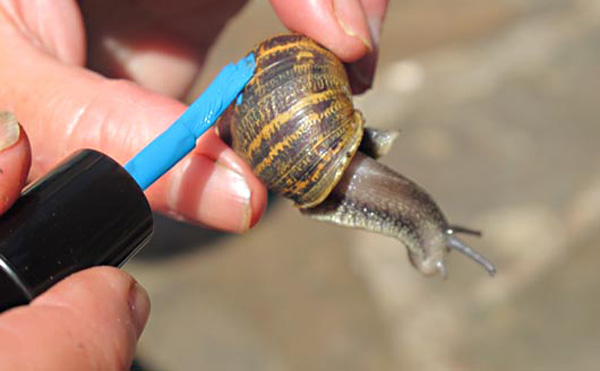
Snails

From the 2010 experiments - Ruth Brooks: Homing Snails

I learnt so much more than I had anticipated, not just about my chosen research subject - homing instinct in snails - but about other garden creatures, and how our gardens contain well-balanced, mini-ecosystems that we disturb at our peril. And my interest in science has increased exponentially. I am now addicted to science programmes, and magazines - and science festivals!

Learning the scientific process was challenging, but great fun - more like play-with-a-purpose. I had enormous support from my mentor, Dr Dave Hodgson, a terrestrial ecologist, who helped me get my head round the scientific method; and also from Michelle Martin, the Radio 4 producer who was always on hand to answer any queries about anything whatsoever.

Participating in one of the recordings at Broadcasting House was one of the highlights of the summer, along with my giving a talk at Sparsholt Horticultural College as part of Gardeners' Question Time Summer Party.

I also enjoyed following the diaries on Facebook of the other three finalists: the appearance of noctilucent clouds; where you'd find tightest squeeze at a music gig; and how people decide on their Facebook profile picture.

I had no idea that science covered such a vast range of subjects.

Ruth and Peter marking snails

Ruth and her neighbour Peter tracking snails

Most satisfying of all was being able to do some genuine research, culminating in useful results. We found that, yes, snails do indeed have a homing instinct, confirming long-held, widespread anecdotal evidence. Findings so far reveal that they are able to return to their resting and feeding sites from up to 30m metres away. Beyond that, more research needs to be done, and is currently under way at the University of Exeter's Cornwall site, under Dave Hodgson's direction.

We are recommending that gardeners take their snails to a distance of 100 metres, just to be on the safe side!

If you have ANY idea for a science project, do enter it online for this year's award. Even if you're not chosen as one of the finalists, you'll enjoy listening as they explain their research topics, and learn a lot of science as you follow their progress to the grand final at Cheltenham Science festival next year.

You might, like me, be one of the lucky ones. You'll suddenly find yourself going along new, unexplored and exciting paths. You'll discover new abilities and inner resources that you never dreamed you possessed. And then, who knows where it will all lead...?

Ruth Brooks was chosen as the BBC's Amateur Scientist of the Year in 2010

Front Row on Trial: Improving our online service

Blog comments are currently unavailable. Find out more.

Post categories: , , 

Ben TooneBen Toone20:00, Tuesday, 27 September 2011

Laura Marling and John Wilson

Laura Marling and Front Row's John Wilson (picture by Jerome Weatherald)

For the last three weeks Front Row has been offering daily programme downloads, audio clips and topical highlights of its extensive archive. This has been part of pilot looking at how we could improve our online service for the programme.

We're keen to hear what you think of what we've done, either by replying to this post or via Front Row's contact us page.

You may have already downloaded one of the Front Row Daily podcasts, where we offered the whole of that night's programme to download for free. Previously we offered a weekly highlights podcast. We received a lot of emails and tweets about the daily version, so we know this is popular.

We've curated a week's worth of reviews on the Front Row homepage for an easy, one stop shop to the Front Row verdict on the latest openings and releases, including Stephen Merchant's stand up and the film adaptation of Tinker, Tailor, Soldier Spy.

With Tinker Tailor in mind, author John le Carré was one of our selected interviews from the archive. He joins Leonard Cohen, Jo Brand, Anjelica Huston and Tony Bennett who've all resurfaced on the Front Row homepage.

And we've created some slideshows to illustrate some of our features, including our review of the Degas exhibition at the Royal Academy and our interview with Roger Moore. Mark Kermode talks about the five favourite films you won't have seen in a piece we couldn't squeeze into the programme. And there's a video of Laura Marling performing live in the Front Row studio.

You may have noticed some of the programme segments broken up into a new style on our programme pages - clips as we call them - which are more readily shareable and look neater on the page. And you may have seen Front Row tweeting from @BBCRadio4 using the tag #bbcfrontrow.

Do let us know what you think of anything we've done - what should we keep? What could we do better? And anything we should have tried? All feedback gratefully received.

Ben Toone is a content producer for Radio 4 interactive

Life and Fate: Download, keep and listen later

Blog comments are currently unavailable. Find out more.

Post categories: , , 

Paul MurphyPaul Murphy16:50, Tuesday, 27 September 2011

Life and Fate: How long have I got to download all the episodes?

All the episodes of Radio 4 adaptation of the epic Life and Fate are available to download until this Sunday when the first episode expires (NB: The expiry dates on the podcast page page are wrong - you need to deduct 14 days from the stated availability. There's a longer explanation of why the dates appearing are wrong here*).

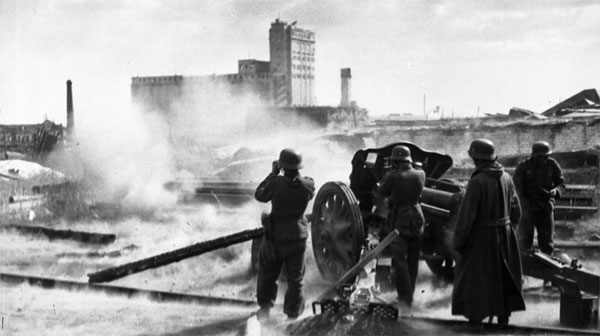
Battle of Stalingrad

Stalingrad, used under license from the Deutsches Bundesarchiv

Life and Fate: Some of the reviews

In The Telegraph Pete Naughton was effusive in his praise:

"Life and Fate is fabulous, mind-expanding drama, brilliantly adapted from Grossman's book by Mike Walker and Jonathan Myerson and delivered with great subtlety by a big-name cast. I'd be staggered if it's not an enduring hit..."

The Observer's Miranda Sawyer found it harder to get into:

"But by episode 5, where we joined Sofya, a Jewish doctor captured and put, with other Jews, on to a cattle truck to Poland, I was utterly gripped."

And she concludes:

"I yearn for a long, lonely car drive and to listen to the whole drama all in one go."

Life and Fate is dark, challenging and at times difficult to follow. And I suspect some may have been daunted by the subject matter. But as The Guardian's Elisabeth Mahoney says:

"This is a tough book, shaped by Grossman's own experience - his mother was among 20,000 Jews murdered in Berdichev in 1941 - and his time as a war correspondent, during which he wrote one of the first eyewitness accounts of a Nazi extermination camp. It can make grim listening in places, but this is countered by beautiful writing, exquisite acting and the sheer class of the adaptation."

Paul Murphy is the editor of the Radio 4 blog

  • You can download all the episodes of Life and Fate to keep and listen later from the Radio 4 podcast page but do it before 2pm this Sunday, 2 October.
  • There's more information about Life and Fate including a family tree of Life and Fate's characters to print out on the Life and Fate programme page.
  • Life and Fate on the Radio 4 blog
  • *BBC podcasts are normally available for 7 days, 30 days or indefinitely. To ensure that all the episodes of Life and Fate would be available for seven days after the transmission of the last programme an exception was made (with the permission of the rights' holders) and the availability would be 14 days. As the current system doesn't allow 14 days to be set as a duration we had to set it to 30 days initially and manually remove episodes as they reach 14 days. Apologies for any inconvenience (and the lengthy explanation).

The 4 O'Clock Show: The Roald Dahl archive

Blog comments are currently unavailable. Find out more.

Post categories: , 

Rich Preston15:15, Monday, 26 September 2011

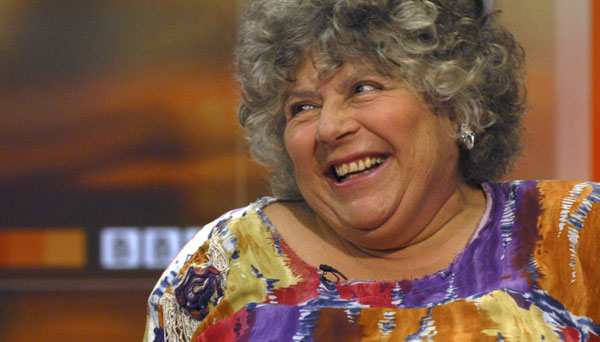
2011 marks 50 years since the publication of the Roald Dahl classic James and the Giant Peach. The 4 O'Clock Show on BBC Radio 4 Extra has recorded a new version of the story, read by Miriam Margolyes. You can catch up on the website and listen to the remaining parts everyday this week. Rich Preston from the 4 O'Clock Show explores the Dahl archive - PM.

Letter from Dahl

James and the Giant Peach began life as "James and the Giant Cherry", which would be pushed along the water by giant waterboatmen. It was only later that Dahl later changed it to a peach, because a peach would be "prettier, bigger and squishier than a cherry". The changed fruity preference only came to light after Dahl's death, when his papers were sorted and catalogued for the opening of the Roald Dahl Museum and archives.

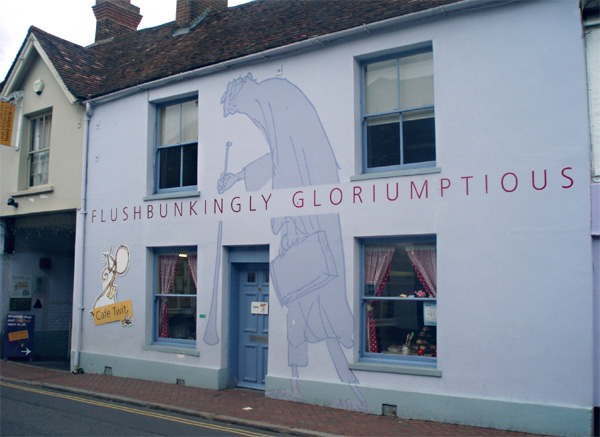
The Roald Dahl museum is on Great Missenden High Street, a pale blue building complete with the outline of the BFG meandering along with his dream horn. Among the first things I saw on display were the some of the original documents for James and the Giant Peach, including a page from Roald's ideas book.

Dahl Museum

"A good idea is like a dream - you'll know you had one, but unless you write it down you'll not remember what it was," he said. And sure enough, at the bottom of the page, scribbled lightly in pencil was the seed of an idea. It read, "The cherry that wouldn't stop growing. Fairy story."

I was shown some of the many pictures Roald took - he was a keen photographer - as well as his old RAF pilot's helmet and one of his old Norweigan sandals, which he posted to Quentin Blake when they were trying to figure out what the BFG should wear on his feet. Have a look at a picture of the BFG - that's Roald's sandal right there.

As part of my trip, I was allowed in to 'The Strong Room' - the securely locked, watertight, climate-controlled nerve centre of the museum.

It houses the Roald Dahl archive.

The room itself was relatively small, but inside were shelves and shelves of unassuming blue cardboard boxes with little pencil labels on the front. Simple words that gave me goosebumps.

Roald was a meticulous record-keeper, and hung on to each version of his work as it evolved and progressed. My eyes were drawn to the box about shoulder-height. On it were the words "Box 44 RD 2/27/6-12 - Matilda".

Jane Branfield, the museum's Archivist, opened up the Matilda box for me. The page that greeted me when the lid was lifted read "First Draft, Summer 1986." The story of Matilda was originally called "The Miracle Child". Chapter 1 was titled 'Wickedness'.

Matilda is perhaps the story that changed most dramatically between first and final versions. And as Roald later said, this is the story he got the most wrong in the first version.

"Wicked children are happiest when they are making somebody else miserable. To them, being wicked is a pleasure. There is no doubt that Matilda is one of these."

There was no Miss Trunchbull, and no Miss Honey. Matilda's parents were long-suffering, lovely people, and Matilda's teacher - Miss Hayes - was addicted to horse racing. Matilda had to use her telekinetic powers to help horses win at the races and so keep Miss Hayes out of prison. As the story finishes, they both meet a rather grizzly end - completely different from the modern story.

Jane then offered to get Charlie out for me. How could I refuse? Unusually, there is no first draft of this story. After it was written, Roald gave it to one of his nephews to read.

"I think it stinks, Uncle Roald," was the review. Jane can only assume that Roald was so disappointed that it was binned before starting again. The original story was called Charlie's Chocolate Boy and told the story of a boy who fell in to a chocolate vat and was given as a present to Mr Willy Wonka. As we looked through the different drafts, we saw the story change and develop.

We looked at the final draft. It was typed, printed, bound and all ready to be delivered to the publishers to be turned in to the first edition of what was now titled Charlie and the Chocolate Factory. Right at the last minute, Roald had flicked through and scored out every occurrence of the words "Whipple Scrumpet." He replaced it with "Oompa Loompa."

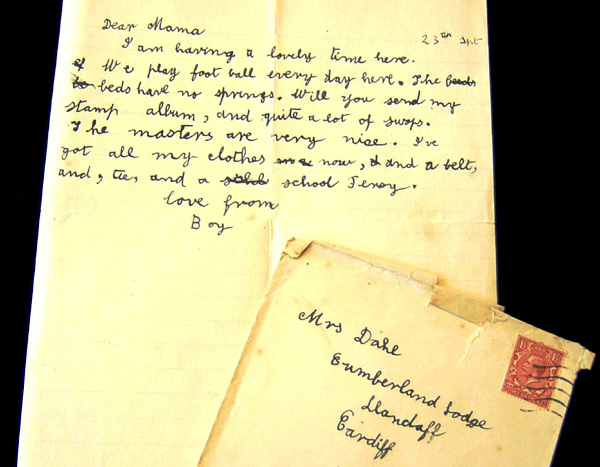
There was so much more to the archives than just the stories, however. There were boxes and boxes of letters to Mama. Jane confesses this is her favourite bit. When Roald was at boarding school he had to write to his mother twice a week. This was a habit he kept up over the years, and there's an entire collection of letters from the age of nine right the way through his time in the RAF, America and into his career as a successful author. One of Jane's personal favourites is a schoolboy story about winter tobogganing in which several of the boys ended up in a frozen stream and a snowball fight followed. "It was the best day of my life," Roald wrote.

There were boxes filled with all the international versions of Roald Dahl's books. I liked the look of the Arabic Charlie and the Chocolate Factory. And there was a single box, simply labelled "Unpublished." Roald was an energetic storytellyer, filled with ideas. But he was also a perfectionist and, as we saw from the first draft of Charlie, wouldn't put something out there if he wasn't happy with it. His family have always respected his wishes and these stories will never be published.

Rich Preston is a producer for BBC Radio 4 Extra

Tears in Perivale - Feedback in the archives

Blog comments are currently unavailable. Find out more.

Post categories: , 

Roger BoltonRoger Bolton13:45, Friday, 23 September 2011

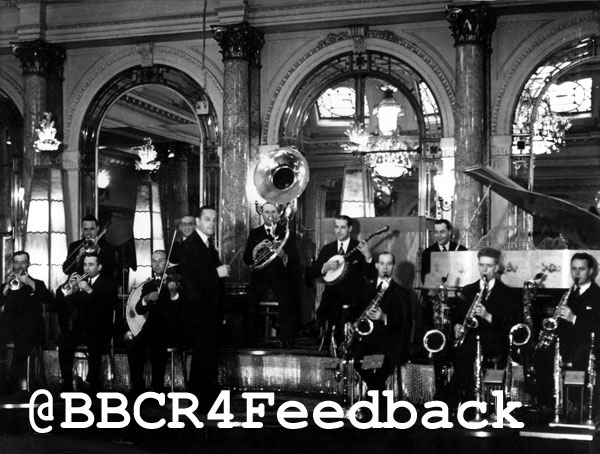
The Savoy Orpheans in an early BBC radio broadcast of dance music in 1926

What is the best way to recapture one's childhood?

My memory is notoriously selective and needs a prod if I am to venture off the well worn paths. Often that is provided by a smell. Whenever fresh tarmac is being laid on a road I linger half-intoxicated by the smell and the memory it evokes of my first day at school aged 4 and three quarters.

I even remember the precise point where the tarmac was being laid, the corner of Norfolk Road, Carlisle, in the year of our Lord 1951. An even more powerful stimulant is sound, which is why I found myself in tears this week in an industrial park in Perivale, Middlesex.

Where once the poets talked of flowing cornfields and John Betjeman lauded the Metro Line there is now the ever present smell of petrol fumes and the frequent noise of planes heading for Heathrow.

Across the Avenue, Perivale's 14th century wooden church, lying on a bank just above the River Brent, is a reminder of gentler days. In the nineteenth century its cemetery was a fashionable place for middle class Londoners to bring their loved ones to lie in rural seclusion.

The BBC's new archive centre is unlikely to win awards for architectural merit. Indeed to me it looks like an aircraft hanger, or a large shed. So why the tears?

Because inside is almost everything the BBC has ever broadcast including those programmes which lit up the rather grey 1950s, Hancock, Educating Archie, and a little later, Round the Horne, and to which I listened with my now dead parents.

Long-dead voices live here, together with those of present-day presenters like the author, whose early ventures into sound are worth forgetting.

At the archive I met Sarah Hayes, the BBC's controller of Information and Archive and Peter Skinner, the head of operations there. Typically I put my foot in it straight away by called their spanking new home a shed.

In order to see this content you need to have both Javascript enabled and Flash installed. Visit BBC Webwise for full instructions

By the way in Feedback we also played some extracts from the archive including some of your requests. Here they are:

In order to see this content you need to have both Javascript enabled and Flash installed. Visit BBC Webwise for full instructions

In case you did not recognise them, they were:

  • Listen with Mother - , Julia Lang
  • Brown Eyes Why Are You Blue? - The Savoy Orpheans
  • John Reith
  • Outbreak of war - Rt Hon Neville Chamberlain, 3rd September 1939
  • Launch of Radio 1, Tony Blackburn, 30th September 1967
  • The Falklands War, Brian Hanrahan, 1st May 1982
  • Brian Johnston and Jonathan Agnew, 9th August 1991

Roger Bolton presents Feedback

  • Listen again to this week's Feedback, produced by Karen Pirie, get in touch with the programme, find out how to join the listener panel or subscribe to the podcast on the Feedback web page.
  • Read all of Roger's Feedback blog posts.
  • Feedback is on Twitter. Follow @BBCR4Feedback.
  • The picture shows the Savoy Orpheans during an early BBC music broadcast in 1926. It's from the BBC's picture archive.

In Our Time newsletter: Shinto

Blog comments are currently unavailable. Find out more.

Post categories:

Melvyn BraggMelvyn Bragg11:02, Friday, 23 September 2011

Ed's note: We're running the In Our Time newsletter weekly on the Radio 4 blog. You can hear this episode (and the huge archive of previous episodes) on the In Our Time website - PM.

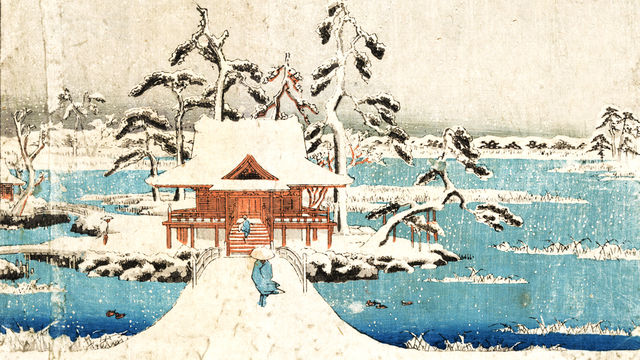
Shinto

How you can make an academic conversation about Shinto (which consists of so many negatives) both lively and even jolly beats me, but the three academics who turned up this morning managed it, I think.

As soon as the programme finished, Richard Bowring said "I hope you're none the wiser"! I thought he was remarkably good, but when he told us that this was the first time he had ever been on the radio I was even more impressed. Perhaps there's not a great call on the services of the Professor of Japanese Studies at the University of Cambridge, but judging from the way he dealt with questions which to a great scholar (which we on the programme were very reliably informed he is) with such courtesy, despite the fact that they must have seemed, again and again, like taking Thor's hammer to a slender tack, was exemplary.

And I made a joke after the end of the programme! There had been so many negatives expressed that I suggested that the programme remembered a Noh play. We are firmly in the land of The Diary of a Nobody here.

Lucia Dolce burst into a paean of praise about the iconography of the kami who were also Buddhas. It seems we left the impression that these shrines were empty places saved by a mirror, but, no, there were some wonderful things there and they needed the attention they failed to get.

The main point that Richard made after the programme was that Shinto, without a written doctrine, without an original sacred source, without a single revelatory leader, was always at the stage of recreating itself. And the hold or the grip that it had, and has, is that it deals with the origins of Japan; it deals with what is Japanese. There had been many stages along the way for Japan, where they thought that they came nowhere in the list of countries which had a proper past. People and ideas came in from Korea, from China, from the Pacific islands. Shinto did for Japan what Joshua - according to Martin Palmer - did for the Jews in the 11th century BC, i.e.: made of the different tribal accounts a single narrative story which was their story and one which they accepted, or pushed off (his phrase). So Shinto is about lineage every bit as much as religion.

Lucia came in with the notion that it was not as important as Buddhism. That the Japanese claimed the Buddha for themselves. Their story is that although the Buddha originated in India and spread through China and Korea, it was in Japan that he reached his apotheosis. It was the last country to receive the Buddha and they received him in his perfect form. There were some mutterings around the room, but there was also extremely respectful attention paid to this.

Out then with bags and baggages into Soho to my mini-offices, now cluttered up with people as we drive through the last filming weeks of the programmes we're doing for BBC Two on class and culture. Filming, filming, filming. Peter Hennessy this afternoon in the Travellers Club, Pete Townsend in a working man's cafe in Pimlico yesterday, Vivien Duffield and Grey Gowrie in the Royal Opera House a week or so ago, Ferdinand Mount in a Unitarian church in Islington in the same week, Alan Bleasdale up in Liverpool last Monday, back to Wigton over the weekend to do the outline links. I have certainly reeled around Britain over the last four months and there are one or two things to say. It is far from being a broken society. It is full of resilient, humorous, tolerant people doing very well under pressures put on them by successive mismanaging governments. (A lot of my anecdotal evidence there comes from the scores of people I met while doing the Reel History series, which is going through the frames on BBC Two at the moment.)

Sunny day. Prospect of a walk from Soho, through a couple of parks, and an encounter with Peter Hennessy to talk about class and culture (again for the BBC!). What a lucky life!

Melvyn Bragg presents In Our Time

The Day of the Sardine: Being Dad

Blog comments are currently unavailable. Find out more.

Post categories:

Michael ChaplinMichael Chaplin06:00, Tuesday, 20 September 2011

Editor's note: First published in 1961 to much acclaim, The Day of the Sardine is the story of Arthur Haggerston a school-leaver with zero educational qualifications, an absentee father, a mother who gives him a hard time, and a home in a slum-clearance area of Newcastle. Written by Sid Chaplin it's been abridged for Book at Bedtime by his son Michael Chaplin. It's on Monday to Friday this week at 10.45pm and you can catch up on the Radio 4 website - PM.

When I was a small boy, growing up in Newcastle in the late fifties, I used to go for walks with my Dad on Sunday mornings before Two-Way Family Favourites and the Yorkshire pudding.

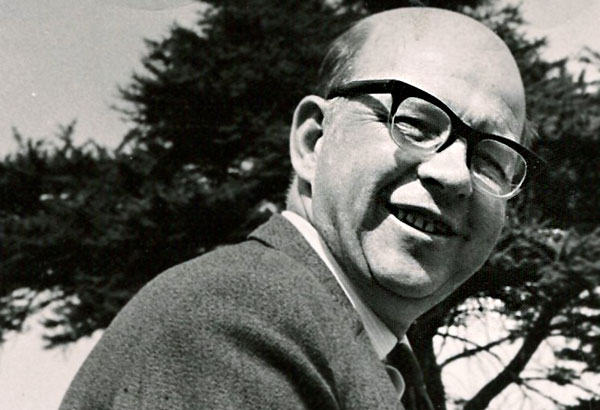
Sid Chaplin

Sid Chaplin, author of The Day of the Sardine, adapted by his son, Michael, for a Book at Bedtime

Often there was a particular destination: an old and rather overgrown cemetery with fine, idiosyncratic memorials and a pair of severe stone gatehouses by the Newcastle architect John Dobson. As we walked around I’d swish at thistles with a stick and he’d stand and scribble in his ubiquitous notebook. It was only many years later that I discovered what he wrote down: he was collecting names for characters in his books.

Twenty-five years ago it was Old Jesmond Cemetery that we chose for my Dad’s grave, and marked it with a piece of the Frosterley marble that keeps the structure of Durham Cathedral in place.

But now here’s another memorial – an abridgement of one of those novels for Book at Bedtime – but more to the point, a rich entertainment for the Radio 4 audience.

The Day of the Sardine is the tale of Arthur Haggerston, recent graduate of a sink school, trainee tearaway, embarking on a slippery journey into adulthood, dabbling in gang violence, seeking love and friendship, and all the while searching for a moral compass in an increasingly prosperous but also uncertain world.

The author called the book "a social thriller", a response to the changing times and the crumbling working-class culture of his adopted home - we moved to Newcastle in 1957 - and it remains as relevant today, 50 years after it was first published.

It’s a gripping book, with brilliantly realised characters and sense of place, great comic interludes, but above all else deeply humane and sympathetic, like the man.

And the strange title? That refers to a piece of advice Arthur receives from his Ma’s lodger and lover, the wise Harry, who works in a fish cannery: "Don’t swim with the shoal, lad. Don’t be a sardine. Be your own man. Navigate yourself."

I believe the abridgement works well, but it was hard work. Indeed it was one of the most difficult things I’ve ever done, for reasons both technical and personal. I suppose the experience has been, in John Mortimer’s phrase, a voyage around my father, and as a result after all these years I’ve got to know both the book and the man rather better. His voice speaks through every line, often in revealing and surprising ways. As the architect Berthold Lubetkin said in another context "The song is over, but the chords go on vibrating".

As for Arthur Haggerston, I don’t know whether my Dad found the name in the cemetery. Maybe I should go back and have a good look. Maybe I’d find traces of both of them there.

Michael Chaplin has adapted The Day of the Sardine for Radio 4

Tom Robinson: It's My Story - Getting Bi

Blog comments are currently unavailable. Find out more.

Post categories: , 

Ashley Byrne20:00, Monday, 19 September 2011

Editor's note: In this episode of It's My Story, Tom Robinson, assesses his own changing attitudes to bisexuality and asks if it's still a bit of a taboo in Britain today? Here on the blog the programme's producer Ashley Byrne writes about the process of getting it made -PM.

Tom Robinson

Tom Robinson

Credit is due to Radio 4 for commissioning Tom Robinson: It's My Story as it's taken us six years to convince a mainstream broadcaster in the UK to do a programme about bisexuality.

Some bisexual activists will be convinced there's a concerted media conspiracy to erase the subject from the airwaves but I put it down simply to innocent ignorance.

We did get TV people in particular wondering if it was a bit risqué. "I don't think we're ready yet for a big bisexual expose" was one retort.

And in more than one instance people would say "but the gay thing is passé now, it's nothing new. It's been done." When we said "but it's about bisexuality, not being gay", they'd just look at you with a rather confused expression.

For many people bisexuality just isn't on their radar because it's largely invisible. Unless someone tells you, how do you know they're bisexual? If a man and a woman walk hand in hand in the street, people will assume they're straight. If you see a same sex couple canoodling, then they're gay or lesbian. But as I discovered in making this programme, you really shouldn't assume anything.

Statistics on the prevalence of bisexuality are contradictory. Scientists disagree about its true existence and there are those who dismiss bisexuality as merely "trendy" or a phase on the way to being gay.

Whatever the academics or cynics think though, the fact remains that some people do not define their sexuality as 100% straight or gay. But where and how do they freely express those feelings in a society where, with the exception of John Barrowman's character in Torchwood, there are few media portrayals?

In 30 minutes you can only scratch the surface of a subject like bisexuality but I hope, if nothing else we have made people think before they rush to define their relatives, friends and acquaintances in the future.

Ashley Byrne is the Producer of Tom Robinson: It's My Story - Getting Bi

Miriam Margolyes and James and the Giant Peach on 4 Extra

Blog comments are currently unavailable. Find out more.

Post categories: , 

Monise Durrani16:00, Monday, 19 September 2011

One of the most enjoyable elements of producing The 4 O'Clock Show is the stories - part of my job involves spending bits of the working day listening to children's stories, and choosing content for the programme inspired by those stories.

So it was a real treat to find myself in studio producing what is the first ever story recorded especially for The 4 O'Clock Show. And what a story: a new abridgement of James and the Giant Peach, in its 50th anniversary year, all to be commissioned and read just for us.

Miriam Margolyes

Miriam Margolyes

Doing the honours behind the microphone for our reading is the actress Miriam Margolyes. Miriam played Aunt Sponge and the Glow-worm in the 1996 animation of the book. So we were absolutely delighted when she agreed to revisit the story for us.

At this point, I also have to confess that it's the first full-length reading I've ever produced - a pretty good one to start with, isn't it?

I've been a features and documentaries producer for most of my career, and have recorded many short readings to go in documentaries as illustrations; and I've also produced the winning entries of short story competitions, plus a season of poetry for BBC Radio Scotland, so I'm not completely new to it. But I've never recorded any single reading that's lasted more than five minutes. So this has been an exciting, slightly nerve-wracking, and very rewarding experience.

The person doing the real hard work though, is Miriam. James and the Giant Peach has an large cast of oddball characters, and Miriam has given them all wonderfully different, lively voices.

So part of our preparation was to work out what a Grasshopper, or an Earthworm should sound like. One of my tasks was to sit down and write out a character description for Miriam - she wanted to really think about what type of "person" each of the creatures was.

A character guide for insects is definitely the oddest brief I've had to write in the last ten years.

We did have a fairly lengthy discussion about what the Ladybird should sound like. Ladylike, we decided - there are a couple of times she's described as prim, but as she's James's best friend inside the Giant Peach, she's got to be warm-hearted too.

Listening to Miriam in studio as we recorded was just delightful - hearing the words leap off the page and come to life. Roald Dahl's stories were made to be read aloud - descriptions of the "wild white moon" and the peach "soft and warm and slightly furry, like the skin of a baby mouse" are just so vivid, even more so when spoken.

For Miriam to remember the voice she's given each creature, and bring their conversations to life is no mean feat - she said it was one of the more difficult readings she's done.

And it got more difficult for her.

Ever had one of those sudden onset colds, when your nose gets blocked, your eyes start watering, and you struggle to breathe? Poor Miriam came down with one halfway through part six.

Ever the professional, she was so concerned about doing the reading well that she insisted we put the recording on hold, and return to it a second time when she was well again, rather than sounding stuffed up and full of the cold. So putting herself through having to remember all the voices and characteristics all over again. What a star.

So, Radio 4 Extra listeners - we're proud to present to you, James and the Giant Peach. So good we recorded it twice!

Monise Durrani is the producer of James and the Giant Peach

Read Radio 4 Extra celebrates Roald Dahl on the blog More on The 4 O'Clock Show

Sunday Night Comedy - after The Archers

Blog comments are currently unavailable. Find out more.

Post categories:

Paul MurphyPaul Murphy19:00, Sunday, 18 September 2011

Editor's note: This Sunday sees the launch of Radio 4's new Sunday Night Comedy strand with John Finnemore's Souvenir Programme. On the blog here's Radio 4 and 4 Extra controller, Gwyneth Williams, and star of the first show in the slot, John Finnemore, to tell you about it - PM.

John Finnemore's Souvenir Programme

John Finnemore's Souvenir Programme starts on Sunday at 7.15pm on Radio 4

Gwyneth Williams, controller of Radio 4, writes:

'John Finnemore launches our new Sunday night comedy slot just after The Archers at 7.15pm. While I was in Edinburgh during the festival the comedy department were waxing lyrical about his scripts. So I have been excited about this show for quite a while. Now here it is - a new sketch by the creator of Cabin Pressure, a Radio 4 favourite.

I was pleased to read Jane Anderson's comment about the new comedy slot in the Radio Times:

"Not a word is wasted - this is a chill-out zone for smart people".
And there is more to come - Rory Bremner and Sue Perkins to name just two who are bringing us new programmes for Sunday night after The Archers.'

John Finnemore on his new show:

'Right. This is it then. The one thing I have always most wanted to do in comedy is write and perform my own radio sketch show, and now I have. I really hope I haven't messed it up. (To find out if I have, and if so how much, listen to Radio 4 at 7.15pm this Sunday night, or shortly afterwards you can hear it on the Radio 4 website.)

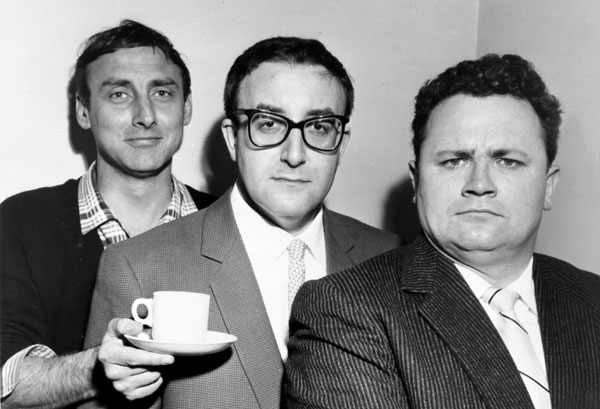
It was always specifically a *radio* sketch show I wanted to do - much as I loved TV comedy growing up, it was listening to things like On The Hour, People Like Us and Harry Hill's Fruit Corner on the radio, and cassettes of things like I'm Sorry I'll Read That Again, Hitchhiker's Guide, and Pete and Dud, that really made me wish I could find a way to be allowed to do *that* when I grew up, as opposed to, say, a proper job.

There's something about the idea of a gang of people clustered round a microphone trying to make the audience and each other laugh that I particularly loved. In fact, we recorded this show round one central mike, rather than the usual method these days of having one each, more or less entirely (whatever I might have said to the cast at the time) so that I could pretend I was in The Goon Show.

There's no theme to the show. I felt that if I was going to write every sketch myself, which I was egomaniacally keen to do, I couldn't really afford to restrict myself to one subject area or even style. So, there are sketches, like Speak As I Find, which, if not exactly satirical, at least have a point to make. There are sketches like To Rerecord Your Message which come entirely from character, and there are sketches like Three Guards, which are just silly and fun. I hope.

The stories at the end are something I've been doing on the live sketch circuit in London for a while, and started as a parody of the great ghost story writer M.R. James, and in particular an audiobook of his stories read by Derek Jacobi, which I urge you to buy if you like that sort of thing.

Jacobi reads it perfectly, and part of reading it perfectly is that he - I'm sure deliberately - invests the narrator with an incredibly pompous cosiness which I find very funny. As I've written more of them, the style has widened out to be a bit John Buchan, a bit H.G.Wells, and a bit R.L. Stevenson - in fact any of those writers between about 1885 and 1939 who wrote stories in which chaps who only ever refer to one another by their surnames are reluctantly persuaded by other chaps at the club to tell tall stories in which, despite their apparent modesty, they feel able to say things like this, (from a Buchan short story):

"I learnt to walk in the Himalayas, and the little Saxon hills seemed to me inconsiderable, but they were too much for most of the men."

Mainly though, let's be honest, these sketches are a homage (or rip-off) to the Round the Horne or ISIRTA tradition of ending with a daft gang-show 'play', an opportunity for the cast to do even more than usually stupid voices, and me to do even more than usually stupid jokes and puns - and let me straight away acknowledge the glaringly obvious influences of Police Squad, Mark Evans' Bleak Expectations, and Stephen Fry's famous 'Letter' sketch:

"Of all the hideous disfigured spectacles I have ever beheld, those perched on the end of this man's nose remain forever pasted into the album of my memory."

That's it. I can't quite believe my luck in having got the chance to do this show. I'm really proud of it, and I very much hope you enjoy it.'

John Finnemore's Souvenir Programme starts on Sunday 18 September at 7.15pm. You can hear it shortly afterwards on the Radio 4 website.

Vasily Grossman's Life and Fate: Listen online, download and keep

Blog comments are currently unavailable. Find out more.

Post categories: , , 

Leigh AspinLeigh Aspin12:00, Saturday, 17 September 2011

Life and Fate graphic

Every episode of Life and Fate will be available as a podcast for 14 days after broadcast to download and keep

Another big Radio 4 moment has arrived: every drama slot across eight days (apart from The Archers, rest assured!) is being commandeered to bring you a dramatisation of an epic historical novel. The title alone is both compelling and a little daunting: Life and Fate by Vasily Grossman.

So how best to support this on air event online?

Inspiration

I’ve been assured by several people I respect that this is a 20th-century masterpiece. But if you still need to be convinced that this is worth giving up a number of hours of your life to, then I hope you’ll be inspired by some of the people we’ve asked to advocate the work to you. Two leading actors from the cast – Kenneth Branagh and David Tennant – have recorded their thoughts, and Andrew Marr has written an introduction on the Radio 4 Blog. For a more in depth discussion of the life and work of Vasily Grossman, I recommend last Monday’s special edition of Start the Week.

Ready when you are

Let’s assume you’re in! But while you’re already likely to be a loyal Radio 4 listener if you’re reading this blog, you may find it hard to make time for a whole week’s worth of drama, however enticing. Here’s where the digital offer plays its key role: enabling you to catch up at a convenient time. Every part of the drama will be available on the Radio 4 website after broadcast until a week after the final part is broadcast. And we’re podcasting every episode too, meaning that you have 14 days after broadcast to download and keep each edition for free.

Guiding you through

I’m assured by the drama’s producer, amongst others, that a family tree is an essential aide memoire to help us keep track of the novel’s large number of characters. So download this friendly guide before you start.

There are synopses on the programme pages and more background to the production on this blog post.

However you listen, I hope you enjoy it.

Leigh Aspin is Interactive Editor at BBC Radio 4

In Our Time newsletter: The Hippocratic Oath

Blog comments are currently unavailable. Find out more.

Post categories: , 

Melvyn BraggMelvyn Bragg22:00, Friday, 16 September 2011

Ed's note: From this week we'll be running the In Our Time newsletter weekly on the Radio 4 blog. You can hear this episode (and the huge archive of previous episodes) on the In Our Time website - PM.

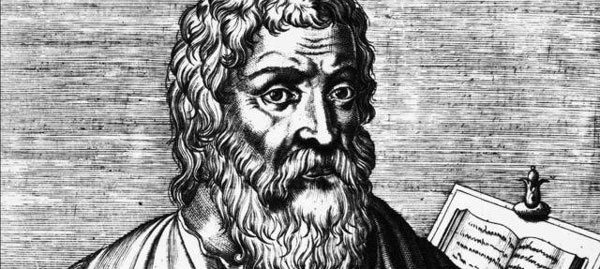
Hippocrates

There are usually two sorts of sleep I have on the night before In Our Time: one is bad, the second is worse.

But before the first edition of a new season of In Our Time I have a very special sleep. It's called worst, or none. What keeps me going is a ridiculous aim. It could be called the Holy Grail. That is, I keep saying to myself all I have to do tomorrow is to be capable between 9:02 and 9:44am. I don't know why that keeps me going but somehow it does.

I had an appalling night's sleep. Turned up creaking and internally (stoic to the last) groaning, but was fed copious cups of tea by Ingrid. There were even grapes on offer this morning, which seemed to confirm the idea that I ought to be in hospital, and then away we went.

They were such a merry crew. It's difficult to think of a more cheerful Emeritus Professor than Vivian Nutton, or a more enjoyable companion in discussion than Helen King, or anyone as hung about with the accoutrements of academic achievement than Peter Pormann. He has published on medicine and philosophy in Late Antique Alexandria, on Greek-Syriac-Arabic translation technique, on the history of mental illness in tenth-century Baghdad, and so it goes.

Afterwards what he really wanted to discuss was Star Trek.

Yes. Star Trek. He could do a Mastermind on Star Trek and I'm thinking of suggesting him to John Humphrys. Even worse (or even better, depending on your starting point), Helen King is of the same ilk. Vivian Nutton, the Emeritus, was not so very far behind.

Star Trek, Peter informed us, had two episodes about the Hippocratic Oath. Galen, the great Greek-born Roman physician, featured in Star Trek. Peter was semi-apologetic as the discussion continued, but unable to keep trouncing everybody with the most recondite facts about it.

Vivian restored a little order to the post-programme conversation by saying that no other ancient document is really used today. Not one is tested as much in the modern age as it was two and a half thousand or two thousand years ago.

It seems to have come back into fashion in the last thirty years to be introduced into ceremonies while students swear an oath of their allegiance. Helen suggested it was partly because of the demand or new affection of students for ceremonies at the end of their university career. In her course at university she starts off with the Hippocratic Oath itself. It has the wonderful merit of being short, pithy and extraordinarily relevant. Euthanasia? Abortion? The conduct of doctors? Confidentiality of patients? There it was, at least two thousand years ago, perhaps even two and a half thousand years ago. I feel that Hippocrates seared himself onto the consciousness of the ancient world so much that he must have produced more than he can be proved to have produced.

Perhaps an urn will be discovered under some JCB digging away in Kos, and you'll pull out a bit of papyrus and it will say 'These are the works of Hippocrates and you're all wrong in thinking he was lots of other people as well'.

Peter Pormann was, in the programme but also after the programme, very determined to say that he thought the Islamic medical translations were totally part of the Western response and continuation of the work of Hippocrates, not something aside and different, as has been thought for so long.

There were twenty commentaries on the aphorisms, for example, in Arabic between the twelfth and the sixteenth century. It was only out-commentaried on by the Bible. I began to think in the end that every generation and century had their own Hippocrates. But that is a measure of the man's charisma and irradiance.

I'm afraid there was not much wandering about. Back to the offices in Soho where we're hammering out timetables for these programmes we're doing on class and culture. The sun beckoned, the skies were blue, but I'm staying resolutely indoors. There is something, I conclude on certain afternoons, quite special about looking at the weather from inside.

Melvyn Bragg presents In Our Time

Feedback: Are big radio events worth it?

Blog comments are currently unavailable. Find out more.

Post categories: , , , , 

Roger BoltonRoger Bolton15:00, Friday, 16 September 2011

The shadow of the last controller of Radio 4 still hangs over the network, not least in the form of an eight-hour dramatisation of Vasily Grossman's epic Russian novel, Life and Fate.

Life and Fate cast shot

Some of the cast from Radio 4's production of the epic Life and Fate

To be honest I had never heard of it, but ex-controller Mark Damazer insists that it is one of the greatest 20th century novels, and he commissioned dramas and documentaries about it before he left for a new life at an Oxford college.

Even so are such blockbuster radio events worth it?

That's one of the issues we looked at this week, and I had hoped it would give me the opportunity of meeting two of the stars, not Kenneth Branagh and David Tennant, but Janet Suzman and Greta Scacchi. But I was disappointed.

Also this week we report on the latest outbreak of discontent among some Radio 3 listeners who think "their" network is using too many gimmicks in the attempt to attract new listeners.

"Don't alienate the ones you already have", is their message to the Controller of Radio 3, Roger Wright.

He is coming onto Feedback in a few weeks so do let me know what you think about the changes he has just made to his schedule.

Meanwhile here is the Feedback feature on Life and Fate.

In order to see this content you need to have both Javascript enabled and Flash installed. Visit BBC Webwise for full instructions

Roger Bolton presents Feedback

What does a revolutionary look like?

Blog comments are currently unavailable. Find out more.

Post categories:

Zubeida MalikZubeida Malik16:19, Thursday, 15 September 2011

What does a revolutionary look like? I have to admit I did have some preconceived ideas on that front, which involved Che Guevara T-shirts, miscellaneous bits and bobs of clothing from army surplus shops, and yes, a bandana. All of this was of course kicked into the long grass as soon as I met Hana, Sharif and AbuBakr.

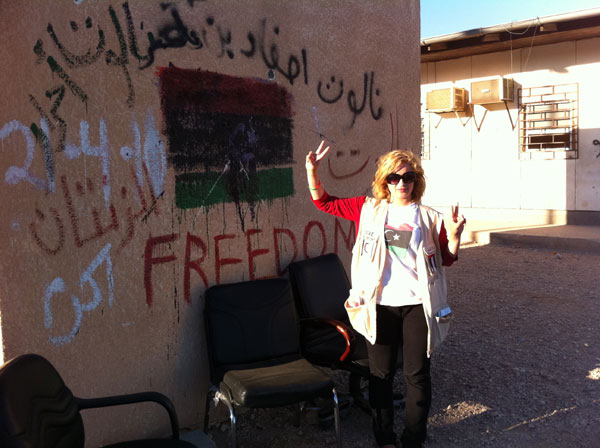
Hana taken at the Dhaiba-Wazin border at the beginning of May

Hana Elgadi taken at the Dhaiba-Wazin border at the beginning of May.

I'd heard from friends and contacts that young British Arabs were being inspired and moved by events in the Middle East and travelling out there to take part. Weeks were spent phone bashing talking to lots of people trying to get a sense of how many and who was going out to countries swept up in the Arab Spring. There were days when I'd be given a number to call, then speak to the person only to find out that they were off to Benghazi, Tunisia or say, Egypt the next day.

It was a combination of luck, timing and hardwork that I got to meet and interview Hana, Sharif and AbuBakr, and as it turned out they were perfect for the documentary. I couldn't have asked for better.

So what do revolutionaries look like?

Remember I'd not met any of them before and the relationship I'd built up with them was totally phone based. So let me introduce you to the ones I met, and I'm hoping they'll change any stereotypes you might have.

When Hana opened the door I was greeted by a vivacious peroxide blonde. She played loud trendy music for me, the bands and singers she listens to when she's in Libya, to help keep her morale up. I pretended to know who the bands are.

In between packing and buying last minute supplies before she went back to Libya , she'd agreed to see me. Her attire? Skinny jeans, trendy T-shirt, keffiyeh and high heels.

Sharif, is... cool. (Is it cool to say that anymore?) But you know what I mean. He plays the oud, a traditional Egyptian instrument, and plays it like a professional. He knows all about music, art, films. He has a deep voice, ideal for a late night broadcaster. And even after a long day at work, he agreed to see me and tell me about his time in Tahrir square. I also got to meet his father, who I could tell was quietly proud of what his son had done. His attire? Chic office wear.

And then there's AbuBakr. I met up with him at his student digs. He got caught up in a violent demonstration in Yemen. He's in his flat telling me about bullets whizzing past and people being killed - and then he goes on to talk about getting his dissertation in on time.

He was buzzing with energy and excitement and keen to talk about events all across the region. He's someone who talks knowledgably about the Arab spring. So much for student apathy. His attire? Blue T-shirt and baggy jeans - classic student garb.

I loved Hana, Sharif and AbuBakr's passion to be in their parent's country of origin, to be part of a revolution, for believing that they can change things. They had the courage to leave their jobs and uni and step into the unknown. Anything could have happened, nobody knew, or knows even now, how events are going to turn out in the Arab spring.

Zubeida Malik presents The Call of the Arab Spring

The National Short Story Award: Listen to and download the finalists

Blog comments are currently unavailable. Find out more.

Post categories: , 

Di Speirs16:00, Thursday, 15 September 2011

Editor's note: The BBC National Short Story Award in partnership with Booktrust is in full swing. The shortlist was announced last week and this year as well as hearing the finalists on the radio you can download them as podcasts to listen to whenever and wherever you want: in the gym, on the way to work, last thing at night. Links and full details are at the end of this post. Here BBC producer Di Speirs, a regular on the judging panel, casts her eye over the shortlist - PM.

It's that time again - after all the secrecy and non-disclosure agreements, the private mulling and the public musing of the first judging meeting, the casting and recording, our five short-listed short stories have been revealed on Front Row last Friday and the first of our authors interviewed on the show.

So how was the 2011 selection of stories?

Did they dwell on austerity, bemoan the economic troubles of the globe, or celebrate the flowering of democracy through social networking? Were the interesting times we live in reflected in the tales we judges were told? By and large, not really!

Impecunious living and politics did get some mention (and one of our stories does delve deeply into being a "have-not") but the universal theme that united this year's most exciting entries, and was true for many of those stories we couldn't put through, was a timeless one.

The workings of the heart sit at the centre of all the short listed stories - fulfilled, rejected, heart-felt, heart-sore, it's all there. Beyond that unifying factor though the angles are very different and there will be, I am confident, considerable debate next week when we choose the winner.

Last week I was at a BBC talk on how we handle science on television and radio. I couldn't, given the news was still secret, reveal that two of this year's short-listed stories are steeped in two of the most exciting developments of the twentieth century, heart surgery and space travel, and arguably are doing just that job of throwing a new light on scientific advancement that fiction can do so well.

Meantime the stories are going out on air - we judge them on the page, but of course translating a story to another medium is always a fascinating and challenging process. What you may lose in the word count replaced by what an actor can bring.

This year is no exception - with some wonderful performances from stellar names like Tim Piggott Smith and Indira Varma and newer voices like Lydia Wilson, who has been garnering praise for her theatre and television work, and Trevor White, one of the most versatile Canadian actors working here and Mike Sengelaow, a New Zealander by birth but an able if hapless young Australian in Rag Love.

This moment in the award is in some ways my favourite. All five writers are receiving due praise and lots of exposure on air. They are all reaching new audiences and I feel personally, they are genuinely all winners. I'm already hoping they will feel encouraged to pen more short fiction, and indeed hoping that they will enter next year!

Di Speirs is Editor, Readings at BBC Radio 4

In Our Time: To download, keep and listen whenever you want

Blog comments are currently unavailable. Find out more.

Post categories: , , , , , , 

Melvyn BraggMelvyn Bragg12:50, Wednesday, 14 September 2011

I was surprised but obviously delighted when, seven years ago, I was told that In Our Time was to become the first BBC programme to be podcast - but, to be honest, I didn't quite know what it meant at the time. It turned out to mean a very great deal. Thus strikes the law of unexpected consequences once again.

So far it has been only new editions of the programme that have been podcast. But this week we've started podcasting our entire In Our Time archive.

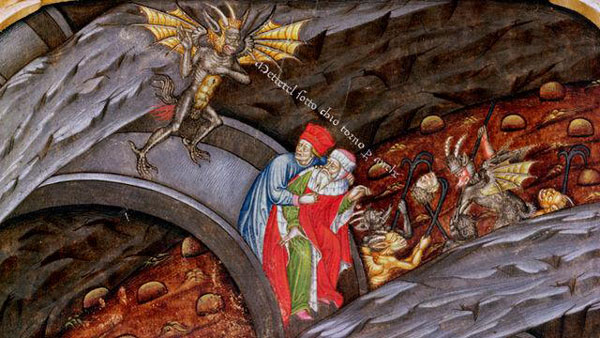
Dante's Inferno

From October 2008: "Melvyn Bragg and guests discuss Dante's 'Inferno' - a medieval journey through the nine circles of Hell." Available now as a podcast to download and keep.

To date we have produced 517 editions of In Our Time. All of these are available to be downloaded - and so will every future programme. In brief, you can get hold of and keep the whole collection at home on your own computer to listen whenever you want.

It's become a library of the air.

When we started in 1998, the idea of being of such value was off the radar. The main idea was to survive the first six months with what seemed to be a rather overambitious notion that we could take the cleverest academics in the land, and let them loose on the most recondite subjects available, and hope to gain a respectable Radio 4 audience just after nine o'clock on a Thursday morning.

We underestimated the Radio 4 audience in those first few months - not in their intellectual reach or in their enthusiasm but in their numbers, and as time went on in their loyalty to this eclectic enterprise.

It now seems that we are becoming an encyclopaedia (I say "we" not in the Mrs Thatcher sense of "We are a grandmother" but "we" in the sense of "the succession of producers, researchers and myself"). There couldn't be a much better outcome, could there? We are asking people to come in and talk whose work furnishes the great written encyclopaedias, and who themselves are salami-slicers of encyclopaedias, and they are now being recycled into a soundipaedia. Can we claim that as a new word? The wizards of the website have divided these 500-plus programmes into different categories (science, religion, history, culture, philosophy) so that they're easy to sort through.

When I look at the range and see the way that the work has built up, I can, in an unwary moment, kid myself that there was some purpose at work in the early days. I'm afraid it wasn't so.

The basic idea, among those of us who did it, was to educate ourselves and to find subjects which tested us - therefore we needed to be at full stretch; or baffled us - therefore we were looking for clarity. Others were part of an initially loose but increasingly resolute attempt to lasso areas of knowledge not very often brought to a wider public.

I suppose one of the best examples of that is works from the great Arabic Courts of learning from the 8th to the 14th century, or the outer edges of science, which contain so many rich ideas, opaque to most of us (with very much me included) but available, it seems, through the generous minds of the academics who turn up on Thursdays from all four points of the United Kingdom and give us the cream of their knowledge with quite remarkable concision.

The wonderful thing about it, as far as I'm concerned, is that it is simply never-ending.

We have done quite a few programmes about the history of China, although I'd like to do many more. The same applies to India, while we have barely touched on South America, which we must do more of. We have been reasonably good on philosophy, but I'm glad to say that has spread around other programmes, and so you feel maybe we can move a little more heavily into other areas. The classics, especially the Greeks - well, once upon a time I wanted to call the programme "It all Began with the Greeks", or a phrase to that effect.

It did at one stage appear to be the case, and I was not even daunted when a formidable lady on the front-row pew of a church in Putney, when I was talking about IOT, said that if she heard the phrase "Let's go back to the Greeks" once more she'd lose the will to live. Nevertheless a few weeks later, when we did "go back to the Greeks", she dropped me a note to say she was still with us!

I think at the best these programmes can be thrilling - well they certainly bring a great deal of excitement to me. It's rather an experiment to see if their freshness and vivacity will endure in this sonic encyclopaedia (or whatever the word is) and linger as long as works in some of the great libraries of the past. That's asking an awful lot - but who knows?

Melvyn Bragg is the presenter of In Our Time

New comedy on Radio 4: Very Old Pretenders

Post categories:

Paul MurphyPaul Murphy11:23, Wednesday, 14 September 2011

Ed's note: On the BBC Comedy blog there's a post about a new Radio 4 comedy Very Old Pretenders that starts this Thursday - PM.

From Carl Gorham, creator of cult animation classic Stressed Eric, comes Very Old Pretenders, in which two Jacobite soldiers from 1745 are found alive and well in a cave in Perthshire and have to be integrated into modern society by academic Andrew Merron.

Jack Docherty, Rebecca Front and Gordon Kennedy

Jack Docherty, Rebecca Front and Gordon Kennedy

Read the rest of the post and leave a comment over on the Comedy blog

Radio 4 Extra celebrates Roald Dahl

Blog comments are currently unavailable. Find out more.

Post categories: , , 

Mary KalemkerianMary Kalemkerian13:05, Tuesday, 13 September 2011

Today, Tuesday 13 September, is the 95th anniversary of the birth of Roald Dahl, a hugely popular and prolific writer who has been referred to as "one of the greatest story-tellers for children of the twentieth century". Dahl's memorable and magical books for children include: Charlie and the Chocolate Factory, James and the Giant Peach, the Witches, The BFG and Fantastic Mr Fox.

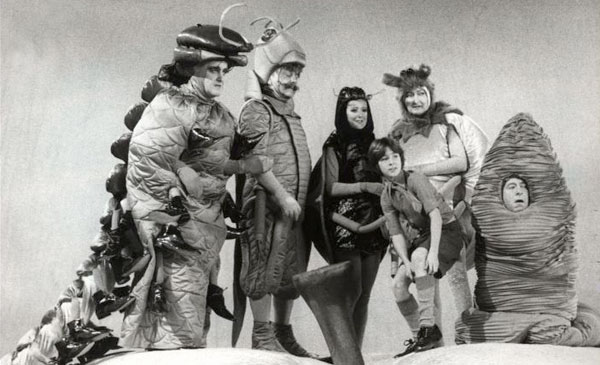
James and the Giant Peach, 1976 TV adaptation

James and the Giant Peach shown on BBC 1 in December 1976. From left to right: Bernard Cribbins as Centipede, Thorley Walters as Grasshopper, Kate Lock as Ladybird, Simon Bell as James, Pat Coombs as Spider and Hugh Lloyd as Earthworm.

Novelist, short story writer, fighter pilot and screen writer, Roald Dahl was born in Cardiff of Norwegian parents in 1916, and he died in Oxford in 1990. Such is the continuing popularity of his work that 13th September is celebrated as Roald Dahl Day in the UK, Africa and Latin America.

Radio 4 Extra's 4 O'Clock Show not only marks Roald Dahl Day, but has also dedicated the entire month of September to celebrating the life and work of this great writer. Roald Dahl Month on 4 Extra features a range of his stories, Dahl-related delights, and archive interviews with the man himself. Coming up on The 4 O'Clock Show is a brand new version of James and the Giant Peach, read by the doyenne of the spoken word, Miriam Margolyes (Ed's note: Starting on 19 September 2011. More info here.) The story has been abridged and recorded especially for The 4 O'Clock Show, and marks an extraordinary 50 years since the book was first published.

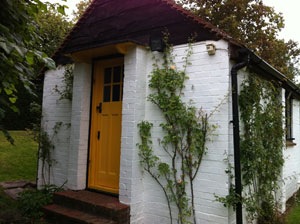
Dahl's shed

This week, listeners can also hear about a visit to Roald Dahl's house. Producer Rich Preston was delighted and privileged to be allowed to peek inside the writing hut at the bottom of the garden where all of Dahl's creations first came to life.

Here is Rich's fascinating account of his visit:

When I was young, Roald Dahl was my favourite writer - my mum tells me I knew Fantastic Mr Fox practically off by heart. So I was thrilled to be given the chance to visit his home and see the place where he wrote all of his books.

The Fantastic Mr. Dahl lived in Gipsy House, at the end of small country lane in the Buckinghamshire village of Great Missenden. And in the garden, with a bright yellow door, stands Roald Dahl's writing hut.

It was constructed for him by a local builder, Wally Saunders, who many believe was the inspiration behind The BFG. Roald had wanted a place to escape to, where he could be surrounded by his favourite things and simply sit and write. He called it 'my womb.'

You first enter a small ante room filled with large filing cabinets, which were home to his records and early drafts. Then you enter the main room itself, completely customised by Roald Dahl. His writing chair had belonged to his mother, and he'd cut a square out of the back pillow to accommodate an old wartime injury. A suitcase filled with logs is nailed to the floor a precise distance away from the chair. A heater hangs precariously from the ceiling - he used his walking stick to pull it backwards and forwards on wires for warmth. And a sleeping bag lay on the floor - he would pull it right up over his legs so he was totally cocooned. He would then place a roll of corrugated cardboard across his lap, and on top of that would sit his writing table. He would sharpen six Dixon Ticonderoga pencils and start to scribble on his yellow, American-ordered paper.

Roald hung on to things that mattered to him. The walls of the hut are covered in pictures of his family and things that his children had made. On a table next to his writing chair lay all sorts of things... including his own hip joint. Roald had had his hip replaced and the doctor at the time had commented on it being the biggest he'd ever seen - and so he gave it to Roald to keep, which he did. I was able to pick up and hold Roald Dahl's hip bone!

There is also a heavy, grey, metallic ball - every day after his lunch, Roald would have a Kit Kat. The foil wrapper was balled up and, day after day, he would add to the ball. He did this every day for the rest of his life, and the ball ended up about the size of a large, very heavy, ping-pong ball.

I also looked inside a small test tube which contained a Wade-Dahl-Till valve; a device Roald had co-invented following a disastrous accident involving his son Theo, to release fluid building up in a child's head. Although Theo recovered of his own accord, it became a commonly used piece of medical equipment. Another test tube contained shavings of Roald's back from that wartime accident - small grey flecks of bone and flesh. In life, as in his stories, he was as intrigued by the grotesque as much as any child.

Outside in the garden are paving slabs engraved with quotes from Dahl's books. "'Giants are never dying,' the BFG answered. 'Sometimes, and quite suddenly, a giant is disappearing, and nobody ever knows where he goes to.'"

My visit was unforgettable."

Mary Kalemkerian is Head of Programmes at BBC Radio 4 Extra

Eliza Manningham-Buller's second Reith Lecture: Security

Blog comments are currently unavailable. Find out more.

Post categories: , , , , 

Jennifer ClarkeJennifer Clarke17:30, Monday, 12 September 2011

Editor's note: This Tuesday morning Radio 4 broadcasts Eliza Manningham-Buller's second Reith Lecture, Security, at 09.00 BST. It will be repeated on Saturday 17 September at 22.15 BST - PM.

Eliza Mannigham-Buller

In Security, recorded last week in Leeds, Baroness Manningham-Buller argues that the security and intelligence services in a democracy have a good record of protecting and preserving freedom.

During the lecture, she strongly condemns torture, and touches on the recent allegations about MI6's alleged activities in Libya. Her comments have already attracted a lot of attention, featuring on BBC news, in the Guardian and The Telegraph. Tony Blair told the Today programme on Saturday that he "profoundly" disagreed with her arguments about the post 9/11 world.

After the Tuesday transmission, you will be able to download the programme as a podcast and read a transcript on the Radio 4 website.

Again, as last week, during the broadcast we will be tweeting links to useful relevant content from the @BBC_Reith Twitter account, and will share some highlights via the @BBCRadio4 Twitter account. Thanks to those who have been using the hashtag #Reith to join the debate. You can also share your thoughts and reaction to the lecture here on the Radio 4 blog.

In the meantime, we are still offering a number of "Reith Extra" programmes for download via Radio 4's Documentary of the Week podcast. This week's programmes include a history of GCHQ,a two-part series tracing the Hunt for Bin Laden, and a File on 4 programme from 2007 about the challenges of trying to close the Guantanamo Bay detention facility.

Radio 4 has also recently published the Reith archive, and you can explore more than 60 years of lectures on the Radio 4 website, where you can listen to the programmes and read the transcripts. You can download the previous Reith Lectures via the two archive podcasts 1948 to 1976 and 1977 to 2010.

The most popular downloads so far are Edward Said's 1993 lectures on the Representation of the Intellectual, which you can listen to or download, and the 1986 Reith Lectures by Scottish Judge Lord John McCluskey, Law, Justice and Democracy.

Jennifer Clarke is senior multiplatform producer, Radio Current Affairs

Afternoon Play: Floating

Blog comments are currently unavailable. Find out more.

Post categories: , 

James RobinsonJames Robinson14:24, Friday, 9 September 2011

Editor's note: The Radio Times described this fantastical Afternoon Play: Floating as "a maritime Passport to Pimlico, with the locals relishing their unexpected autonomy and selecting a leader". The Guardian review said that Floating has "a delightfully quirky presence, and a poignant conclusion". Here on the blog James Robinson, the producer of Floating, talks to its creator Hugh Hughes - PM.

Hugh Hughes

Hugh Hughes on location in Anglesey

On April 1st 1982, the Isle of Angelsey separated from the mainland of Wales and floated out into the North Atlantic. This Friday's Afternoon Play: Floating, reconstructs this extraordinary event and tells the story of Anglesey's subsequent journey.

Remarkably at the time the incident failed to grab a single headline. And I have to admit that until I met the creator of the show - emerging artist Hugh Hughes, who grew up on the island - I'd never heard of it myself. I caught up with Hugh recently and asked him why he thought the event went unnoticed:

"Well, Margaret Thatcher was Prime Minister of Great Britain at the time and she took the country to war in The Falklands on the very same day that Anglesey drifted away. So all media attention was focused on the South Atlantic."

So nobody noticed that Anglesey had floated off?

"That's right. You see my friend Arwel says that the news has a finite number of cameras and it's physically impossible for them to cover everything that happens."

But, Anglesey's a pretty big place (it's the largest Welsh Island) how could something like this slip under the radar?

"I suppose it's not an event most islanders openly talk about. I think there's an anxiety about how tourists might feel if they knew their treasured holiday location has been known to take its own course and float away from the mainland where they live."

So is there a possibility that this could happen again?

"No, no, no. I am sure the island is a safer place these days - after all, lightening doesn't strike twice. Although my Uncle Dewi's barn has been struck seven times within the last thirty years. But that's no big surprise when you see how it has been wrapped in aluminum foil."

So did you enjoy the experience of making Floating?

"It has been a wonderful experience. It's not every day that a boy from Llangefni is invited to London by the BBC to make his very own radio play. I am thrilled by the opportunity the people in London have given me. And I was also very grateful for the support I had from the islanders themselves, including my Aunty Glenys who managed to persuade her choir to help with the crowd scenes."

The story covers a very significant moment in your life, how did it feel to revisit that time?

"I remember the first time I cut the lawn with a lawnmower - making this play reminded me of the pleasure that activity brought me."

The show itself is quite unusual - how would you define it?

"You could call it a documentary, a docu-drama, a biopic; it involves re-enactments and reconstruction, therefore you could call it a dramatic documentary reconstruction... It uses music and there are songs, so, technically you could call it a musical - although my friend Sioned says it's nothing like what you find in the West End."

So is it fair to say it defies definition?

"In a way, yes. My Aunty Beryl makes this cake; she uses apricots, plums, banana and cream and icing sugar; it's so good that people ask her to make it for birthdays, weddings and even funerals. It's a cake that defies categorisation, although it's very rare to have it on Sundays."

James Robinson is the producer of Floating

In order to see this content you need to have both Javascript enabled and Flash installed. Visit BBC Webwise for full instructions

Andrew Marr: An introduction to Vasily Grossman's Life and Fate

Blog comments are currently unavailable. Find out more.

Post categories:

Andrew Marr07:01, Friday, 9 September 2011

Editor's note: This coming Monday Andrew Marr discusses the life, work and legacy of the writer Vasily Grossman in a special Start the Week recorded at an event in Oxford to celebrate his novel, Life and Fate. Centred around the bloody battle of Stalingrad, Life and Fate charts the history of both a nation and a family in the turmoil of war. There is a special thirteen part adaptation of Life and Fate with Kenneth Branagh and David Tennant starting on Radio 4 on 18 September. On the Radio 4 blog Andrew Marr introduces what many see as one of the greatest novels of the modern age - PM.

Battle of Stalingrad

Stalingrad, used under license from the Deutsches Bundesarchiv

Mikhail Suslov, the "cultural" boss of the Soviet Union in the early 1960s, was one of the worst. He read Life and Fate closely. He decided it could be published - but not for more than 200 years.
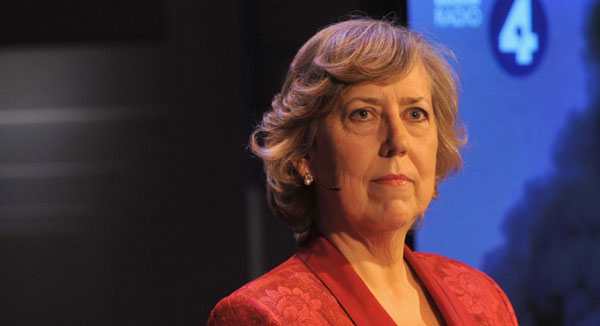
When you pick up or listen to Vasily Grossman's Life and Fate, you are experiencing a masterpiece plucked from oblivion. KGB officers had raided Grossman's flat and thought they had every copy of the manuscript, even down to copying paper and the ribbons from his typewriter. Grossman died thinking nobody would ever read it.

In fact, he'd given a copy to a friend, and it had been forgotten in a bag underneath some coats in a country home. It was copied by dissidents and made its way eventually to the West. We have Life and Fate by the slenderest of chances.

Why were the authorities so frightened?

Grossman had been a popular and patriotic novelist. He had narrowly escaped Stalin's terrifying Great Purge but when Hitler invaded Russia, became a journalist for the Red Army's newspaper Red Star.

Life and Fate is one of the best examples of journalism elevated and reshaped into a great novel. Grossman saw the Soviet retreat, the heroic defence of Stalingrad, titanic tank battles and the fall of Berlin. His unblinking, pulse-racing prose was devoured by soldiers and airmen all over Russia. He was nominated for the Stalin Prize.

He was also the first reporter to reach the hideous concentration camp Treblinka. His account of the Jewish holocaust there is one of the essential pieces of journalism of the twentieth century.

But there was a lot more to Grossman's uncovering than reporterly objectivity. He was a Jew, who had had to leave his mother behind when the Germans advanced; she was murdered and he never recovered from the guilt and despair. As a Jew, he fell foul of the Stalinist dogma that the Nazi atrocities were aimed indiscriminately at Soviet citizens. Describing the Nazi programme to exterminate Jews in particular was not welcome in the victorious Soviet Union. As a truth-teller, and a Jew, Grossman was in trouble.

After 1945 came full-blown Soviet anti-Semitism and a new round of purges. Grossman became a steadily more open critic. His last and uncompleted novel, Everything Flows, ends with flaming, raging pages which tear into the inhumanity and barbarism of Lenin and Stalin. Like his Treblinka report, it remains essential reading for anyone who wants to know the truth of that bloodiest of centuries.

English readers do not - as yet - have access to Grossman's "Soviet" novels, so we cannot compare them to Life and Fate. But this is the opposite of a propaganda or "political" novel. It is a book written in a spirit of love and pity for human weaknesses, as much as one which celebrates courage. It is a book of foolish regrets, greed, a sparkling love of nature, passionate arguments and tiny details - as well as fighting and killing and courage. Peace, and war.

It is also a book of ideas, up-to-date even today. Grossman was a highly educated scientist, fascinated by the latest thinking. Einstein and the curvature of space-time haunt the imagination of his physicist hero, Viktor Shtrum. He reflects that "The Day of Judgement had come... Truth had been sleeping for centuries... no one in the world could be happier than the scientist."

This book really does stretch its arms round all human life, as does another book about invasion and patriotism, Tolstoy's War and Peace. Tolstoy was one of Grossman's heroes - he paid a pilgrimage to the older writer's home, Yasnaya Polyana, just before it fell to the Nazi invasion. Grossman, ambitious though he was, would be first to say that to compare Life and Fate with the greatest novel of all is absurd.

But here is the extraordinary thing. Snatched from the gloves of the KGB, Grossman's novel, though not perfect, actually can stand this most extreme comparison. It has become a book every educated person should know.

Andrew Marr presents Start the Week

Can east London's Silicon Roundabout help Britain out of the economic crisis?

Blog comments are currently unavailable. Find out more.

Post categories: , 

Michael Wendling18:20, Thursday, 8 September 2011

Editor's note: In Business explores what's behind the flurry of entrepreneurial web-based businesses siting themselves near an east London roundabout which has led to the area being dubbed Silicon Roundabout in a clear nod to Silicon Valley. BBC journalist Mike Wendling considers if these hungry, go-getting entrepreneurs might help lead Britain out of its economic gloom

Old Street roundabout sign

Is the future of British business in and around Old Street roundabout?

Not long ago, I went to see a friend's band play in east London.

It was a pretty typical night out in painfully trendy Shoreditch - hanging out in the basement of a strangely unfinished office block, with plenty of not-very-cheap beer and loud music.

Now, this kind of thing might seem tangential to the economic crisis that is gripping, the UK, Europe, and indeed most of the world.

But I mention it in this context because of an interesting new phenomenon. The trendy clubs and art galleries in a shabby neighbourhood in east London seem to be attracting the kind of businesses that could point towards one way out of the economic doldrums.

And so for the past few weeks I've been hanging out in east London with Radio 4's In Business presenter Peter Day, not to find the next big thing in indie rock or modern art, but instead visiting the offices of high-tech businesses, talking to entrepreneurs and those who are backing them.

The people we met love the place. It has cheap rent, great coffee shops, and lots of parties. It attracts highly educated young people with angular eyewear who are willing to work long hours to get in on the ground floor of a great idea.

Elizabeth Varley is one of the Silicon Roundabout evangelists. She set up Techhub in one of the grim blocks nearby. Much more than an office building, it’s a base and meeting space for dozens of tiny companies. For a few hundred pounds a month anyone with an idea can rent a desk and, more importantly, be surrounded by their peers.

Talking to Varley, you get no whiff of the gloom currently drenching the financial pages.

"This area was colonised by artists and designers and independent restaurateurs and shop owners," she says. "There's something very similar between artists, independent bar owners and entrepreneurs. It's about people wanting to do their own thing, and it’s about an atmosphere and a vibe in the area."

What’s happening around Old Street is small, almost petri-dish sized. The government’s Tech City UK initiative estimates that around 1,000 jobs have been created this year because of the east London tech boom. That’s nice, but nothing compared to the 38,000 people who became unemployed across the UK in the three months to June.

And we found there are troubling questions about the sustainability of the sector and its ability to really carve out a niche away from Silicon Valley, USA. There is as of yet no UK equivalent of Google, or Facebook, and no obvious candidate to become one.

But there is something happening in this creative cluster, and it might eventually provide a plan to boost job growth. Despite what the Shoreditch hipsters would like to believe, there’s nothing unique about east London itself, and nothing stopping similar colonies from springing up in, say, Manchester, Glasgow or Sheffield.

Or indeed anywhere with creative, hungry, educated young people – and some decent bands to listen to once the day’s work is done.

Mike Wendling is a BBC Journalist

Remembering Sir Harry Secombe and Neddie Seagoon

Blog comments are currently unavailable. Find out more.

Post categories: , , , 

Martin DempseyMartin Dempsey10:00, Thursday, 8 September 2011

Tea for the Goons in 1958 Spike Milligan, Peter Sellers and Harry Secombe

Tea for the Goons in 1958 - from left to right - Spike Milligan, Peter Sellers and Harry Secombe

How would you react to the phrases "needle-nardle-noo" or "what, what, what what, what!"?

Naturally, context is everything. In response to the query "what are you doing in my bathroom?" well, they're clearly inappropriate. However, if it's an exchange from The Goon Show, it's probably the least alarming piece of dialogue on offer – and the man uttering those deathless words would be Harry Secombe, worthy of a celebration all his own.

The Goon Show is the category-defying, post-war radio comedy that has influenced everything from Monty Python to the Mighty Boosh. It was crafted by Harry together with Peter Sellers and Spike Milligan. But while one had the voices and the other the sheer insanity, it was Harry's cheery, indefatigable and perpetually dogged Neddie Seagoon who braced the whole show together.

Harry would have been 90 this Thursday – and The Goon Show is just part of a career which took in a generous spectrum of comedy and drama.

His showbusiness start came at The Windmill Theatre in London in the late forties, and Harry's radio career began with Variety Bandbox and Educating Archie. When the Goons took off, a parallel career as a singer beckoned. Perhaps not unusual in an age when most entertainers could warble a tune or two, but Harry studied under Italian maestro Manlio di Veroli, becoming one of a select few Bel Canto tenors.

In common with most of his peers, Harry served in the Second World War. In a suitably Goonish twist, he found himself promoted to sergeant by his old regiment while entertaining troops in the Falklands – nearly four decades after being demobbed.

In addition to a full recording career, Harry also acted on Broadway and in films, alongside Dame Sybil Thorndike and Sir Richard Attenborough - playing characters created by Charles Dickens and French writer Alexandre Dumas.

A regular comedic presence on BBC television and ITV throughout the sixties and seventies, Harry occasionally paired up not only with old cohorts Peter Sellers and Spike Milligan, but contemporaries like Ronnie Barker and Arthur Lowe. A keen churchgoer in his youth, Harry's later television career saw him fronting various religious programmes and putting his mighty singing voice to good use.

Like a lot of notable creative individuals, such as Russell T. Davies, Rob Brydon and Terry Nation, Harry Secombe was a Welshman, born in Swansea in 1921. He was pretty candid, however, about not actually being able to speak Welsh. He died in Surrey in April 2001 leaving a wife and four children.
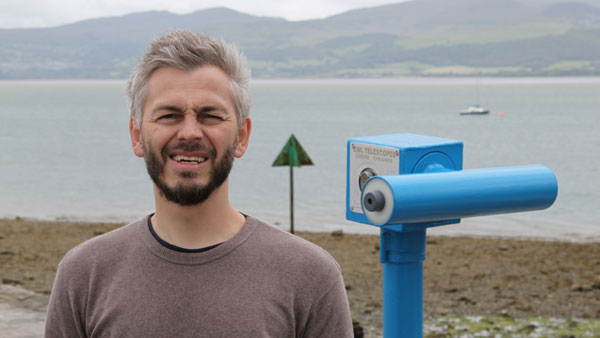
Alongside his comedic legacy, a theatre in Sutton bears his name. Fans of A Hitch-Hiker's Guide to the Galaxy will have heard his son Andy as Colin the Security Robot - "Mr Prefect, sir!" - in the final radio series.

However, you needn't take my word for it. Hear the man himself talk about his life on Radio 4 Extra in Goon Abroad at 2.15pm; or pick his favourite music next Sunday on Desert Island Discs Revisited. Both will remain on iPlayer, where you may listen and blow a raspberry in Neddie Seagoon's honour.

Martin Dempsey is producer, Radio 4 Extra

Harry Secombe, Michael Parkinson and Peter Sellers on Parkinson in 1972

Harry Secombe, Michael Parkinson and Peter Sellers on Parkinson in 1972

Bruce Forsyth with Harry Secombe

Bruce Forsyth with Harry Secombe

Sir Harry singing with Dana on The Harry Secombe Show in 1973

Sir Harry singing with Dana on The Harry Secombe Show in 1973

Harry Secombe

Harry Secombe presenting an edition of Songs of Praise from the Haymarket Theatre Royal, London in 1999

Afternoon Play: The Marches

Blog comments are currently unavailable. Find out more.

Post categories: , , 

Paul MurphyPaul Murphy13:22, Wednesday, 7 September 2011

Editor's note: Over the past year, writer Sebastian Baczkiewicz has been working with the Herefordshire communities of Kington, an historic market town on the English/Welsh border, and Ewyas Harold, a village in the Golden Valley, to create The Marches for Radio 4.

Here, the writer Sebastian Baczkiewicz reflects on the experience, answering some questions set by the producer of The Marches, Sasha Yevtushenko. - PM

the Marches

The Kington Festival Wheelbarrow Race which features in the play about Kington

Sasha Yevtushenko: How did you begin?

Sebastian Baczkiewicz: I wanted to ground each of my plays in stories that the communities had shared with me. I saw my role as taking these stories and weaving them together into a coherent whole. So I began the process by encouraging the participants to think about story-telling in general. I asked them to think about stories connected to where they live. To help, I suggested various headings, for example: stories of love, of exile, stories about one's neighbours, about the past. The raw material that I collected through these workshops became the starting point for the plays.

How did the workshops contribute to the writing process?

First of all, they gave me the feel of the pieces, the sense of where we were. For example, in Ewyas Harold the village acts as a sort of airlock between the modern world and a much more isolated, rural world which exists in the surrounding hills.

In Ewyas Harold, I got the idea for the play's structure after speaking to a gentleman who had been a mobile librarian in rural Herefordshire for many years. As time went on, I began to see how a character with that job would give us the potential to travel, and I really wanted to have that sense of movement in the play. As soon as I discovered that character, I knew I had a way in. The conceit also allowed me to weave many of the other stories I had heard into the narrative. That's how Fearless Librarian Saves The Day began.

What about your other play, Man In A Wheelbarrow?

I had the idea of using an outsider. Dramatically, what happens when you have an outsider as a protagonist is that it opens the world of the play out to the audience. In Man In A Wheelbarrow, Trudy has travelled from Seattle in search of information about her family background. This device was a way of seeing the town of Kington with fresh eyes. It provided me with a way in to telling the story.

How important was the rural setting to your plays?

For me the countryside evokes timelessness. I had the feeling that I was in the middle of a landscape that hadn't changed its character over the last thousand years. It was made clear to me by the communities that there is an almost symbiotic relationship between the countryside and the town. The towns evolve from the landscape; they're built around the agricultural life of the community. As a resident of the town said to me "What's bad for the countryside, is bad for Kington". I knew I had to get this sense of timelessness into the scripts.

What happened after you wrote the scripts?

As soon as I finished the first drafts, I arranged to go back to each community. We divvied up the parts and read the plays aloud together. In Kington, the people who were the inspiration for certain characters in my play, ended up reading themselves - or at least my version of them. It was really nerve-wracking for me, but thankfully it was very positive - an extraordinary moment, not lost on any of us.

How useful was it recording the plays on location in Hereforshire?

It was very useful for the actors. They got a sense of the town, what they were dealing with. For instance, the actor Richard Elfyn was playing the role of Kington's street-sweeper in Man In The Wheelbarrow. On the day of recording he actually had a chance to have a cup of tea and a good chat with the inspiration for the character - Kington's real street-sweeper. It was a unique experience - for both of them. I had a palpable sense that the Kington community really enjoyed that process.

Did the final plays achieve what you wanted?

I hope so. It's important to stress that I was never seeking to create a definitive portrait of either community. Rather than the documentary truth, my aim was to capture the spirit of each place. The communities provided the stories, and it was my job to make it seem as though these were all part of one story. What was so unique and exciting about this project was that 'real life' and 'drama' were separated by only a single buffer, and that was me. It was a scary undertaking, but also a great honour.

Paul Murphy is the editor of the Radio 4 blog

  • Man In A Wheelbarrow and Fearless Librarian Saves the Day will be broadcast on Wednesday 7 and Thursday 8 September at 2.15pm on Radio 4. You can listen online for seven days afterwards.
  • If you have access to a digital TV, you can press the red button from any BBC TV channel at this time and select "The Marches" to watch the film that accompanies each play. The films and plays will also be available on the Radio 4 website after broadcast.
  • There's a video about the making of The Marches on the Radio 4 website.

The Philosopher's Arms: Where ideas meet beer

Blog comments are currently unavailable. Find out more.

Post categories: , 

Paul MurphyPaul Murphy10:30, Wednesday, 7 September 2011

Two nights ago, in a pub not too far from Broadcasting House, Matthew Sweet asked whether people would hook themselves up to a machine guaranteeing a fulfilled life. Among the guests were philosopher Jo Wolf and David Willets MP. (You can hear the debate online.)

Jo Wolff, David Willetts, David Geaney

Our panellists: (left to right) Jo Wolff, David Willetts and David Geaney

This is The Philosopher's Arms - a place where philosophical ideas meet the real world in the company of beer. The evening's subsequent conversation ranged over mental health drugs, government happiness policy and prozac in the water supply.

Each week in The Philosopher's Arms Matthew Sweet takes a dilemma with real philosophical pedigree and sees how it matters in the everyday world. He'll be joined by a cast of thinkers and experts to show how the dilemma's we face in real life connect us to some of the trickiest philosophical problems ever thought up.

Paul Murphy is the editor of the Radio 4 blog

Eliza Manningham-Buller's first Reith Lecture: Terror

Blog comments are currently unavailable. Find out more.

Post categories: , , , 

Jennifer ClarkeJennifer Clarke16:50, Monday, 5 September 2011

Editor's update: The first of Eliza Manningham-Buller's first Reith Lecture is now available as a transcript and as a podcast to download - PM.

Eliza Mannigham-Buller

Tomorrow Radio 4 broadcasts Eliza Manningham-Buller's first Reith Lecture, Terror, at 09.00 BST. It will be repeated on Saturday 10 September at 22.15 BST.

On the tenth anniversary of the attacks on the United States on 11 September, the former director-general of MI5 reflects on the lasting significance of that day. Was it a "terrorist" crime, an act of war or something different? She offers a unique perspective on the event, its impact on the world and the repercussions which are still being felt today.

After the Tuesday transmission, you will be able to download the programme as a podcast and read a transcript on the Radio 4 website.

During the broadcast we will be tweeting links to useful relevant content from the @BBC_Reith twitter account, and will share some highlights via the @BBCRadio4 twitter account. Please include the hashtag #Reith if you would like to join the debate. You can also share your thoughts and reaction to the lecture here on the blog.

In the meantime, you may enjoy the range of "Reith Extra" programmes which we have been podcasting via Radio 4's Documentary of the Week podcast. These include histories of MI5, MI6 and GCHQ, and a special programme from 2005, How Islam got Political, in which Frank Gardner traces the rise of political Islam in Britain and around the world.

You can also listen to many of these and other programmes from Radio 4's 9/11 coverage here. Radio 4's controller Gwyneth Williams has also written about the station's coverage on the Radio 4 blog.

Radio 4 has also recently published the Reith archive, and you can explore more than 60 years of lectures on the Radio 4 website, where you can listen to the programmes and read the transcripts. You can download the previous Reith Lectures via the two archive podcasts 1948 to 1976 and 1977 to 2010.

Jennifer Clarke is senior multiplatform producer, Radio Current Affairs

Radio 4 and 9/11 Ten Years on

Blog comments are currently unavailable. Find out more.

Post categories: , , , , 

Gwyneth WilliamsGwyneth Williams18:00, Saturday, 3 September 2011

Last night we recorded the first of Eliza Manningham-Buller's Reith Lecture series. I need not tell you that security was high for the former Director General of MI5 and the Radio Theatre was littered with senior members of the secret world.

Eliza Manningham-Buller

The former Director General of MI5, Eliza Manningham-Buller giving the first of her BBC Reith Lectures to be broadcast on 6 September 2011.

I am glad to be broadcasting these lectures which invite us to consider the decade that has just passed through the prism she offers: how democracies confront the challenges that terrorism brings and how we balance our freedoms with necessary security.

She was at the heart of events that day ten years ago and she speaks frankly about her views, answering questions with an alarming precision.

The theme of the 2011 Reith Lectures is freedom - never more relevant as the Arab Spring continues to unfold around us.

Baroness Manningham-Buller's lectures make up the second part of this specially extended series following those of the distinguished Burmese campaigner for democracy, Aung Sang Suu Kyi, who gave a moving account of the struggle for freedom from tyranny in lectures that were secretly recorded and smuggled out of Burma.

The tenth anniversary of 9/11 offers a chance for Radio 4 to bring together many sides of the network for those who want to explore a truth beyond News and Current Affairs programming.

We tell the story of The Day Before painting a portrait of New York, America and the wider world as it was 24 hours before the attacks. We have adapted The Reluctant Fundamentalist by Moshin Hamid who talks to Jim Naughtie about the chilling encounter in that story in Bookclub. He takes listeners to Pakistan and brings to life a new mood in the meeting of strangers there - one tainted now perhaps for ever.

We have asked five internationally-acclaimed writers to write an open letter for Radio 4 listeners in the 9/11 Letters, in which they consider the consequences of 9/11: Joseph O'Neill, Michael Morpurgo, Lionel Shriver, Caryl Phillips and Naomi Alderman. We will run these letters across the Book of the Week slot in the morning.

Washington, 9/11 is our drama. Reconstructed from a welter of documents we tell the story of how George Bush and Dick Cheney responded in the first few hours after the attacks and how their responses set in train the events that were to follow in Afghanistan and Iraq.

I hope the balance of the planned News and Current Affairs coverage - with a special extended version of Americana, a documentary about British Muslims and some special editions of our daily sequence programmes, as well as select contributions from Woman's Hour and other programmes - will give listeners as much and as little as they want to hear about that transforming day now, a decade on.

And last night at the lecture the splendid historian, Peter Hennessey, reminded me again that ten years is not really very much time at all. Do listen to his recent Radio 4 documentary, One Hundred Years of Secrecy.

Gwyneth Williams is Controller of BBC Radio 4 and BBC Radio 4 Extra

More or Less: Debt - A European Odyssey

Blog comments are currently unavailable. Find out more.

Post categories:

Tim HarfordTim Harford13:00, Friday, 2 September 2011

Sheep

"...Like the blind cyclops casually touching the backs of his sheep, bondholders didn't pay close enough attention to the fact that the risks of default had not gone away."

On More or Less, we're always looking for the perfect analogy to help clarify complicated things. And the European debt crisis is certainly complicated. We think we've come up with exactly the right way to describe the whole sorry business: as Homer's Odyssey.

Let's start with the Trojan Horse. The original horse was a big hollow wooden statue, inside which a Greek attack squad was smuggled into the city of Troy.

What has that got to do with the debt crisis? It all goes back the late 1990s and the creation of the Eurozone, which the Greeks wanted to join. To get inside the walls of the Eurozone, the Greeks needed to convince the European Union that they had met various irksome rules about inflation, government deficit, and government debt.

Instead of calling Odysseus, the modern Greek's called Goldman Sachs and asked them to structure a clever financial deal that put a lot of Greek borrowing off the books. And it wasn't just Goldman Sachs - it's been reported that there were all kinds of ways in which the Greek government of 11 years ago managed to make their macroeconomic statistics look trim and healthy.

In late 2009, George Papandreou came to power in Greece and announced some bad news: the Greek deficit wasn't the manageable 3.7 per cent of GDP which his predecessors had reported. It was almost four times bigger. And that made Greece's debt look completely unsustainable.

Time to introduce our next character to the story: the cyclops, the one-eyed giant who trapped Odysseus's men in a cave, planning to eat them for breakfast. Odysseus then stabbed the cyclops in the eye with a red hot sharpened stake - which has to hurt.

What have I got in mind for the modern-day equivalent of a blind, enraged colossus? Easy: the international bond markets. Think about how Odysseus escaped. The Cyclops, unable to see, stood by the entrance to his cave and touched each of his giant sheep as they trotted out to graze. Odysseus -cunningly - told his men to cling to the underside of the sheep, and the Cyclops was unable to tell that the Greeks were sheltering under his livestock.

When different European countries had different currencies, investors - that is, the international bond markets - charged much higher interest rates to the likes of Greece than to Germany, simply because of the risk they were taking in lending money to the Greeks rather than the Germans.

But the Euro acted like the giant sheep. Clinging on beneath it were all these national governments, some of which were creditworthy and some of which were not. But the bond markets acted as though they were all pretty much the same.

And obviously they weren't all the same. Like the blind cyclops casually touching the backs of his sheep, bondholders didn't pay close enough attention to the fact that the risks of default had not gone away. They treated all Eurozone countries very similarly - at least until a couple of years ago - and lent money to Greece almost as cheaply as they had done to Germany.

Now. Remember Circe? Circe invited Odysseus and the Greek sailors to a banquet on her island, and as they gorged themselves on the food and drink, she transformed them into pigs. It's evocative of what a lot of people think happened to Portugal, Ireland, Greece and Spain - often collectively, and rather impertinently, called the PIGS.

Many people think those countries gorged themselves on cheap money which they had access to courtesy of the blind bond markets. And they used the money to get on with whatever they fancied getting on with. In the case of Ireland, it was a property boom. But in the case of Greece, it was the Greek state running a large, unacknowledged deficit.

Different things have happened to different countries. In Ireland, the national debt suddenly ballooned because Irish banks had lost an inconceivable amount of money. In Spain, the problem was that growth collapsed. The debt was low - and in fact it's still not that high - but with low growth investors are getting nervous. And then in Greece there was that long-run off-the-books accumulation of debt. Each case is different.

And we Brits shouldn't be too smug. Last year, our budget deficit was higher than that of Portugal, Ireland, Greece or Spain. We out-pigged the lot of them. But, like Odysseus, we escaped unscathed.

Why? Well, like him or loathe him, nobody doubts that George Osborne plans to get the deficit down quickly, and that reassures investors. But before Osborne pats himself on the back, there are other reasons. George Osborne's arch enemies, Gordon Brown and Ed Balls, kept the UK out of the Eurozone.

That means austerity measures in the UK don't hurt growth as much as they do in Eurozone countries. Our flexible currency allows to export some of the pain to others.

Time for another tale from the Odyssey: the Sirens. The Sirens had beautiful, tempting songs but would rip sailors to pieces. Odysseus told his sailors to block their ears with wax but had himself tied to the mast so that he could hear the Siren song and yet couldn't leap overboard to his death, no matter how hard he tried.

It turns out that the story of the Sirens is a classic in economic theory. It represents the idea that sometimes you can gain an advantage from tying your own hands. It's called a commitment strategy. And this is one of things investors liked about the Euro: being a part of it means Greece, for example, can't devalue its debt by printing money, no matter how tempting that option becomes.

But there is a downside. These commitment strategies are great until you reach a situation where you really, really need to break your commitment. At that point, you're stuffed.

Later in the Odyssey, Odysseus is sucked into the gigantic whirlpool of Charybdis. He saved himself by leaping off a raft and grabbing hold of a fig tree. The point is: it is a good job he wasn't tied to any masts at the time.

The Odyssey ends with a bloody massacre of a bunch of greedy ne'er do wells. Let's hope that this story ends better.

Tim Harford is the presenter of More or Less on Radio 4

Nina Perry on 'Spirit of the Beehive'

Blog comments are currently unavailable. Find out more.

Post categories: , 

Nina PerryNina Perry10:45, Friday, 2 September 2011

Ed's note: Spirit of the Beehive (TX: 11am, Friday 2 September 2011) is a composed feature by Nina Perry exploring our enduring relationship with the honeybee. Here on the blog Nina talks about the making of the programme. You can listen to Spirit of the Beehive online shortly after transmission for seven days - PM.

Nina Perry and Heidi Hermann

Karl Von Frisch, the scientist who discovered that honeybees perform a waggle dance to communicate with one another, described the life of bees as "a magic well". At times making Spirit of the Beehive felt like diving into an infinite elixir - bees are spellbinding.

Coming face to face with a hive of bees for the first time was a heady experience, the fear and awe focussed the mind, whilst the tantalising aroma of honey and wax, and the buzzing, thrumming sound of around 50,000 bees going about their daily duties seduced the senses. I understand why bees provoke admiration and respect from those who work with them and why beekeeping is growing in popularity - bees are great.

Humankind's relationship with bees is by no means a new thing as Professor of Apiculture Francis Ratnieks from the Laboratory of Apiculture and Social Insects says: "the honeybee is man's best friend, and this goes back thousands of years".

bee

Our wise ancestors appreciated the honeybee as provider of sweetness and light - honey and wax for candles. But they were probably unaware of one of the honeybee's greatest gifts - "only recently have we realised the importance of pollination, including pollination of foods ranging from from apples and almonds to coffee and oil seed rape" says Professor Ratnieks.

Paradoxically as the numbers of honeybees are declining our appetite for foods pollinated by bees is on the increase. So how do we help the honeybee (and in turn help ourselves)?

"What would be a good way of conserving an animal? Well it might be ask it what it needs" says Professor Ratnieks, who with his team at Sussex University is observing and decoding the bees' waggle dance to discover where they like to forage best.

We can learn a great deal from listening and observing bees, and not just about bees, we also learn about ourselves. My experience of listening to bees was disconcerting, recording up close and hearing the hive through headphones created the aural illusion of bees flying into my ears.

I wanted to flap, swat, run, but remembered the advice of 17 year old beekeeper Devente who works with the Social Enterprise The Golden Company based in Hackney in East London:

"When you understand a bee, when you know what it's doing your perspective changes from swatting to being still."

So I face my fear of being stung, still myself and listen. As part radio producer, part composer I've a particular interest in the musicality of the hive and my aim in this feature is to convey the spirit of the beehive in both words and music.

As Zoe Palmer founder of the Golden Company explains "the bees life is filled with sound and vibration and communication, it's really complex and really harmonious, it's almost as if the hive is a big vibrating music box."

A musician as well as a beekeeping social entrepreneur Zoe says of the life of bees "it's like being in a choir producing a sound greater than you can as an individual, the bees work together to produce something they cannot individually create, they work for the benefit of the whole hive."

Honeybees are highly successful social beings and the way in which they live and work together can be a useful metaphor for us humans who are relative newcomers to living in social groups, and let's face it, sometimes we're not very good at it.

For the Golden Company the bees embody their business ethos of social and economic inclusion and environmental responsibility. I completed the composed feature Spirit of the Beehive a week before the August riots.

As trouble ignited in my local area I felt my fear grow. My thoughts turned to the inspirational young bee guardians I had met in Hackney, how was it for them?

A day or two after the fires had died down I received word, an invitation to The Golden Company's honey harvest. Happily I returned to Hackney and cheered as the beekeepers reaped some of the rewards of their gentle focussed patient care: sweetness and light, what a gift and what a tonic.

Nina Perry is the award-winning producer of Spirit of the Beehive as well as composing the music. You can find out more about Nina's work on her website.

More from this blog...

Categories

These are some of the popular topics this blog covers.