Archives for January 2011

How to get into Oxford. Climb in through the window

Blog comments are currently unavailable. Find out more.

Post categories: , 

Riazat ButtRiazat Butt17:45, Monday, 31 January 2011

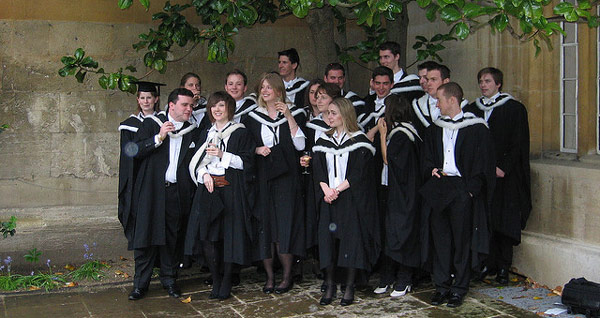
Oxford undergraduates

Editor's note: Riazat Butt is The Guardian's religious affairs correspondent. Listen to her programme on Radio 4 at 2000 tonight - SB.

Oxford University's admissions system is one of those subjects that really winds people up - and that's why I wanted to look at it. It enrages those who think the institution is predisposed towards fee-paying white toffs, creating a breed of graduates that go on to dominate public life (Exhibit A, Andrew Neil's Posh and Posher on BBC 2 last week). Or it puts people (usually those who have studied there) on the defensive, saying the university is elite rather than elitist and that bright students, whatever their background, have as much a stab at getting a place as any public school pupil.

There are also those who think there is too much emphasis/attention on Oxford and Cambridge and there are plenty of other universities providing a first-class excellent education and a much better social life to boot. The rows have been rumbling on for years and look unlikely to be resolved any time soon unless, you suspect, there are radical changes to Oxford's admissions policy. But rather than assemble a collection of well-meaning, well-informed talking heads referring to events that occurred 20 years ago (or more) I thought it would be more interesting, and human, to follow pupils through the application process and talk to the people deciding their fate.

Few teenagers will have had to big themselves up or experience such a competitive environment - more than 17,200 people chasing 3,200 places for 2011 entry - at their age and I wanted to know what they thought of the procedure. Is it fair? Does it work? So we follow four students from my hometown of Southampton - they don't fit an Oxford stereotype, sorry to disappoint - as they try to grab a slice of academic glory.

I expect people will disagree with the content - and the conclusion - of the programme. I will probably be accused of not going hard enough on the contentious issues of educational or racial diversity. But I started making this programme thinking people could get to Oxford on merit alone. Do I still think that? Yes, but there are caveats. Doing your homework - not just for your A-Levels - really helps. Know what you want to study, why and where otherwise there is little to distinguish you from everyone else who is applying. Did our Southampton students manage this? You'll have to listen tonight to find out.

Riazat Butt is religious affairs correspondent for the Guardian and presenter of How to get into Oxford

Rock Island Line

Blog comments are currently unavailable. Find out more.

Post categories: , , 

Steve BowbrickSteve Bowbrick13:04, Monday, 31 January 2011

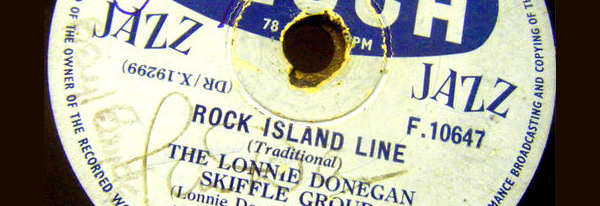
Rock Island Line label

Editor's note: I'm republishing this post from last year now because the programme has just been repeated and that's a good enough excuse to revive this excellent new recording of Skiffle classic 'Rock Island Line' - SB

The chorus goes like this:

The Rock Island Line is a mighty good road The Rock Island Line is the road to ride

The Rock Island Line is a mighty good road

If you want to ride you gotta ride it like you find it

Get your ticket at the station for the Rock Island Line

Darren Broome, producer of a lovely Radio 4 programme about Rock Island Line that went out this afternoon, has pulled off a small coup. He's secured a brand new recording of this keystone of folk, blues and rock 'n' roll music (and that strange hybrid we made our own called skiffle) from Pete Donegan (Lonnie's son) and the legendary Quarrymen, for you to listen to here. And, if you've got a web site of your own, you can click the 'embed' button, take the track away and embed it there.

Rock Island Line was first recorded on a prison farm in Arkansas in 1934. Lead Belly recorded it in the late thirties for Alan and John Lomax. In Britain, George Melly recorded the song in 1951 and Lonny Donegan and his Skiffle Group (Chris Barber on bass, Beryl Bryden on washboard) turned it into a hit in 1955.

And the rest is history.

In order to see this content you need to have both Javascript enabled and Flash installed. Visit BBC Webwise for full instructions

Steve Bowbrick is editor of the Radio 4 blog

A new schedule, The Archers and cuts

Blog comments are currently unavailable. Find out more.

Post categories: , , , , , 

Roger BoltonRoger Bolton13:55, Friday, 28 January 2011

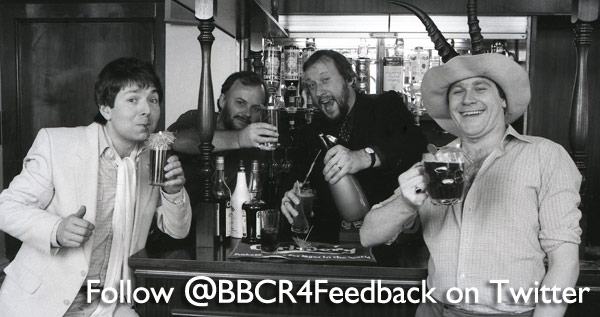
Graham Seed as Nigel Pargetter, John Peel, John Walters and Trevor Harrison as Eddie Grundy in 1984.

Editor's note - Feedback is back. And highlights of the first episode of the new series are a wide-ranging interview with Controller Gwyneth Williams and an encounter with Archers editor Vanessa Whitburn for two of her listeners - SB.

Hardly had Feedback gone off the air before Christmas then James Naughtie and Andrew Marr struggled to say "Jeremy Hunt the Culture Secretary" without lapsing into language more usually associated with Mellors, Lady Chatterley's lover. Trebles all round and the inevitable puns about Naughty Naughtie and Marred reporting.

Not much humour, intentional or otherwise in the first Feedback of the new run. Instead we travel with lovers of The Archers on their journey to Ambridge, still livid at the death of Nigel Pargetter and intent on resurrection or revenge. There is an emotional confrontation with Nigel's killer, Archers editor Vanessa Whitburn. Does she regret pushing him off the roof?

We also hear from the newish controller of Radio 4, Gwyneth Williams, who after four month in the job is now ready to announce some initial changes. Good news for fans of science and foreign affairs. Bad news for those of you who enjoy series like The Choice or On The Ropes.

Gwyneth's previous role was at the BBC World Service and I'll be talking to the director of the World Service, Peter Horrocks on next week's programme so if you have a question you want me to ask, do let me know.

So this week, there are two extracts from Feedback for you.

The first is that visit to Ambridge, the second the interview with Gwyneth Williams (by the way, rumours that she walks everywhere in bare feet as an economy measure are not true - in her office maybe but not in the Feedback studio when I interviewed her. And you'll be glad to know that biscuits and croissants she mentions in her blog post were not provided. Only water... from the tap.

In order to see this content you need to have both Javascript enabled and Flash installed. Visit BBC Webwise for full instructions

In order to see this content you need to have both Javascript enabled and Flash installed. Visit BBC Webwise for full instructions

Roger Bolton is presenter of Feedback

  • Listen again to this week's Feedback, produced by Karen Pirie, get in touch with Feedback, find out how to join the listener panel or subscribe to the podcast on the Feedback web page.
  • Feedback is on Twitter. Follow @BBCR4Feedback.
  • Gwyneth Williams blogged about her planned schedule changes earlier this week and Vanessa wrote about reactions to the 60th anniversary episode on the Archers blog.
  • Finding pictures to illustrate blog posts about The Archers is getting harder. This one shows the visit of DJ John Peel and his producer John Walters to the programme in 1984. On the left is Graham Seed playing Nigel and on the right, Trevor Harrison as Eddie Grundy.

'Curating' The Secret History of Social Networking

Blog comments are currently unavailable. Find out more.

Post categories: , , 

Steve BowbrickSteve Bowbrick10:03, Thursday, 27 January 2011

The Mick Jones Public Lending Library, under The Westway, 2009.

Curation is going to be one of the big words of 2011. Everyone's at it. My Saturday newspaper offers to 'curate my weekend', chefs 'curate lunch'. Every time we share a link or a music track with friends we're 'curating the web'. Real curators, of course, will object to such imprecise use of the term but it does seem to be useful in describing the pulling together of links, reviews, reactions and background that we often do here on the BBC blogs.

Jem Stone, whose day job is running social media for BBC Radio, has been experimenting with one of the emerging crop of 'curation tools' (this one's called Storify, there are several others. We'll try them all) so I've asked him to assemble a page of useful context for Rory Cellan-Jones' fascinating 'The Secret History of Social Networking'. Let us know what you think. A useful addition to the broadcast output? Or another distraction?

The application is a pre-release (beta) version and you may find some glitches in the presentation of links etc. so please leave a comment if you spot one.

Steve Bowbrick is editor of the Radio 4 blog

  • Listen to the first episode of The Secret History of Social Networking on the Radio 4 web site.
  • The picture shows the Mick Jones public lending library, an exhibition of pop cultural ephemera curated by the Clash guitarist in 2009.

Some changes to the Radio 4 schedule

Blog comments are currently unavailable. Find out more.

Post categories: , , , 

Gwyneth WilliamsGwyneth Williams06:55, Monday, 24 January 2011

Noctilucent clouds, photographed by John Rownlands, a finalist in BBC Radio 4's 'So You Want to be a Scientist' project.

I was promised freshly-brewed coffee and croissants at the end of their last run but when I went to Feedback to talk to R4 listeners - alas - I got a lovely welcome but just the usual BBC water... I did, however, get a chance to answer some listeners' questions and to put some of my early thoughts about Radio 4 to Roger Bolton. I was also interviewed by Ben Dowell from Media Guardian and his article is published today.

In my first three months as Controller of Radio 4 I have been travelling around meeting producers - and I have still to meet many, both in-house and in the independent sector. I have been overwhelmed by the commitment and quality that I encounter from programme-makers everywhere so I am determined to try and simplify our commissioning processes. Radio 4 has good audience figures and rings with intellectual rigour so if we cannot take a few creative risks now, when can we? In terms of strategic direction, I want to emphasise Radio 4's more forward-looking, modern side to complement our deserved reputation for history coverage and I am keen to encourage a more international sensibility across all programmes- I don't mean more foreign programmes but a subtle understanding that what happens in the world affects our local decisions and everyday lives, in culture, economics, health and most things.

From October I plan to launch a new 9 a.m. science programme - not about the ideas of science which Melvyn Bragg covers regularly in the brilliant In Our Time - but about science and working scientists, about the scientific method, across a range of subjects: physics, biology, engineering, technology, natural history. The Science Department will lead the work on developing this and I have been talking to various people, among them Jim Al-Khalili, a scientist and an experienced broadcaster, about possibly presenting it. I also want to broadcast a fifteen-minute interview strand in which some of our best journalists can be led by their passions and interests in choosing subject matter and interviewees. I hope to entice Lyse Doucet, Robert Peston, Bridget Kendall, John Humphrys, Lucy Kellaway and others to give it a try. I have been talking to the poet Ruth Padel about the possibility of presiding over a series of poetry masterclasses that will travel around Britain to tap into the current explosion of interest in poetry. And there will be new comedy on Sunday evening to cheer us at the end of the weekend and build on Radio 4's record of championing talent. Look out too for new satire from Rory Bremner.

This does not come without some sadness: Taking a Stand, On the Ropes, The Choice and Between Ourselves will go from October to make way for science. I launched Taking a Stand myself some twelve years ago with its talented producer. The programme was award-winning; I have one, for an interview Fergal Keane did with Rufus May, that I have kept with me and is now hanging on the wall of my new office in Broadcasting House. I have not made this change without a lot of thought and I can assure you that, in different ways, these much-loved presenters will still grace the airwaves of Radio 4.

Gwyneth Williams is Controller of BBC Radio 4 and Radio 7

Adapting Balzac for the Friday Play

Blog comments are currently unavailable. Find out more.

Post categories: , , , , , 

Adrian PenkethAdrian Penketh10:07, Friday, 21 January 2011

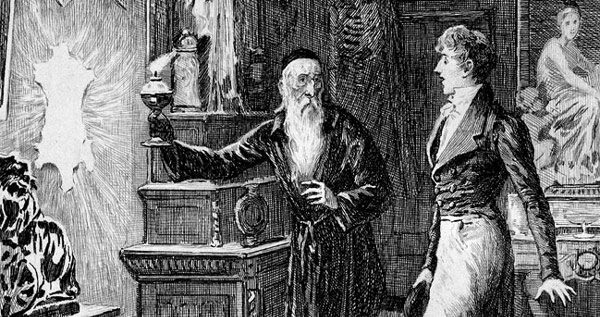
Detail from an illustration on the title page of Honoré de Balzac's Le Peu de Chagrin (1831).

Editor's note: Adrian Penketh is an actor and playwright. He's adapted a novel by Honoré de Balzac for The Friday Play - SB.

In the introductory note to my first copy of The Wild Ass's Skin (La Peau de Chagrin), the word 'allegorical' was used in the first paragraph. It's a welcome word for a writer searching for an adaptation, because, crudely speaking, it suggests that the physical setting, while providing a prism, is not the be-all-and-end-all. In this case, 1830s Paris was the prism through which a young, uncompromising Honoré de Balzac was able to produce one of the greatest antidotes to human self-adoration that exists in literature.

The Wild Ass's Skin took me back to playing those old adventure books, plotting my map, encountering strange characters, unreal settings. It has passages in Sanskrit, strange wiggly lines mid sentence. What is this thing? Is he laughing at us? Then it sideswipes you with its astonishing detail, slays you with its arid humour. It drips with the hot political debates of the era, and contains unashamed new-fangled scientific ideas that even Balzac himself renounced later in his career. It was precisely this experimental spirit which captured my imagination. It seemed a shame to allow our lack of knowledge on the subject of Charles the Tenth of France get in the way of this. After all, there's that word: 'allegorical'.

And then there's the sublimely simple hook: The Skin. A concept which, in varying forms, has been well used since, from Dorian Gray to Aladdin. A concept that touches something in every person who's ever asked a friend what they would do if time stood still, or if they found a million pounds in a suitcase... The Skin would therefore be the anchor. If I didn't deviate from that, and didn't take my eye off the clear modern parallels, I could depart from the book while still staying faithful to its ideology.

And the parallels to today are potent: we have the fall of a massive institution; a political shift accompanied by the inevitable apathy and cynicism; and a philosophical choice: serve yourself, for spectacular but short term gain, or everyone else, for the good of the world. For the similarities between the 19th century's aristocracy and our own, the investment bankers, you only have to look at the splendour in which they both lived and for which they were once admired, and the subsequent disdain and revulsion to which they were subjected, more, probably, to deflect our own corruption than theirs.

The first idea was kind of crude: In the book, Raphael spins his last Napoleon on the roulette wheel before leaving to throw himself in the Seine. In the play, Rupert throws his 'last' fifty quid at a stripper before heading off to the Thames. It helped to see these two men almost as brothers. The key difference was that in the book Raphael is broke, in the play Rupert decides to give his money away. Raphael believes he is faceless because he has no money; Rupert believes that his money has made him faceless, and passes on his whole being, contained inside a wallet, to a perfect stranger, heightening Balzac's notion that if you're looking for happiness, your bank account is not an ideal place to start.

The biggest decision I made early was to use no narration, thus making it impossible to get too ponderous. My personal tastes, being more anchored in the economy of 20th century dialogue, allowed me to make pretty sweeping, unapologetic changes relatively free from literary guilt, the most dramatic of which being the whole of Part Two, in which Raphael details his love for and betrayal by "The woman without a heart" - Foedora. In the book, Foedora represents High Society turning its back on Raphael. In the play, she is the world of Finance itself, seducing and rejecting Rupert in equal measure. And in any case, I decided one love story was enough for a 57-minute play.

Balzac's book was opulent and full of colour; my play is claustrophobic and dark; his book targeted the wealthy classes, mine attempts to reflect today's scattergun approach to moral responsibility. I also have a sneaking suspicion I've been more generous in my helpings of hope than Balzac would have approved of, particularly perhaps with regard to the end. The most famous line of the book reads something like: "All the happiness of the world can be contained in one hour of love". But where Balzac turns this idea on its head by bringing the book to a literal climax in a rushed and passionate sex scene, I chose the other kind of love. Besides, I could only think of one way Balzac's ending could be done, and who needs to hear that coming out the radio?

Adrian Penketh adapted The Wild Ass's Skin for BBC Radio 4

Give us one of the old tunes

Blog comments are currently unavailable. Find out more.

Post categories: , , , 

Deborah WainDeborah Wain10:00, Thursday, 20 January 2011

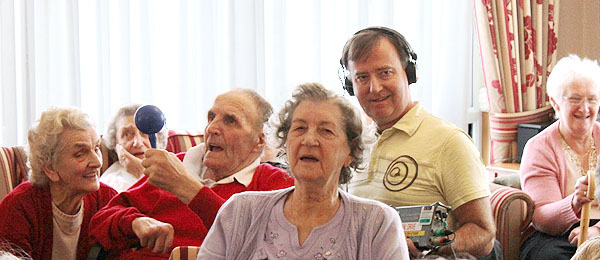
Recording a concert with a group of people with dementia at a care home

Editor's note: Deborah Wain is the writer of today's Afternoon Play 'Notes To Self', a drama about Alzheimer's disease, based on real experiences and interwoven with recordings of music sessions carried out in care homes and day centres - SB.

A heartfelt blast of a chorus or just a brief flickering of fingers and a smile from someone seemingly lost in the mist of their illness.

The power of music to bring joy and relief to people with dementia is truly amazing and, even after witnessing its effects many times now, I'm still deeply moved and inspired by it.

Patients who have been unable to speak for a long time can often find words through singing. Their abilities may have otherwise shut down but they can sometimes 'come back to life' through music.

In simple terms, the brain has two fundamental types of memory - factual, using logic and reason, and emotional - and the area of the brain which stores the latter remains undamaged for far longer when it's attacked by Alzheimer's. It makes sense that people even in advanced stages of the illness can still respond to music given its link to feelings throughout our lives.

I was a guest at a number of music sessions run in care settings by South Yorkshire-based charity Lost Chord, who along with the Alzheimer's Society Doncaster and Rotherham, helped with research for my play Notes To Self.

Lost Chord is unique in that it uses highly-trained, professional instrumentalists. Regular performances in the same venues and a tactile approach from musicians and volunteers yield often dramatic results. Memories are unlocked, personalities expressed and, importantly, connections made between loved ones. And all in under an hour's performance!

I wanted to write a piece of drama that attempted to explore Alzheimer's disease from the point of view of the person affected, focusing on music as a link between past and present, and reality and perceived reality.

The resultant piece Notes To Self is fictional but inspired by, and based on, contributions from participants in the project.

Throughout the process I interviewed people able to talk about their experiences, as well as spending time with those who found it much more difficult to communicate. I also met relatives, carers and experts from the society.

A team from Radio 4, led by producer Nadia Molinari, later visited Doncaster and recorded Lost Chord sessions at the Richmond Care Home, Sprotbrough, and the Linney Centre, Balby.

Once the drama had been recorded at the BBC in Manchester, with a wonderful cast headed up by Linda Bassett, the actuality was woven in.

A few people have questioned whether the loss of visual references might dilute the impact of the piece's documentary elements, but I feel radio beautifully conveys the alchemy of the sessions by revealing small, individual triumphs over what is so clearly a cruel illness.

Deborah Wain is writer of Notes To Self

Beyond Belief - dealing with serious issues in a serious way

Blog comments are currently unavailable. Find out more.

Post categories: , , 

Ernie ReaErnie Rea13:34, Wednesday, 19 January 2011

Religious graffiti in London.

I gave up my day job as Head of Religious Broadcasting at the Beeb in January 2001 and began presenting Beyond Belief in January 2002. It was just three months after 9/11 and the events of that day gave it a context: All of a sudden everyone was interested in world religions. Britain woke up to the fact that most of the world takes faith seriously, sometimes deadly seriously.

Even now, nearly nine years on, I have a spring in my step on the morning of a recording because I know I am likely to learn something new. The best programmes are nearly always the ones that hit a tender spot. How does Islam treat women? Why is the Yemen such a hotspot? In a programme on suicide, from the current series, we ask "do people have the right to take their own life?"

The best contributors are the ones who have strong convictions - most of my guests do, because their faith, or lack of it, is at the heart of who they are - but they are prepared to engage with opposing views. I'm very proud of the fact that no-one has ever completely lost it on Beyond Belief.

The big letdown occurs when a contributor expresses strong convictions on the phone and then ducks away when we get on air - and yes it happens quite often! Nothing annoys me more. Some of our contributors have a natural tendency to glance over their shoulders at their constituencies to try to make sure they are following a party line. The opposite can sometimes occur too: guests who allow fellow panellists to make their points unchallenged. Sometimes, once in the studio, contributors forget that they represent a constituency of the audience, and, in a bid to be polite, fail to stand up to opposing views. In such cases we have been known to stop the recording and remind all the gusts of their role and the importance of their contribution to the programme.

Religion is by nature contentious. As far as I'm concerned no series is complete unless we've annoyed a few people by raising sensitive subjects which they would rather keep hidden. People who agree to take part respect the programme; they understand that we are trying to deal with serious issues in a serious way.

I've been very lucky in my producers, all of them women. We sit down at the start of a run and draw up a potential list of subjects. It always changes because the programme reacts to current events. I like to think that Beyond Belief tackles subjects that no other programme on Radio 4 addresses. When we started out, Helen Boaden who was then Controller of Radio 4, said she thought that we would have exhausted the subject matter after one series. She was gracious enough to admit that she was wrong. 240 programmes on, we're still going strong.

Ernie Rea is presenter of Beyond Belief

Cocktails, nuts and anachronisms

Blog comments are currently unavailable. Find out more.

Post categories: , 

Ed ReardonEd Reardon10:19, Monday, 17 January 2011

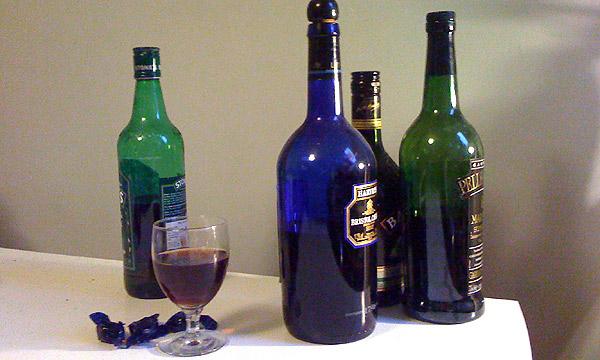
Assorted bottles

Editor's note: the final instalment of Ed Reardon's midwinter diary puts the final nail in the coffin of the season of goodwill - SB.

People sometimes say to me "What must it be like being you?" - most recently at my local greengrocer's, when I tried to take back and exchange a dozen or so almonds for some that might prove to be more crackable. In the past, when I had a family, a house and a garden, a regular mid-January ritual would see the paterfamilias taking the offending nuts out to the vice in the shed.

The successful results would be consumed with the drinks left over from Christmas, the remains of bottles of port, whisky, madeira etc adding up to a not unacceptable cocktail; good and warming too, given that by that time said paterfamilias found himself spending the night in the shed more often than not.

But now there's just me and my cat in Berkhamsted...and, in answer to the question, being Ed Reardon is not bad at all. At this time of year I take a few minutes to (as my late Mother termed it, generally after the school report arrived) 'have a meeting with myself'. This is not the same as making fatuous and frankly unenforceable New Year Resolutions about drinking and smoking less - life's too short. It's more a kind of stock-taking, though undertaken in my own time and not the infuriating sort carried out by a dozen or so spotty staff at the Co-Op, leaving one person on the till to deal with a queue of thirty, some of us with £1.50 dividend vouchers burning holes in our pockets.

So what do I see as I look in the shaving mirror, in the bit that's not obscured by Aubrey Beardsley nymphs round the edges, very popular in the 70s and salvaged from the shed mentioned earlier? Once again, I see a survivor.

True, the year just gone brought several professional setbacks on the authorship front - Armando Iannucci's Carpathian Walks disappointingly underperformed, the one which would have taken the book off the supermarket shelves clearly being a walk too far.

A similar fate befell Getting My Life Back - Tony Hayward's BP Story, though I understand several thousand unsold copies were shipped out to the Gulf of Mexico to help plug the leak and I'd already been paid my £1500 ghost-writing fee up front, so no real harm done.

But on the credit side I still have half a box of Quality Street left, my reward from BerKebabs in Station Road for being their second-best customer in 2010 (for those interested in statistics, Feedback's Roger Bolton waltzed off with the first-prize tin of Celebrations for the third year running, but after all it's the taking part that counts). For a half-box full person like myself that may be deemed a success, or 'a result' as the local vicar once described the Resurrection in his Easter newsletter.

Only this morning the postman added to my good fortune by leaving half a dozen intertwined red rubber bands on my doorstep, solving the immediate crisis with the toilet cistern. Moreover according to my agents' website it's only three weeks before they're open for business again, earlier possibly if the Snow Reports from Verbier are anything to go by.

Waiting on Ping's desk for her return will be a brand-new 90-minute TV script about the writing of The Canterbury Tales. The success of Downton Abbey and the BBC4 'biopics' has taught me that only a pedant worries about historical accuracy and anachronisms these days, so my dialogue is replete with 'Don't go there, Chaucer', 'That Wife of Bath is well past her sell-by date', 'The Miller's in a good place right now' and 'Patience is Griselda's default setting'. What's more it only took a day and a half to bash out.

And I could still be around to see it produced, as now I'm assured I may live to be 100 according to no less an authority than Dame Joan Bakewell (once dubbed the Thinking Man's crumpet, now - without wishing to be unkind - more of a Thinking Man's rusk). So contrary to expectations the future dawns bright and clear and long.

Although judging from the way the BBC has been playing fast and loose with much-loved characters in The Archers, the reality is that the 60th anniversary edition of Ed Reardon's Week might well find the decomposing body of its eponymous hero slumped inside the front door, with a suspiciously well-fed Elgar purring contentedly at the remains of my feet.

Oh, well.

Ed Reardon is an author, pipe smoker, consummate fare-dodger and master of the abusive e-mail

King James Bible podcasts

Blog comments are currently unavailable. Find out more.

Post categories: , , , , 

Paul SargeantPaul Sargeant18:24, Tuesday, 11 January 2011

KIng James Bible frontispiece

How much of King James Bible Day did you catch on Sunday? It was hard to miss with 28 readings across a single day and a star-studded cast: Samuel West, Emilia Fox, Hugh Bonneville, Toby Stephens, Henry Goodman, Niamh Cusack, Rory Kinnear, Miriam Margolyes and others.

There were some interesting perspectives on those famous stories too: Simon Schama and David Lodge on Genesis; Howard Brenton picking apart the parablesof David, Solomon and Job; and the always provocative Will Self musing on the final days of Jesus and the Resurrection.

Altogether it was a fairly epic celebration of the 400th anniversary of the publication of the King James Version and it's all available to download for free until Sunday.

It was certainly the biggest chunk of bible that I've heard since school. Except that, like everyone, I've actually been getting little chunks of bible wisdom on a regular basis because the words of the King James Bible have become 'all things to all men'. (1 Corinthians 9.22)

That was made pretty clear in the third of James Naughtie's documentaries on the history of the King James last week, and it's what the short season of programmes was intended to celebrate: the book's enormous influence on the English language.

As Gordon Campbell, Professor of Renaissance Studies at the University of Leicester, said:

The bible that they heard everyday worked itself into the language and indeed those biblical contexts were often forgotten. So if we say something like 'fly in the ointment', or 'go the second mile', or 'my boss is a thorn in the flesh',... no-one would say: "Ah yes that's a biblical allusion," because those origins have been lost.

All those readings of the King James Bible, in all those churches, over all those centuries have embedded the words and phrases in our linguistic DNA.

The experts in Wednesday's documentary were discussing those phrases in a pub, and we've been tweeting a few more that you might have heard in your local:

Say the times they be a-changing / Though the blind lead the blind - Aerosmith (Matthew 15.14)


An eye for an eye / And a tooth for a tooth / And anyway I told the truth - Nick Cave (Matthew 5.38)


Your spirit's wilting and your flesh is weak - The Human League (Matthew 26.41)

It was a lot of fun tracking down some of the songwriters who have put a bit of bible in their boogie - and some authors who have, directly or indirectly, drawn on words from the King James in their own novels.

The linguist David Crystal, in his book Begat, identifies 257 phrases popularised by the King James Bible that we are still using today - far more than any other book.

I'm sure we missed out some famous ones and didn't even get to use my own favourite: Freddie Mercury repeating 'Another one bites the dust' 16 times in the same song (sadly the King James quotation is 'lick the dust', though the modern variation of 'bite' probably does derive from it.)

All in all, looking at the way its rhythms and phrases have become woven into our everyday language, it's hard not to agree with the sentiment expressed in Matthew 24.35: "My words shall not pass away."

Guest editors, online poker and 'talkdownmanship'

Blog comments are currently unavailable. Find out more.

Post categories: , 

Ed ReardonEd Reardon11:04, Monday, 10 January 2011

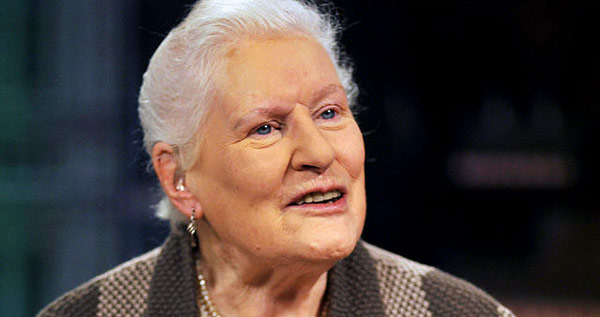
Literary editor and memoirist Diana Athill.

Editor's note: part three of Ed Reardon's midwinter diary, which began in the Xmas party season, coincides happily with the first episode of his new series - SB.

I suppose it was around the end of last week that I was forced to bow to the inevitable and accept that, once again, Ed Reardon had not made the short-list to be Guest Editor of the Today programme. This remains a barely comprehensible snub, as I'm one of its most assiduous correspondents, regularly bringing to the producers' attention the use of split infinitives, sloppy English that I would term Estuary but for the certainty that none of its 12-year old exponents would understand the meaning of the word, and duff racing tips.

My hopes of landing a Guest Editorship were briefly raised with the announcement that during the Christmas period the BBC was going for the quality end of the market by hiring the Pope to do Thought for the Day (and the actual Pope to boot - when I first heard the news I assumed it was just another way of referring to that Pope Joan de nos jours, the ubiquitous Ms Atkins).

But this was clearly a temporary aberration on the Governors' part, not so much thinking outside the box as thinking outside a wine-box, or three, after the latest BBC Council meeting. Because sure enough the final selection was the usual trendy crew of actors, installation artists and satirists, most of whom wouldn't even normally be awake when the programme finished, let alone up.

So this is to give a sample of what an Ed Reardon Editorship of Today might include. Regarding the structure of the programme itself, there would be no place for self-satisfied CEOs polluting the Business News with adverts for how well their companies are doing in the High Street (or off a barrow in Brick Lane to judge from most of their accents).

I have no objection in principle to the concept of product placement - keen-eared listeners may recall the reference to Blakeys Boot Protectors in my radio play about the digging of the Blisworth Tunnel, the fruits of which I'm still enjoying ten years later - as long as it satisfies the inner life of man and not just the cravings of Mammon. In which former category I would include the imminent publication of Ed Reardon's Week Series 4 as an Audiobook, mentioning it regularly on the half-hour, after the Today sports bulletins. The knock-on effect from all the Ashes euphoria could only prove beneficial to sales.

As with Guest Editor Sam Taylor-Wood's item on home birthing or Diana Athill on infidelity, various Ed Reardon hobby-horses would also be indulged, such as replacing the daunting stairs up to Berkhamsted station platform with an escalator - or better still an airport-style moving pedestrian walkway, as escalators can be hazardous to those whose trouser-bottoms and shoelaces are not in the first flush of youth.

For one of my Outside Broadcasts I would try and get to the bottom of where so-called Customer Services departments are taught their communication skills. This morning I happened to forget the password which gains me entry to an online poker club; a new one was issued via email, together with the infuriating message 'Hey don't worry dude - we all do it!' This is in the same vein as otherwise serious guarantees or contracts of service which are invariably prefaced 'The Small Printy Stuff' or 'Yawn! Sorry, gotta read it though!'

It would be interesting to find out if there exists a Stephen Potter-type School of TalkDownmanship where this sort of thing originates - quite possibly in Yeovil, though I suspect I wouldn't have to venture far beyond wherever it is Richard Branson hangs his baseball hat these days.

I would also visit the offices of a national newspaper, probably The Guardian as it's only a short walk from Euston, and stand over one of its television 'critics' as they went about their business. This would satisfy a long-held belief that TV reviewing is palmed off on the nearest person not doing anything else that day, but as a proper writer I'd also help them eradicate some of the grisly solecisms to which the job falls prey, such as 'Remember you read it here first', 'Despite or possibly because of ' and - a particular bugbear this - 'Actually I made that bit up', the last refuge of the facetious hack.

And having Ed Reardon breathing down their necks might stamp out the self-regarding habit of TV reviewers mentioning their girl- or boyfriends and what they think about the programme in question, as if anybody cared. Mawkish references to critics' other halves have no place in decent journalism: why, even my cat Elgar paws the G2 section in knowledgeable despair when I put it on the floor under his bowl, bless him.

There - that's just off the top of my head and it isn't even ten o'clock yet.

Ed Reardon is an author, pipe smoker, consummate fare-dodger and master of the abusive e-mail

From the Archers blog - The Archers editor on the 60th anniversary

Post categories: , , , 

Vanessa WhitburnVanessa Whitburn09:21, Monday, 10 January 2011

Nigel and Helen

A week on from marking our 60th anniversary, and it's clear it's not just the residents of Ambridge who are talking about recent events in Borsetshire.

I have a two inch high pile of press cuttings before me. Many celebrate the amazing achievement of a drama having reached its diamond jubilee, making it currently the longest running soap in the world. Others look back at the storylines that have gripped Archers fans over the last 60 years. Beside that, a report showing hundreds of listener comments about the anniversary episode. And then one of the team pops in to tell me that during the anniversary episode on 2 January, The Archers and 'SATTC' was the most discussed subject on Twitter in the world.

Read the rest of Vanessa's post and leave a comment on the Archers blog...

Standing on the shoulders - the Radio 4 Christmas Appeal passes £1 Million

Blog comments are currently unavailable. Find out more.

Post categories: , , , , , , 

Sally FlatmanSally Flatman08:16, Sunday, 9 January 2011

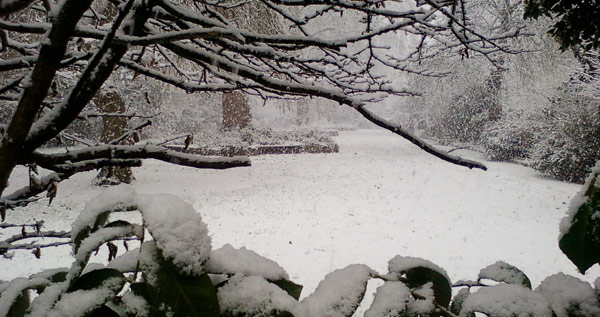
Editor's note. We've published several photographs from the homeless photographers group at St Martin-in-the-Fields since the Christmas Appeal started. This snowy scene by Blodeuwed really emphasises how hard this Winter has been for homeless people. If you haven't made a donation yet, you can do so on the Radio 4 web site - SB.

One million pounds for the Radio 4 Christmas Appeal. Yes, you read that right: one million pounds for the Christmas Appeal and we are still pinching ourselves!

Last year we reached almost £900,000 - that was remarkable but we know that appeals don't have a right to increase year-on-year and life is tough for many people at the moment.

Gwyneth Williams, Controller of Radio 4 says:

This is a wonderful result, particularly given the difficult economic times. Evidence, once again, of the generous kindness of Radio 4 listeners and the importance of the work being done at St Martin-in-the-Fields for vulnerable people in London and across the UK.

The one million is, of course, made up of many thousands of donations - including one gift of £2 given by someone who is currently homeless.

This appeal clearly has a very special place in the hearts of many of you - we know that, not just because we've reached a million pounds but also because of the letters you've sent in with your donations. One lady sent a cheque and said she had been giving 'ever since Dick Sheppard', the first vicar of St Martin's to give a Christmas Appeal.

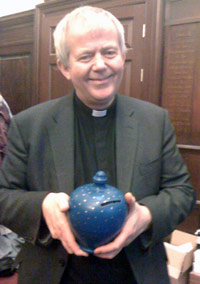
The Reverend Nick Holtam with a pot of coins donated to the Radio 4 Christmas Appeal

Rev Nick Holtam with the pot of coins

This small but very heavy pot held by a smiling Rev Nicholas Holtam, the current vicar, also holds a lovely story. It is jammed full of small change! A listener heard the 2009 Appeal and decided to put her coppers into this pot during the year to give to the 2010 Christmas Appeal. When it came to delivering the money it was so heavy, her husband had to drive her and the pot to St Martins! Thank you.

I am sure that the cold weather in December made all of us acutely aware of how dreadful it must be to have no home in such weather. One listener wrote: "I have always been a bit judgemental with regard to the homeless but this cold snap has made me grateful for my warm and comfortable home. I cannot imagine anything worse than sleeping rough just now."

For those who like numbers Craig Norman who administers the Christmas Appeal tells me that it hit the £10,000 mark in 1939. It hit £100,000 in 1982.....and in 2010 it has achieved £1,000,000 - it truly is a landmark year. But as the Rev Nick Holtam says:

Austen Williams, who was my predecessor but one, died on the day of the Christmas Appeal 9 years ago and he heard the appeal and said one day they're going to reach a million pounds and actually we're standing on the shoulders of lots of people who've done this before and we've reached a million pounds - it is extraordinary.

Thank you.

Sally Flatman is producer of The Radio 4 Appeal

  • Donations to the appeal are still coming in. Make yours on the Radio 4 web site.
  • The picture was taken in Leinster Square, Bayswater in West London by Blodeuwed, a member of the homeless photographers group at The Connection at St Martin-in-the-Fields. More pictures from the group are on Flickr.
  • The BBC Radio 4 Appeal has a Facebook page. Visit the page and click the 'Like' button for updates on the weekly appeal which raised a total of £1.5M for 52 charities last year.

Mondays don't have to be miserable any more

Blog comments are currently unavailable. Find out more.

Post categories: , 

Leigh AspinLeigh Aspin18:10, Friday, 7 January 2011

Editor's note: in the video, Mr Mark Thomas explains why you might want to download a new Radio 4 comedy podcast - SB.

A new (free) Radio 4 comedy podcast is here to start your week with a laugh. So download it for free and it's yours to keep and listen to on the move.

So why have we done it this way? Our existing Friday Night Comedy podcast (featuring The News Quiz or The Now Show each week) is downloaded over a million times every month and consistently occupies one of the top slots in the iTunes podcast chart. Audience feedback has told us that you'd like more comedy to download.

For rights reasons, we're not able to offer all of our comedy for download. But we've reached an agreement to offer single episodes from a number of Radio 4 comedies. We trialled this service over the summer on the Friday Night podcast feed (while The Now Show and News Quiz were on their summer break) and it was well received. So here's your chance to download a wider selection of Radio 4's comedy and listen at your leisure.

Here's the schedule for the next few months:

  • 10 Jan: Mark Thomas: The Manifesto
  • 17 Jan: Ed Reardon's Week
  • 24 Jan: Rudy's Rare Records
  • 31 Jan: Showstoppers
  • 7 Feb: Tom Wrigglesworth's Open Letters
  • 14 Feb: Bleak Expectations
  • 21 Feb: It's Your Round
  • 28 Feb: Brian Gulliver's Travels
  • 7 Mar: I've Never Seen Star Wars
  • 14 Mar: It is Rocket Science
  • 21 Mar: Just A Minute
  • 28 Mar: The Simon Day Show

Leigh Aspin is Interactive Editor at BBC Radio 4

Calculating the height of Loxley Hall

Blog comments are currently unavailable. Find out more.

Post categories: , , , , 

Richard KnightRichard Knight15:37, Friday, 7 January 2011

Calculating the height of Loxley Hall.

In order to see this content you need to have both Javascript enabled and Flash installed. Visit BBC Webwise for full instructions

Oh dear. Now we've done it.

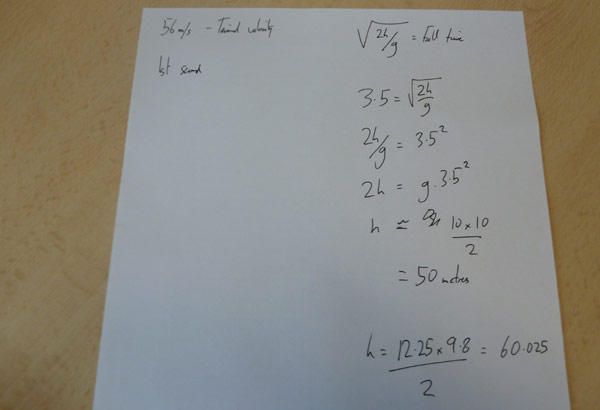
In today's More or Less we calculated the height of Lower Loxley Hall - the ancestral home of the late Nigel Pargetter in The Archers - by timing the length of Nigel's scream as he fell from its roof. The answer: over 60 metres. That's the height of York Minster, or about 20 storeys. Quite a pile!

Here's how we worked it out. Nigel's flailing form would have accelerated at almost 10 metres per second per second. He'd have started at a speed of zero and finished the first second at a speed of 10 metres per second - covering about 5 metres.

During the next second he'd have fallen 15 metres. During the third second, 25 metres. We took the liberty of ignoring air resistance because terminal velocity - the speed at which air resistance balances the force of gravity - is over 55 metres a second. Within minutes of broadcasting the item, however, the More or Less inbox was inundated with comments like this:

Your facile calculation did not take into account any time that Nigel may have spent sliding slowly down the icy roof.

Or this:

He could have started screaming as he began sliding towards the edge of the roof, realising he was doomed. And could his scream not have continued for a short while after hitting the ground? If his death was from internal bleeding leading to cardiac arrest, this would have been very possible.

Well. Maybe. The presenter Tim Harford and I did discuss these possibilities before scripting the item. But we decided that had Nigel slid down the roof, we would have heard him do so. We also questioned whether he would really have started to scream before falling off. Wouldn't he have been too busy trying not to fall off?

But as I write, the flood of emails continues. Clearly, we will have to re-visit our calculations next week. Tune in.

Richard Knight is Series Producer of More or Less

The shipping forecast vs The Ashes on Radio 4 LW

Post categories: , , , , , 

Denis NowlanDenis Nowlan11:32, Friday, 7 January 2011

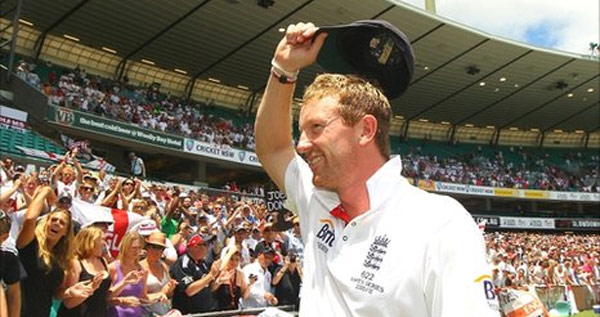
England's Ashes victory in Australia in 2011

In order to see this content you need to have both Javascript enabled and Flash installed. Visit BBC Webwise for full instructions

We had long discussion yesterday, considering various tactics for avoiding a possible clash between the late night Shipping Forecast and the end of the last Test Match. Could we only carry it on FM and DAB? That wouldn't work for mariners far from land as they rely on the carrying power of Long Wave...

Read the rest of Denis Nowlan's post and leave comments on the BBC Radio blog.

More from this blog...

Categories

These are some of the popular topics this blog covers.