Archives for February 2010

A History of the World arrives at 500 BC... and takes a break

Blog comments are currently unavailable. Find out more.

Post categories: , , , 

Mark DamazerMark Damazer16:14, Tuesday, 23 February 2010

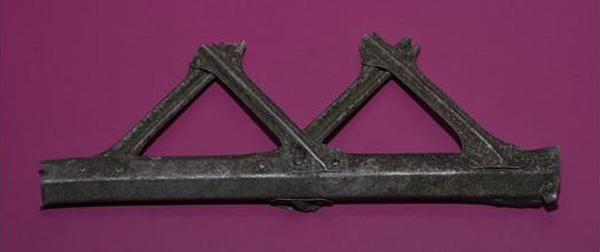
zeppelin fragment

So the first tranche of A History of The World has come to an end - and very, very good it has been. We leave part one with a Chinese Bell.

There won't be unanimous approval because too many people are listening to it for that - but the evidence is that those who do listen broadly love it.

I have written before about the displacement of Book of The Week - and that comes back next week with Patti Smith. Quite a contrast to Neil MacGregor. We have plenty of room for both.

The Radio 4 series is only part of the story of A History of The World (AHOW). The project - a full partnership between the British Museum and the BBC - encompasses a very significant website, hundreds of museums around the UK, scores of the BBC's local radio (and television) stations, thousands of schools, BBC children's TV (see the brilliant series 'Relic'), and the World Service.

Have a look at the web site. It has pictures of the Radio 4 objects from the series - but many more objects that belong to museums across the country that have global connections - and more from the audience too. Do join the fray.

We will be back with new objects for AHOW on Radio 4 in May. I want the memory of this series, and the entire project, to last decades. It deserves to.

We are going to run each of the six weeks of AHOW that have been transmitted thus far in six separate one-hour omnibus editions on Friday nights at 2100 - beginning on Friday March 5th. And over Easter BBC 1's 'Inside Out' will have stories about objects from your area.

Mark Damazer is Controller of BBC Radio 4

  • A History of the World has a very interesting blog of its own and a page on Facebook. Become a fan to add the daily object to your newsfeed.
  • If you're on Twitter, use the hashtag #AHOW when you're talking about A History of the World.
  • The AHOW podcast will be available online for a full year and you can download individual programmes in MP3 format from object pages like this one, for today's Chinese bell.
  • The picture shows a fragment from Zeppelin airship L33 which came down near Colchester in 1916. It was added to the collection by Michael Hunnable.
  • A History of the World was one of the topics discussed on Radio 4's Feedback today. Roger Bolton interviewed editor Robert Ketteridge about the decision to move Book of the Week, running the programme three times per day, the programme intros and the theme music (there's also a fascinating post on the AHOW blog about the theme music).

David Cameron on Woman's Hour

Blog comments are currently unavailable. Find out more.

Post categories: , , , , , 

Steve BowbrickSteve Bowbrick17:44, Thursday, 18 February 2010

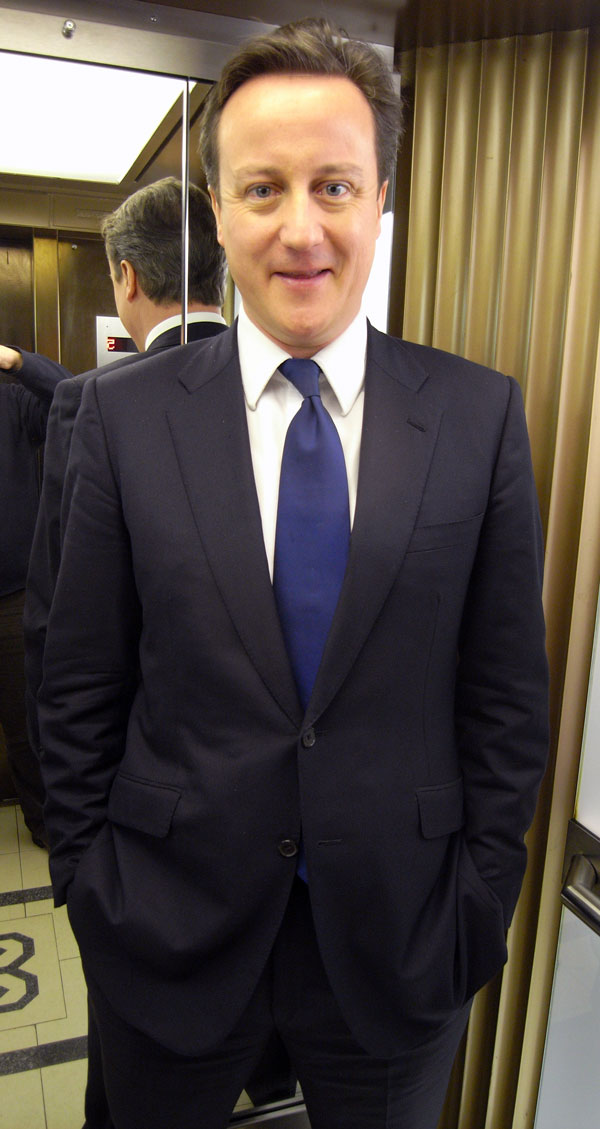
David Cameron in a BH lift

Leader of the opposition David Cameron came into Broadcasting House this morning to talk to Jenni Murray. I headed over to meet him as he entered the building and got a few photographs of the big event. The other pictures are on Flickr and you can listen to the interview - the second of the programme's interviews with the main party leaders - here for the next seven days. Gordon Brown is next.

Steve Bowbrick is editor of the Radio 4 blog

You've got spram!

Blog comments are currently unavailable. Find out more.

Post categories: , , , , , 

Neil KoenigNeil Koenig19:00, Thursday, 11 February 2010

Shelf of spam

Here's a puzzle - and to help you solve it, a clue. The Bottom Line is a conversation show where top chief executives and entrepreneurs have a lively debate about business topics with Evan Davis. Now, can you spot the odd-one-out in the following list?

  1. A hypnotist
  2. A vegetarian
  3. An expert on eco-friendly Christmas decorations
  4. The chief executive of the world's largest oil company


The answer is 4 - the only one not to have been proposed (so far) as a contributor by their public relations agency.

Here's some more potential contributors that PRs have suggested: an expert on wine-tasting; a singer-songwriter, who'd also like to perform on the show; a medical expert on 'summer madness'; a documentary film director; a psychologist who can talk about playgrounds; a diet expert; a band who've released their third single; a dentist... There are plenty more examples.

Might one end up thinking that the PR industry is full of people who are out of touch with their counterparts in the media? Well you might, if you saw some of the emails I get. Actually, the best PRs suggest good contributors we might not know about; come up with exciting topics; and help us to remain in touch with important business trends. We're grateful for their help - and their patience with our demands.

Most of the contributors who appear on the show are there because we have made the request. With some high-profile guests, we have to be very persistent to convince them to take part - and good PR people can help us here. The idea of appearing on a programme that's broadcast in the UK and around the world on Radio and TV can be daunting to some contributors, though most are excited by the idea of such a huge audience.

But a few PRs spell trouble. Some will guard access to the chief executive they're looking after a bit too fiercely. On one occasion when we weren't able to brief the contributor properly beforehand, he ended up being a hundred miles away at the time of recording - leaving us half an hour to find a replacement guest from scratch. Another chief executive obviously thought there was safety in numbers, because he had three different PR firms advising him (they all demanded separate briefings).

Then there are the huge number of unsolicited submissions we receive, only a very few of which are suitable enough for us to follow up. Some PRs seem to have no idea that the programme is about business, rather than, say, rock music or holidays. Even when they do have a vague grasp of the show's content, they often pitch almost anyone with a business background however remote, especially if there's some event coming up.

These PRs are often the same ones who send lots and lots of emails...the vast majority of which are irrelevant (a friend has christened these 'spram'). For those PRs who haven't yet grasped the basics of effective electronic communication, this advice from a mid-1990s guide to 'netiquette' might help: "messages... should be brief and to the point... unsolicited advertising which is completely off-topic will most certainly guarantee that you get a lot of hate mail."

Of course I am not alone; many journalists have to grapple with far more calls and emails than I do. Chris Anderson, Editor in Chief of Wired magazine, wrote a famous blog post on the subject, where he explained he would ban PR people who sent him inappropriate emails because there were just too many.

The other side of the coin is that it can be tough to reach the right person in a large media organisation like the BBC - and we do try to help 'lost' PRs. But there will always be some who will just grab a media contacts list and email everyone on it, not worrying if the guest or story is appropriate, because it's the easiest thing to do.

So our advice to PRs is, do as Chris Anderson suggests - find out what a journalist is interested in before contacting them. It isn't that difficult - and it might save some money. For example, if a PR listened to or watched an edition of the show before sending in promotional CDs, DVDs and books (and we get a surprising number of these) he or she might discover that we don't play music or movie clips, and we almost never review books.

Managing relations between large organisations and the public is not an easy task. In this week's programme we'll hear how top PR practitioners Julia Hobsbawm and Lord Tim Bell go about it.

Neil Koenig is series producer of The Bottom Line

  • The Bottom Line, uniquely, is broadcast on BBC radio and television: on Thursdays and Saturdays on Radio 4, and on World Service Radio and the BBC News and World News TV Channels. The next programme is on Radio 4 tomorrow at 2030 (repeated at 1730 on Saturday).
  • The picture, which shows a shelf of Spam in a Korean shop, is by Mark DeMaio. Used under licence.

Say What You Want to Hear

Blog comments are currently unavailable. Find out more.

Post categories: , , 

Jeremy Mortimer10:20, Thursday, 11 February 2010

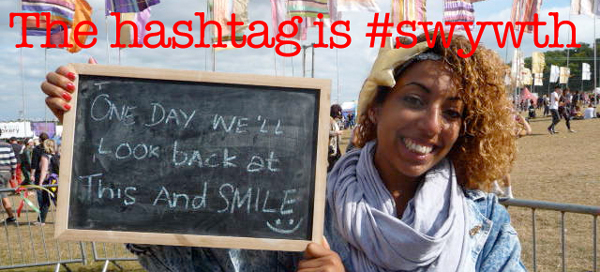
swywth.jpg

Editor's note: SWYWTH's Facebook page has pics, news from the project and, of course, SWYWTHs - SB.

What is a SWYWTH? What is your SWYWTH? Is it that secret something you say to yourself every day when you look in the mirror? Something that constantly echoes in your mind? Something that, finally, really ought to be said out loud? SWYWTHs are all these secret things, the things that never really get said. They've been locked up in your head for years, haven't they? But now we've got a system for letting them out.

Mike and Erik may not be the brightest of internet entrepreneurs. Or the most successful. In fact it is pretty clear that they don't have much of a track record when it comes to success. Unlike their former college mate Steve, who made it out of Liverpool in the 1980s and has spent the last twenty years surfing the dot.com boom in the United States.

But I'm getting ahead of myself here. Mike and Erik are two characters in a Radio 4 Afternoon Play (played by Stephen Tompkinson and Ewan Bailey). They can't be real - can they ? And their site 'Say What You Want to Hear' - the one that asks about those voices in your head - that can't be real, can it ?

Well it is. Check out the Say What You Want to Hear web site.

Those clever people at the Radio 4 web site were so taken with Mike and Erik's idea that they decided to steal it and put it on their web site. And to invite all of you to send in those requests to voice the secret things you've been saying. And we've roped in some of those well known Radio 4 voices too - to say them.

So if you send in something like 'How could I get through another day without the help of Charlotte Green or Chris Aldridge' (for example) then you might be lucky enough to hear it voiced by Charlotte Green - or Chris Aldridge.

And then Tim Wright (writer) may select your Swywth ('Say What You Want to Hear' geddit ?) and weave it into the second Say What You Want to Hear play which is being recorded at the end of February for broadcast on the 9th March. And your Swywth may be the one that propels Erik or Mike to success !

Or it could help Erik to find Scarlett, the mysterious woman who just may be the love of his life.

To recap: How do we do it? It's simple. You write them down. You send them to us. And we record them, publish them on the web for everyone to hear. And some of them get to be included in the Afternoon Play.

You can also join in the 'swywth'-making process on Twitter, on Facebook, on YouTube, on Flickr.

Jeremy Mortimer is producer of Say What You Want to Hear

Postcards from a Cataclysm - short drama for Radio 4

Blog comments are currently unavailable. Find out more.

Post categories: , , 

James RobinsonJames Robinson10:43, Wednesday, 10 February 2010

pencil

I love short film festivals. They're a bit like a box of chocolates: You might get an incredible story, a fantastic animation or something totally abstract and experimental. And when you do get a dud, you're safe in the knowledge that there'll be another along soon.

Radio 4 is uniquely privileged to have 45 minutes of original drama every afternoon, but it's never really tried short-form drama in the Afternoon Play slot... until now. Postcards from a Cataclysm is a collection of 'audio shorts' - between 30 seconds and 6 minutes long - packaged around the idea that an asteroid is about to strike planet earth.

Now, there will be those who say that short-form drama is yet more evidence of society's dumbing down and that in our increasingly technologically dominated world, attention spans are shrinking to such an extent that they can't concentrate on anything unless it's bite-sized and easily digestible.

But that is to miss the fact that short-form drama really is an art form in its own right. Only the most skilled of writers can craft a satisfying story with believable characters in less than 5 minutes. You only need to spend a short while on the BBC Film Network to see that when it's done well short-form can be a fantastically rich dramatic experience.

In terms of audio there's some great experimental shorts provided by the French company Arte Radio (not all of them in French).

Short-form also allows audio drama to sit comfortably into the playlist of your MP3 player. So you might get a short play or a poem nestled between Chopin and Shakira.

But, perhaps the most interesting challenge of fitting short form into the Afternoon Play slot, was making the individual pieces work as a whole. Regular listeners deserve a satisfying arc across the 45 minutes, so while attempting to make the shorts as individual and distinct as possible, we were keen they all felt part of the same story.

Whether we succeeded and whether short-form is the way forward or simply a detour to somewhere slightly different, please have a listen and judge for yourself.

Listen to one of the shorts created for the programme, Amazing Grace by The Factory:

In order to see this content you need to have both Javascript enabled and Flash installed. Visit BBC Webwise for full instructions

James Robinson is producer of Postcards from a Cataclysm

In Our Time, from Aristotle to the History of Zero

Blog comments are currently unavailable. Find out more.

Post categories: , , , , , , , 

Mark DamazerMark Damazer15:05, Monday, 8 February 2010

library

In Our Time is both in a central slot in the schedule and something of a cult. When it began 12 years ago it was a leap into the dark. Would a mass audience (over 2 million a week listen to at least some of it - and mostly all of it) take to something so straightforwardly intellectual - and so simple in its format.

Melvyn Bragg had been master of ceremonies at Start the Week for 10 years but had left it after becoming a Lord. And everyone at R4 wanted to keep him. Thus was born In Our Time. It rapidly became clear that the audience not only coped - but loved it. And now many hundreds of editions later it is one of the keystones of Radio 4.

The programme was a pioneer of 'Listen Again' - as we called the facility to listen after the programme was broadcast in pre iPlayer days - and then became the first Radio 4 programme to be podcast. Melvyn at the time was not 100% au-fait with the technology - but he saw the point and his on-air trails for podcasts were works of art. And there has always been a big demand for 'listen again' in what ever form - 300,000 podcasts a month for instance. The website is the most loved of any Radio 4 programme. (We measure these things).

But we have often been asked why the audience only has 7 days to listen again - and why we can't make available the brilliant - and enduring - programmes that have been made in recent years.

And we now can do that. Every edition of the programme is now available from the website. So if your thing is the measurement problem in physics: man is not the measure of all things or Heaven: a journey through the afterlife or any one of hundreds of others - you can now listen when you want. Enjoy.

Mark Damazer is Controller of BBC Radio 4

Latest RAJAR listening figures

Blog comments are currently unavailable. Find out more.

Post categories: , , 

Mark DamazerMark Damazer11:51, Thursday, 4 February 2010

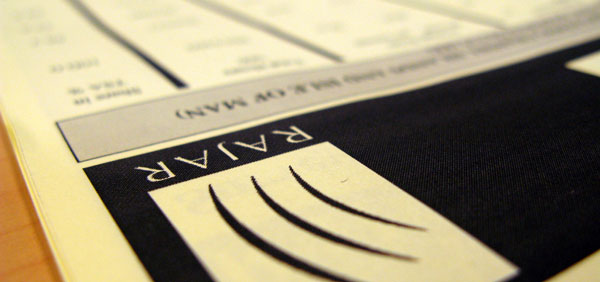
Bowie RAJAR

It's RAJAR day. It happens four times a year. We get figures for the previous quarter's listening - in this case Oct- Dec 2009. And although not quite as vertiginous as the previous quarter - the figures are pretty decent. The headlines are that 9.84 million of you listen to at least 15 minutes a week - and you listen on average to 12 hours 34 minutes - which is up from the previous lot of RAJARs - and more than any other station. Radio 4's share of the total radio market is 12.5% - which is also up. And we have slightly more listeners than at this stage last year. So all in all we're happy enough.

What causes change in listening figures ? In television it's easy to track. There are overnight figures for every programme and you can predict what sort of programme will get a huge audience (Strictly, X Factor) and what will harvest fewer viewers. There are no overnight figures for radio, and in the case of Radio 4, there is quite a lot of stability in listening patterns. We know that almost all that we do at 0900, say, will get an audience hovering around the 2 million mark - or that the Afternoon Play will get about 800,000. We would have to do something violent to change that hugely.

But over a period of time I hope that the quality of the programmes and some changes here and there persuade more people to try Radio 4 - or to stay with Radio 4 longer. Our success is for you to judge.

Sometimes - but rarely - a big event influences listening. Thus 9/11 and the Iraq war in 2003 both boosted the RAJARs - with programmes like Today, The World at One, PM and The World Tonight attracting a larger audience wanting the depth and analysis we hope we provide.

It is possible that the recession has had an impact on our figures. It's not easy, though, to isolate the effect.

And as I always say - RAJARs are relevant. Quality and range matter more.

Mark Damazer is Controller of BBC Radio 4

More from this blog...

Categories

These are some of the popular topics this blog covers.