Archives for November 2009

Fecundity and mortality on The Archers

Blog comments are currently unavailable. Find out more.

Post categories: , , 

Mark DamazerMark Damazer09:21, Monday, 30 November 2009

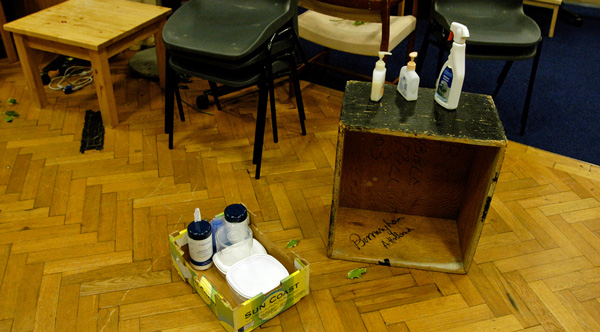
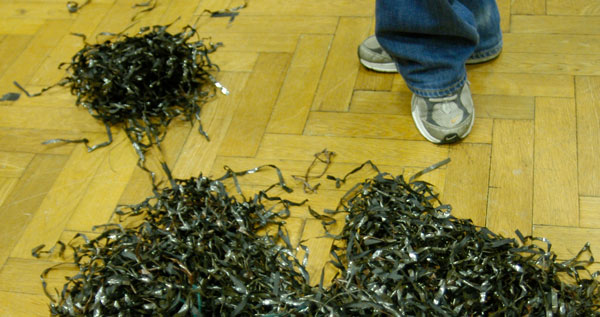
Archers studio yoghurt pots

At the end of last week I had my annual Archers plotlines meeting.

Those present - Archers editor Vanessa Whitburn and two trusty Archers senior producers, the Head of Radio Drama (England) and the Commissioning editor for R4 Drama - and R4's press officer.

A few days in advance I get a brown package and my PA hands it over to me. Inside is a 66-page, single-spaced A4-size document and a spreadsheet/calendar explaining how the plot will develop over time. The document is numbered and my PA wags her finger at me and reminds me that if I lose this I can say goodbye to my nice Radio 4 life and look forward to a lifetime of ignominy. I am terrified every year but thus far I have managed not to leave the papers anywhere more dangerous than the back of my car buried under a pile of Radio 4 CDs.

The meeting lasts a couple of hours as we haggle about who to make ill, happy, pregnant, successful and... yes... dead. We talk - heatedly - about actors.

There is much dark humour and some themes crop up every year... about the balance between The Archers family and others, the need to space out fecundity and mortality, the problems caused by actors' other commitments etc.

It's a fascinating and complicated business. Any number of criteria need to be juggled. Is a particular plot line really credible? Do we have the highlights spaced? Which plotlines will make a splash? What do we do with children whose voices may need to change? Are the lighter plots - often starring the 'rude mechanicals' - up to enough? Can we make sure the misery is not overwhelming and not all timed to take place over Xmas? Should we do something 'big' in the plot for the 60th anniversary (January 2011)? And how big (so there's a bit of Kremlinology for you)...

There's also a little bit of inter-generational justice at stake here. Vanessa could go for something huge - but we know that although that might have a very large impact now - what will it do to the long-term future of Ambridge and future listeners? And from time to time we will indeed do something huge (cf Sam/Ruth/David in 2006).

At the end of the meeting we agree two or three big changes but the bulk of the plan goes through. The numbered documents go to a shredder. I feel immediately calmer. My PA beams happily.

All I have to do now is to resist temptation and never tell anyone - not even my family - what's going on. I just look smugly superior as they try and guess.

Mark Damazer is Controller of BBC Radio 4

The BBC National Short Story Award

Blog comments are currently unavailable. Find out more.

Post categories: , , , , , , , 

Di Speirs19:45, Friday, 27 November 2009

In order to see this content you need to have both Javascript enabled and Flash installed. Visit BBC Webwise for full instructions

Hurrah! At last. After all the waiting, and the reading, and the deliberating we have at last reached the moment when we can reveal this year's short-list of five contenders for the BBC National Short Story Award (BBC NSSA). These five have survived the turbulent and exacting examination of first our teams of sifters and then, for those that made it through the first hoop, intense discussion and dissection by this year's judges - the writers, Dame Margaret Drabble and Helen Dunmore, the broadcaster Tom Sutcliffe, the singer-songwriter Will Young, and me.

The process of judging is a fascinating and sometimes unsettling one. As the summer progressed I read through my teetering pile of short stories. There were very short stories and those that almost tipped the 8000 word limit; there were first person monologues, futuristic visions, time travellers, llamas, historical adventures and not a few, often moving, parent-and-child stories. There were relationship breakdowns and tender endings to long marriages; a man who disappears, literally, in a fancy dress costume, a woman who disappears through the ice, an artist's glove that reappears as art. This year the quality of the writing and the names of the writers who now take this award seriously, were more impressive than ever.

Filtering the pile of sixty odd stories down to a long list is hard; conceding personal treasures and reaching a consensus on our final five took most of a pleasurable autumn's afternoon but of course one of the joys of this experience is re-assessing stories and uncovering new depths. Passionate defences of certain stories moved them up our list; general approval was not, in itself, sometimes enough. It was the most good-natured judging meeting I've been involved in but very rigorous as we debated futuristic feminism, and whether a monk's pursuit of an orphan over four pages qualified as a short story - even if it was wonderful writing (it almost did!), and, was too much plot actually a disguise for a proto-novel?

The other four judges are even now pondering and re-reading the final five and discussing them in the press - but in the Readings Unit a large part of the job only kicks in once we can get on with turning beautiful writing into equally beautiful radio. Casting the right voice is always the key element in production - these five stories were gifts - we set off in pursuit of the best of British and to everyone's joy secured just the actors we were after.

We needed someone to capture the nuances of North London's Hendon community - Miriam Margolyes is starring round the corner from Bush House (where we live) in Samuel Beckett's 'Endgame' - she was happy to emerge from her dustbin to read Naomi Alderman's 'Other People's Gods'. Julia MacKenzie abandoned the acuity of Miss Marple for the confusion of the protoganist in 'Hitting Trees with Sticks' by Jane Rogers - in a monologue of Bennettian perception. Two of our favourite and most long-standing of readers were instantly perfect casting for their two very different stories; Hannah Gordon has flavoured Sara Maitland's magical mix of science and witches with a heady Highland density in 'Moss Witch', and Penelope Wilton displays her customary restraint and compassion in Kate Clanchy's moving and original 'The Not-Dead and the Saved'. However it is probably fair to say that there was most excitement amongst the team here over the re-jigging of studios to fit in with the latest Harry Potter filming schedule, so that Jason Isaacs could transform briefly from the sinister Lucius Malfoy to a hapless middle-aged American son in Lionel Shriver's 'Exchange Rates'.

And now the whole experience is gathering speed as we head towards the culmination of our work - and the revelation on Monday 7th Dec of this year's winner. As well as a chance to hear the stories on air, there's the build up to the award ceremony, and terrific coverage of the short story genre and the award with interviews with Will, Tom, Margaret and Helen on air and in the press; Julian Gough, winner of the 2007 award, is tweeting, and for the first time, we have gone multi-platform. More on that on Monday - meantime Will Young and Tom Sutcliffe reveal the short-list and discuss the stories on tonight's (Friday's) edition of Front Row. They are a great selection - we hope you enjoy hearing them next week. And wondering which one will win.

Di Speirs is Editor, Readings at BBC Radio 4

  • The shortlist was revealed on this evening's Front Row, presented by Kirsty Lang.
  • Full details of the BBC National Short Story Award on the official web site.
  • The animated reading above is an excerpt from Other People's Gods by Naomi Alderman. View clips from the other shortlisted stories here.

Five more perspectives for Archers Week

Blog comments are currently unavailable. Find out more.

Post categories: , , 

Steve BowbrickSteve Bowbrick17:35, Friday, 27 November 2009

Archers studio sign

I'm quite new at the BBC but I've been listening to The Archers since I was a small child. Its characters have been companions for decades. Events from Archers episodes are mixed up with those from my early life in a quite confusing way. I don't listen every day but the fine grain of life in and around Ambridge is a kind of essential background to my life. I'm not overstating this and I know I'm not alone. I know there's a reasonable chance that you too remember the arrival of strident Pat at Bridge Farm or the mysterious disappearance of Nelson Gabriel or Eddie's dalliance with Jolene...

So it's obviously been a career highlight to spend some time with The Archers team at the BBC's office in central Birmingham. And what I've learnt hasn't eroded the magic at all. I know now that keeping a drama with a cast of 60-ish on-air 6-days-a-week requires something like a military operation with strong leadership and the kind of team spirit I've rarely met. My dealings with the Archers team have been a bit like an encounter with a rather benign cult. Everybody on the team, from cast to producers to engineers and assistants greeted me with the kind of clear-eyed passion for the programme that any network would kill for (but you wouldn't want to cross them). It's been a huge pleasure to experience the pride of the Archers team in what they do. I hope you've been able to share a little of it here on the blog.

Today is the last day of Archers Week and - I'll be honest - I've been finding it quite hard to keep up with the flow of behind-the-scenes insights as they've come in so here's a final-day round-up of fascinating posts from Archers people:

A script with a view

Blog comments are currently unavailable. Find out more.

Post categories: , , 

Tim StimpsonTim Stimpson16:10, Friday, 27 November 2009

Archers-Graph1024.jpg

Tim Stimpson is an Archers scriptwriter (the youngest ever). Here he shares with us some of the tricks of his trade, including the unique visualisation above - SB.

Whilst episodes written in September are now being broadcast and episodes written in October are being recorded. I'm now working on scripts for the middle of January. Normally there are four writers working at any one time, but because of the Christmas break we're working on two months of scripts meaning that there are eight of us writers busily typing away. Some of us look out across rolling hills, but I look out across a barbed-wired wall into the back of a postal depot in south Birmingham. Writing the Archers is my own imaginary escape to the country.

Reading the blogs this week has been quite interesting for me too. As a writer I only visit the Mailbox once a month for our regular script meetings and as one becomes engrossed in one's own scripts it's easy to forget that the machine that is 'The Archers' is still busily running away. After the script meeting we all head back to our homes in Bristol, Dorset, Cheshire - or in my case just four miles down the road - and wait by our inboxes for the storylines. We then have five or six days to write a synopsis and then twelve days to complete our six episodes.

I've already had a first sweep at most of my scripts. Generally I like to get them written as quickly as possible, which then gives me plenty of time to go back and tinker. Today I've already been busy redrafting my Tuesday episode. Because of restrictions with actor availability it's meant that my two main storylines have become tethered together. Normally I'd try to spread them out into separate episodes, but I'm rather enjoying having to interweave my two most high-powered storylines. They're both mainly two-headers, they're both emotional (although in different ways) and, as often happens as one goes along, I'm discovering themes and resonances between the two threads.

Writing for The Archers can often seems like a big puzzle. To help me get my head around this when I first receive the storylines I normally draw a graph with the days of the week along the x axis and the intensity of the individual storylines along the y. It sounds horribly technical (although I do draw it in pretty colours!) but it allows me to better understand the shape of my week. All the writers have a very different ways of approaching their scripts. For instance some prefer to start at Sunday and write straight through to Friday. I prefer to go with the mood I'm in that day. So if I'm feeling light-hearted I might choose to spend some time with Lynda and the Parish Council, or if I'm ready for something a bit more hard-hitting I might have a crack at... Oh but that would be giving the story away!

So - the sun is shining, the red vans of the Royal Mail have all left the yard and the cat, as usual, is trying to make her own contribution by walking across the keyboard. Where shall I go now? I think I head down to The Bull. I could do with a pint.

Tim Stimpson is a scriptwriter on The Archers

Crossing Continents is back

Blog comments are currently unavailable. Find out more.

Post categories: , , , , 

Hugh LevinsonHugh Levinson13:15, Friday, 27 November 2009

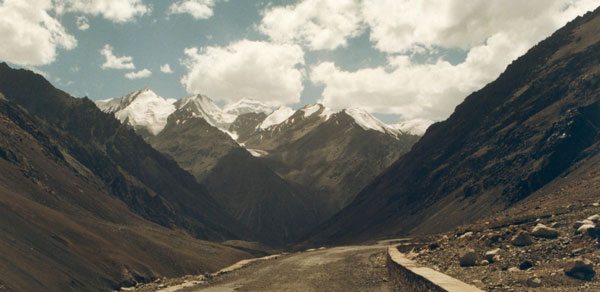
Karakoram highway

The message on my voicemail was garbled. Not surprising perhaps, as the producer was speaking over a dodgy satellite phone connection and was not in the calmest of moods. Something about the Taleban, risky flights, the Pakistani intelligence services and an 18-hour road trip through the notorious Northwest Frontier Province.

It's this kind of thing that makes the job of editing Crossing Continents interesting. Interesting in the sense of alarming, worrying, nerve-wracking and guilt-inducing. I spend rather a lot of my time sitting in a glass box (not quite an office, more like a goldfish bowl) in White City where nothing very dangerous is likely to happen. Although I suppose you could get a nasty scald from a cup of tea.

Meanwhile I send some of the world's best radio documentary journalists off to some very nasty places indeed. Places where nasty things happen to people, including journalists and their contacts. Earlier this year, presenter Lucy Ash and producer Nick Sturdee went to Chechnya and interviewed a human rights worker, Natalya Estimirova. She took them to a field and showed them where the bodies of some young women had been found. The women had been bundled into cars and then murdered. A few days after the interview, Natalya herself was bundled into a car and murdered. Natalia's colleagues believe she was murdered in retaliation for her many years investigating human rights abuses.

Now I had a producer in one of the remotest bits of Pakistan on the trail of a story that had turned very weird. Nothing had gone according to plan. Promised permits had not turned up. An institution they wanted to visit had been blown up by the Pakistani military. Helpful associates proved to have dubious connections. Intelligence agents wanted to take away the recordings. And here I was in my glass box, trying to make sure that my producer got back safely.

Luckily I had a security blanket. A detailed risk assessment - a score of pages long - which the producer had compiled with help from the BBC's high risk team (an amazing bunch), the Islamabad Bureau, the head of the World Service's Urdu service and some streetwise BBC contacts on the ground. I carried the risk assessment with me everywhere in my backpack. The official reason was to keep the emergency numbers in case I needed to ring them. The real reason is that it's a talisman.

And I reminded myself that the producer had wanted to go. She'd found the story she was pursuing and she knew that she was under no pressure from me. If she wanted to ditch the project and bail out at any time, she had carte blanche to do so. And we had procedures in place for the producer to call and text both me and the Islamabad office. I thought back to our series of detailed conversations over several months about the practicality and safety of the project - and how we'd talked it over forwards and backwards here in the goldfish bowl.

So despite the garbled message I calmed down. And I'm happy to say the producer is now back in the UK. Now another team is on location in another potentially dangerous part of the world. And I'm carrying their risk assessment around with me in my backpack again.

Hugh Levinson is producer of Crossing Continents

Being Nic

Blog comments are currently unavailable. Find out more.

Post categories: , , , , 

Becky WrightBecky Wright12:15, Friday, 27 November 2009

Archers oak counter

I was in the studio yesterday recording two episodes for December. The first episode was at 0915 and the second at 1445, leaving me with a chunk of time in the middle to catch up with cast members I haven't seen in ages. It was great to see Ros Adams (Clarrie) as we haven't been in an epidode together for months. I spent most of lunchtime chatting to Ryan Kelly (Jazzer) whilst eating soup from the canteen and making a fuss of his guide dog Hadley (even though I know I'm not supposed to!) I also worked with Alex Lilley (Coriander) for the first time and found out that she lives within walking distance of my parents (small world!).

Alex and I had to record a scene that involved eating and drinking. I always have to remind myself to leave a hand free to turn the pages of my script and to make sure that when it's my line I'm not mid-munch! It's trickier than it sounds. There was also another first today, Mia (Nic's daughter) speaks, so it seems quite serendipitous that I have been asked by Steve Bowbrick to describe what it was like to be a newcomer to The Archers.

As long as I live I will always remember my first day in Ambridge. A few weeks after auditoning to play a new character called Nic (at the time I didn't even know what Nic was short for!) I found myself sat in the green room waiting to do my first readthrough. I can only describe the feeling as a mixture of intense excitement and extreme terror. I hadn't told many of my friends what I was doing that day - I'd just mumbled something about doing a radio job, but I knew that this wasn't any radio job. I was acutely aware of how iconic 'The Archers' is, how much it means to people and that it is ingrained in British culture... so no pressure then!

The scene to be recorded that day was the one that I had read at the audition: Nic is struggling to get onto the bus and Will Grundy comes to her rescue. I'd met Phil Molloy (Will Grundy) at the casting and was relieved to see a familiar face. He was very kind to me and made me endless cups of coffee. When it came to start the readthrough, my nerves really kicked in: the people that you've been chatting to a few seconds earlier suddenly morph into those familiar characters heard on radios around the world... it was a surreal moment and for a few seconds I sort of stared into space, not quite comprehending that this situation actually involved me... then reality hit, my first line was coming up and Nic was about to have a voice of her own.

That was just over two years ago, and since then I've learnt a tremendous amount as an actor, become friends with many of the Archers team and developed an unhealthy obsession with the doorbell board (yes, I was that annoying child in B&Q in the late 80s who had to press every single one). Nic has matured, made mistakes, laughed, cried, grilled sausages and been the victim of a cow stampede! The wonderful thing about being a character in the Archers is that things in Ambridge happen in 'real time'. Every script I open gives me clues to who Nic is. It's great to learn what clothes she likes to wear, when her birthday might be, what happened to her before she met Will and how other characters describe her. All of this helps to breathe life into Nic with all her innate qualities and foibles. For an actor, having the chance to develop a character over a long period of time is a rare and wonderful opportunity.

The Archers has become an integral part of both my professional and personal life, It really is more than just a job.

Tales of the Unexpected - Lives in a Landscape 5 years on

Blog comments are currently unavailable. Find out more.

Post categories: , , , 

Alan DeinAlan Dein09:19, Friday, 27 November 2009

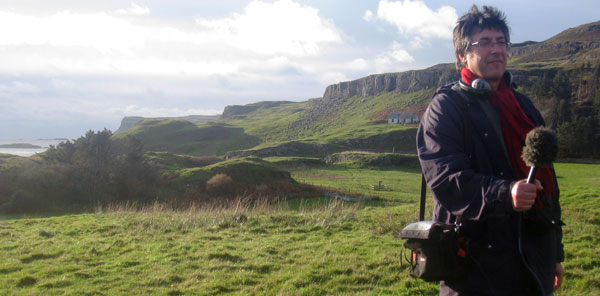
Alan Dein on Canna

Editors note: Alan Dein is a historian and he makes extraordinary radio features, many of which are on my list of favourites of all time. I asked him to write a piece introducing series five of Lives in a Landscape which is on-air now - SB.

"You canna see Canna, it's hidden beyond Rum", explained the Captain of the 'CalMac' ferry service as it headed out of Mallaig on the Scottish mainland towards the small islands of the inner Hebrides. "In the winter season we only sail three days a week, and that's dependent on the weather".

This voyage to the remote isle of Canna, whose entire population consists of eleven adults and six children, was my final recording destination for this year's series of BBC R4's Lives in a Landscape. For four days both myself and producer Neil McCarthy listened to the stories of the islanders - including the gardener, the primary school teacher, the archivist, the proprietors of our supposedly haunted guesthouse, and both of the islands two farmers. Besides recording plenty of conversations, we were compelled to point the microphone at the natural landscape itself, with its extraordinary ever-changing light, wind and birdsong.

For me, it's all of this, and more, that excited me when I was offered the role of the narrator and the reporter on Lives in a Landscape. It was the chance to pursue the kind of radio that I'm passionate about - a heady, unconventional combination of voices, stories and the environments.

The series was created five years ago by Simon Elmes, Creative Director of Radio Features and Documentaries. When it began the programmes ran as montages - non-presented, skilfully constructed audio essays. 'Lives' retains all of this magic and ethos of feature documentary making, but for the past two years, in addition to the collage of characters, there's my voice guiding the listener through the half-hour ride. Sometimes I'm almost an omnipresent investigator, like in 'Tilting at Windmills' (produced by Sara-Jane Hall), our exploration of Knighton, a border-town situated right in the middle of Offa's Dyke. The plan to erect four massive wind turbines is causing rifts within the community. Of course Knighton's backyard could also be yours or mine.

In other episodes, I retreat slightly, leaving the words of our cast of characters to breathe, rather than mine. This year's opener 'Play for Tomorrow' (produced by Laurence Grissell), is an example of that - a gentle and penetrating study of first-year sixth formers from Grimsby as they while away their Summer. A chance for us to home in, to consider voices, and lives, that don't seem to get heard very often at all.

In today's programme, members of a special writers group created for former Royal Ulster Constabulary officers tell their stories, and their individual search for solace through poetry or prose. A week on, I hear from two brothers from Peckham, South London whose triumphs on their local BMX cycle track may transform them into potential Olympians. And then there's Canna, a remote Scottish island with its 17 inhabitants - eleven adults, four primary school-aged children, and a set of two year old twins.

What excites me about the possibilities of an anthology series like Lives in a Landscape is this very opportunity for variety. It's a case of expecting the unexpected - whether it's conveyed by the producer's sound design, or how the narrative is unravelled, or even the actual subject itself.

As the ferry pulls into Canna, and the islanders watch us disembark, I wonder what tales they will have to tell? I say farewell to the Captain, who checks the weather conditions. "Anything can happen in the next half an hour" he says.

Alan Dein is an oral historian and broadcaster

Finding an excuse to go into the cubicle

Blog comments are currently unavailable. Find out more.

Post categories: , , 

Sarah MorrisonSarah Morrison16:31, Thursday, 26 November 2009

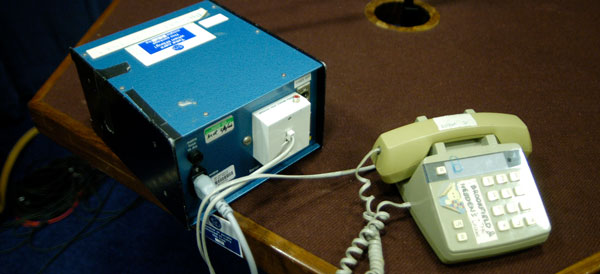
Archers studio phone

It's been a strange old day! Having spent a year on attachment covering Sonja Cooper (Sonja wrote a blog post as part of Archers Week yesterday), in our Technical Broadcast's Assistant's role, it's my first day back in my old role of Broadcast Assistant. It's quite a change going from compiling the programme in an editing suite all day or going out on location recording sound effects, to being back at the hub of it all in the middle of the office. I'll miss the creative side of the technical work, but there's something nice about being back working alongside fellow Broadcast Assistant Sally Lloyd and the team again and being in on all the office gossip!

I've spent the day acclimatising myself to my new desk and drawers - the office has moved since I was last in this post and I now have an uncluttered view of Sally sitting opposite me, busily tying up the loose ends of the last few days of casting for our December and January studios.

The last time we worked alongside each other was nearly two years ago, before I left to go on maternity leave to have my son and then go on attachment - so everything's feeling very different and new. Although I've worked in the building this past year, the actors have been welcoming me back as I pass them in the corridor - presumably I've been invisible before! But it's nice to stop and chat.

My favourite part of this job is assisting on our studio recording days and we're in the middle of that now - Nigel (played by Graham Seed) has just popped by the office with a work query and I've just been showing Nic (played by Becky Wright) the latest picture of my son!

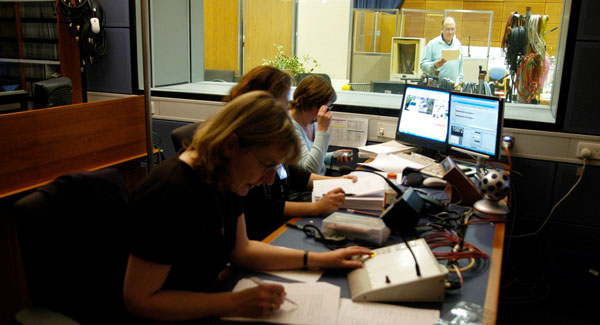
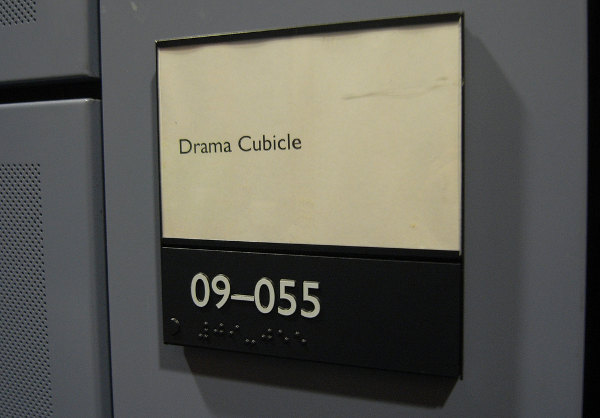
I love the feel of this period in our working cycle each month - it's what all the casting, writing, story-lining and paperwork culminate in and there's such a feel of family between the cast and production team. I've just nipped into the studio cubicle to have a quick chat with the crew - I love the cubicle and will find any excuse to go in there to see what's going on. With Michael, the Studio Manager on panel, Kath, the Grams Operator sorting out recorded sound effects and Liza the Spot SM creating sound effects live in studio - it's an interesting place to be. And the process is all so fast!

Anyway, having sorted out my work space, I'm all set to get my head down and get stuck into the job. Although I might just pop and have a cup of tea first...

Sarah Morrison is a Broadcast Assistant on The Archers

Our Mutual Friend - sound design - Colin Guthrie

Blog comments are currently unavailable. Find out more.

Post categories: , , , , , 

Colin Guthrie15:50, Thursday, 26 November 2009

Right from the start it was clear that the sound of water would feature heavily in the soundscape of the production - the river Thames could be considered the central character of the piece as so much of the story is woven in and around it. Drownings and near drownings, Lizzie Hexam and her father earning their living in a small boat on the Thames and the rain drenched streets of London meant that the sound of water would play a big part. One of the big differences between doing a production like this on the radio and on film is that, generally speaking, the actors stay a lot drier on radio. Having said that, on a number of occasions we set an actor in front of a washing up bowl full of water and asked them to plunge their head in and emerge, gasping for air as if with their last breath. Which, for some of the characters, it was.

For a fifteen minute episode we have half a day in the studio to record the actors and add a lot of the sound effects. The main assembly of the programme then takes place in the editing channel. In the editing process we use four different types of raw sound:

  • The words spoken by the actors
  • Sound effects recorded in the studio
  • Sound effects from pre-recorded sound effects libraries
  • Music

All of these can be manipulated in the editing process - precise editing to isolate the sections you want, adjusting volume levels, adding reverberation etc.

The scenes involving drownings are good examples of how the radio sound picture is built up using a number of different elements. The drownings all involved a struggle with two characters; so we would record the dialogue leading up to the struggle and the vocal sounds of the characters fighting and gasping for air. We might then record the sound of their feet, scuffing the pavement and some additional splashing. A lot of the picture would then come from pre-recorded sound effects - the background sound of the river flowing and the surrounding ambience, splashing and the sound of scuba breathing.

Creating the image of the characters going underwater needs precise placing of sound effects and acoustic treatment of the sound to paint the picture without the help of any dialogue to explain what is happening. A splash as they fall into the river, vocal struggling and splashing, followed by an isolated large breath from one of the characters. This breath subconsciously leads us to expect they are going underwater. As they go under, the bright sounds of the splashing are suddenly reduced in volume and the higher frequencies are taken out to give the murky, dull sounds you associate with being underwater. The scuba breathing gives us the rising bubbles and the classic underwater sound. A rasping breath signals their breaking of the surface, the volume of the splashing is increased and the high frequencies are brought back as they hit the night air. We would then add a track of Roger Goula's music, possibly adjusting some of the timing of the scene to fit the drama of the scene with the shape of the music.

I spoke to Roger about his music for Our Mutual Friend:

In order to see this content you need to have both Javascript enabled and Flash installed. Visit BBC Webwise for full instructions

Colin Guthrie was sound designer for Our Mutual Friend

  • Roger Goula writes music for film, television and radio. His personal web site is here.
  • Radio 4's 20-part adaptation of Our Mutual Friend is on-air now.
  • Radio 4's 20-part adaption of Our Mutual Friend is on-air now and because it's part of the 'series catch-up trial' you can listen online to all the programmes in the series until seven days after the last episode airs.
  • We'd love to hear your thoughts about Dickens dramatisations you have heard and enjoyed on the radio. And which of the novels do you think Radio 4 should tackle next?
  • There are production photos of the whole cast, taken for Radio 4 by Phil Fisk, here.

A day spent producing (and directing) The Archers

Blog comments are currently unavailable. Find out more.

Post categories: , , 

Rosemary WattsRosemary Watts10:40, Thursday, 26 November 2009

cubicle

A straight hit into studio today after not having been in the office for a week, all a bit of a shock and I gave myself an hour and a half to get into work - I only live 12 miles away! Just as well I did, the traffic is always heavy on a Monday morning, and I got in with 20 minutes to spare; time to get a cup of tea and find out what's been going on since I've been away. It was a great start though with some lovely scenes between Lilian and Peggy, and later some feisty scenes with Pip and David, nice to see her finally spreading her wings.

It's important to keep my eye on the ball, as I'm doing episodes from different weeks; four from Carole Solazzo in week 1 and then two from Mary Cutler in week 3 of our recording month. There's no time for a break, fortunately there are plenty of chocolate biscuits to keep the energy up. We are also lucky enough to have Julie Cook with us on work experience, and between helping us do the scene timings she gets us all a cup of tea! With two more episodes in the afternoon it was a long day, and it was great to finally arrive home.

Another couple of episodes on Tuesday morning and I hand over to my colleague, Kate Oates, who is directing this afternoon and tomorrow. That just leaves me to catch up on storylining queries. Just before I went on leave I was liaising with a research contact in the prison service; one of the writers wanted to know some details about visiting times in open prisons, so that will need chasing up this afternoon. Then it's heads down on the writers' synopses for the last four weeks of the double-up. The synopses have already been edited by Vanessa Whitburn (Editor) and Julie Beckett (Senior Producer); I need to go through them as well to ascertain what the 'jump off' points are for each story and then work on the potential storyline for the next four weeks.

It's quite a complicated business, as it includes a combination of research lines, longterm storylines, programme anniversaries, events that are happening in the real world, and most importantly, liaising with our Agricultural Story Editor Graham Harvey - a mine of information and all of it good! The 'pickups meeting' is on Friday morning, and we will be discussing storylines which will be broadcast running up to Easter 2010 - the year goes even quicker when you work here!

Nothing discussed at this meeting is set in stone though, Graham and I continue to work on the storylines over the next few weeks, and our next full script meeting is early in the new year, when the writers will have a chance to look at the script pack and discuss where we want to go with the programme. There's never a minute to spare in The Archers, and very little time to look back at what you've directed and think - 'yeah - that was ok;' as soon as one task is complete you're straight on to the next. It's a good job we work in a team.

Rosemary Watts is a producer on The Archers

Capturing the everyday sounds of Ambridge

Blog comments are currently unavailable. Find out more.

Post categories: , , , , 

Sonja CooperSonja Cooper16:14, Wednesday, 25 November 2009

Archers straw

Only last week I was fretting about my return to work, after having had time off to have my second baby. But why should I worry? Of course I would remember how to sound-edit the programme, and I would never go into a blind panic when I had to point that microphone for the latest sound effect needed in studio! This week? I can honestly say that I feel as if I had never been away! And there really was no need to panic.

Coming back to work - even when what you do involves editing and microphones - is much like riding a bike - you rarely forget.

There is always so much to do in the run up to studio week, for me, so if I was going to pine too much after my adorable boy, and my hilarious daughter, then this was a good week to choose a return. I honestly haven't stopped.

I have already recorded on a beautiful farm in deepest Leicestershire (yoghurt-related effects) and I have had a good few children in to repeat lines after me. Then there is the hectic compiling of episodes, playing out (our speak for listening back to the final version), scheduling and podcasting.

Today, already, I have played out 6 episodes that transmit in a couple of weeks (not quite Christmas, but if I hear any more Christmas hits, I think my head may spin), planned a couple more recordings, done some episode scheduling and podcasting, and am just about to commandeer an edit suite to play out an Omnibus...

Then, when the day is done, and I can be sure that the listeners will get their daily dose of the programme, I will pop out for a good run (my other passion, besides my kids and my job), and then back home... but you don't want to know the trials and tribulations of that part of my day!

Sonja Cooper is a Technical Broadcast Assistant on The Archers and she's responsible for recording many of the sound effects you hear on the programme

  • Here, for your listening pleasure, are some of the sounds captured by Sonja on her recent travels:

In order to see this content you need to have both Javascript enabled and Flash installed. Visit BBC Webwise for full instructions

In order to see this content you need to have both Javascript enabled and Flash installed. Visit BBC Webwise for full instructions

In order to see this content you need to have both Javascript enabled and Flash installed. Visit BBC Webwise for full instructions

In order to see this content you need to have both Javascript enabled and Flash installed. Visit BBC Webwise for full instructions

In order to see this content you need to have both Javascript enabled and Flash installed. Visit BBC Webwise for full instructions

In order to see this content you need to have both Javascript enabled and Flash installed. Visit BBC Webwise for full instructions

A History of the World in 100 Objects

Blog comments are currently unavailable. Find out more.

Post categories: , , 

Mark DamazerMark Damazer10:00, Wednesday, 25 November 2009

In order to see this content you need to have both Javascript enabled and Flash installed. Visit BBC Webwise for full instructions

Today we unveiled details of the most ambitious and exciting factual project since I became Controller of Radio 4. It's 'A History of The World in 100 objects' presented and written by Neil MacGregor - the Director of the British Museum.

In 100 separate 15-minute programmes Neil talks about a single object in the British Museum Collection that can tell us about a host of different things. There will, of course, be a description of the object but most of each programme will focus on areas where Radio excels as a medium - on how the object was made, its political, economic and cultural significance, how the object came to be in the collection - and so on. There are a hatful of stories and ideas in every programme. I have heard those that have been made so far and they are wonderful.

The series will look at objects from all over the world - and will span tens of thousands of years of human struggle and achievement. Every object will have been man-made. That is what makes this different. Most histories are based on documents as sources. This takes as a starting point that the craft and inspiration involved in making things can reveal history in a different and complementary way.

We have changed the schedule to try and give the series a wider audience than if it had been placed at 1545 - which is where most of our other big narrative histories have been broadcast (Amanda Vickery's A History of Private Life and David Reynolds' Empire of Liberty series about America being the latest examples). These have been terrific and it is in part their success that has encouraged us to try something bolder for 'A History of The World.' (AHOW)

So for 20 weeks next year AHOW will broadcast at 0945 and repeated at 1945. It won't be in consecutive weeks. We will be running the series in three tranches during 2010. But when it is running - it will occupy the 'Book of The Week' slot in the morning and the repeat of the Woman's Hour drama in the evening - immediately after 'Front Row.'

'Book of The Week ' is a vital part of Radio 4 and frequently scintillates - and I have no doubt that some of the audience will feel its absence. But I think every now and then I need to adapt the schedule and I am sure that the series will be terrific. The Woman's Hour drama - currently wonderfully filled by 'Our Mutual Friend' - will still be broadcast at 1045.

There is a great deal more to say about AHOW. It is no longer simply about Radio 4 and the British Museum. The force of the idea has captured many other programme makers around the BBC - on BBC television, on CBBC, on the World Service and throughout the BBC's Nations and Regions. And it will be tied together by a special website - where you will be able to see the objects in splendid detail - and where we are creating opportunities for the public to contribute too.

One final word - it's not been a typical BBC project. We have worked from the outset in partnership with the British Museum. We and they have been working on it for over three-and-a-half years. We could not have done it without Neil MacGregor and the British Museum as a whole. It's been a vastly stimulating affair - and I hope you enjoy its fruits. It all begins on January 18th...

Mark Damazer is Controller of BBC Radio 4

When do they start playing Christmas music in the shops?

Blog comments are currently unavailable. Find out more.

Post categories: , , 

Julie BeckettJulie Beckett15:27, Tuesday, 24 November 2009

drama cubicle sign

Just been into studio where Producer Rosemary Watts is directing with the usual tight schedule - she's making an episode for mid-December so it's full of Christmas cheer. When I went in she had the whole cast plus some of the team (and Blog Supremo Steve) all doing some 'wild track' sound effects. That means they were recording background effects for later in the episode, so they were all playing different people from their normal characters. It was set at Lower Loxley out in the wood, and it involved cheerful chat and some laughter and some exclamations of wonder.

Christmas episodes always have twice as much music as the rest of the year, chosen by writers and producers, and then found and cleared for copyright by our Technical BAs (Sarah and Sonja at the moment). We try to go for a full range, reflecting what might be heard and when! This year I had to phone a department store in Birmingham to find out when they were planning to play Christmas music in the shop for the first time this year - we were working on the scripts in early November and it just felt very early.

But we were right - their dates and ours matched up perfectly. Same goes for the switching on of the Christmas Lights in Borchester - we have to research when such things are happening in the real world and match up. Our aim is that when it happens in someone's home town, it happens in Ambridge too. It's up to archivist Camilla to tell us when we normally do the lights round the village green though.

It's nice going into studio without having a job to do - just being an observer. You don't get to do it very often. Proper team work, with everyone having a role to play. So you've got someone mixing the whole sound picture at the desk, two people supplying the effects, one in studio with the actors, and one in the cubicle with the director playing in the recorded ones. You've got the director, who is working with the actors and also listening to the whole episode as it's recorded, making sure it all feels right and matches what she wants.

Then you've got Broadcast Assistants who time everything we do, with a running timing against the readthrough time so that we know we're not too long or too short. They're also looking after any actors who need special help. Everyone's attention in the cubicle is focussed on the script or the speakers as we record - you only really look at the actors when you're speaking to them before and after takes. So today and yesterday, while dropping in, I've watched the actors working. Fascinating to see the absolute concentration, the working together, the application of timing and emotion to the script - and all while turning the pages without a sound.

Julie Beckett is a Senior Producer on The Archers

The editor's morning

Blog comments are currently unavailable. Find out more.

Post categories: , , , 

Vanessa WhitburnVanessa Whitburn13:06, Tuesday, 24 November 2009

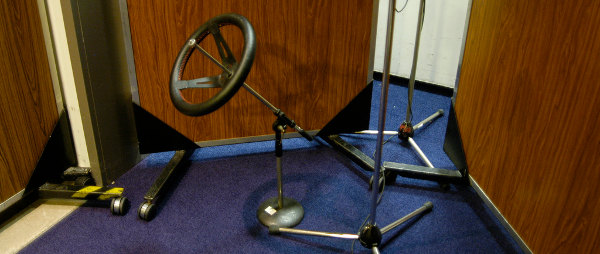
steering wheel

Editor's note: Vanessa wrote this post yesterday - SB

Started the day with a bit of a staffing crisis as we are mid-way through casting the double-up and sickness in the office meant we were a bit short to phone the actors to secure their bookings for the January and February studios. (Some people do not realize that unlike the TV soaps, our core cast are not on permanent contract to us and they do fit in a lot of other work. This means that they are contracted per-episode).

My trusted PA Jenny Cooley stepped into the breach to help out as she often does and resumed chasing up actors and agents from Friday when we started casting. It is always a busy time in The Archers office as we come up to Christmas because we are casting and writing two months worth of episodes instead of the usual one (hence the 'double-up'). This is so that members of the production team can take a break over Christmas without falling behind too much. The Archers is on the air six-days-a-week with an Omnibus on Sunday mornings and that means we never stop. The double-up means twice as much paperwork and script editing, twice as much of everything really. It's fun but requires a lot of energy from all.

Today, in their homes, eight writers are writing an episode of the Archers each, after a busy storyline meeting the week before last. Julie Beckett, my Senior Producer, and I edited eight weeks-worth of synopsis last week and so we broadly know where the writers are going and what they are writing. We have had phone conversations with each of them. One of our writers, Mary Cutler, phoned me this morning to clarify a couple of points.

Julie normally takes the first two weeks of synopsis and I take the second two. This means that we have to speed-read each other's and dovetail of course. But it means we get through it in an admirable two days which allows the writers time to write. Last week we did four days of it, as it is a double-up. I usually synopsis-edit at home so I am not disturbed. Sometime I go up to the shops to stretch my legs and if anyone speaks to me it's like waking from a dream. I am usually deep in thought about some storyline or other and not where my body is at all! So please excuse me if you see me and I am a bit vague.

This morning though I am in the office and had a pleasant interview with The Lady Magazine. The article is due to come out over Christmas and it was good to talk to a journalist who obviously listens to the programme and spoke with authority about it.

I'm now checking illustrations for the new map which will launch when the new Radio 4 Archers web site goes live in the New Year. It is amazing how much hard creative work goes on behind the scenes. People working on everything from the Archers logo itself to the look of the pages before you even get to the new content. It has been interesting to work with the many creative people involved.

Now I'm writing this... and it's 1315... Oops, supposed to be with someone to talk through a story idea for next year over lunch. So signing off for now. Hope to blog another day.

Vanessa Whitburn is editor of The Archers

Hooray for Henry!

Blog comments are currently unavailable. Find out more.

Post categories: , , , 

Mark DamazerMark Damazer08:37, Tuesday, 24 November 2009

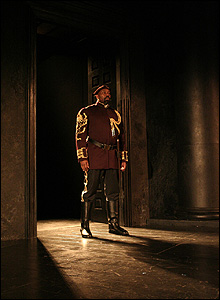
Lenny Henry plays Othello

Lenny Henry has won the 'Outstanding Newcomer' award at the London Evening Standard Theatre Awards - one of the best known drama awards in the U.K. He won it for playing Othello - his first Shakespearean role. Indeed his first drama role.

It is great news for him - but also for us. I saw him do it in Leeds - before the play came to the West End. He was excellent. The R4 connection is that Lenny ended up playing Othello after having done two feature programmes with producer Simon Elmes about his inital allergy to Shakespeare, and his increasing fascination with the plays. Which led him - on air - to learn about how best to recite iambic pentameter etc...

And out of that came the pursuit of Lenny by Barrie Rutter of Northern Broadsides to play the part. Bingo. We have recorded it for Radio 4 and it will transmit early next year. A treat.

Mark Damazer is Controller of BBC Radio 4

Life outside The Archers

Blog comments are currently unavailable. Find out more.

Post categories: , , 

Tim BentinckTim Bentinck18:37, Monday, 23 November 2009

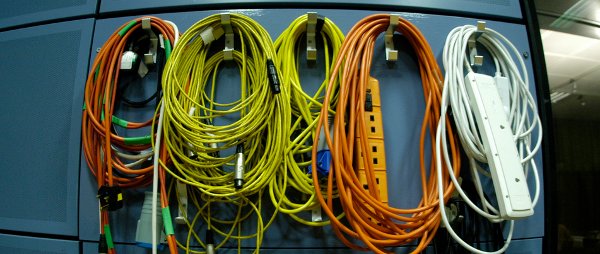
cables

Well here I am back in Ambridge after a two month stint Educating Rita at the Watermill Theatre in Newbury - I popped up to Birmingham to do four episodes in that time but was otherwise immersed in the discipline and rigour of theatre. Most of my life as an actor involves doing something different every single day and having to do the same thing every night (and twice on Thursdays and Saturdays) for six weeks was a shock to the system. However the result is that I feel more alive and brighter than I have for years - a nightly dose of adrenaline is a wonderful boost to the system and feels like having one's batteries recharged. I recommend it.

Of course I've returned to a Norman-less Ambridge, which is sad and very much the end of an era. It really won't feel the same. No doubt we will be recording scenes of the death of Phil at some point, which will be poignant for me, having lost my own Pa not so long ago. A little known fact is that as well as using the pen-name 'Bruno Milner', Norman also wrote Archers scripts as 'Norman Bentinck' - this long before I joined the show - weird or what? He was very different from my own father in so many ways but they had two things in common: they both had silver hair and beards and were both Google-like in their ability to answer almost any question you could throw at them. They both had prodigious memories and seemed to be able to recall everything that ever happened to them - unlike me: I am in the process of devising a one-man show about my life, with anecdotes, my songs and video, and have been trawling my friends for funny stories. It's terrifying the things that they've sent back - entire swathes of my life that I have no recollection of whatsoever. Scary.

Happy Christmas to all, and be nice to me in Mustardland!

Tim Bentinck plays David Archer in The Archers

...and the ironing board

Blog comments are currently unavailable. Find out more.

Post categories: , , 

Felicity FinchFelicity Finch12:47, Monday, 23 November 2009

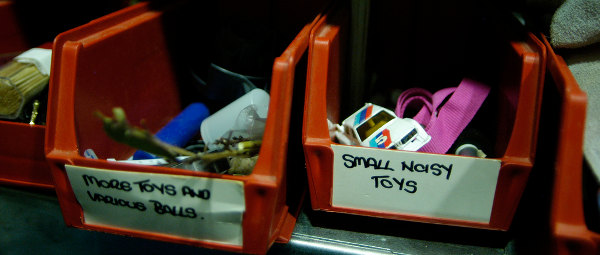
Archers toys

I've just come out of the studio where I've been recording three scenes in the first episode of the day which starts at 0915 with my daughter Pip and husband David. I always like scenes with Pip, played by Helen, as although I haven't got a daughter of my own I do have two nieces who live up in Newcastle who are a similar age to her, so the trials and tribulations of teenage daughters (without giving too much away...) are not completely alien to me! One of the interesting aspects of the Archers is the huge cross-section of age groups the cast spans so today I've been with sixteen year-old Helen and a ninety year-old June who plays Peggy. The scenes were pretty straightforward family settings so didn't call for my favourite sound effect: 'the folding ironing board' which magically makes a perfect cow pen clank!

It's been a little odd seeing Tim again this morning as last time we met was a couple of weeks ago when he was playing Frank (a middle-aged professor) in Educating Rita rather brilliantly with a very shaggy beard and hippy hair... Today he's been shorn and i've got my husband back!

I'm recording again at 2.45 so I've had a gap of a couple of hours in between. Sometimes it's nice to just relax and catch up with fellow actors as we seem to spend a lot of time coming and going over the six days we record and never having time to catch up with people properly - and as there are now about 60 in the cast, some of whom are in very intermittently, it can feel a lot like passing ships...

Other times I'm desperately trying to log on to a computer somewhere to catch up on emails connected to alternative work. I'm often researching a feature for Woman's Hour or a half hour documentery feature for Radio 4 as my other job over the last ten years or so has been in this field. Today I'm trying to do some research for the programme 'Something Understood' which I'm presenting in January, as well as write up a report on some work i was involved in recently in Kabul. Believe it or not Afghanistan has its very own radio soap which was originally based on the Archers, called New Home New Life. It's a wonderful vehicle to get across really important information to listeners - education through entertainment - providing quite literally a lifeline to many listeners.

Well I need to go and grab a quick lunch now at the great café opposite the Mailbox here in Birmingham where we record - which must make a killing from hungry Archers actors... It's funny to think sometimes of the huge number of actors who've been involved in recording the programme for nearly 60 years. I feel very aware of this fact today as the last scene I recorded with Norman was broadcast last night. He had played Phil from the beginning. I feel very lucky and privileged to have shared these moments with him as he died two days later.

Felicity Finch plays Ruth Archer in The Archers

Wearing a cravat

Blog comments are currently unavailable. Find out more.

Post categories: , , 

Charles CollingwoodCharles Collingwood12:16, Monday, 23 November 2009

Cravat man

Editor's note - Charles Collingwood, landed lothario Brian Aldridge in The Archers, stopped by my borrowed desk in the Birmingham Mailbox this morning and, while pacing up and down, dictated this short diary piece to me. And this, for some reason, seemed entirely appropriate - SB.

I stayed overnight in Birmingham because my home is in distant Hampshire. After a hearty breakfast I popped into the BBC Shop to sign copies of my autobiography - Brian and Me. Selling well, I'm happy to say!

And then I popped up to the Archers Green Room. There were a few laughs with my old friend Tim Bentinck (of 25 years), then producer Rosemary Watts came and told us all to be quiet and we did a read-though of the 1130 episode. We do four episoded per day - 0915, 1130, 1445 and 1700. A long day if you're in all of them. Today I'm just in the 1130 and the 1445, which is a good thing becasue I've got to drive home all the way to Hampshire.

My episode this morning, without giving too much away, is with my gamekeeper, William. And grumpy William needs taking down a peg or two which I'm more than able to do. William. of course, is played by Philip Molloy (whose father in real life is Terry Molloy who plays Mike Tucker).

On Friday I'm delighted to say I'm recording Just a Minute in London. I don't know the subjects and don't know the panel but I'm sure it'll be a riot. Last Friday, coincidentally, I went to a Lords Taverners tribute lunch for Nicholas Parson who's now officially the oldest man on the planet but looks the youngest. A great time was head by all. A worthy tribute to an old trouper.

And finally please note that in my photograph I'm wearing a cravat (since I promised not to put pictures of the cast on the blog you can see Charles in his glory here - SB). I wouldn't want to disappoint you.

Charles Collingwood plays Brian Aldridge in The Archers

Listening to Norman's last episode

Blog comments are currently unavailable. Find out more.

Post categories: , , 

Julie BeckettJulie Beckett11:09, Monday, 23 November 2009

Norman Painting

A quick look at the message board on the Archers website tells me that many of you were there and listening to Norman Painting's last appearance as Phil last night. So indeed were the production team. It was lovely to hear his voice again, in an episode that was completely unchanged from the one we recorded with him just before he died. Incredibly, that lovely moment with the sixpence carrying his date of birth was there right from the start.

I had to pick up my mum last night to take her to a meeting - so my daughter, who is learning to drive, drove me over there at seven o'clock. We sat outside the house listening together, before going in, where of course my mum had been listening too. Like some of you, she had heard Norman's first performance as well as this, his last. An amazing career, spanning so many years. Coming into the office this morning, I've just learned that Vanessa, our Editor, was also driving home last night and sat in the car outside her house until the programme ended. Both of us were very moved.

As I write, Rosemary Watts is directing the next lot in studio - we're up to Christmas and beyond now, and some of our actors will be joining the blog today. It's very strange for us all to think that Norman won't be making his way to BBC Birmingham to join us - and we'll miss him.

Julie Beckett is a Senior Producer on The Archers

Next week is Archers Week

Blog comments are currently unavailable. Find out more.

Post categories: , , , 

Steve BowbrickSteve Bowbrick19:03, Friday, 20 November 2009

Ambridge map

It's a rather benign coup. The fascinating and varied people of Ambridge are taking over. For five days only you'll be able to read about every aspect of the creation of The Archers here on the Radio 4 blog. Blog posts from behind the scenes at The Archers - by the cast, producers, engineers, writers, the programme's editor Vanessa Whitburn and even the boss, Mark Damazer - will appear here between Monday 23 and Friday 27 November.

There will be blog posts, photographs, audio and, inevitably, some tweets. On Monday and Tuesday I'll be 'live blogging' from the Birmingham studio (not far from Ambridge). Various actors and producers will be helping me and throughout the week I'll want to hear from you. Send me your questions and comments: leave them here on the blog. If you're on Twitter, use the hashtag#archersweek.

And Sunday evening's episode is a very important one. It's the last of thousands of episodes recorded by Norman Painting, who played patriarch Phil Archer for almost 60 years, before he died on 29 October. I wouldn't miss it for the world and I expect that Archers Week will be, at least in part, a tribute to Norman.

Steve Bowbrick is editor of the Radio 4 blog

  • The Archers messageboard is one of the busiest at bbc.co.uk. Host (and Archers script writer) Keri Davies has just announced that a new host has been appointed.
  • Archers Addicts is the official Archers fan club. To mark Norman's final episode, they're observing the traditions of 'Stir-up Sunday' this weekend. Read the recipe and join in.

The annual Radio 4 Christmas appeal

Blog comments are currently unavailable. Find out more.

Post categories: , , , , 

Libby PurvesLibby Purves18:56, Friday, 20 November 2009

St Martins bag

Back to Trafalgar Square for another year, in a strange flat limbo between the departure of the last Antony Gormley plinth-person and the arrival of the big Christmas tree. This time last year - as right now - I was involved in the Radio 4 Christmas appeal, for the work of St Martin-in-the-Fields with homeless and vulnerable people. The fund is shared two ways; half goes to the Connection at St Martin's - shelter and outreach for homeless people - and half to something called the Vicar's Relief Fund (we'll come to that later).

Normally, you'd think that from year to year things would feel much the same. This year, they don't. While economists and companies brightly talk of the recession 'bottoming out' and spirits rising, and bankers suck of bonuses as big as before, the fallout is still absolutely real, right here. In the centre next to St Martins' called the Connection, they have more clients, and most of them are far from being the cartoonish image of the 'tramp'. As someone said last year, any of us is only two or three bad decisions away from the pavement. Sometimes it's drink, sometimes drugs, but as often as not the stories you hear are just about lost jobs, broken relationships, fractured family life, and the sort of pride which stops you from asking for help in time. It keeps you sleeping on friend's sofas or walking all night and dozing on benches by day, carrying a neat-looking tourist backpack so that nobody need know it holds all your worldly possessions.

The blow to pride, and the difficulty of climbing back up to normality without losing it, is one of the recurring themes which outreach workers and clients both stress. The Connection - businesslike, practical, civil, comradely - deals well with it. And in the companionable atmosphere of the art room and the writer's group, the deeper wilder feelings can be let out in safety, and the healing begins.

So I like the Connection, these visits and the voices which my producer Sally Flatman and I collect there. But there's another half to this 83-year-old Radio 4 appeal, granted to St Martins by Lord Reith, less dramatic perhaps but immensely valuable: a fund which provides a stitch in time, a quick necessary patch to stop the whole financial dam breaking and overwhelming people. It is called the Vicar's Relief Fund, and inside the stately 18th Century church, beneath the gilded ceiling, the Vicar himself Nick Holtam likes to run us through some of the year's beneficiaries.

But the name - Vicar's Relief Fund? Blimey, how retro can you get? In an age which prefers to witter about delivery and empowerment and service-users, the very title has a stern Victorian ring to it. Personally, I rather like that (I always fear that my loyalty as a donor to the Salvation Army might erode if it ever abandoned its little 1886 red shield logo or changed its name to "Save!"). But the Vicar's Relief Fund is not at all retro: it provides a very modern service, in the age of fines and mounting interest and compulsory paperwork.

What it does is to give small grants for specific immediate needs - average only about £160, often as low as £40 - and to give them very, very quickly (unlike the DSS). Social workers, clergy, community workers or Citizens Advice Bureaus make the requests, so they are all known to be genuine and urgent, and the Fund responds fast. That stops fines and interest building up, or a domestic crisis becoming dangerous. Sometimes it's rent arrears after a sudden bereavement, sometimes some vital bedding for a new baby, sometimes replacement of a broken cooker (the alternative, if you're poor, being one of those terrible HP scams where you end up paying five times its value). Given a bit of bad luck and trouble any of us could find ourselves needing a small sum, quickly, to prevent the spiral into ever deeper debt. One of this year's Vicar's Relief Fund grants was £60.94 to replace a builder's registration card so he could work - rather than remain homeless. It did the trick. He's back at work. And sleeping in a bed.

So I like this half of the appeal too. It appeals to my quarter- Scottish DNA and the shade of my Fifeshire father - a stitch in time, a brief hand up the slippery slope, a nod to human dignity, not too much said. Sometimes - memorably last year, with a retired engineer who lost the financial plot after his wife died - a beneficiary is willing to talk about what the Vicar's Relief Fund did for them in a hard time. But they don't have to. Quickly and quietly, it does its bit and steps back out of the limelight. Except at Christmas, when we celebrate it - and you fund it. Thanks.

Libby Purves is a broadcaster and radio presenter. She presents Received with Thanks, Radio 4's programme about the appeal

  • This year's appeal takes place on BBC Radio 4 on 6th and 10th December. Volunteers from Radio 4 and from St Martin-in-the-Fields will answer the phones, accepting donations from people all over Britain. Last year over £750,000 was raised.
  • The photograph, by producer Sally Flatman, shows the possessions of one of The Connection's clients, including a newly-issued birth certificate. When you're homeless or living in a hostel, your bag and its contents take on extra importance. A frequent task for workers at The Connection is obtaining duplicate birth certificates for people who have lost theirs and thus find it hard to get work or a place to live. There are more pictures here.

Acting in Our Mutual Friend

Blog comments are currently unavailable. Find out more.

Post categories: , , , 

Jessica DromgooleJessica Dromgoole14:00, Thursday, 19 November 2009

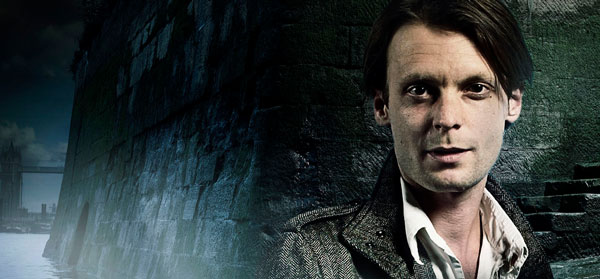
Carl Prekopp in the role of John Rokesmith in Radio 4's adaption of Our Mutual Friend

I asked members of the Our Mutual Friend cast four questions: what appealed to them about their character, why Dickens is so enduringly popular, what they best remembered about the recording, and why they enjoyed radio acting (if they did). Here's a recording of Carl Prekopp and Daisy Haggard talking about the production, recorded especially for the blog:

In order to see this content you need to have both Javascript enabled and Flash installed. Visit BBC Webwise for full instructions

Over the next few days we'll be publishing our cast members' responses to my questions. First, Carl Prekopp:

Often with Dickens the straight man in the middle is quite frustrating for an actor as he can see all the weird and wonderful characters having a ball around him. But in 'Our Mutual Friend' the mysterious nature of John Harmon and his circumstances gives the actor an appealing otherworldliness. Having in a sense confirmed his own 'death' he is looking in on the lives of people from behind a mask of deception throughout. He is quite an empowered central character. Almost like a private detective. And the wonderful thing is no matter how front footed he is, it is still a girl who is the source of so much of his frustration.

I loved having a face off with Jamie Foreman. It was also one of the few scenes where the darker side of my character had a chance to rear it's head.

Daisy was a wonderful leading lady. And from the readthrough it became quite obvious she was going to be fun in the studio so all scenes with her made for a good day at work.

Dickens pays unbelievable attention to detail, so much so that once you have finished one of his books, that story is a part of you as though it is a memory. You can see the people, the streets and the feeling that comes with each event as though you were actually there.

I enjoy doing radio because it is left to the power of the imagination. It's good old fashioned story telling giving everything over to the audience. We as actors can create the world in our own minds, forgetting we're in our normal clothes and holding scripts in a windowless studio and the more we use our imagination the more the audience will create their own images of the geography of the play and how the characters and their world may look. No two audience members will have the same image of any one play.

I also love radio because there are no physical restrictions on the parts we can play. And in this age of beauty before talent it is quite liberating. I have in my time played a endorphin-addicted body builder. People that know me will understand that this is a part I could never play in any other medium.

Jessica Dromgoole is a producer at BBC Radio Drama

  • Radio 4's 20-part adaptation of Our Mutual Friend is on-air now.
  • Radio 4's 20-part adaption of Our Mutual Friend is on-air now and because it's part of the 'series catch-up trial' you can listen online to all the programmes in the series until seven days after the last episode airs.
  • Look out for further blog reports on the recording process, with contributions from composer Roger Goula, studio manager Colin Guthrie and other members of the cast.
  • We'd love to hear your thoughts about Dickens dramatisations you have heard and enjoyed on the radio. And which of the novels do you think Radio 4 should tackle next?
  • There are production photos of the whole cast, taken for Radio 4 by Phil Fisk, here.

The BBC Trust's Thought for the Day ruling

Blog comments are currently unavailable. Find out more.

Post categories: , , , , 

Mark DamazerMark Damazer10:46, Wednesday, 18 November 2009

religion books

The Thought for The Day ruling by the BBC Trust was never going to be greeted with universal applause - or anything like it.

In a nutshell the Trust says that restricting Thought for the Day to speakers who espouse a faith does not breach the BBC's obligation to impartiality - but the Trustees say that it is up to the management to decide whether to include non-believers.

As I have said before I think it's a very finely balanced argument. I know humanists, agnostics and atheists are frustrated. They tell me so - loudly. (And mostly politely). But the slot has its merits. It is distinctive and even if you sometimes scream at the radio when it's on - and I have done this myself - it nevertheless often gives a sharply different perspective on the news - and thus can be stimulating. Maybe infuriating - but different.

One more thing before I duck for cover. We do many programmes and items on religious and ethical issues. There are many perspectives on offer - and many of them are not rooted in faith at all.

I discussed the state of play on Thought for the Day on yesterday's PM. Here it is:

In order to see this content you need to have both Javascript enabled and Flash installed. Visit BBC Webwise for full instructions

Mark Damazer is Controller of BBC Radio 4

Cosmic dust and poetry in Cardiff

Blog comments are currently unavailable. Find out more.

Post categories: , , , , , , 

Caroline RaphaelCaroline Raphael11:02, Wednesday, 11 November 2009

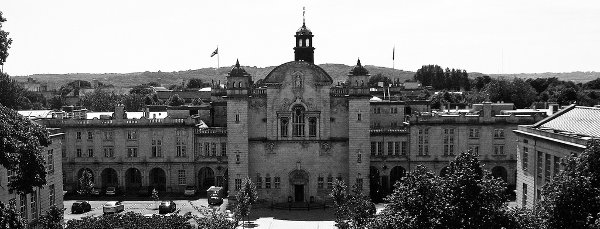
Cardiff University

Free tickets for BBC Radio 4 recordings at Cardiff University

Update: the information about Any Questions below is wrong. The panel for tomorrow's live show is: Claire Fox (Institute of Ideas), Tim Montgomerie (Editor of Conservative Home), AN Wilson (journalist) and Chuka Umunna (Labour's Parliamentary Candidate for Streatham - @ChukaUmunna on Twitter).

We are about to embark on the third and final leg of our mini-tour of Universities. We will be in Cardiff on Thursday and Friday of this week (the 12th and 13th November). On Thursday we are recording Material World with Quentin Cooper and new quiz show The Third Degree hosted by Steve Punt that sees academics pitted against their students. On Friday we have Any Questions with Jonathan Dimbleby and Bespoken Word, our performance poetry programme presented by Mr Gee.

The Cardiff venues are large so we have room for members of the public as well as students and members of the University staff. If you go onto the Cardiff University website you will find details of how to book. So if you live in the Cardiff area do come and join us. You are all very welcome.

The following guests have been confirmed:

Any Questions: journalist Bryony Gordon (@bryony_gordon on Twitter), Chuka Umunna (@ChukaUmunna on Twitter), Labour's Parliamentary Candidate for Streatham, Steffan Lewis, the Plaid Cymru prospective Parliamentary Candidate for Islwyn and Andre Walker, Tory campaigner.

Bespoken Word: John Sparkes, Dizraeli, Laura Dockrill, Ross Sutherland and Nathan Penlington.

Material Word: Nick Pidgeon and Nick Jenkins from the Energy Institute talking about the Severn Barrage. Haley Gomez will be talking about Cosmic Dust and Nick Pidgeon about public reaction to new technologies including the news about the proposed new nuclear power plants.

Caroline Raphael is Commissioning Editor for Comedy and Entertainment at Radio 4

Sunday Worship from Camp Bastion, Helmand

Blog comments are currently unavailable. Find out more.

Post categories: , , , , , , , 

Phil Pegum16:04, Tuesday, 10 November 2009
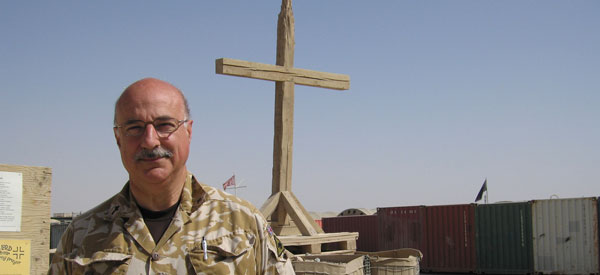
Padre Andrew Martlew, presenter of Radio 4's Sunday Worship from Helmand

The seeds for Sunday Worship from Helmand were sown more than five years ago. I'd always been interested in the role of religion in an organisation where the job - when all else failed and to put it bluntly - was to blow things up and kill people. It took about 18 months from first contacting the Ministry of Defence until Martin Bell and I stepped on to a flight from Brize Norton to Iraq just before Christmas 2006.

We were heading for Basra to meet the Reverend Andrew Martlew, who was then stationed at the Shaiba Logistics Base with 40 Regiment Royal Artillery and the series for Radio 4 was called 'God and the Gun'. In the jargon of the Church his job is known as incarnational ministry. Getting out of the churches and on to the ground. Sharing the lives of the people who need you. And for a padre in the military, that can mean going in to some very uncomfortable places, both physically and spiritually.

The programme was a success, winning the premier award from the Sandford St Martin Trust, but I felt there was unfinished business. 'God and the Gun' was a documentary and came, I hope, with its own insights. But there was another way of exploring the experience of religion in a battle field. Why not through an act of worship? I thought that would allow us to explore the human side of this story at a much more profound level.

'Sunday Worship' is Radio 4's weekly act of worship. Mostly it comes in a conventional form as you'd imagine, from a church or cathedral, but occasionally it goes 'out on the road' and is recorded as a feature - still recognisably an act of worship with prayers and hymns, but with added documentary elements.

When the causalities started to mount in Operation Panther's Claw everyone I spoke to in the military told me that the atmosphere on Remembrance Sunday this year would be different. In July I suggested recording a Sunday Worship in Helmand on the themes of sacrifice, service and remembrance and that Andrew Martlew, who's still a serving padre, would be the ideal man to do it.

So, after a lot of behind the scenes negotiation with the Ministry of Defence, that's how we found ourselves early one October morning once again at Brize Norton waiting for the RAF flight to Afghanistan. When you're making a programme dealing with such powerful and emotional themes, getting the right tone is the most important and difficult challenge - giving an honest account of what the people serving this summer in Afghanistan have been through, without being voyeuristic and sensationalist, or sentimental and mawkish.

I'd be lying if I said that I had an exact image of the tone I wanted for the programme and I think I'd doubt any producer in similar circumstances who told me they had. I don't believe you can ever have an advance plan; you've just got to rely on your antenna and thankfully, in this case, your presenter. We were interviewing the sergeant major of the hospital in Camp Bastion. He's a member of the Territorial Army and in civilian life worked for BT. In Helmand he found himself, among other things, in charge of the mortuary.

He'd steeled himself for preparing the bodies of soldiers for repatriation; what he didn't expect was to be wrapping in shrouds the bodies of young children - victims of accidents who'd been brought to the hospital, or who'd been caught up in the fighting, and sometimes victims of IEDs - those roadside bombs can't tell the difference between a British soldier and a local child.

As the SM told us, you can't see the sight of small children in large body bags without it changing you and not surprisingly he started to cry. And so did my presenter Andrew Martlew. But then something extraordinary happened. Something which I, coming from a documentary production background, had never encountered. Andrew Martlew the presenter, instinctively and unselfconsciously became Padre Martlew, the army chaplain. He reached out to that soldier knowing, in a way that only another soldier would, what he was going through and offering comfort and reassurance. For chaplains, this is what incarnational ministry is about.

For me this small moment, mirrored countless times in different guises, distilled the essence of remembrance from a soldiers' perspective. This is the window I wanted to open for listeners. I think only Sunday Worship could do that and perhaps only an army padre would understand what tone to take. And there were three people crying in the corner of that ward in Camp Bastion hospital.

Phil Pegum is a Producer in the BBC's Religion & Ethics department

Producing and directing Our Mutual Friend

Blog comments are currently unavailable. Find out more.

Post categories: , , , , , , , , 

Jessica DromgooleJessica Dromgoole16:00, Friday, 6 November 2009

In order to see this content you need to have both Javascript enabled and Flash installed. Visit BBC Webwise for full instructions

Editor's note: the second instalment of our series about this year's big Christmas adaptation, Our Mutual Friend, is by producer/director Jessica Dromgoole:

5 May 2009. Behold London! Behold Oxford Circus tube station! Behold Broadcasting House! Behold 60a! The studio is primed for nine days of wonder. Ordinarily, four weeks of Woman's Hour Dramas would take twelve days to record, but we're ambitious for the economy of scale; creating complex equations of cast size, cast calibre and time spent on the episodes. Jeremy and I have been poring over the recording schedule for longer than is healthy, with an eye to clustered threads of story, locations, the actors' availability, and the Studio Managers' and our own sanity. Matilda and James - the broadcast assistants - have been negotiating with contracts, agents, the actors themselves, the actors' childminders, and the radio rep coordinator, keeping up with our ambitions, and often exceeding them. They're extraordinary.

The first day is daunting. Jeremy is directing. I'm sitting in, absorbing as much as I can. Everything the actors do today will hold fast for the series. Their vocal choices, the level of their articulacy, the breadth of the comedy, the dynamic of each of their relationships. The strongest boldest performances are already working really well. The actors are loving the script. Outside of the leads, the world of Our Mutual Friend is such a melting pot of front-footed characters, ambitious, driven, delighted with themselves, it calls for size and clarity, and the cast are delivering beautifully.

6 May. My scenes today are new territory, on the whole. The Boffins with Rokesmith. Jason asks whether Mr Boffin knows who John is yet. None of us know. He demonstrates the difference it makes to his performance, which is huge, but not revealing. We decide that yes, he does know, or he's 95% certain, and he's testing Rokesmith by showing him round the old house. Colin (Guthrie) and Anne (Bunting) - the Studio Managers - are working beautifully together, creating a London that is very true and simple, and doesn't feel clichéd Victoriana at all. Lee Ross gives us a variety of Weggs. He's not happy with the voice yet. He'd painted him huge and primary in the readthrough, setting a fantastic bar for everyone else there, but wants to find something else. We record the first encounter with Boffin over and over, trying to hit the dynamic which will persuade us that these men belong to the same story, and when it happens, it's a delight.

The actors at the Jolly Fellowship Porters get the giggles every time the Inspector sucks on his pipe. I don't get it. It's been a long day. How Colin and Anne look so fresh is beyond me.

7 May. Jeremy today. Episodes 6-10 already! Some great work with Daisy (Bella) and Carl (John) this morning. Making the series at this pace, it feels too early for John to declare his feelings for Bella, but of course, listening at only fifteen minutes a day, it'll be about time. Lizzie and Jenny Wren are a lovely partnership. Both voices are light and clear, but the actors are heading in different directions - Lizzie's is clouded by difficulty, Jenny's luminous with confidence. As Jeremy prepares for the Eugene/Bradley confrontation over the billiard table, I say 'Oh, my favourite scene of the whole series'. A look of panic crosses Jeremy's face, and I wish I hadn't put him under the additional pressure. It's a difficult scene to pull off, because our enjoyment of it depends so strongly on the sightlines and eyeballing of the two men. This is achievable, and Patrick and Neil are really in harmony, but it's not easy.

8 May. Great day. Episode 9 is a break away from the feel of the series so far, and Jamie (Rogue) and Carl (John) are relishing the prospect of a substantial scene. Carl admits afterwards that he was nervous about playing the hard man, out-Jamie-ing Jamie, but they work well together, feeding each other and timing beautifully. It's almost disappointing that they get it so right so quickly. Favourite exchange of the day: 'That's a good table' ... 'It's a dead table now'. We record the drowning. I love drownings on radio. Love them. Topless actors with their heads in washing up bowls of water, surfacing for each line. The method is crude but the effect is fantastic. The washing up bowl comes out. Jonathan (Radfoot) blanches. He's got a cold and didn't know he'd be asked to put his head in the water. We warm the water for him. He's very game. Each element sounds great, but we'll have to wait for the edit to see how they fit together.

11 May. I can't be in studio today. Too much else to do. I've got a studio (for In Mates, an Afternoon Play) at the end of the month and need to turn the script around in time to cast it. I live so resolutely in Our Mutual Friend, I'm aware that I'm trying to cast In Mates like an Our Mutual Friend reunion*. Jeremy is recording Rogue's drowning, Wegg's first turning of the Boffin screw, and the Wilfers' anniversary dinner, cooked by Bella. I email-pester Matilda and James asking for progress reports. I send two texts to Jeremy by lunchtime. I'm an Our Mutual Friend stalker. Absence is focusing my mind exquisitely. I'm done by four, and hot foot it to Broadcasting House, and back to the oxygen of filthy old London. I'm sent straight into studio to be an extra in the Jolly Fellowship Porters. I'm rubbish. People wish I'd stayed away. *I do, and Pauline Quirke (Mrs Boffin) plays Michelle, Lizzy Watts (Lizzie) plays Kirsty, Malcolm Tierney (Old Harmon) plays the father-in-law, and Ben Askew (Sloppy) plays Pavel.

12 May. Busy studio today. A lot of short scenes. A lot of movement. Something strikes me about the third week of the series. The third quarter of the book, too. The characters are set, and there is little time to delight in their foibles and quirks. Their journeys are at their most complex, and they are - for the most part - facing the worst of their troubles. Individually the scenes are exciting, witty, beautifully turned. Together the day is enormous. We fail to record all the scenes on the schedule. We've been breaking our backs to keep to the schedule, and plug at each scene until we're perfectly happy, and it's a horrible feeling to be responsible for the one lapse. It's a sad day, too, because characters are beginning to leave the series. Saying goodbye to Nicola (Jenny) is unnecessarily hurried because of my schedule guilt. We'll see her on Thursday at the aftershow drinks, but the studio will be smaller without her.

13 May. Jeremy's day, full of exquisite two handed scenes - Rogue and Bradley, John and Bella, Bradley and Charlie, Eugene and Lizzie. The actors are so sure of who they are by now, and so compelled by the paths of their own stories, Jeremy is directing them so simply, and Colin and Anne are approaching them with so little clutter, sitting in the cubicle is a privilege. It's fascinating how Dickens has moved his characters - his leads - from uncertainty, questing, fecklessness, superficiality, towards something more driven, more sure, more in line with the bigger, bolder characters who have peopled the world they move in.

14 May. The last day of full cast recording. I mustn't give away the story, but there are scenes and moments, and performances I will treasure. A double drowning. Two brimming washing up bowls. Two discarded tops. My favourite thing, twice. Bradley's justification, which Neil and I worked on until it had barely an inflection at all; Rokesmith's wild moment of clarity on the street with Mortimer, where Carl manages to suggest that he is working with only the top 5% of his brain; Wegg's counterattack at the moment of his comeuppance, which Lee gives with utter conviction, silencing the room and possibly delivering the message of the book; these come once in a blue moon ordinarily. To get to work on them all in one day is utopian. We end on Lizzie's song, which feels lovely and obscure, carrying a lot of the tone, but none of the narrative of the series, and then repair to the pub for drinks with as many of the cast as possible. Carl and Neil are both appearing in theatre, so don't make it, and are missed, but the atmosphere is very positive and celebratory. I leave as Nicola is offering Jamie a wheelchair lift to his home in South East London on her lap.

15 May. Alex Jennings. So completely at ease with Dickens, Mike's writing, the microphone. He's a joy. He's disappointed to have been such an outsider to the process, having called in to studio the day before and 'felt the love', but we can tell how crucial his voice and his interest will be to the pieces as a whole.

Jessica Dromgoole is a producer at BBC Radio Drama

  • Radio 4's 20-part adaptation of Our Mutual Friend begins on Monday at 1945
  • Jeremy Mortimer, Executive Producer, wrote about adapting Our Mutual Friend here on the blog last week.
  • Look out for further blog reports on the recording process, with contributions from composer Roger Goula, studio manager Colin Guthrie and members of the cast.
  • We'd love to hear your thoughts about Dickens dramatisations you have heard and enjoyed on the radio. And which of the novels do you think Radio 4 should tackle next?
  • There are production photos of the whole cast, taken for Radio 4 by Phil Fisk, here.

Morpurgo reads Sassoon on PM

Blog comments are currently unavailable. Find out more.

Post categories: , , , , , 

Tony Pilgrim17:55, Wednesday, 4 November 2009
Siegfried Sassoon

In the hour or so before Prime Minister's Questions today, MPs were invited to another event. In one of the Commons' committee rooms, the National Heritage Memorial Fund announced it was donating half a million pounds to save the collection of Siegfried Sassoon's private diaries and pocket notebooks which were compiled while serving on the Western Front.

The collection also includes an autographed manuscript of 'A Soldier's Declaration' which when it was first read out at Westminster in 1917 caused a national storm. Sassoon claimed that the war was being prolonged by those who had the power to end it. Ninety years on his statement was again read out loud - by the writer and author Michael Morpurgo. Michael kindly came in to read it again for PM.

In order to see this content you need to have both Javascript enabled and Flash installed. Visit BBC Webwise for full instructions

Tony Pilgrim is head of scheduling and planning at Radio 4 - he's currently working on attachment at PM

Moral Maze on Twitter and mob rule

Blog comments are currently unavailable. Find out more.

Post categories: , , 

Steve BowbrickSteve Bowbrick09:33, Wednesday, 4 November 2009
flash mob

This evening starting at 2000, the disputatious crew of the good ship Moral Maze will be debating 'Twitter and mob rule'. Guests are regulars Melanie Philips and Clifford Longley plus Kenan Malik and James Panton. The programme's billing says:

This week the Moral Maze asks "when does a popular and spontaneous protest become mob rule?" Fans of Twitter, the micro blogging site, have chalked up a couple of notable victories of late. Followers helped to expose a legal injunction against the Guardian and Twitter led protests generated tens of thousands of complaints against Jan Moir when she wrote a column using the death of Stephen Gately to criticise gay marriage. Is this net based protest a valuable tool to demonstrate popular opinion or are we sacrificing traditional political engagement for the instant gratification direct action?

Since I expect the Twittersphere will be humming loudly during the programme (it's already started), let's keep track of the conversation using a hashtag.

If you're listening this evening and you feel like Tweeting about the programme or its theme, use the hash tag #moralmaze. That way everyone who's listening will be able to see each other's contributions. Use a search tool like Ice Rocket or Twitter's own. Or use a real-time display gadget like Twitterfall. There's a comprehensive list of Twitter clients and services on Wikipedia. Just follow the hashtag #moralmaze.

I'll be there, listening and tweeting on the @Radio4blog account as will other Radio 4 people. Guests Kenan Malik (a regular presenter of Analysis) and James Panton (an Oxford academic) are on Twitter and they've both mentioned their appearances on tonight's programme already.

Steve Bowbrick is editor of the Radio 4 blog

A programme named

Blog comments are currently unavailable. Find out more.

Post categories: , , , 

Alexandra Feachem11:20, Tuesday, 3 November 2009

Cage

This has proved much harder then we thought and thank you all for all your comments and suggestions. In the end we had well over 50 title suggestions, from listeners, Radio 4 bloggers, colleagues, presenters and random people we've simply accosted who didn't look like they had anything better to do. Favourites included 'Quips and Quarks', 'Brian and Robin's Multiverse', 'Schrödinger's Chat', and 'Here's Looking at Euclid'.

We considered them all very carefully, and took on board all your comments, hence our slight tardiness in getting back to you, but we do finally have a winning entry. And the title is... (insert drum roll here)... 'The Infinite Monkey Cage'. This was actually one of the earliest contenders, and came from our very own Robin Ince. It's inspired by the popular probability idea that suggests if monkeys were left with a typewriter for an infinite amount of time they would eventually type the complete works of Shakespeare. I'm not sure if Robin is suggesting that he and Brian are the monkeys in this scenario, but we all loved it the moment he suggested it, although there were concerns that it was perhaps not as straightforward as some of the Radio 4 titles around today, and whether this mattered? (see my previous blog post).

But the fact it is a bit offbeat and challenging is the very reason it fits the show so well, with its irreverent and quirky take on the world through scientists' eyes. I hope you will join us inside The Infinite Monkey Cage for our very first broadcast on Monday November 30th at 1630, and that we live up to our spankingly brand new title, and thank you for being part of the process.

Alexandra Feachem is a producer in the Radio Science Unit

The Radio 4 University tour reaches Bedfordshire

Blog comments are currently unavailable. Find out more.

Post categories: , , , 

Steve BowbrickSteve Bowbrick16:51, Monday, 2 November 2009

Nick Mohammed and the moon

As I wrote last week, I've been travelling with a small group of Radio 4 people (and an outside broadcast truck) on the network's University Tour. We've visited two of the three planned universities so far: Derby and Bedfordshire (Cardiff next week). The tour is a trial. If it's a hit it'll be repeated in later years.

Students and faculty are treated to a selection of Radio 4 stuff right there on campus. In Bedford there were recordings of With Great Pleasure (with Robert Webb), The News Quiz, Thinking Allowed and Nick Mohammed's Apollo 21. There were classes from Radio 4 experts: Rory Morrison's newsreading workshop, sessions on digital journalism from the College of Journalism, writing for radio from BBC writersroom and a social media presentation... given by me. There was also a BBC careers exhibit.

A highlight was an hour-long workshop from Jon "The Men Who Stare at Goats" Ronson about making radio features. I covered his workshop live, here on the blog, typing away from a corner of the auditorium while we heard insights and clips from Jon and his producer Laura Parfitt. Fascinating and inspiring.

Other coverage of the event included Twitter - on the @radio4blog account and using the hash tag #R4UniTour and lots of photos, mostly from Radio 4 producer Stan Was, on Flickr. Stan shot the video of Nick Mohammed above and I shot a lot of short vox pops with Bedfordshire students - asking them to tell me 'four things I know about Radio 4' (I'll publish the vox pops later, probably after the Cardiff trip). More from the tour when we get to Cardiff on 12 November.

Steve Bowbrick is editor of the Radio 4 blog

  • Nick Mohammed was photographed by Stan Was after a special recording of his Apollo 21 sketch show to be broadcast on Radio 4 at 1830 on 11 November.
  • The events at Cardiff University on 12 and 13 November are open to University students, faculty and staff and all are free of charge. There's a special page on your intranet where you can get tickets and learn more.

Your new BBC ID is ready

Blog comments are currently unavailable. Find out more.

Post categories: , , , 

Steve BowbrickSteve Bowbrick16:26, Sunday, 1 November 2009
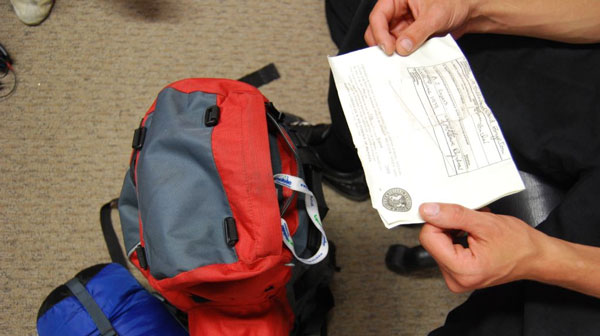
Supermen

If you've ever left a comment here on the blog or on the messageboards you'll have signed in to the web site to tell us who you are. Over the weekend the BBC's sign-in system was upgraded. As a result, the next time you sign in something different will happen and you'll be asked to 'upgrade' your user account to the new system, which is called BBC ID. This will happen only once and it's a pretty easy process. It's all explained here on the BBC Internet blog.

Steve Bowbrick is editor of the Radio 4 blog

Heather honey and hard work

Blog comments are currently unavailable. Find out more.

Post categories: , , , , , 

Fran BarnesFran Barnes12:00, Sunday, 1 November 2009

Farming Today honey press

Picture the scene. Blue sky... singing birds... the rolling Derbyshire moorland covered in a blushing pink eiderdown as beekeepers across the country arrive for the annual ritual of taking the bees to the heather.

That's how it should have been on that August day when the Farming Today bees arrived at the much hyped moorland in order that Aunty and her team of thousands of workers would produce gold standard heather honey.

However, the cold, foggy rainy day which greeted us in Derbyshire was not the idyllic scene I had been expecting. As we unloaded the Farming Today bees from the trailer our trousers became heavy with rain, our feet started squeaking and large drips of water were rolling down the backs of our necks.

It had taken 2 hours to drive there, but 10 minutes after arriving and unceremoniously dumping the Farming Today hive near the soaked heather, we were on our way back. Praying that the weather would be kind to our bees and, at the very least, they wouldn't starve.

In September we brought the bees back. They didn't starve. Quite the contrary it appears... Now it was time to harvest it.

Heather honey extraction is not easy. Other types of honey are spun out of the frame in a centrifuge. Heather honey is thicker and no amount of spinning will get it to shift. Instead, it is pressed out using a converted wine press. 40 tonnes of pressure are put on a stack of honeycomb filled with heather honey. The pressure makes the honey runny and it trickles out into a bucket.

For me, honey extraction is the worst part of beekeeping. It's sticky, it takes an age and the cleaning up afterwards would test the patience of a saint. It took 2 hours to extract the honey our bees had produced. It would take another 2 hours to clear up. Add that to the time taken travelling to the moor and back... heather honey production is not for the faint-hearted.

However, Aunty and her gang had done Farming Today proud. They'd produced 30lbs of the stuff. For those who haven't ever tried heather honey, spread thinly. It's not like other honey which can be eaten by the spoonful. It has a strong taste. Chris and I are ashamed to say that when we first tasted it at our evening classes last March we wrinkled our noses in disgust.

We would both now agree that the hard work that bees and beekeepers put into producing the seasonal crop of heather honey produces a sublime product. The consistency of liquid fudge and the taste of... well, you'll have to try some. But when you do bit into a piece of toast smeared with heather honey do think of the work the bees have put in to produce it, and of the lengths the beekeeper has gone to to bring it to your kitchen.

Fran Barnes is a producer on Farming Today

  • Readers of the blog are very interested in bees. The Farming Today Bees category is the most popular on the Radio 4 blog.
  • Farming Today is on Radio 4 Monday - Friday at 0545 and on Saturday morning at 0630. You can listen again online, of course, and there's a podcast.
  • The picture shows the machine used by Fran to extract the Farming Today heather honey.

More from this blog...

Categories

These are some of the popular topics this blog covers.