
The Archers, game theory and the kitchen sink
It began, a couple of weeks ago, with my editor asking, "Chris do you know about game theory?" I've been a journalist long enough to know it doesn't pay to plead ignorance (unless you've done something wrong or stolen pens from the desk of a colleague), so I said, "I know all about game theory - I studied it at university." This wasn't entirely untrue: I remember the subjects I studied at university, but in the same way a hangover remembers the last thing you drunk.
"Great, I knew you'd know", said my editor, "I want you to do a piece on game theory and The Archers for Broadcasting House: the plot-line with Matt, Chalky and the SFO is a perfect example of the prisoner's dilemma". This was a bit of a challenge. The prisoner's dilemma has been used to analyse everything from the cold war to the economy, but I believe this was the first time it had been applied to Ambridge.
In the end, I did what any good student of game theory would do, I cheated and let two other people make the radio piece for me. A very patient and kind professor of economics, Martin Cripps gave up his Friday to visit The Archers' studios and an equally charming and patient Mary Cutler - the longest serving script writer currently working on the show - agreed to discuss her craft with Martin.
The end result was a fascinating conversation and the two had more in common than you might suppose.
You can listen to a longer version of their conversation in the player below.
In order to see this content you need to have both Javascript enabled and Flash installed. Visit BBC Webwise for full instructions
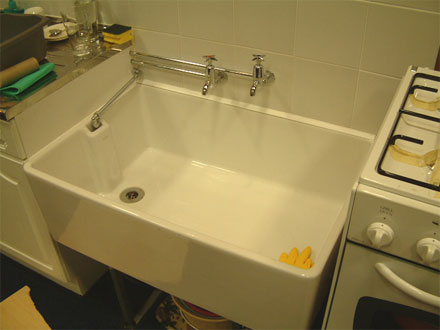
- Chris recorded his interview in The Archers' studio in Birmingham. The picture shows a kitchen sink used to make sound effects in the studio. It's from a slideshow of pictures of the studio.
- Chris's Broadcasting House item about The Archers and game theory went out on 29 March (podcast).
- Entries about game theory from The Stanford Encylopedia of Philosophy and Wikipedia.
- A history of the RAND Corporation (PDF) where much of the early work on the practical application of game theory was done.
- The Telegraph's City Diary on the SFO's arrival in Ambridge.
- A Shockwave game based on the prisoner's dilemma from the Open University.

Comment number 1.
At 14:25 7th Apr 2009, Mustafa Grumble wrote:That was fascinating, thank you - the sort of thing you could only get on Radio 4.
Complain about this comment (Comment number 1)
Comment number 2.
At 08:17 18th Apr 2009, cebuhotel wrote:This comment was removed because the moderators found it broke the house rules. Explain.
Complain about this comment (Comment number 2)