
Like most people, my love of classical music happened through a series of unrelated fortuitous events. My mother used to blast Cosi fan Tutte out of the cassette player in her old Nissan Sunny in a bid to try and keep her four unruly offspring quiet. I thus have Mozart and da Ponte to thank for avoiding a collision on the school run, as we children inevitably got into a wildly distracting scuffle in the back seats. Lesson no. 1: classical music is like balm for the soul/stops kids punching one another.
Then, I remember my head virtually exploding with excitement when the music teacher played us Tchaikovsky’s 1812 Overture on an old record player – I’d never paid much attention in our tuneless choir rehearsals, but hearing that tumultuous, pulsating, adrenalized orchestral racket stopped me sleeping that night with excitement. Lesson no. 2: classical music can be spectacularly cerebrally stimulating.
And my eternal thanks to Mrs Antoniou, my piano teacher, who sat and listened to 4 year-old me playing Frere Jacques. Badly. 24 times over. Her limitless patience, gentle encouragement and boundless enthusiasm fostered in me a love of learning and playing music that remains today. Lesson no. 3: classical music is an unbeatable combination, a physical, mental, emotional and intellectual discipline.
But what I, and the children like me, never had was a one-stop shop; a place to go to where everyone could encounter the great music of the past whenever they wanted to. If your parents could afford music lessons, if they turned on Radio 3 or took you to a concert, you had a chance to hear great classical music. But it remained a lottery to get access to hearing – and being able to engage with - classical music.
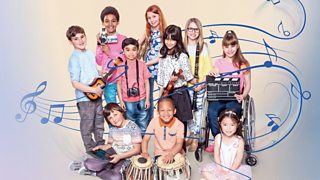
Now, thanks to the BBC’s brilliant Ten Pieces scheme, every primary school child in the country has access to classical music. Through ten seminal pieces of music, the project encourages kids to listen, respond, react and create and it will, I’m sure, open a door to a new world for lots of children – a world of wonder and delight, where music is the springboard for their own creativity and brilliance.
Here on Radio 3, there’s a chance to supplement what your children are learning about the Ten Pieces – and find our more for yourself - via a host of companion programmes and features. Every weekday morning at 7.30 (between Monday 29 September – Friday 10 October), children and musicians introduce each of the Ten Pieces on the Breakfast show. Over the same two weeks, you’ll hear recommendations of other music linked to the Ten Pieces, each morning on Essential Classics.
There’s a chance to hear the Ten Pieces in full during Afternoons on 3 and in Saturday Classics, the Ten Pieces ambassadors Laura Mvula, Alison Balsom and Catrin Finch introduce their choice of music. Meanwhile, on In Tune, I’ll be bringing you Ten Facts on each of the Ten Pieces - available as a free download so that parents and grandparents can share and enjoy that knowledge with their children.
And as a big closing fanfare I’ll be hooking up with the Blue Peter team for a live In Tune from Salford. I can’t think of a better way of getting the message out there to as many kids as possible. Lesson no. 4 – classical music can seriously enhance your life.
