
Humid heat, torrential rain and crowds upon crowds of party-goers all hit the one street town of Victoria on the opening day of Seychelles Carnival parade.
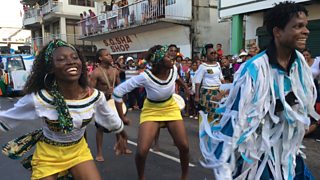
Seychelles Carnival parade
Like most people the only thing I associated with the Seychelles before researching this programme was luxury holidays and the vision of millionaire yachts moored off perfect beaches. I wasn't quite expecting rain showers on a monsoon scale which hemmed us into our apartment, turning the baking heat outside into a steaming sauna.
This was Carnival time and hundreds of kids, dancers and musicians were dressing up for the biggest event of the year. It was there that I met the cultural dance group Latroupe Nacyonal and singer-songwriter Jean-Marc Volcy preparing for their own performances and a whole new side to the Island's heritage opened up to me.
Jean-Marc Volcy's dream is to promote the music of the Seychelles to a wider audience. He is convinced that the ballad style 'moutia' and party style 'sega' should be more widely enjoyed, and that promoting Seychelles culture is his duty as a gifted artist.
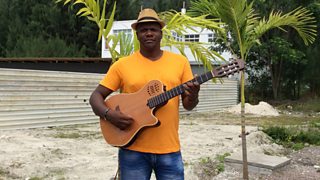
Jean-Marc Volcy
In a similar vein, during our session with Latroupe Nasyonal Sesel, the young dancers, picked from all over the islands, were proud to belong to this elite group, promoting their culture with the graceful and sensual movements of both European and African traditions. Smiling broadly, they were clearly happy to be Seychellois born and bred.
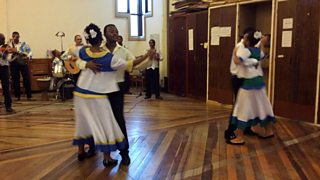
The similarities to the music and dances in St Lucia, thousands of miles away in the Caribbean Sea were striking. Both Creole speaking, both based on the European dance music from the big houses on the plantations and both with the added ingredient of African rhythms and moves brought by the original slaves from Africa.
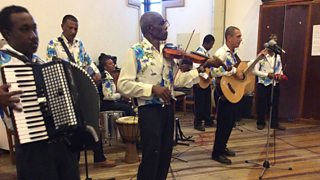
Perhaps one day the Seychelles will be known for this too.
