BBC BLOGS - Radio 3 Blog

Archives for July 2011

Viola player Laura Sinnerton on performing favourite works

Blog comments are currently unavailable. Find out more.

Post categories:

Laura SinnertonLaura Sinnerton|16:21 UK time, Friday, 29 July 2011

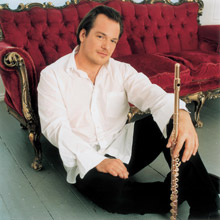
Emmanuel Pahud Photo: EMI

Emmanuel Pahud Photo: EMI

Laura Sinnerton provides a BBC National Orchestra of Wales player's eye view of the Proms ... 

It has felt a very long time since I last blogged about my Proms 2011 experience. In the interim, we have recorded more Doctor Who music and rehearsed for two Proms falling on consecutive days.

It’s always a little tricky having proms on consecutive days, especially when each work requires such different personnel. I was lucky to be playing in everything, but for a lot of colleagues, this week has involved much hanging around waiting to be needed.

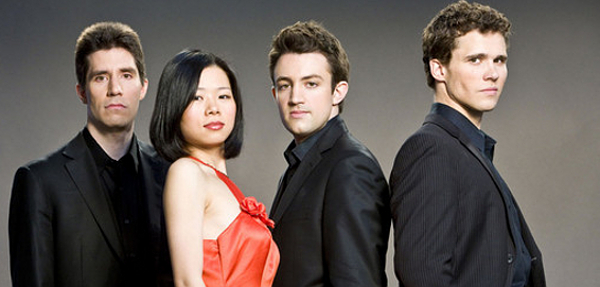
Proms 16 & 18 represented the BBC's commitment to giving a platform to music from across the classical spectrum, mixing established masterworks with brand spanking new pieces. I was totally blown away by the Arditti Quartet. I think whether or not the work, Hinterland, by French composer Pascal Dusapin, was your thing or not, you couldn't fail to have been struck by the sheer muscular virtuosity of the Quartet's playing. As for Emmanuel Pahud - what can one say, he really is fabulous (not to mention very well dressed).

These Proms contained two of my favourite works ever - Stravinsky's Firebird and Beethoven 7. Playing them in a venue like the Albert Hall, with such audiences, magnifies a hundredfold the myriad reasons why these works are so wonderful.

Since joining the orchestra, I've played both Firebird Suites (I didn't initially realise there were two Suites, cue much confusion while I was listening to the score along with a recording, lamenting to no-one in particular that there must be something wrong with the part ...). With the complete Firebird, it was easy to get caught out, as there are whole passages transposed into different registers, or bits that you normally enjoy playing cruelly stolen by a different section. Complete ballet scores are funny things on the concert stage because they are missing one crucial ingredient - dancers. Nonetheless, it is amazing music and a masterclass in orchestral colour. The last ten minutes of the work are magic to play – the horn solo, the sweepy harps, the ascending strings, the brass, building from nothing to a monumental finish.

Beethoven 7 is in my Top 5 Favourite Pieces in the repertory as the last movement is blatant unashamed viola exuberance. We performed both Beethoven symphonies sans vibrato which challenged my own preconceptions of how to play Beethoven. We can become very arrogant and settled in our own opinions about how something should be done, and it is healthy to try something different. I couldn't stop smiling in the finale, where a lot of viola muscle was exhibited – behold the power of the C string!

For anyone still under the misconception that being a classical musician is glamorously romantic, you should have been on our coach home. That's always a 'down to earth with a bump' moment – especially when there is an accident on the M4, dreams of bed before midnight evaporate, and cabin fever sets in. Apologies to violinist Carl Darby, whose crossword I filled in with nonsense words while he slept.

Petroc on Verdi's Requiem

Blog comments are currently unavailable. Find out more.

Post categories:

Petroc TrelawnyPetroc Trelawny|00:30 UK time, Friday, 29 July 2011

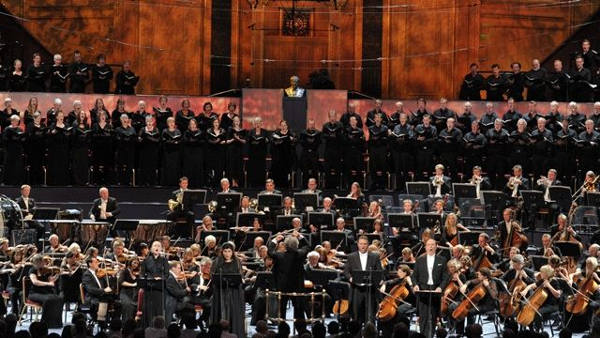
Photo of the Verdi REquiem at the Proms

I was presenting Sunday’s performance of Verdi’s Requiem for BBC4 - and did my opening link from the choir seats, surrounded by the 380 strong chorus, an amalgam of the BBC National Chorus of Wales, the London Philharmonic Choir and the BBC Symphony Chorus. After months of independent preparation, suddenly the great forces massed together. It was fascinating watching the choirs integrate as one grand instrument.

I sensed the groups were a little wary of each other at rehearsal, watching for signs of different methods of preparation, checking the strength of one choirs altos verses another’s tenors. Was there even a little healthy competition between the ensembles, their respective choral directors looking on like proud fathers on sports day ?

Seems hard to believe there wasn’t - and any edge or creative tension that gave was surely well worth it; it was an amazing event, thrilling from beginning to end. ‘I felt I was witnessing a classic performance of this great piece’ wrote Ivan Hewitt in the Daily Telegraph; in the Guardian Tim Ashley had a few problems with the soloists, but loved the chorus, who ‘unleashed a crushing sonic weight at full throttle, though the sounds that linger most in the memory, perhaps, were the quieter passages, suggestive of great crowds murmuring in terror.’

Read the rest of this entry

The new look R3 schedule

Blog comments are currently unavailable. Find out more.

Post categories:

Roger WrightRoger Wright|17:07 UK time, Tuesday, 26 July 2011

Radio 3 Controller Roger Wright explains some changes to programmes and presenters coming up in September on Radio 3.

Now the 2011 BBC Proms festival is up and running, my mind is not only on putting the finishing touches to the 2012 Proms but also to the new season on Radio 3 which kicks off in September.

We have today announced two new classical music programmes for the new schedule.


Essential Classics will be a new weekday morning programme (9-12) to be presented by Rob Cowan and Sarah Walker. It will include an Artist of the Week feature as well as strong elements of recommendation, including the chance to hear the recording chosen by Building a Library in CD Review.


Saturday Classics between 3-5pm (on Saturdays!) will offer a personal view of classical music from a range of presenters, including many well-known figures from the musical world. These authored programmes will give listeners a chance to hear themed programmes which reflect a personal interest of the presenters.


I can be certain of only one thing - namely that these changes will be met by a variety of responses.

I always feel that the oft-used phrase "you can't please all the audience all the time" is a rather inadequate response to scheduling issues but it is the truth and one of the challenges of managing the range and breadth of Radio 3 programming.


Our weekday Breakfast programme will begin half an hour earlier at 6.30 and following Rob's move to Essential Classics, Sara Mohr-Pietsch will be joined by Petroc Trelawny. Suzy Klein will take Petroc's place on In Tune and Rob and James Jolly will present Sunday Morning in place of Suzy.

I hope you are following all this! If not it will all become clear when we launch our new schedule on Monday September 12th.


I am particularly pleased with our new look to Sunday afternoons with The Choir following the repeat of Choral Evensong and Words and Music having a regular slot at 6.30. Words and Music regularly gets critical acclaim and warm audience feedback and I know that its unique qualities, a mix of unannounced themed music, poetry and prose, will find a new audience.


Now it's back to the present and on again with the Proms!

The composer's dilemma - what to call the piece

Blog comments are currently unavailable. Find out more.

Post categories:

Michael Zev GordonMichael Zev Gordon|15:46 UK time, Wednesday, 20 July 2011

Graphic of keyboard question key

Composer Michael Zev Gordon is writing a new piece for the BBC Symphony Orchestra. In the coming months he'll let readers get inside his head, with regular insights into the actual process of composition. In his second dispatch, he reflects on the implications of naming the music ...

Music is wonderfully complex as to its meaning; it's been argued about for centuries. Is it essentially abstract, or is it a container of emotions or ideas - or can it conjure these up in the listener? Actually, it seems to me the moment one generalises, definitions are bound to fail - that some music just cannot be pinned down as to its content, that other music could quite easily translate into an idea or mood. At the same time, I think you can have a small but important influence on how a piece is perceived by what it's called: you can 'frame' the listening in a particular way. It can appear to be left entirely open - by give the piece an abstract title: sonata, symphony, bagatelle. But even here the very fact of invoking those genres actually carries all sorts of implications to do with form and past history. Or you can be much more poetic and directed - La seduisante - Couperin; Rain Coming - Takemitsu - giving the listener an image or notion through which to hear the music. And there are titles in between that give some sort of location but not too much, or deliberately play with the listener: Derive - Boulez; Bob - Barry.

For some composers these locators come as a backward glance after composition, for others they have to be in place before a note is written. I've swung back and forth about this, but am happier when a title at least evolves during composition - and that's what I'm trying to do now with this new work. It's not coming so easily!

Partly that's the result of writing a piece in many movements - 7 - and wanting to give titles to all the movements. But it's also because I want to find titles that do direct the listener into the expressive orbit of the piece, but not so closely that they might limit listening.

Read the rest of this entry

Inside the Proms - Petroc Trelawny's backstage view

Blog comments are currently unavailable. Find out more.

Post categories:

Petroc TrelawnyPetroc Trelawny|12:35 UK time, Wednesday, 20 July 2011

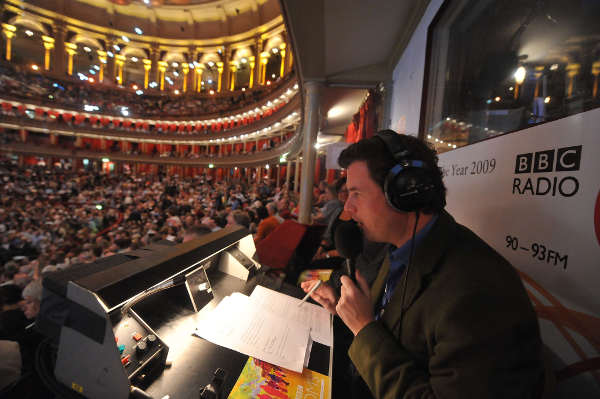
Photo of Petroc Trelawny in the Radio 3 box at the Royal Albert Hall. Photo © BBC Chris Christodoulou

Petroc in the Radio 3 box at the Royal Albert Hall. Photo © BBC Chris Christodoulou

Radio 3 and BBC TV presenter Petroc Trelawny will be blogging every week during the Proms season. Here's the first of his despatches ...

May I introduce you to a windowless room in the bowels of the Royal Albert Hall? I’m writing this in the Radio 3 Proms office, where a small and slick team gathers each day to get the Proms on air. Rob Cowan is here at the moment, sitting in the corner reading a new biography of George Szell. Rob is presenting the first Prom tonight, the Radio France Philharmonic, conducted by Myung-Whun Chung. His producer Emma Bloxham is tinkering with their script, and editing a clip of the brothers Capuçon.

Senior studio manager Sue Thomas is poring over Stravinsky - she’ll be on the faders in a truck out the back, working hard to ensure listeners get the very best hi-fi sound. ‘How many microphones do you have?’ I ask her. ‘It’s a trade secret,’ she laughs, then says, ‘it’s at least forty. Rite of Spring is a big challenge, there’s a huge dynamic range to cope with.' ‘Yes, from deathly quiet to deafeningly loud!’, Rob chips in.

Fellow studio manager Gill Drabble walks through the door with a radio microphone for me. The Belcea Quartet and cellist Valentin Erben are giving the second Prom tonight; Late Night concerts see the presenter leaving the Radio 3 box, and introducing the concert from the stage. Tonight it’s just one work, but it’s one of the masterpieces of all chamber music, Schubert’s Quintet, written a matter of weeks before his death in 1828. Judging by the rehearsal, the sound of a quintet playing alone in the Albert Hall will be amazing - extraordinarily intimate considering the size of the place. That’s part of the magic of the Proms; more than a thousand doing the Gothic Symphony, then 48 hours later, five chamber musicians filling the same great space.

I love the atmosphere of Late Night Proms - it’s completely different to the early evening concerts. Some will be packed; Nigel Kennedy playing Bach for example; others will see a very different crowd squeezing in - the World Routes Academy Prom, or the Spaghetti Western Orchestra are bound to include a larger than normal share of first-timers. I remember introducing a new music Prom last season that had about 500 people in the audience. That’s a capacity crowd at some venues, but barely dents the Royal Albert Hall. The empty seats didn’t mean it was any less exciting as a concert, with Prommers having the space to lie down in the arena, and the seated audience able to spread themselves around the stalls. I looked up at one point and saw a man alone in the great spread of the circle. It may not have been packed, but it was an unforgettable night for all of us there.

The Albert Hall is great late at night; it feels a little subversive waiting for a Late Night Prom. The crowds disperse, you can have a drink and relax knowing there’s more to come. ‘It’s a bit like listening to the radio under the covers as a child,’ Rob’s just commented. ‘Huge fun, exciting and somehow a bit naughty at the same time’.

This season sees another feature for those who want to linger longer in SW7 - Proms Plus Lates. Once a week, at weekends, the Elgar Room is transformed into a nightclub. The room has had a makeover this season, and looks terrific, with soft lighting, tables and chairs set out cabaret-style, and a house pianist tinkling away on a red piano, formerly owned by Elton John, no less. The bar does a good trade, and then we’ve live music and poetry. On the first night the Will Gibson Band (mainly graduates from Trinity) played jazz, and performance poet Laura Dockrill bought tears to everyone’s eyes with a bitter/funny poem about weekend dads. I predict that tickets for Proms Plus Lates are going to become pretty hot; they are free, but can only be obtained by ticket holders from Door 6 during the interval of that nights Prom. If you are coming to Friday night’s Prom with the BBC Phil, I’ll see you in the Elgar room after.


Read the rest of this entry

Late Junction - broadcasts from Latitude

Blog comments are currently unavailable. Find out more.

Post categories:

Philip TagneyPhilip Tagney|15:23 UK time, Tuesday, 19 July 2011

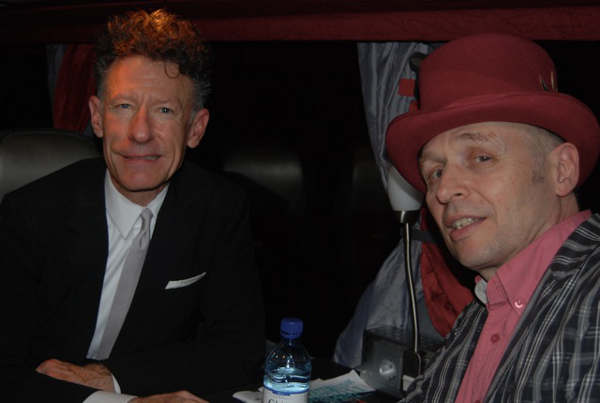
Photo of Lyle Lovett and Max Reinhardt. Photo: Felix Carey

Lyle Lovett (l), Max Reinhardt and that red hat

I walked into Broadcasting House yesterday afternoon with my production team, the fresh mud of Suffolk spattered on our jeans, just back from the Latitude Festival.The Festival Republic boss Melvin Benn had invited us to curate a small music stage in the woods, called Lavish Lounge, and we put on three bands a night for three nights, with our presenter Max Reinhardt DJ-ing between sets. As well as taking the performances from the stage, we recorded interviews and some songs with other artists appearing at Latitude, using a portable studio parked next to our recording truck.

We had a diverse range of musicians onstage, reflecting the eclectic music policy of Late Junction, ranging from Spiers and Boden’s traditional English folk songs and dances, to Leafcutter John’s laptop electronica. Max Reinhardt hosted the stage, introducing the bands while sporting a red top hat that clashed interestingly with the blue patterned wallpaper of the Lavish Lounge. But country-rock star Lyle Lovett was so taken by Max’s headgear when we interviewed him in his tour-bus (see above) that he did an impromptu photo session to capture the red hat against the bus’s red curtains.

The weather was inevitably a challenge. After a fine sunny Friday, it rained overnight and continued during Saturday. We were carrying musicians’ gear and instruments by hand across very muddy ground to get to the stage in the woods.

Read the rest of this entry

Havergal Brian's Gothic - how we pulled it together

Blog comments are currently unavailable. Find out more.

Post categories:

Laura SinnertonLaura Sinnerton|17:29 UK time, Monday, 18 July 2011

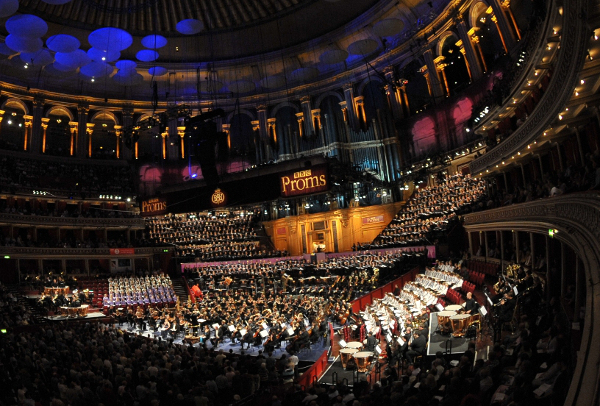
Photo of 1000 musicians performing Havergal Brian's Gothic Symphony

The BBC Concert Orchestra and BBC National Orchestra of Wales join ten choirs at the BBC Proms for a performance of Havergal Brian’s ‘Gothic Symphony’. BBC/Chris Christodoulou

I am writing to you from a coffee shop in Cardiff Bay. I am on my second coffee, so may now be able to write coherently. I make no promises. What has happened to my normal hyperbole-laden, over-enthusiastic prose, I hear you cry? If you were at the Royal Albert Hall last night, you would know!

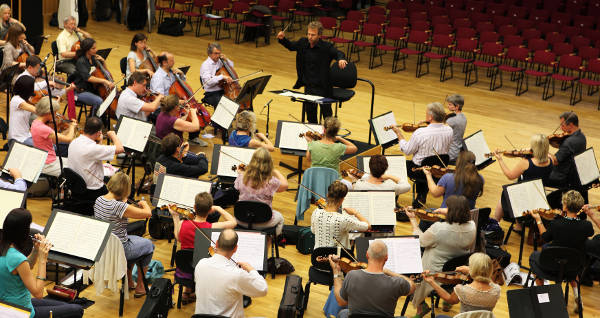
This week, the BBC Concert Orchestra and BBC National Orchestra of Wales combined for the first rehearsal of Havergal Brian's Gothic Symphony. It was wonderful to renew old acquaintances and make new friends, and there was a wonderful atmosphere of collaborative spirit. I say collaborative spirit: what I mean is, it felt a little like we were about to enter the trenches together. Everything about this Prom has been a feat of logistical planning, or rather, much like a military operation, from which rehearsal spaces could actually accommodate us, to who was bringing cake for tea.

Few realise how much goes on 'backstage' for a work like this to ever even get to first rehearsal – the weeks stage managers spend perfecting floor plans; the hours string principals spend trawling through parts trying to decipher divisi; the days librarians spend marking up bowings and rewriting illegible parts, the personal practice time each individual puts in (did you hear that xylophone part?!).

Read the rest of this entry

Rehearsing the First Night of the Proms - what's in a note?

Blog comments are currently unavailable. Find out more.

Post categories:

Phil HallPhil Hall|13:09 UK time, Friday, 15 July 2011

BBC Symphony Orchestra sub-principal viola Phil Hall wrestles with the complexities of the scoring in tonight's First Night of the Proms performance of Janacek's Glagolitic Mass

It's no secret that Leos Janacek was not an easy man to live with. His temper and love affairs were legendary. There's a story about him attending a performance of his wind sextet Mladi after which he ran on stage and announced to the audience: 'hat wasn't my composition... the clarinettist wasn't playing it right!' But I've always been intrigued by this quirky, temperamental composer and one summer, whilst on holiday in Prague I suggested to my long-suffering wife that we take a trip out to Janacek's house in Moravia. She gave me THAT look. 'There's a big forest there,' I said, trying to big it up, 'and the restaurant where he used to eat...' Before too long we were pootling along the Czech motorway until it runs out in Brno, then on to the tiny village of Hukvaldy, his birthplace and country retreat, where he composed and even owned part of the forest. In the old school-house where he was born are some of his manuscripts which look as if several talented spiders have emerged from a bottle of Quink and run over a blank page. I have honestly never seen such illegible calligraphy. Pity, then, the poor publisher or masochistic scholar in search of the 'Truth' when faced with the likes of this:

Read the rest of this entry

Roger Wright introduces this year's Proms

Blog comments are currently unavailable. Find out more.

Post categories:

Roger WrightRoger Wright|16:34 UK time, Thursday, 14 July 2011

Graphic of BBC Proms 2011

The 2011 BBC Proms start tomorrow and I remain astonished at the calm approach of my colleagues as the clock ticks away.

There is a mixed feeling of wanting to get on and kick off the festival, whilst at the same time secretly hoping that the First Night might be delayed by a week to give us all more time to get ready!

The broadcasting rig is in place in the Royal Albert Hall and the first proofs for the concert programmes are being circulated - two signs that we are almost there!

The aims of the Proms have remained the same since the festival's beginning in 1895 - chiefly to bring high quality classical music to the largest possible audience. There are though, inevitably, new challenges each year.

This year, for example, we have had to point out again to disappointed audiences that, even if they have been unsuccessful in getting tickets for particular Proms, they should keep on trying as tickets do get returned to the box office. Of course it is also important to remember that there are around 1000 tickets on sale on the day for just £5 - a vital factor in continuing the accessibility of the Proms. The success of the online booking system launched last year has made audience members more visible to each other as it has allowed them to see just how great is the demand for tickets. It is more fair than the previous system but it has clearly been a shock (for example to those seeking tickets for the Horrible Histories Prom) for the audience to see how quickly tickets are sold. Sadly we can't make the hall capacity any larger, nor can we stem the flow of demand. Thank goodness for the chance to queue on the day.

One piece of good news is that we have decided this year to increase the arena standing capacity by taking out the fountain for the whole season. There will be those who will mourn its loss - and the Promenaders will no doubt miss the chance to float an often surreal mix of inflatable creatures on the circular pond! In recent years it has come and gone during the season, depending on the demands of each event and such issues as TV camera positions. But this year there will be no fountain so that we can fit more audience members into the arena. It will also help enormously with the increasingly complicated Proms schedule as we pack more events (and often more intricately staged concerts) into the festival diary. There will also be an additional benefit, as the filling and emptying of the fountain's vast quantities of water over a summer was not exactly environmentally friendly. This change has given us an opportunity to re-think the look of the arena and I very much look forward to seeing the striking new design for the floor when I go to the hall for the final rehearsals for the First Night.


The use of social media has increased enormously since the 2010 Proms and it will be fascinating to see how it develops throughout the summer. Do please go to our newly refreshed Proms website and make the most of its interactive offers. There is a much more dynamic home page and I look forward to reading your reviews of the concerts.

I hope you also enjoy another innovation this year - the Proms daily podcasts - short introductions by a handful of Radio 3 presenters to some of the key works on offer. I also await questions from the public for my regular Ask the Directorsessions online throughout the Proms. It is always fascinating to hear from the audience and it is a great opportunity for me to answer any enquiries, no matter how straight forward they might be. I wonder what the stories of the 2011 Proms will be. We are soon going to find out!

Roger Wright is Controller, BBC Radio 3 and Director, BBC Proms

The Escher Quartet - Recording for Radio 3

Blog comments are currently unavailable. Find out more.

Post categories:

Dane JohansenDane Johansen|13:11 UK time, Thursday, 14 July 2011

Picture of the Escher Quartet

The Escher Quartet

Dane Johansen is cellist with the Escher Quartet, who are part of Radio 3's New Generation Artists scheme. Here, Dane describes their recent recording work.

Gregynog Music Festival

Our first NGA concert was at the Gregynog Music Festival, just outside Newtown in Wales. Dating all the way back to 1933, it's the oldest music festival in Wales - Elgar and Britten themselves have visited. The festival's current director, Rhian Davies has done a marvellous job of developing interesting and provocative programmes. One of the themes of the festival was composers who experienced synaesthesia, a rare perceptual condition that causes one to see colours while hearing music: our programme included the quartets of Debussy and Sibelius, both confirmed synaesthetes. Rhian pointed out that Debussy and Sibelius first met in London, after Debussy had completed his quartet and just before Sibelius composed his 'Intimate Voices’ quartet. Debussy and Sibelius expressed themselves very colourfully in these works, not surprisingly as their brains were wired to associate sound with colour. Radio 3 is associated with the festival, so staff from the Wales production team were sent to record our concert. In addition to the Debussy and Sibelius, we performed Haydn's 'Sunrise' Quartet, Op. 76 No. 4. In the middle of the third movement, an enormous bee of some sort flew into the hall and hovered menacingly in front of Adam, our violinist. I was watching him, and amazingly, he didn't flinch or fail. Listen carefully to the broadcast (at 1pm on 18 November in the Radio 3 Lunchtime Concert series) and you might hear his would-be assailant buzzing around the stage!

Read the rest of this entry

Ringing in the new ...

Blog comments are currently unavailable. Find out more.

Post categories:

Laura SinnertonLaura Sinnerton|17:59 UK time, Monday, 11 July 2011

Picture of the BBC National Orchestra of Wales with Thomas Sondergard

The BBC National Orchestra of Wales with Thomas Sondergard

BBC National Orchestra of Wales blogger Laura Sinnerton describes the experience of working with the orchestra's new principal conductor ...

It was back in 2009 when we first worked with Thomas Søndergård. Our principal conductor, Thierry Fischer, had suddenly taken ill and Søndergård entered the fray at the last minute to conduct a programme of Sibelius, Mahler, and Brahms. His pleasant manner, efficient, yet in-depth rehearsal technique and obvious passion for the music, left an immediate and lasting impression on us. As we were already aware that Thierry would be leaving us at the end of the 2011/2012 season, the great and infamous orchestral rumour mill was rolling before Søndergård had even left the studio – could he be the one for us?

Fast forward to Monday 11 July 2011: Thomas is with us to perform a programme of Sibelius, Dvořák and Prokofiev (with the fabulous violinist Baiba Skride). Now, management may have tried to keep it a secret from us all, like a surprise gift at Christmas, but the plethora of cameras and official people in the studio pretty much gave the game away that an announcement of exciting proportions was about to be made. There were very wide smiles abounding in the studio (unusually for a Monday morning) as Thomas was announced as our new principal conductor.

With that, it was straight into rehearsal. I won't bore you all with the technical details of the rehearsal, but what came across, as it did the first time we worked with him, was a great sense of musicality; a love for telling the story of the music, rather than just getting from A to B in the score. Tonight's concert is one not to miss.

I really do believe this to be a very exciting time for our band. Over the past year, we have won a BBC Music Magazine Award for David Matthews' Symphonies 2 & 6 (with Jac van Steen) and were nominated for a Grammy for our recording of Sullivan's Ivanhoe. We have recently had a number of fantastic new appointments in key playing positions within the orchestra, bringing fresh blood and enthusiasm with them. Mark Bowden, a former RPS Composition Prize winner, has just been announced as our new resident composer (in addition to his role as the Rambert Dance Company Music Fellow) and will be joining Simon Holt on our in-house composition team. The addition of Thomas Søndergård to our already established conducting team of Tadaaki Otaka, François-Xavier Roth and Jac van Steen, reinforces the feeling of exciting times ahead.

The appointment of a new conductor affords us the opportunity to look back and see how far we have come. It also gives us the opportunity to look forward and, in a way to redefine ourselves, seeking ever greater standards of performance and creativity in our role as a BBC orchestra and as Wales' National orchestra. With Thomas Søndergård we can continue, in the words of Alex Ross in his book Listen To This, to work as an 'individual and an institution bringing out unforeseen capabilities in each other'.

New thinkers, new thinking

Blog comments are currently unavailable. Find out more.

Post categories:

Matthew Dodd|17:08 UK time, Thursday, 7 July 2011

Photo of Radio 3's New Generation Thinkers. Photo © BBC

Radio 3's New Generation Thinkers. Photo © BBC

Matthew Dodd, head of speech programmes, explains how Radio 3's New Generation Thinkers were recruited.

Reading 1000 application forms is not everybody’s idea of a fun month. But now I’ve done it I can heartily recommend it. Honestly! Because the quality of the first-ever applications to Radio 3’s New Generation Thinkers scheme was astounding.

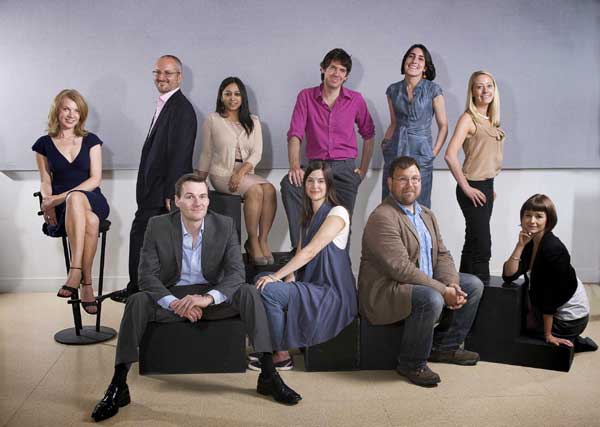
New Generation Thinkers (NGT) is a new partnership between Radio 3 and the Arts and Humanities Research Council which attempts to reach up-and-coming scholars who are hungry to broadcast their research work to a bigger audience. We put out a call for entries last November, our judges spent the Christmas break reducing those 1000 to 57 finalists with great difficulty and we then invited them to come to the BBC to talk about how big ideas can make great radio – and auditioned them while we were at it.

Last week we brought the 10 winners together for the first time and started to broadcast their first mini-essays inspired by their work on Night Waves.

I’m delighted that it has raised welcome debate in broadsheets and online about that most unBritish topic: who is an intellectual and had the BBC chosen the right kind of brain.

However I have to admit now - we weren’t trying to find a new wave of 'public intellectuals'. More modestly we wanted to find charismatic people with ideas that could turn into good programmes. And we did it by methodical selection. 'An X-factor style search' one headline quipped. Actually the process was a bit closer to a very heavyweight episode of The Apprentice with hard-nosed scholars showing off their skills in group activities at the workshops.

Read the rest of this entry

Keeping it light ...

Blog comments are currently unavailable. Find out more.

Post categories:

Margaret CameronMargaret Cameron|16:32 UK time, Thursday, 7 July 2011

Picture of the BBC Philharmonic Choir

BBC Philharmonic/Jon Super

From Burglar Bill to the Pirates of Penzance - Margaret Cameron of the BBC Singers reviews some the choir's Light Fantastic experiences ...

I read in the paper last week that a challenge on the Guinness world record for the largest number of ‘pirates’ in one spot had just been attempted in Penzance, where a total of 8,734 piratically clad people turned out to the event.

Gilbert and Sullivan had their own brush with piracy of a less romantic kind: after problems with companies putting on unauthorized versions of HMS Pinafore in America from which they received no income, they wished to prevent the same fate befalling their new opera, Pirates of Penzance, due to open in New York on December 31st 1879. So, in order to secure the copyright they arranged for a ‘scratch’ performance to be put on the day before at the Royal Bijou Theatre, Paignton by a D’Oyly Carte troupe who were performing Pinafore in the area. They had one day to rehearse, no costumes or set and the performers read from the score. Sounds familiar...

For the BBC Singers, our journey into the murky underworld of crime and derring-do (purely in musical terms of course) began with a concert in Knightsbridge, given as part of BBC Radio Three’s Light Fantastic Festival and conducted by our principal guest conductor, Paul Brough. The central piece in the programme was Joseph Horowitz’s colourful portrayal of a classic bible tale of deliverance: Captain Noah and His Floating Zoo, with a libretto by Michael Flanders. Originally conceived as a light-hearted oratorio for children, the Singers performed it in a full choir version with Richard Pearce on the piano and Michael Bundy striking fear into our hearts in the role of God. Also featured was a lesser known piece by Rutland Boughton – Burglar Bill, (A Choral Tragedy for Mixed Voices). It is a sentimental tale, finely set by the composer, of a cockney burglar interrupted in his work by the daughter of the house, an angelic, lisping child, and the music required the Singers to characterize their very different voices.

Read the rest of this entry

Composing, as it happens ...

Blog comments are currently unavailable. Find out more.

Post categories:

Michael Zev GordonMichael Zev Gordon|15:36 UK time, Thursday, 7 July 2011

Picture of composer Michael Zev Gordon

Michael Zev Gordon

Composer Michael Zev Gordon is writing a new piece for the BBC Symphony Orchestra. In the coming months he'll let readers get inside his head, with regular insights into the actual process of composition

STARTING OUT

This blog will be, I hope, something unusual. Most times, composers are asked to write or talk about their music after they've written it. But what I want to do here is to blog about my new commission for the BBC Symphony Orchestra while I'm writing it.

So I'm not going to write about ideas when they're fully formed. Instead I want to reveal what it is to arrive at something, with all the possible accompanying uncertainties, all the things that change. I want to talk as much about what I reject as what I keep, to show how raw things can be at first, and something of the long graft of refining, of ordering.

I want to reflect sometimes, too, the quite complex relationship between my intuition - what I leave to gut feeling - and my conscious mind.

All this is going to be done over the next 6 months or so. I want to blog regularly every week or two - some of these blogs will appear on this website site. The piece itself will be performed in Autumn 2012 in the Barbican in London.

So what can I say to start off? Well, in fact I can't pretend I'm right at the start of the process. It's been bubbling away for months, even years in some ways. For a start, I received the commission more than a year ago, and my thoughts about a piece for large orchestra pre-date that.

What has driven it? In part, to build upon a piece written for the London Sinfonietta in 2009 - a work for piano, ensemble and electronics - in which I explored fragmentation and fragility; used past music as a trigger for expression to do with memory and nostalgia; and looked at how music can play out the opposition between tranquillity, as we let things go, and our human desires that root us. The central concept was a Buddhist one: The Impermanence of Things, which gave the piece its title.

Read the rest of this entry

More from this blog...

Categories

These are some of the popular topics this blog covers.