BBC BLOGS - Radio 3 Blog

Archives for April 2011

Hari Sivanesan's World Routes Academy journey begins

Blog comments are currently unavailable. Find out more.

Post categories:

Hari SivanesanHari Sivanesan|16:06 UK time, Thursday, 28 April 2011
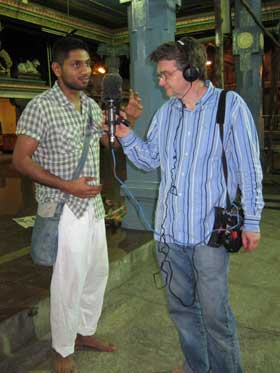
Hari and Roger recording links

In advance of his next Radio 3 broadcast in World Routes at 3pm on Saturday, this year's World Routes Academy protégé Hari Sivanesan writes about his travels to the Indian city of Chennai for his first meeting with his mentor, the singer Aruna Sairam ...

I remember my last night at home before leaving for our first trip to India... It was a Wednesday night and absolutely manic trying to prepare both musically and also logistically! I was franctically trying to pack and trying to remember all the little things you'd kick yourself for forgetting once out there!

Plus I was working on the day of my flight itself and going straight to Heathrow from work, hence it was proving a little challenging! I had decided not to take my normal veena but take a portable version instead! The weight of the real veena plus packing and the effort of taking the coffin-like box abroad is really taxing! So a certain Indian company has invented a portable version of the instrument (there's a large difference in timbre because it's electric! Yes, electric! ...) Roger Short, our producer for this trip, looked appalled ... But it was definitely an easier option for transporting and to sit down with on a daily basis with Arunaji, hence, frowns aside, the portable version it was...


I can still almost feel the butterflies I had that night! I was very, very excited. First, just because India is one of those countries that despite numerous visits, I’ve never tired of: the culture, the music, the food, the colours, maybe not all the smells but definitely some of them ... I had spent the previous couple of nights watching a few YouTube videos of Arunaji’s recent concerts. She had collaborated with Mandolin U Srinivas and on another occasion with Shankar Mahadevan; both genius artists in their own right, top billers basically! Lots of high points which brought goose bumps to Aarati and I as we watched the clips ... The thought of going and sitting with her for sessions in Chennai was (and still is) so daunting, let alone performing on the same stage for our forthcoming BBC Proms concert on 27 July. Putting all that aside, I was basically really looking forward to meeting her and also looking forward to the idea of taking time out to concentrate on music. It didn't really click that Lucy Duran, the usual World Routes presenter was not coming on this, our first trip. That meant that music aside, as you'll hear, I had to do the presenting too. Interesting ... 

All in all I had no clue what the whole World Routes Academy was going to throw at me. I was prepared for a hectic schedule of sessions, interviews, visits, trips etc., but kept my fingers crossed, hoping that I would have the opportunity to imbibe all that I could while out in India, digest all of it when I came back and most definitely enjoy the ride, whatever it presented ...

In Saturday's World Routes, Hari explores the roots of South Indian music at a temple festival, and talks to fellow veena player Rajesh Vaidya, who draws inspiration in his playing from Michael Jackson. He also looks at the contemporary music scene in Chennai with a visit to the city's own Radio One, and meets star film playback singer Srinivas.

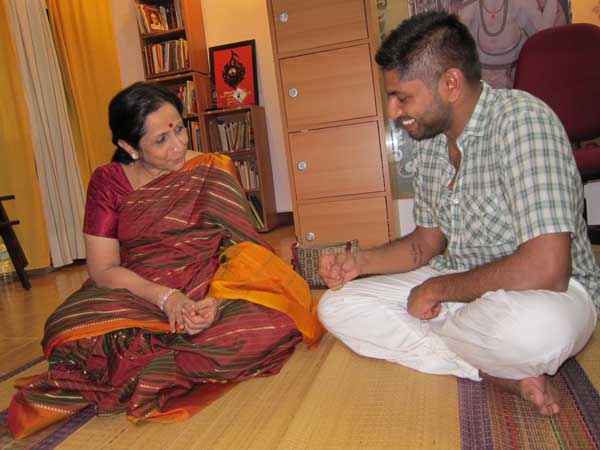
Photo of Hari Sivanesan and Aruna Sairam

Hari Sivanesan with Aruna Sairam
Inside Fauré's Requiem ...

Blog comments are currently unavailable. Find out more.

Post categories:

Edward GoaterEdward Goater|11:36 UK time, Tuesday, 19 April 2011

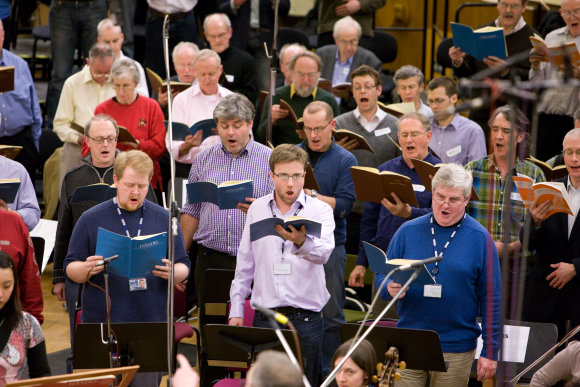
Photo of the chorus at a BBC Singers 'Come & Sing' event

The chorus at a BBC Singers 'Come & Sing' event

BBC Singers' tenor Edward Goater reflects on Fauré’s Requiem, recorded for broadcast on Wednesday 19 April.

It is, for me, simply one of my most favourite pieces of music, and an opportunity for the BBC Singers to record a live concert performance of it was too good to miss. The Singers also like to share their enthusiasm whenever possible so it was especially nice to have the opportunity to workshop the piece in a Come & Sing event with members of the public. Enthusiasm reined unbound at the event confirming a curious phenomenon I like to call the 'Messiah Effect’. It is a collective amnesia that possesses amateur (and professional) singers alike; a collective enjoyment of the experience despite the demands and difficulty the music places on the singer. Messiah is a massively long, and technically daunting evening’s work but this is always somehow forgotten before and after the concert! The same is true of Fauré’s Requiem but to a lesser extent. Long sweeping melodies and beautiful harmony demand of the singer constant flawless tone and breath control. This is especially true of the tenors, to whom Fauré gives the lion’s share of expression. Add to that the eternally famous 'Pie Jesu' and 'Libera me' soli, and you’ve got yourself a packed 45 minutes of drama!

There can be no better example of the power of personality in someone’s music than that of Fauré’s, but not in the manner that you might initially think. His is a music of modest brilliance from an eternally honest man. He was, and still is, regarded as the father of modern French music. Darius Milhaud dedicated his 12th string quartet to him even though he’d never met him (and I can heartily recommend the muted slow movement to you!). The power of persuasion was Fauré’s great gift. He was never interested in grand dramatic gestures or sumptuous orchestrations unlike his contemporaries, and this is eloquently expressed in his best-loved major work – the Requiem.

Read the rest of this entry

Launching the 2011 BBC Proms ...

Blog comments are currently unavailable. Find out more.

Post categories:

Roger WrightRoger Wright|10:50 UK time, Thursday, 14 April 2011

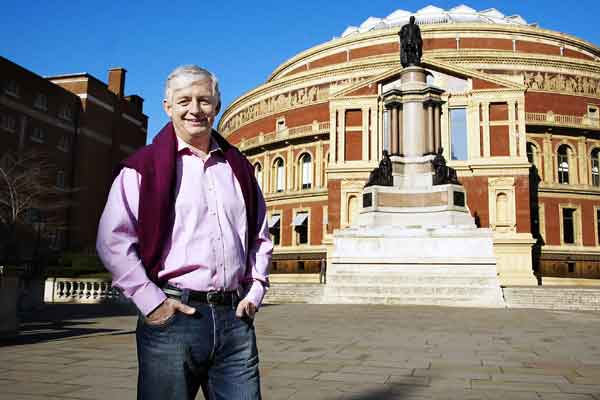
Photo of Proms Controller Roger Wright at the Royal Albert Hall

It's the morning of the BBC Proms launch. I have a real sense of anticipation and excitement because, at last, it's possible to tell everyone about the 2011 plans.

I always feel rather unfriendly keeping the plans as secret as possible until now.

We need as much publicity as possible on launch day as we have hundreds of thousands of tickets to sell and therefore want to spread the word as widely as we can. Leaks beforehand would simply drip the news out and potentially undermine the launch day splash.

Of course, in these days of social networking, rumours spread very quickly - and some of them were really wide of the mark! The first Proms performance of Havergal Brian's Gothic Symphony, however, has been one of the worst kept secrets in recent history! It's been fun to read the message boards full of 'will they, won’t they?' comments. So now it’s clear - we will! I'm not, by the way, one of those who, in order to make the case for a neglected work, overstates its importance. I don't claim the Gothic as a masterpiece, any more than I do the Second Symphony of Arnold Bax (also receiving its Proms premiere this year), but I do think they are important pieces, worth hearing in good performances and then letting audiences make up their own mind, rather than being influenced by second- or third-hand opinions.

Last year I was shocked (or perhaps just disappointed) when enquiring further of those who dismissed Parry's symphonies to discover that they had never heard any! I will, however, very much fight the corner for the quality of music by Frank Bridge. 'There is a willow', 'Enter Spring' and the Piano Quintet are fine works to stand alongside more regularly performed pieces and his place in musical history should stand for more than being simply Britten's teacher.

Of course with two months of concerts and a rich array of satellite events there is plenty for me to announce and lots of information for our audiences to take in and respond to. It's good to be able to give out all the details although I find there is far too much to talk about; so keeping it clear is one thought uppermost in my mind when talking about the music and performers featured this year.

If there is one event I would single out as an intriguing and fun concert to which I am particularly looking forward it is the Audience Choice Prom which will be given by the wonderful Budapest Festival Orchestra and Ivan Fischer. This will be the first Prom in which the whole programme has been selected by the audience in the hall. Pity the orchestra librarian!

I started to do interviews last week for those outlets with long lead times. It is around this time that we try to nail down as much of next year as possible and so my biggest challenge in giving interviews is not to get the years mixed up. It would be all too easy for me to give out the 2012 details now as they are most fresh in my mind!

One of the regular questions I get asked is 'what are the highlights?' or 'What is new this year?' It will be easier to talk about what seems to have particularly engaged and surprised the audience in the next few weeks when the discussion really gets into full swing. But there's no doubt that some of the star artists will excite ticket buyers as well as the international orchestras. I look forward to answering questions online once the season gets under way.

Goldie's Band - Download the music ...

Blog comments are currently unavailable. Find out more.

Post categories:

Graeme KayGraeme Kay|14:44 UK time, Tuesday, 12 April 2011

Picture of a member of Goldie's Band recording at BBC Maida Vale studios

The BBC TWO series Goldie's Band: By Royal Appointment has received a considerable amount of favourable comment from viewers.

To mark the three-part series following drum and bass pioneer Goldie on a mission to discover young people with talent and passion for music for a special Royal performance, BBC Radio 1Xtra invited musicians from the series to perform at the BBC's Maida Vale studios.

You can now download 12 tracks from the series, recorded at Maida Vale right now by clicking this link to visit the 1Xtra download page.

What was the root cause of the American Civil War ...

Blog comments are currently unavailable. Find out more.

Post categories:

Dr Adam SmithDr Adam Smith|15:25 UK time, Thursday, 7 April 2011

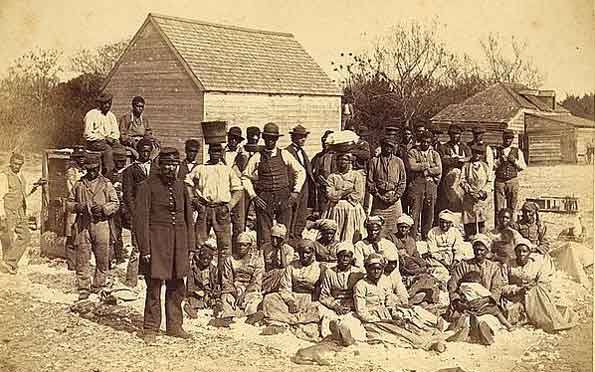
Picture of American Civil War slaves

American Civil War slaves

In a new three-part Sunday Feature series on Radio 3, Dr Adam Smith, Senior Lecturer in American History at University College London looks at the American Civil War

I’ve been researching and writing about the American Civil War – on and off – for ten years but making these programmes has made me think about it in new ways. It is 150 years to the week since South Carolinian artillery opened fire on a Federal fort in Charleston harbour and the war to establish a separate Southern republic began. More than 600,000soldiers were killed in a four-year war that led, in the end, to the emancipation of four million black slaves in the American South.

History, of course, is always re-written by each generation and as a professional historian myself I am fascinated by those issues where scholars disagree and consensus seems impossible to reach. But approaching this subject anew with the producers of this series brought home to me the fact that these areas of disagreement are really about details – on the really big questions, scholars are now in complete agreement. None of the historians we spoke to for these programmes – and no others that we could have found – dispute the fact that the war was caused, fundamentally, by slavery (although they disagree vehemently about precisely how slavery caused the war).

There were other issues, to be sure, that agitated northerners and southerners in the years leading up to the war, but all are related pretty directly to slavery. Slavery was not the prime motivation for most northern soldiers when the war began, but most of them came to the view that in order to end the rebellion and prevent such treason from happening again, slavery had to be uprooted. Most southern soldiers were not slaveholders and they were fighting for hearth and home, yet the society of which they were a part depended on slavery. It was bound up into their way of understanding the world. So there is no getting away from slavery as the core issue – its role in creating the circumstances in which war could happen and the way in which it shaped the way the war unfolded.

But one of the things we wanted to do in this series was not just talk to historians – interesting though someone like me would think that is – but also to get a measure of how the Civil War still echoes in American culture today.

And here we came upon an interesting problem. Scholars may be in agreement about what the war was ‘about’ but, as one of our contributors, Ed Ayers, put it, there is a ‘folk memory’ out there that is very hard to shift. Despite the best efforts of many popular historians and National Park Service rangers, the scholars’ war remains detached from the public memory of the war to a remarkable extent. At a Civil War site in Virginia we spoke to a southern white man who told us quite movingly about his need to honour his ancestors who had died for the Confederacy. He wasn’t a racist and he certainly wasn’t defending slavery, but somehow the analytical categories used by academic historians couldn’t capture his sense of the need to square what seems an impossible circle – turning a bitter, fratricidal war into a process of nation-building and thus giving meaning to the sacrifice even of those who died for the losing side.

Find details of Part 1 of Dr Smith's Radio 3 Sunday Feature series on the American Civil War 

BBC Phil Japan tour ... sadness and stoicism

Blog comments are currently unavailable. Find out more.

Post categories:

Julian GregoryJulian Gregory|12:39 UK time, Thursday, 7 April 2011

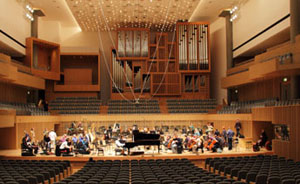
Photo of a BBC Philharmonic rehearsal in Hiroshima's Bunka Koryu Kaikan hall, Japan

The Japan earthquake forced the BBC Philharmonic to abandon a tour. Here Julian Gregory (First Violin) reports on the dramatic events. Photos by Andy Price (First Violin).

Occasionally, there is a moment which defines a point in our lives. Either side of it, life is different. Our moment occurred on the Yokohama Bay Bridge, twenty miles south of Tokyo, at 2.46pm on Friday 11 March.

Before the convoy of coaches reached the bridge, we had been enjoying a remarkably successful tour of Japan, with five excellent concerts already done. The partnership with conductorYutaka Sado and soloist Nobuyuki Tsujii (below, right) was spectacular, the halls were sold out, the logistics ran as smoothly as a bullet train. The band had flown out to Japan in two groups - carnivores via Paris and vegetarians via Amsterdam: the Dutch serve better veggie in-flight meals.

Our first destination was Hiroshima. This is where you begin to get the first taste of a foreign tour; gathering a snack for the train journey from a Japanese station involves some bravery, as nothing is explained in English and there's a bewildering array of unidentifiable delicacies. It's pot luck, resulting in food envy when you see that your colleagues are unwrapping something delicious as you stare bemused at the oddly shaped thing you still can't identify... You know you're on tour.

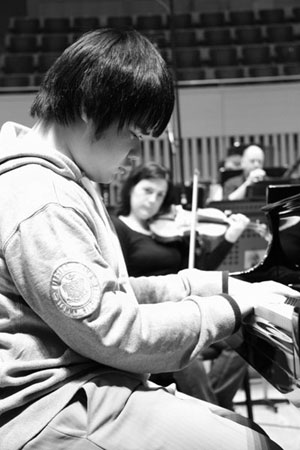
Photo of pianist Nobuyuki Tsujii

A free day in Hiroshima helped to smooth off the jetlag. Acclimatisation before the work begins is important; fighting to stay awake onstage isn't great for our performances. Many visited the Peace Park and Museum, created as a tribute to those who lost their lives and futures in the atomic bomb in 1945. This was a profoundly moving experience, and unknown to us, a premonition of the way in which the Japanese people cope with dreadful adversity. The concert on the following day set the standard; Nobu's Tchaikovsky Piano Concerto leaving us and the audience spellbound, and Yutaka's poise and enthusiasm inspiring the band to play to our very best. We knew this was set to be a great tour.

The concerts that followed were equally successful; the hotels, the travel, and the helpful generosity of our tour agents and the Japanese people - all were as good as it gets. Although the food, the sightseeing and the socialising are an integral and enjoyable part of touring, it's the concerts that define the way we feel; and we felt good.

Concerts followed in Kyoto, Osaka, Nagoya, and Matsumoto. We ate strange things. We travelled at nearly 200 miles per hour on trains. Our luggage was magically transported from place to place, the instruments were always there, ready for us at the venue.

There were two splendid receptions put on by our hosts, the second of which was provided by Yutaka, our conductor. A couple of orchestral instruments came out for a few Irish jigs, to entertain the hosts, and it turned into a freestyle jam session - with our esteemed conductor unexpectedly whipping two recorders out of his case and playing both at the same time; even our soloist got up to dance. All was well; half way through, and next stop Yokohama. A day later we set off in convoy for the 25-mile trip to our sixth concert, just the other side of Yokohama Bay bridge.

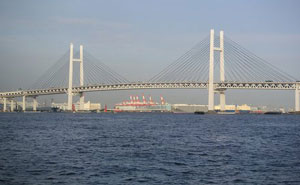
Picture of Yokohama Bay Bridge

Yokohama Bay Bridge

This is where we became a small part of a world-changing moment. Many of us have tried to describe the feeling of being bounced around as the coaches stopped on the bridge, but it's hard to explain. The feeling was surreal; something was happening that none of us had experienced, and that was the point at which the tour changed. The most powerful earthquake to hit Japan since records began became its defining moment.

It took a little while to realise the enormity of the event. We even rehearsed the programme in the hall, having made it intact across the bridge. Our tour agents, led by the calm and supremely efficient Kazu, grasped the situation. Possible tsunami; we are at sea level... on the coast. The concert is off. The team packed up the instruments, and we launched into the gridlock to arrive at the Tokyo Dome Hotel nine hours later. Nine hours on the orchestra bus, and not a peep of complaint.

The hotel swayed and creaked throughout the night. Everyone had their own experience; some were calm and bemused, but most were worried. Thirty floors up in your room, the substantial aftershocks were magnified, and so it was downstairs to the lobby for many. It was difficult to get messages back to friends and family, as the mobile phone networks were jammed, and as the news became clear of the devastation wreaked by the tsunami, the sense of unease grew. Tokyo was unusually quiet, the people appeared calm and stoical, but you could see that they were shaken by more than just the earth.

This was now a different tour. The BBC decided quickly that we should come home, and new flights were arranged with impressive speed and efficiency. We met in the lobby of the hotel with Yutaka; a sad moment for everyone as we said goodbye - for now. We were to move south to Osaka, stay one night, and return home.

The orchestra was safe, but our thoughts were constantly with the people whose lives had been ended or changed forever by the tsunami that hit northern Japan that day. Their stories will continue; every lost soul is grieved by the people they knew, thousands of lives were lost, and many more thousands changed forever. The whole orchestra and its management feel a bond with the Japanese people after a very special concert tour that was marked by friendliness, generosity and the highest standards, and which ended with so much sadness. We resolved to return, to finish the the tour, to take our music back and rejoin the artists we'd grown to like and admire so much. There will be a time when we can return, and fulfil our promise.

Goldie's Band - the Executive Producer's view

Blog comments are currently unavailable. Find out more.

Post categories:

Celina ParkerCelina Parker|11:01 UK time, Wednesday, 6 April 2011

Photo of Goldie's Band performing at Buckingham Palace

Goldie's Band performing at Buckingham Palace

Goldie's Band: By Royal Appointment has been greeted with acclaim by audiences and critics, who have been quick to identify and praise the 'real', raw talent on display from the band members; for many of the musicians – from the worlds of Western and Eastern classical to jazz, rap, and beatbox – the music they create has been inspired by difficulties they have had to overcome in their personal lives. The series is made by the BBC's Classical Music Television department. Here, executive producer Celina Parker sums up her thoughts as Goldie's Band reaches its final episode.

Returning to Christ’s Hospital for final rehearsals was a huge moment for Goldie's Band mentors, musicians and production team alike. Our first residential had been so rich – musically and personally – that expectations were high. And with just three days to go until the Buckingham Palace concert in the presence of HRH Prince Harry, so was the nervousness …

After the first residential – the subject of last Saturday's episode – Goldie had asked each band member to write one piece while they were back at home during the down time before the second and final residential. The mentors gathered to hear the results and it was immediately clear there was a degree of frustration and disappointment. It was a difficult morning session with the band that day – but by lunchtime everyone was firmly focused on the task ahead: to deliver a polished, 45-minute set of original music in 72 hours. Now I’m well aware that TV loves its jeopardy – in this instance, I could have lived without it.

From a filming perspective there was a lot to cover: Cerys Matthews did some remarkable work with Kwabena Adjepong on his song ‘Lost Child’. Goldie had asked Kwabs to really let rip with his performance, and with Cerys’s help that’s exactly what he did; his once modest 12-bar blues evolving into the most extraordinary, raw performance

Other mentors worked on the material generated over the break. Some, like fellow singer Shahid Khan’s inspirational anthem Nothing’s Impossible just required arranging and orchestration. Others, like the drum 'n' bass track Make Change, weren’t in such good shape. Goldie got focused and over two intense sessions, the band pulled it back from the brink.

With one day to go I needed to know the final set list. Understandably, it took the mentors some time to agree which pieces made the cut (and there could be a documentary in that process alone!). We had 45 minutes performance time, tops.I think it’s fair to say that Buckingham Palace run a tight operation and like any professional gig – things had to work to time. So as our small but perfectly formed crew left rehearsals to set up at the Palace, the mentors got down to shortening some pieces, combining others and drilling the band in their changes from one track to the next.

After this … it was over to them.

The truth is that, in narrative terms,we had too much strong footage for this final 60-minute episode. It soon became clear that the Buckingham Palace concert itself was so powerful, that we had to let it run in its entirety – which of course gave little time to unpack the story of those final rehearsals. But, in the end, the music spoke more eloquently than any other footage could.

I know this series has taken every one of the band members on a journey. They weren’t alone. No member of the production team was untouched by what they experienced. For me, making this series has been a privilege – a consuming one perhaps, with its bumpy bits – but a privilege I would not have missed.

More from this blog...

Categories

These are some of the popular topics this blog covers.