
A whole new Carnatic world
Post categories: Radio 3, World Routes Academy, world music
 |23:12 UK Time, Friday, 25 March 2011
This year's World Routes Academy is just about to begin. Focusing on the music of South India, it's going to be an exciting few months, as we work with Hari Sivanesanthe 2011 World Routes Academy mentee. He's a gifted young veena player from South London, with family roots in Sri Lanka. We'll be travelling with Hari to India to meet his World Routes Academy mentor Aruna Sairam, the highly acclaimed South India vocalist, and then on to Sri Lanka to find the roots of Hari's family and explore the Sri Lankan Carnatic tradition. Hari will be keeping a diary, so watch this space for his thoughts on the project.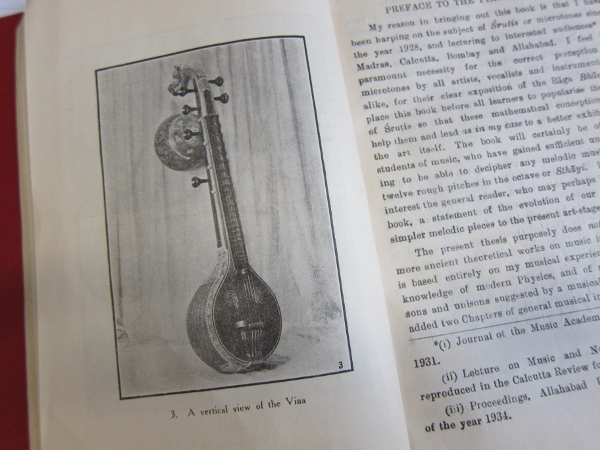
As producer on the World Routes Academy, one of the exciting challenges has been getting my head round a whole new musical vocabulary for the project, from Tamil temples, to Carnatic Saints, there is a pantheon of terms to learn. Digging around in the BBC library I found a small volume which I hoped would be my saviour, printed in 1939 and entitled The Grammar of South Indian (Karnatic) Music by C. Subrahmanya Ayyar, B.A. Unfortunately the first line of the preface of this fantastically detailed investigation of the science of Carnatic microtones starts, 'The structure of the scale.. is not a subject that can be made very interesting.' Thankfully, Hari is a fantastic communicator, and in Saturday's World Routes, he kicks off the Academy by joining Lucy Duran in the studio to set out some of the basics of South Indian music. He's been digging through the BBC Archive for some rare recordings, one of which inspires a performance in which he is joined by a flautist and mridangam player, and also brings his Guru to the studio to talk about the Sri Lankan heritage to her musical practice.
Just to whet your appetite, here is a short glossary of things I've learnt for this week's programme, tune in on Satutrday to hear what it's all about!
- Carnatic - the classical music of South India
- Chennai - capital of Tamil Nadu (once called Madras)
- Hindustani - the classical music of North India
and Knowledge is often depicted holding
- Mridangam - the double ended drum used in almost all Carnatic music
- Pavam - the emotional base of a piece of Carnatic music, the key to the whole piece
- Ragam - the mode or a scale in Carnatic music, often a different order of notes in its ascending and descending form
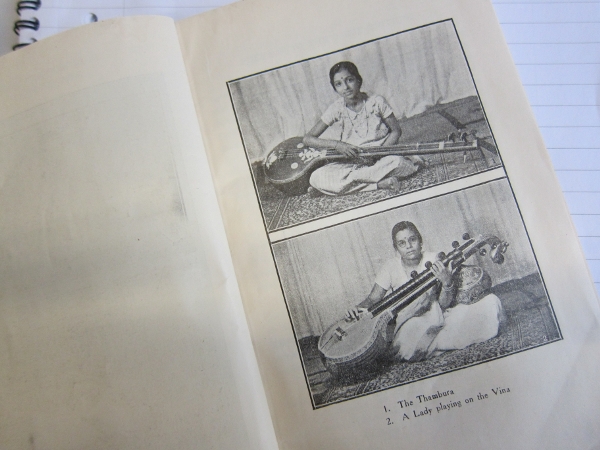
- Saraswati Veena - the 7 stringed lute that Saraswati Hindu Goddess of Arts and Knowledge is often depicted holding, and that Hari plays
- Sri Mutiah Bhagavatar (1877 - 1945) - One of the most famous contemporary Indian composers of Carnatic music
- Saint Thyagaraja - (1767 - 1847) - One of the trinity of Carnatic composers, and along with contemporaries Muthuswami Dikshitar and Shyama Shastry is considered one of the greatest composers in Carnatic music
- Talam - the rhythmic cycle a piece of Carnatic music is based on
- Thanjavur - Perhaps the spiritual home of Carnatic music, in the heart of Tamil Nadu, and where the Carnatic Trinity are from.
- Yazh - the harp like instrument that was recorded in the Vedic scriptures, and is the ancestor of the Veena
- Yazhpanam - Tamil name for Jaffna in the North of Sri Lanka
- Yazhpanam N. Veeramani Iyer - Hari's guru's guru. A prolific and highly regarded Carnatic composer, from Jaffna in Sri Lanka.

Comment number 1.
At 14:06 8th Jun 2011, World Music Fan wrote:Hi Peter,
World Routes Academy seem to be a great programme for mentoring young talent from the world music genre. It would be interesting to know:
1. Eligibility criterion & selection process for becoming a mentee of this academy / programme.
2. Contact details of the person to whom prospective mentees should get in touch.
3. Application / audition deadlines.
Thanks in advance.
Prospective mentee.
Complain about this comment (Comment number 1)