
The BBC Symphony Orchestra goes to Hollywood ...
Post categories: BBC Symphony Orchestra
 |16:11 UK Time, Monday, 10 January 2011
BBC Symphony Orchestra sub-principal viola Phil Hall has been suffering from 'too many notes' - not Mozart, but John Williams! Here, Phil describes a special treat as the orchestra has the chance to play film music
In previous blogs I've mentioned the versatility of the BBC Symphony Orchestra, playing everything from Pergolesi to Panufnik, but there is one genre we seldom get a chance to perform in and that is Film Music. Due to our mandate to Radio 3 (practically everything we do is recorded and 'sold' for broadcast), there is usually no opportunity in the schedule for BBC orchestras to take part in film sessions: TV music, yes, but not film. There is also the difficulty that orchestras can be booked late in the day for such sessions (once the film has been shot) but these invitations can then be withdrawn at the 11th hour. Quite often, too, there is a lot of tedious underscore in film music which leaves one just playing long notes with little interest other than trying to divide the fee by the note. On the other side of the spectrum, however, are composers who really know how to use an orchestra thrillingly to enhance the mood of the movie and write a thousand notes a minute - a recent concert I did exclusively of John Williams's music left me wishing for a new left wrist! Thrilling and well-known 'though his scores are, for my taste the best quality is found half a century earlier in the scores that influenced Williams, notably those of Korngold, Rosza, Waxman et al, so it was with pleasure to read on the BBCSO schedule that we'd be doing a concert of 'Golden Age Hollywood' film music.
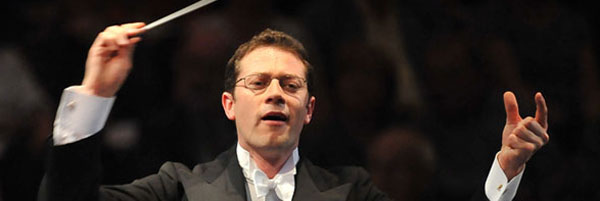
John Wilson
A big problem in performing old film scores is locating the parts. Another problem is reading them. A lot of the parts you get (if you are fortunate enough to have tracked them down in the first place) seem to have been copied by a talented spider and are well-nigh illegible. These scores, however are the lucky ones: they have survived. Metro-Goldwyn-Meyer, in their wisdom, decided to bury all their scores and parts as land-fill for a car park once they had served their purpose and been recorded. Thank heavens, then, for the determination and tenacity of John Wilson, who took on the Sisyphean task of unpicking these 'lost' scores by ear, from the soundtrack.
He's a canny lad, John - a Tynesider with a terrific sense of humour. He cajoles the orchestra into trying to sound like one of the great Hollywood studio orchestras of the '30s and '40s, imploring the strings to use special fingerings and lashings of intense vibrato, the wind players too. He asks the vibraphone for its 'comedy-outer-space-setting'. He gets upset if some players aren't giving 100% - 'You are giving me a pain right here,' he sighs, pointing at his abdomen, 'Please don't send me to an early grave...'. That he loves this music passionately is clear from the labour of love he took on in transcribing hours and hours of it, but he also knows how to ignite the orchestra with his customary 'crackle and vim'. At one point he breaks the cork end of his baton (one which used to belong to Barbirolli) and seems genuinely saddened by this loss of talisman. But Mutiny on the Bounty crackles along at a rate of knots and Gone with the Wind goes like... the wind: by the end the audience is clamouring and I need another new left wrist.

Comment number 1.
At 09:08 12th Jan 2011, Rachel P wrote:Sounds fun. Would not have thought of film music as very worthwhile.. but will now have to think again, and listen.
Complain about this comment (Comment number 1)