
Don't diss those Mozart Piano Sonatas ...
Post categories: Radio 3, The Genius of Mozart
 |11:11 UK Time, Thursday, 6 January 2011
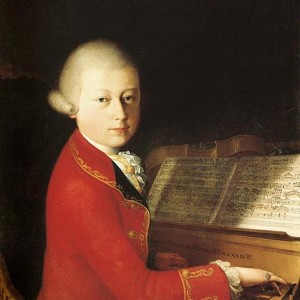
Mozart at the piano
Radio 3's The Genius of Mozart is helping us think again about the maligned Mozart piano sonatas, says writer and critic Jessica Duchen (Radio 3's Mendelssohn Blogger for Composers of the Year).
I've been tuning in as Radio 3 plays every note that Mozart ever wrote (to the best of all our humble knowledge). The initial concept did not precisely make me reach for the 'on' switch (I can't listen to music while I write in any case). But in yesterday's Piano Day, the Piano Sonatas were centre stage, thanks not least to the brilliant Leon McCawley, and it seems high time for a bit of defence for these astonishing and oft-maligned works.
Now, the curse of received opinion and false tradition works against music of every era. Baroque: precious and vibrato-less. Mendelssohn: shallow. Schumann: mad. Liszt: loud and vulgar. Faure: difficult, austere and drippy. Korngold: Hollywood schmaltz. Cage: random and unemotive. And Mozart piano sonatas: written for fortepianos, designed for home-based amateurs in the salons, therefore insignificant and tinkly. Musicians too often come to the music they play with little more knowledge of the context, truths and texts than such poisonous preconceptions (at least two of the above were notions originally put about by the Nazis, yet have seemingly entered universal knee-jerk-reaction consciousness). Recordings are imitated unthinkingly and thus false traditions build.
Look a little deeper, look into the text itself and take on board what you find. It may not be what you expect.
The Mozart piano sonatas are glorious works. Stop the tinkling, stop the Jane Austen images: the composer of the great C minor Fantasy and Sonata, the frenetic and pre-Schubertian A minor K310, the dazazling F major K533/494 gave us Don Giovanni, Le nozze di Figaro and Die Zauberflote. He created those incredible string quintets, 27 inspired and beloved piano concertos, the Sinfonia Concertante for violin and viola, and, for heaven's sake, most of the greatest Requiem ever written. So how are his piano sonatas tinkly and insignificant? Strip away the fear of incorrect phrasing, the academic insistence on articulation from a treatise or two and the idea that you cannot so much as touch a pedal while playing them; immerse yourself in the operas, the orchestral works, the choral music. Then come back to the sonatas and plunge in. The colour, fantasy and imagination you can then find is immeasurable. Take the F major sonata above: try it after hearing Figaro and you can find comparable characters in the sonata: the bubbling Susanna, grand and angry Count, the rebellious pranks of Figaro, the yearning Countess. Place the C minor work alongside Don Giovanni and ... you find the Don's blazing reckoning within it.
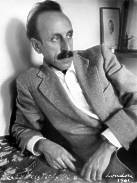
Hans Keller (1919-85)
I used to attend the lectures of Hans Kellerat Dartington in the early 1980s -- he was already ill by then, but I will never forget his talk entitled Today's Musicless Musician. In his young day, he said, recordings were harder to come by, but music students went out of their way to learn not only the full repertoire of their own instrument, but the composers' vital works in other genres. And the idea that anyone could play the late Beethoven sonatas without knowing the late string quartets or the Ninth Symphony was simply unthinkable. You cannot understand the true spirit of a composer from one work alone. Some tried to argue back: can't every work speak for itself? But he had just given them the answer: it can't, not if you want to do it artistic justice. And if you think it can, you're showing up nothing but your own laziness.(Hans Keller also wrote very eloquently about football, btw. There's now a Facebook group devoted to memories of him.

Comments Post your comment