
On the Trail of the Snail
Post categories: Between the Ears, Radio 3, speech
 |11:40 UK Time, Wednesday, 8 December 2010
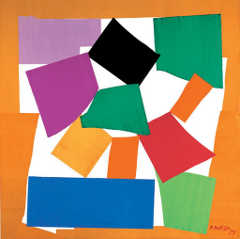
Matisse's The Snail
Independent producer Alan Hall has curated an unusual broadcast in the Betweenthe Earsseries - five celebrated radio producers from around the world contribute their personal responses in sound to Henri Matisse's The Snail, the paper cut-out collage that hangs in Tate Modern, London. You can hear the programme at 9pm on Saturday 11 December. Here, Alan describes the inspiration for the programme.
I can’t remember when I first saw Matisse’s Snail – on a school trip, presumably. But then I can’t recall a time when this playful arrangement of coloured cut-outs, spiralling snail-like within a vast canvas hasn’t been familiar. It used to hang in Tate Britain, filling its own wall. For the last ten years it’s been at Tate Modern – on display, as postcards, posters, adorning exhibition catalogues. To my mind, it’s the iconic image in the Tate collection.
And why it still holds the imagination becomes easier to understand as time passes. My child’s eye was caught by the ‘playschool’ colours and Matisse’s invitation to play a game relating his extraordinary image to the everyday title on the wall – The Snail. This direct statement that what I’m looking at is a snail – and not just coloured paper in a frame - never troubled me. The Snail is a snail, though it isn’t literally a snail. The Snail doesn’t have to look like a snail to be a snail. It represents a snail. It captures snail-ness. Like most viewers, I think, I ‘got’ this early on. Matisse takes us beyond the appearance of a thing to its deeper truth. And this is what has endured and still appeals.
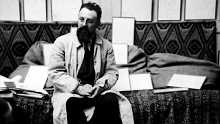
Henri Matisse (1869-1954)
With maturity comes a closer understanding of how Matisse was able to make this image when he did. And why. He was old and ill and could no longer paint or sculpt as he had. But he still had to make, to create, to represent - so instructed his assistants to try out different patterns of paper cut-outs, hanging them on his studio wall. And he settled on this image - the spiral with its resonances in so many natural forms, its sense of movement, its spinning-top mischievousness. But more than that, it demonstrates a profound creative inventiveness that confounds the artist’s diminishing faculties and reveals a life-affirming expressive energy in the elderly man who conceived it.
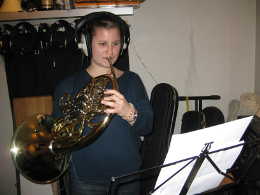
Recording the music
So, in 2010 the opportunity came up to produce a series of ‘audio adventures’ based on the image for the BBC’s feature showcase Between the Ears. And I thought, if a snail is a spiralling pattern of coloured paper, then a snail can be a sequence of sound pieces. I asked some of the best radio producers in the world to consider in five-minute ‘cut-outs’ their own responses to Matisse’s ‘snail-ness’. And the results reflect the different ways people view this image and, of course, the personalities of the makers: Paris-based Dinah Bird’s piece spins and whirls sounds gathered from a children’s toy museum; Australian Sherre DeLys’s holds a still moment of refracted light encountered during a woodland walk; US-based Dane Pejk Malinovski’s dances between archive of Gertude Stein and the description of the sex life of a snail; Norwegian Kari Hesthamar’s accompanies an author as he prepares for a night walk, carrying his ‘home’ in the rucksack on his back… and the piece by Chris Brookes which opens this audio arrangement returns us to both the familiar – a gardener dealing with unwanted snails in his lettuce patch – and the esoteric – a row about a painting inspired by Matisse’s work that was hung by the Obamas in the White House.
I’ve been back to see the Matisse at Tate Modern since completing this production. I’m not at all surprised to find it suggests still further interpretations.
Find programme details for the broadcast of On the Tail of the Snail
Visit the website of Alan Hall's production company, Falling Tree

Comment number 1.
At 21:52 11th Dec 2010, pmcrae wrote:Enjoyed the programme immensely: a great idea and wonderful artistic responses! Can we have more of the kind, please.
Complain about this comment (Comment number 1)
Comment number 2.
At 22:07 13th Dec 2010, Julius Smit wrote:A superb piece of radio: a sound collage of an iconic paper cut-out collage. This is where radio scores so well in creating and fusing new and extraordinary sound-scapes. Full credit to Alan Hall for curating this programme. Let's have some more, please.
Complain about this comment (Comment number 2)