
Haydn - a creative man for all seasons
Post categories: Composers of the Year, Haydn
 |16:51 UK Time, Thursday, 7 January 2010
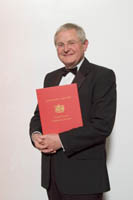 Now that 2009 is a thing of the past, I'd just like to thank everyone who has contributed to the COTY blogs and particularly to the Haydn aficionados. Each blogsite has produced its own style and supporters, and now seems the moment to thank everyone involved.
There can't be many friends who, whatever our mood, always have something rewarding to say to us. Someone whose greatness as a composer doesn't stop him from being good company as well. We have only to read Haydn's vivid comments in his London Notebooks, to feel he must have been tremendously good company. Although he was undoubtedly a master musician, he never seems to have set himself apart from the rest of us, as Berlioz and Wagner often did. To say that he is more like 'one of us' is not to devalue his great talent, but rather to enjoy the fact that he created extraordinary works from quite ordinary circumstances. Like Bach and Handel before him, he produced a vast and varied amount of music. The ability to get on with the job and find endless variety through the application of their craft was something all three composers shared. In Haydn's case, there was no significant genre of classical music that he didn't explore and develop. And the freshness of his invention means that he remains a composer for all moods and all seasons to this day.
- With The Seven Last Words and The Creation, we come closest to sharing his deep faith and spiritualty.
- His string quartets and piano trios fulfil at least two functions for us. They chart a path away from vocal music, which had been the predominant genre in the preceding Baroque era. But they also provide the foundation stone of the rich literature of chamber music that was to follow.
- To say, as some critics do, that Haydn lacks talent as a composer of dramatic music is surely too dismissive. I doubt if many music lovers can forget the first time they heard the Trumpet Concerto - a wonderfully extrovert piece that is still one of the defining works of the repertoire. In the case of the operas, we know there's a lot of fine music to be enjoyed in those scores composed for Esterhaza. Fifty years ago people said Handel operas were unstageable - now we think differently. Perhaps it's time to think about doing the same kind of thing for Haydn.
- To follow the changes of style and content in the symphonies is to see something else remarkable. From the exuberance of Le Matin, Le Midi, Le Soir, through to the darker moods of the Trauer and La Passione is striking enough. But then to follow on with the riches of the Paris and London symphonies is a truly magnificent achievement.
- For the Austrian state he wrote a national anthem, while for his friends and colleagues he composed piano sonatas and divertimenti.
I think the French portrait painter Jean Ingres was right when he said, 'Whoever studies music, let his daily bread be Haydn. Beethoven is indeed admirable, he is incomparable, but he has not the same usefulness as Haydn: he is not a necessity...' So, as bread is a food for all seasons, so surely is Haydn's music. Viva Haydn!

Comment number 1.
At 11:29 8th Jan 2010, Lord Byron wrote:variety is good
I like Haydn
but I also liked the mahler on monday
and enjoying 'the path and the poet' at the moment, on listen again :)
The essay is good.
I walk lots.
I am a poet
https://www.myspace.com/jetsetjasonuk
I like radio 3
Enough said
Complain about this comment (Comment number 1)
Comment number 2.
At 11:38 8th Jan 2010, Jon Jacob wrote:Denis - thanks to you for your efforts "selling" Haydn on the COTY blog. As a former tutor of mine at Lancaster, it's been a bit of a trip down memory lane.
You'll be pleased to hear that at the end of your stint I'm marginally more enthusiastic about Haydn than I am about Handel.
Complain about this comment (Comment number 2)
Comment number 3.
At 21:59 14th Jan 2010, Marzipancat wrote:As I was reading this, Sky.fm just happened to play Haydn's rambunctuous Symphony No. 48, "Maria Theresa."
Long live Papa Haydn!
Complain about this comment (Comment number 3)