
Seeking Messiah
Post categories: Composers of the Year
 |16:31 UK Time, Monday, 21 December 2009
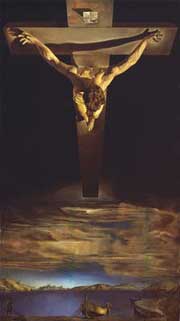 Bizarrely, I think I've managed to get through almost my entire year as the Radio 3 Handel blogger without mentioning Messiah. Maybe that's a good thing (why, after all, should I talk to listeners about a piece they already know so well?), but I can't let the year go by without mentioning it, especially at a time when its music is everywhere. Indeed, in the run up to Christmas in this anniversary year, over 400 choirs across the country will be performing the famous 'Hallelujah Chorus'.
Perhaps one reason for the enduring popularity of Handel's Messiah is its double 'bite of the cherry' - the fact that in any given year you'll usually have the chance to hear it at Easter and at Christmas. That suggestion may seem a bit facetious, but my underlying point is serious: unlike Bach's Passions, which unambiguously tell the Easter story of suffering and salvation, Messiah has no clear narrative structure, and encompasses aspects of Christ's religious significance from the prophecy of his birth, through the Passion, to the day of judgement. This means that, in Christian terms, it's just as appropriate to sing it at Christmas as it is at Easter (indeed, Christians recognise the symbiosis of these two stories of Christ's birth and death).
That lack of narrative comes from a venerable theological tradition of fragmenting and juxtaposing texts - usually Old and New Testaments - in order to make a point (particularly about the foretelling of Jesus as Messiah). This is the tradition that Handel's librettist, Charles Jennens, was working in. Of course, avoiding a narrative was also necessary to avoid committing blasphemy: it wasn't till the mid-20th century that you could actually ask someone to play the 'role' of Christ. (There's a delicious irony in the fact that, as this is also a Monty Python anniversary year - the 'Ruby Jubilee' - they did a one-off show in October entitled Not The Messiah (He's A Very Naughty Boy), The Musical ... but that's another story.)
To return to Handel: that lack of a clear narrative perhaps also makes Messiah's appeal more general: the religiosity of the oratorio may seem 'safer' if it's not so overtly tied to a particular biblical story, and becomes more of an 'Everyman' meditation. That seems to have been part of the point with ENO's recent staging of Messiah, directed by Deborah Warner. Warner tried to tie the oratorio's various messages of joy, pain and faith to contemporary Britain, sometimes with religious overtones and sometimes not.
Whether audiences needed the oratorio's 'contemporary relevance' pointed out to them in this way is another matter. That relevance was surely embedded in the original conception of the oratorio (indeed, Christians might argue, in the whole idea of 'God made man' in the first place!), and the oratorio's popularity today is testament to our continued acknowledgement of its spiritual value, in the broadest sense. As interesting as ENO's staged version may have been, I for one shall be looking forward to hearing the wonderful voices of Sophie Bevan, Catherine Wyn Rogers, John Mark Ainsley and Brindley Sherratt without the visual accompaniment, when Radio 3 broadcasts the ENO performance on Christmas Day - in its magnificence and transcendent optimism, a truly fitting end to this Handel year.

Comment number 1.
At 15:12 22nd Dec 2009, kleines c wrote:I did not think that the ENO's brave attempt to stage 'Messiah' worked dramatically either, Suzanne, although thank you for enlightening us about the work. Fascinating stuff!
:)
I am particularly looking forward to the next four Performances on 3, as choral masterpieces of the Four Composers of the Year will be well represented. I don't know why Radio 3 has ignored its four indefatigable bloggers on New Year's Eve, as it prepares to go X Factor to find its Composer of the Year:
https://www.bbc.co.uk/programmes/b00pgmkh
Complain about this comment (Comment number 1)