
A Rounde O of Musicke by Henricus Purcellus delivered unto ye Publicke in AD MMIX
Post categories: Composers of the Year, Purcell
 |15:19 UK Time, Wednesday, 23 December 2009
 It is not too late to buy your friends and fellow Purcell lovers a Purcell CD for Christmas. My disc of the year is The Complete Fantazias (SIC) performed by the viol consort Fretwork on the Harmonia mundi label (HM907502). Their instruments' warm, fibrous pleading carries the long fluid lines of Purcell's imitative counterpoint in a finely balanced ensemble, expressive of the most agreeable melancholy. Purcell, who was careful to date each of the 15 Fantazias, composed them almost daily throughout June and August 1680, which must rank as one of the greatest bursts of creative energy in history. He was only 21 yet capable of handling the three, four, five, six and seven part textures with supreme skill. The lines weave together with natural elegance, augmenting and inverting the themes or echoing already heard features like an expensive cloth of the sort depicted on the cover close-up of James I's trousers. One can almost sense Purcell smiling at his own brilliance in the extraordinary five-part Fantazia Upon One Note. The last two are both In Nomines, which form, based on a plainsong cantus firmus, every English composer since Taverner had essayed. After Purcell none did until Maxwell Davies and even his was homage. There is no record that other composers were jealous of Purcell though they had every right to be. In fact, he seems to have been one of the best loved composers in history and this CD gives ample evidence of why. The music is both modest and sublime and Fretwork's performance faultless.
Beautifully presented in a hardback, 130-page book with stunning illustrations and learned articles is the double disc To Saint Cecilia by Marc Minkowski and Les Musiciens du Louvre on the naïve label (V5183). It contains an ode, a song and a mass to the saint by Purcell, Handel and Haydn respectively, but the former has pride of place. Minkowski's phrasing is Lully-esque while the singers' diction rather continental on the dipthongs 'Hail' and 'Nature' - except for Lucy Crowe's, of course. She sings Thou tun'st the Earth with effortless, sprightly radiance. Tis Nature's Voice is entrusted to Anders Dahlin, not an alto but an extreme tenor, or as the French call it, haute contre. Italian bass Tittoto's full-speed Wondrous Machine achieves maximum power and thrust with no sense of strain. That, to me, has been the Purcell aria of the year, especially since Neal Davies' thrilling rendition in Westminster Abbey on St Cecilia's eve.
Purcell's choral works have hardly featured at all on disc this year which is a great tragedy. None of the cathedral choirs issued anything, though they sang Purcell often enough live, so it was left to The Sixteen under Harry Christophers to celebrate the anniversary with a tour and accompanying recording on the Coro label, Bright Orb of Harmony (COR 16069). It opens with the Latin verse anthem Jehova quam multi sunt hostes which is a field-day for soloists. The bass lingers just slightly on his impressive bottom E, the show-off. The attention to word-painting and the expressive grief in the long, but rarely performed Let Mine eyes run down with tears are Sixteen hallmarks. The disc also celebrates the 50th birthday of the composer James MacMillan in four works including the impressive O bone Jesu and closes with Purcell's two settings of Thou knowest Lord. The choir is in buoyant form throughout though one misses the plaintive, nostalgia of boys' voices, the more so for the lack of other products on the market.
The year will be remembered for Purcell's secular works - the theatre music and chamber pieces. The Sonatas in Three and Four Parts, trio sonatas by another name, appeared, the former as a L'Oiseau-lyre re-issue from 1995 (4780027) and performed by Christopher Hogwood on the chamber organ, violinists Pavlo Beznosiuk and Rachel Podger and bass viol Christophe Coin, the latter on a Linn Records disc (CKD332) by the new group Retrospect featuring violinists Matthew Truscott and Sophie Gent, bass viol Jonathan Manson and keyboardist Matthew Halls switching between harpsichord and organ. My preference is for the Hogwood team who have slightly more of a feel for Purcell's language while the discreet whispering organ is generally preferable to the jangling harpsichord. On the other hand you do get the popular Golden Sonata (No9 in F) and the long single-movement Adagio in G minor on a ground bass with the Retrospect Trio.
Two performances of Dido and Aeneas were issued. The first on the Chandos label (CHAN0757) won this particular skirmish chiefly because of the soloists Sarah Connolly (her Dido's Lament was requested time and again over the year), Gerald Finley, Lucy Crowe, Patricia Bardon and John Mark Ainsley accompanied by the Orchestra of the Age of Enlightenment, although I still cannot understand why the chorus chose to sing 'bouzy' to rhyme with lousy when it is quite clearly a 'boozy short leave' (rhyming with floozy) which the sailors are enjoying. The other disc on the Alpha label (Alpha 140) came from Russia, was performed at the Novosibirsk Opera House in Siberia in 2007 and featured the New Siberian Singers who didn't always make the English text clear. In fact the thunderous Overture surpassed that on the Chandos disc for exciting rhythms, but thereafter the performance deteriorated.
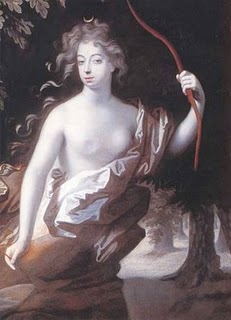
Another re-release brought back from 1995 Roy Goodman and the Parley of Instruments on a Hyperion triple disc of The Complete Ayres for the Theatre (CDS44381/3) featuring the instrumental music for the 15 shows for which Purcell wrote incidental music - act tunes, dances, battle music etc. Only the feeble quality of the dramas stops this wonderful music from being better known. The CD cover is notable for its saucy picture of Nell Gwyn. On Aliavox, Jordi Savall and Le Concert des Nations (AVSA 9866) brought out a delightful recording of music from The Prophetess plus the five suites from The Fairy Queen which was the production of the year in Glyndebourne's sumptuous staging.
Harpsichordist Richard Egarr came out with a Harmonia mundi disc of Keyboard Suites and Grounds (HMU 907428) which despite his persuasive essay in the sleeve notes remained unconvincing. The works are just too slight. London Baroque were the artists on another Harmonia mundi re-release from 1990 featuring a selection of Purcell's Chamber Music (HMA19513270) with Lars Ulrik Mortensen providing a twinkling harpsichord continuo to the group's gut-strung violins.
Finally, the only true compilation of the year was Naxos' The Best of Henry Purcell (8.556839) which has something of everything - a Fantazia by the Rose Consort of Viols, a Dido and Aeneas selection with an impressive Kym Amps as Dido, an anthem Blow up the Trumpet from the Oxford Camerata, an ode for St Cecilia (1683) and, most poignantly, the Evening Hymn sung to an organ accompaniment by the plaintive treble Oliver Lepage-Dean. Your friend and Purcell-lover could do a lot worse if you don't actually keep the thing for yourself.

Comment number 1.
At 14:27 24th Dec 2009, kleines c wrote:What a glorious Christmas review, Rick! Thank you for such an entertaining blog over the course of the year, although in the nature of such things, you might have ruffled a few feathers along the way! Merry Christmas! c.
Complain about this comment (Comment number 1)