Radio Blog

Archives for January 2011

Who's listening? The Rajars are coming

Blog comments are currently unavailable. Find out more.

Post categories:

Steve BowbrickSteve Bowbrick|18:59 UK time, Thursday, 27 January 2011

Yellow hand-drawn sign about Q4 Rajars coverage

The Rajars? Obscure industry obsession or the beating heart of radio? The RAJAR figures for the fourth quarter of 2010 are published next Thursday morning, 3 February. Watch this space for coverage of the numbers that give radio people sleepless nights, starting on Tuesday with an exclusive primer on how they're gathered from RAJAR Research Director Paul Kennedy.

Steve Bowbrick, blogs editor

Painful day for BBC World Service

Post categories:

Peter HorrocksPeter Horrocks|18:37 UK time, Wednesday, 26 January 2011

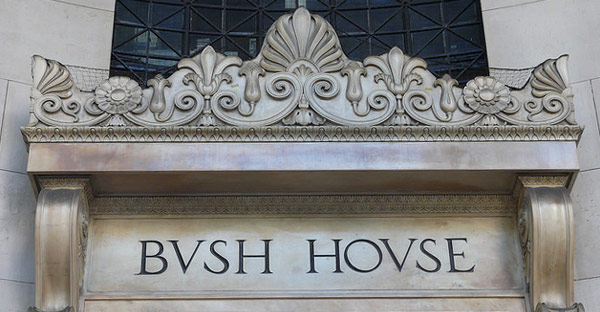
Bush House in the Aldwych, London. The home of the BBC World Service.

Editor's note: Peter Horrocks is director of BBC World Service. This blog post, published on the BBC Editors Blog, explains the cuts to the service announced today - SB

It's been a painful day for the BBC World Service and the 180 million audiences around the world. This morning I announced a fundamental restructure to the BBC World Service in order to meet the 16% savings target required by the UK government's Spending Review last October.

At the moment BBC WS is funded by Grant-in-Aid provided by the government.

BBC WS will be funded by the licence fee from April 2014.

Over the next three years, we will have to make to an annual saving of £46m by April 2014.

In all the changes announced today, the aim has been to protect the WS, its quality and reputation and, where possible, our footprint.

Continue reading this blog post and leave a comment on the BBC Editors Blog...

Delivering Quality First: plans for online radio

Post categories:

Daniel DankerDaniel Danker|18:11 UK time, Tuesday, 25 January 2011

All of the BBC Radio networks

Editor's note: Daniel Danker is the BBC Future Media & Technology manager responsible for building the new 'radio and music product'. In this post from the BBC Internet blog, he makes it clear that everything you can currently hear on the radio station web sites and on iPlayer will still be available in the new 'radio and music product' - SB.

Yesterday we announced the next phase of Putting Quality First. As part of that announcement, we made the first mention of our upcoming 'Radio and Music product', which created a bit of confusion about our plans for online radio: I hope this post explains in a little more detail...

Read the rest of this post and leave a comment on the BBC Internet blog.

Big changes at BBC Online

Blog comments are currently unavailable. Find out more.

Post categories:

Steve BowbrickSteve Bowbrick|16:25 UK time, Monday, 24 January 2011

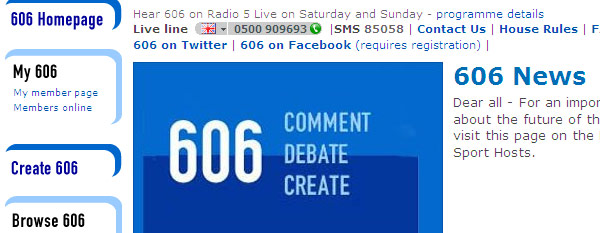
Screenshot from 606 web site

Some big changes have been announced today by management at BBC Online. A cut amounting to 25% will affect the whole of the Corporation's online division (Future Media & Technology). 360 posts will close all together, including between 35 and 39 at BBC Audio & Music Interactive. Around 200 individual web sites ('TLD's) will be closed.

Outgoing boss of BBC FM&T Erik Huggers has written a detailed post for the About the BBC blog, based on his announcement to staff.

On the BBC Internet Blog, executive Ian Hunter has written two blog posts. The first, published this morning, is about the effect of the cuts on the BBC's social media, including the planned disposal of H2G2, the long-running online community and closure of the iPlayer messageboard. In his second post he writes about the mechanics of closing and archiving 200 BBC web sites.

On the Sports Editors blog, Ben Gallop explains that the 606 sports discussion web site will be closed, along with several other sport services.

On its web site, the BBC Trust confirms that it has approved the cuts as part of the BBC's new online strategy. There's a formal announcement on the BBC Press Office web site.

The news has produced a great deal of discussion in the media and on the social networks. 'BBC Online' has trended strongly on Twitter all day, as have several cuts-related hashtags. Many thousands of tweets and nearly 900 blogs mentioned the changes.

Media coverage included The FT, The Telegraph, The Guardian's Paid Content blog, Marketing Week and The Register.

More blog posts from BBC executives are due tomorrow.

Steve Bowbrick, blogs editor

Surround sound for streaming radio - the challenges

Blog comments are currently unavailable. Find out more.

Post categories:

Simon TuffSimon Tuff|12:25 UK time, Monday, 24 January 2011

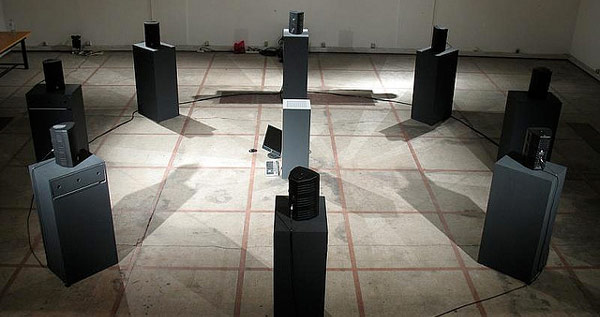
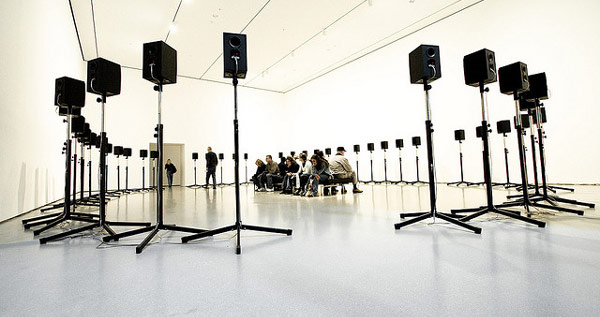
Artwork Cyclone, by Robert Henke

Simon Tuff, a senior engineer at the BBC, takes up the technological challenges being met in producing surround sound for online audio.

Alan Ogilvie (in the first surround sound blog post) talked about some of the challenges we face when delivering surround sound online as well as some of the changes that make this increasingly feasible. In this second part I'll look at what broadcasters like the BBC are doing to create surround sound content for you to enjoy as well as some of the challenges this has created!

The BBC has, in fact, been experimenting with multi-channel sound since at least the days of four-channel quadrophonic in the 1970s (and possibly earlier... but I haven't found the records yet). One of the reasons these experiments didn't flourish was the lack of a good method for broadcasting more than two channels of audio (i.e. stereo) to the home in a way that a significant number of our audience could listen to it. So although tests were conducted and some of the results were impressive, nobody had quite worked out why you should need more than two loud speakers for most programmes or how to get it to the home. Without attempting to blog a history of surround sound, it's worth noting that what helped to answer these questions for the broadcasters was the experience of surround sound in cinema which became wide spread in the 1990s and by the 21st century this combined with DVD technology (in home cinemas) was beginning to have a significant influence on television as the audio accompaniment to HDTV.

At the programme making end of the process we had film production as a starting point and at home we had DVD-type home cinema systems with Dolby or DTS 5.1 surround sound. Then in the middle of the signal chain companies, like Dolby, provided 2 main innovations to help us. Firstly they enabled us to move 6 or even 8 channels of audio over infrastructures that had been built for stereo (mostly the wires within our buildings and studios) and secondly they allowed us to deliver surround sound to these home cinema systems, via digital broadcasting, providing an alternative to DVD as the source of both high quality pictures and sound.

The subject of surround sound distribution is another complicated topic worthy of its own blog post, but first: why and how surround sound? Why is it worth the effort and how does broadcasting differ from film?

Answering these questions has also been a journey of learning and innovation, which we haven't finished by any means but by adapting some ideas from the film and recording industries, plus plenty of homegrown innovation, we have developed reasonably cost-effective techniques that work for HDTV and, we hope, radio too.

We know from research on human perception that hearing is very much a three dimensional experience and that this is especially true for the sound we detect from behind. Anthropologists suggest that this rearward hearing sensitivity was developed to help protect us from threats we couldn't see (e.g. attacks from behind) and thus it is one area of the senses that surround sound can use to enhance the media experience by adding the two rear speakers of the 6 speakers required for 5.1 surround sound. With these we can provide a better sense of space with background noise and reflections of the sound sources in front, coming from the rear, but also by proving a sense of motion as objects leave what we can see on screen and pass to either side or move across behind us.

Next, the addition of a centre speaker to the stereo pair (one left, one right). One of the differences between cinema surround and that for TV is the way we place people speaking (or dialogue) in the in the middle of the sound stage in front of the viewer. With a very large screen and a much larger audience, placing all the dialogue in a centre speaker (often hidden behind that screen) works well for movies in the cinema. However, we have found that for home viewing on smaller screens, with people sat closer, the effect is more realistic if we spread the sound (to some extent) across the front 3 speakers but having this centre speaker still gives TV viewers clearer dialogue and better, more stable, sound images for more of those sat on the sofa.

Another aspect of our audio world that surround sound technology aims to better reproduce is the dynamic range of real life i.e. the difference between the quietest and loudest sounds. This can be very dramatic in cinemas, although broadcasters have had to tame this technology to some extent for TV viewing (if we aren't going to annoy the neighbours etc.). We have several tools to help here but perhaps the most well know is the LFE channel (Low Frequency Effects). This is the 0.1 of 5.1. The idea is that the rumbles and bangs that make movies so exciting can be created best by a loudspeaker specifically designed for this purpose. This is partly because the main components of these sounds are at low frequencies as well as great level (or loudness). In this case the low frequencies are typically below 100Hz where humans and at this frequency can't work out which direction they come from... so, if done properly, you only need one speaker and this doesn't damage the sound image. It is this sort of effect that shakes your chest and perhaps the furniture.

Having a technology that can deliver 'Hollywood levels of excitement' is a good place to start and a lot of good surround sound comes with great films - but television and radio programmes cover a broader range and provide a more intimate experience. This is true of other types of drama certainly but the ability to create a sense of space, of really being there, allows other programme types to benefit. Sport is transformed by the sound of the crowd and the atmosphere of a stadium. Sky's premier league football and the BBC's coverage of Wimbledon are both transformed by the roar of the crowd all around you when a goal is scored or the hushed murmurer of expectation on centre court awaiting a match wining serve. Live music is also greatly enhanced by what surround sound brings. Not only can the acoustics of great performance spaces, from concert venues to cathedrals, be better captured but the thrill of being in a festival audience or standing next to the stage can also be magicked up.

The BBC is still learning how to make the best of 5.1 for TV as well as doing experiments to explore ways of bringing surround sound to radio audiences and considering what the next generation of audio technology, perhaps to accompany 3D pictures, might be!

Simon Tuff is Principle Technologist at BBC FM&T

Whatever happened to surround sound for streaming Radio?

Blog comments are currently unavailable. Find out more.

Post categories:

Alan OgilvieAlan Ogilvie|18:37 UK time, Friday, 7 January 2011

Surround sound

Editor's note: surround sound has history - it was first used in 1940 by Walt Disney - and in this two-part post, Alan Ogilvie reminds us that the BBC's first try at surround sound for streaming audio was back in 2002. He also hints at some plans for the future - SB.

In the first part of this blog post, I want to take you back to when Radio experimented with surround sound on the internet - namely being able to listen to a surround sound-mixed production of Dylan Thomas' Under Milk Wood (2002), and the later 'phases' of Hitchhiker's Guide (2005). It was great! "Why haven't we been doing more?", I hear you ask. Well - there is a simple answer, and you probably won't like it. The internet and the surround sound devices we needed back then just weren't widespread enough. Sure - I was able to listen to the streams we provided, but then I had all the kit necessary to handle it on my home computer... you'd expect that, what with me being the manager responsible for the infrastructure behind the encoding and streaming of the National Radio networks online. But it just wasn't really 'mainstream'.

In those years, it wasn't a foregone conclusion that your computer had the right equipment to decode surround sound audio (specifically 5.1 channel surround sound). Your computer was most likely, compared to what we have nowadays, just a bit 'clunky'. Look at the advances in the 'online' world in the last 8 years since Under Milk Wood was first made available online (and sorry - but it's not currently available to listen to again). Even your internet connection wasn't entirely 'up to it' either, this was before the internet needed to expand to support the masses using Facebook, YouTube, Twitter or iPlayer. Do you remember those days when you'd be lucky if you had broadband and it gave you 512kbps down, the majority of people online at home were only just getting over having a modem that was just slightly faster than a fax machine.

To make sure you could listen to our Radio streams, we had to go for bitrates much lower than we have today in order to keep people happy. In order to deliver the special surround sound streams to you meant that you'd need a bigger bandwidth than what was needed just to listen to regular Radio 4 output online - by only providing Under Milk Wood and Hitchhikers as on-demand streams this meant that your computer could buffer-ahead enough of this 'massive' stream for you to be able to listen to it without constant interruptions from re-buffering. Ah, how I remember waiting on my Windows Media Player on my home computer to buffer the needed amount to listen - and I lived in London with what was considered to be a good internet connection at that time. Suffice to say it didn't take off on the web... not then, anyway.

Nowadays we have better internet connections, and the devices we can connect are both more capable and more appropriate. When I say that they are 'more appropriate' I mean that when I listened in 2002, most home computers were shut away in rooms that were occasionally used by the family... now these devices are becoming part of the fabric of your home life. Just think about where your Games Console is - it's possibly in your front room, connected to a flat screen TV and you probably have a Home Cinema set-up for surround sound. Or maybe you like your audio - and have a nice surround sound capable HiFi system with the ability to stream Internet Radio services. Maybe your home computer, which now tend to come with a soundcard that supports surround sound and enough , is connected to decent speakers (because you use it to play Bluray or DVDs).

We are producing surround sound content to some extent - my colleague Simon will elaborate in part 2 about some of the challenges faced in producing the source material. So maybe we should try this again. Maybe we should take some of this wonderful surround sound audio that's being produced for Radio, and make it available online?

What would we, the BBC, need to do to make that happen? Well, luckily, we've already begun looking at Radio productions and our streaming infrastructure. There are a couple of key areas we need to clear to make this work. In order to stream surround sound online to your computer, for example, we need to get the 'end-to-end' delivery sorted. By this I mean that the surround sound mixed input from production must connect to our stream encoders, these encoders must use the correct codec and bitrate, then it has to be wrapped in the correct transport to stream it to a player on your computer which can not only decode the stream itself but can correctly play it back on your sound device. No mean feat. Especially when, if you take a look around the web, many of the 'common' services for Internet Radio, and even the video services, don't offer surround sound.

Oh, and on top of this, we'd like to do it 'live'... not just for on-demand.

Alan Ogilvie is Platform Manager at BBC Audio & Music Interactive

How to get your unsigned band on the Radio 1 daytime playlist

Blog comments are currently unavailable. Find out more.

Post categories:

George ErgatoudisGeorge Ergatoudis|17:43 UK time, Friday, 7 January 2011

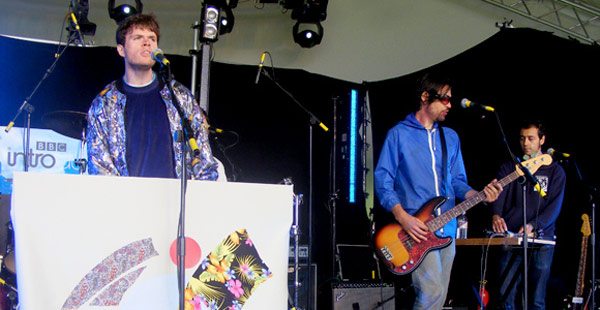
Oxford band, the Fixers

BBC Introducing is an initiative set up by the BBC to support unsigned, undiscovered and under-the-radar artists, and from Monday January 10th the Radio 1 playlist will feature a new track from a BBC Introducing artist every week.

Guaranteed exposure on daytime Radio 1 is a significant opportunity for aspiring musicians, with millions of listeners set to hear their music. But it's not just the plays that will make a difference: the Radio 1 playlist is influential on a global basis, with music industry executives and radio programmers around the world keeping close tabs on the tracks we add each week.

So - how are we deciding who gets added? Well it all begins with artists uploading their tracks to us via the BBC Introducing website.

Any UK artist or band can upload their music, which is then listened to by presenters and producers of their local BBC Introducing radio show. Local teams make recommendations to a panel inside Radio 1 that consists of DJs like Huw Stephens, producers of In New Music We Trust shows and members of the Radio 1 playlist team. It's an efficient filtering system with the very best tracks from a wide range of genres ultimately earning a place on the playlist.

It has never been cheaper or easier to make and record music and there are literally thousands of artists around the UK who are striving to be heard. It's a very competitive business, and the biggest difficulty is actually being discovered.

BBC Introducing is proving to be an effective way of surfacing the best new talent and having heard the first batch of artists we are going to support on the playlist, I'm personally very excited. I hope that some of them will follow in the footsteps of previous BBC Introducing stars such as Chipmunk, Marina And The Diamonds and Florence And The Machine. While there's no guarantee of success for anyone in the music business, this opportunity will definitely provide a brilliant first step on the ladder, and listeners hungry for new music will discover some great new artists.

George Ergatoudis is Head of Music for BBC Radio 1

The shipping forecast vs The Ashes on Radio 4 LW

Blog comments are currently unavailable. Find out more.

Post categories:

Denis NowlanDenis Nowlan|11:30 UK time, Friday, 7 January 2011

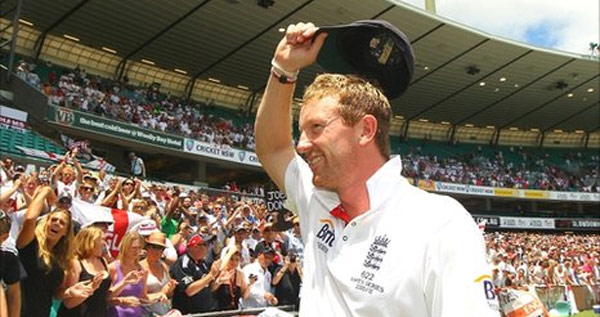
England's Ashes victory in Australia in 2011

In order to see this content you need to have both Javascript enabled and Flash installed. Visit BBC Webwise for full instructions

We had a long discussion yesterday, considering various tactics for avoiding a possible clash between the late night Shipping Forecast and the end of the last Test Match. Could we only carry it on FM and DAB? That wouldn't work for mariners far from land as they rely on the carrying power of Long Wave. Could we move the Forecast, holding off until the last wicket fell, whenever that might be? We do occasionally delay a forecast but this requires us to give at least 6 hours notice of its new position. It was impossible to know when the match would end and therefore impossible to schedule a delayed forecast.

What the cricket needed - but we could not provide - was flexibility: the forecast provides vital safety information and has to go out at a predictable time. After much debate we decided we had to stay with the planned schedule and hope for the best. In the event the best happened, from the point of view of English cricket, but not for Long Wave listeners who may have missed the final, euphoric moment.

The commentary team were careful to warn that the forecast was about to begin and point to opportunities to listen elsewhere. Happily, the final 90 minutes of coverage was carried uninterrupted not only on digital services but also on 5 Live, so accessible to analogue radios. We regret the heartache caused to some listeners but hope they will understand our dilemma and that their irritation will be assuaged by the joy of a historic victory.

Denis Nowlan is Station Manager at BBC Radio 4

  • Catch up with all of the BBC's coverage of England's Ashes victory on the BBC Sport webs site.
  • The TMS blog brings together posts by commentators and producers.
  • Head of Speech Radio Interactive Andrew Caspari wrote about TMS coverage on the Radio 4 blog in November.

The Radio Manchester takeover took place

Blog comments are currently unavailable. Find out more.

Post categories:

John RyanJohn Ryan|16:32 UK time, Thursday, 6 January 2011

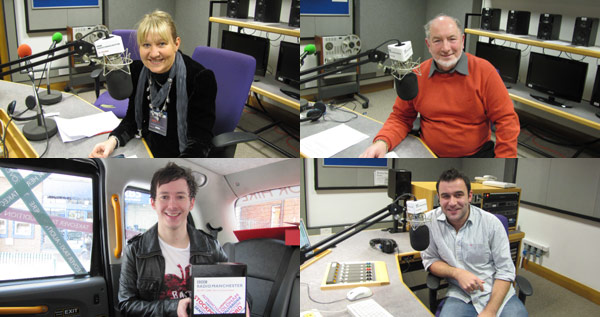
The BBC Radio Manchester takeover

Editor's note: John Ryan wrote two blog posts about the build-up to to the Radio Manchester takeover. Read them here - SB.

A married couple of comedians, a beauty queen and the receptionist at Manchester Piccadilly Station made their radio debut this week as part of BBC Radio Manchester's New Year Takeover.

They were all among the 293 rookies who auditioned for the opportunity to present their own hour-long show.

Deciding who to put on air was a daunting task. My team and I locked ourselves in a quiet room with a notepad and a laptop and started listening to the minute long auditions.

We wanted authenticity, the ability to tell a story in an engaging way - and across the project, a range of voices from different parts of Greater Manchester, ages and backgrounds.

The most impressive were those who casually wove fascinating life stories into their minute. Like the asylum seeker from Afghanistan who told us in perfect English how he arrived in Cheetham Hill unable to speak a word just eight years ago. Like the woman driver from South Manchester who booked onto driving lessons just to meet her long lost brother - the driving instructor. He still doesn't know. And like our married couple, the Wagmans. The improv-comedians met at a comedy conference in Meg's native Dallas, fell in love, and she came back with Ross to Whitefield.

Those that failed to impress were those who affected, perhaps subconciously 'the DJ voice'; that practised the over-rehearsed anecdote devoid of all spontaneity; and those that replied to a minute long audition with two words and a long silence!

Our first sift gave us a shortlist of fifty. We ranked those and worked our way down as we invited successful auditionees to come and record their shows. Nerves got to many. We made several offers to people for whom the idea of a whole hour of radio was terrifying. We thanked them for auditioning, and called the next one.

Finally we found our lucky 17. Each has time to tell us a little about themselves, to introduce one of our best interviews of 2010, and to talk between the songs. Apart from a break for live football from 1400-1700, they took over the station from 0600 to 0200. Our youngest was Yasmin, an eighteen year old from Stretford. Our oldest was Vincent from Royton, who's 67. There was a banker, a hairdresser, an art gallery worker and a charity volunteer. And the aformentioned current Miss Manchester, Elicia.

John Ryan is Managing Editor of BBC Radio Manchester

  • Listen to the whole takeover on the iPlayer.
  • The picture shows four of the successful candidates, clockwise from top-left: Janette Allen, Vincent Gillibrand, Ben Peck and David O'Hara.

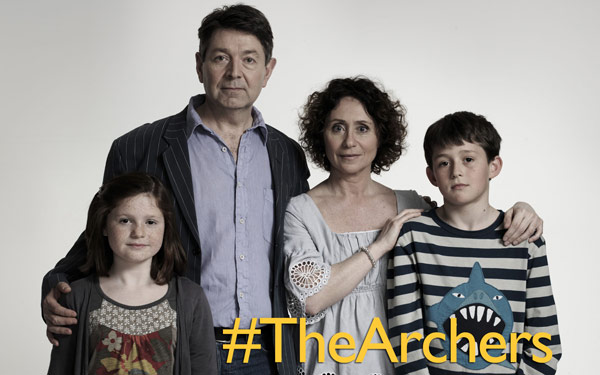
Immerse yourself in The Archers

Blog comments are currently unavailable. Find out more.

Post categories:

Tim DavieTim Davie|15:28 UK time, Wednesday, 5 January 2011

The Pargetters. Left-to-right: Nigel (played by Graham Seed), Lily, Elizabeth (played by Alison Dowling) and Freddie.

Unless you have kept well clear of the media this week, you will have seen or heard that we have been marking the 60th anniversary of the world's longest running continuous drama. The Archers has been a central part of listener's lives since 1951 and, if nothing else, the past few days have proved that it is precious and in rude health.

As you may be aware, debate is raging, particularly over the instantly infamous death of Nigel Pargetter in the special double-episode that ran on Jan 2nd. Even before his extended scream as he fell from the roof of Lower Loxley Hall, the messageboards and Twitter were buzzing. The reaction has spanned many emotions: listeners are angry, supportive, underwhelmed, overwhelmed, shocked, sad and enthralled. Above all, what is clear is that they care, deeply, about what happens in Ambridge.

I understand that some listeners think the special episode received too much attention, but we do need to be able to showcase and highlight the wonders of radio drama. The Archers is quite different to other dramas and I agree that we should let audiences quietly find the plot (too much 'sell' can be counter-productive), but this was a special occasion and we view it as a very rare set of circumstances. We should resist the sense that there is a growing need to sensationalise to build impact.

Also, those that do not believe that recent revelations were big enough to have "shaken Ambridge to the core" (the words of the Archers' editor, Vanessa Whitburn) should listen for a year or two to see just how big these events are: not in comparison with TV spectaculars but for the residents of Ambridge (and the loyal listeners).

Meanwhile, if you have not heard the programme or want to read the comments from listeners, here are some links for you to explore. Now is a good time to immerse yourself.

Tim Davie is Director of Audio & Music at the BBC

More from this blog...

Categories

These are some of the popular topics this blog covers.