
What now for Global temperatures?
Latest satellite data from the University of Alabama (UAH) shows virtually no change in global temperatures from January's levels. The -0.02C anomaly relative to the 1981-2010 average equates to approximately +0.24C above the more standard 1961-1990 average used by the Met Office and World Meteorological Organisation.
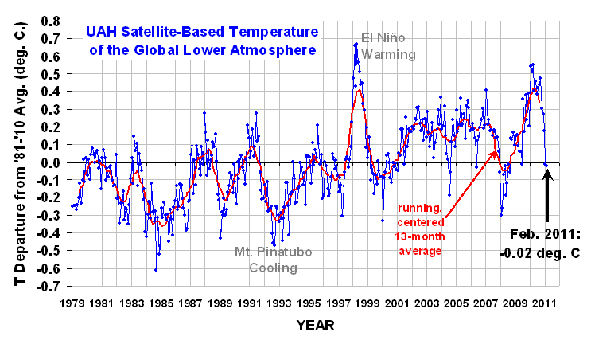
Most climate models indicate that Pacific sea temperatures will very slowly warm in the next few months, with La Nina conditions becoming neutral by mid summer.
The graph below shows that monthly global sea surface temperatures have stopped falling, although as ever it's very difficult to say whether this marks the end of the cooling associated with La Nina.
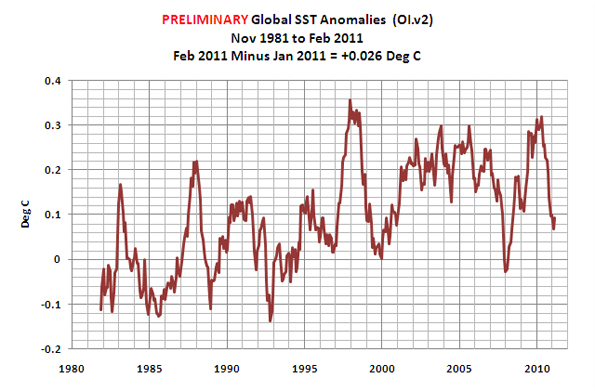
But if the minimum for sea surface temperatures has been reached in this latest cycle, then it's interesting that it will be at a somewhat higher level than the minimum associated with La Nina of 2007 - with the knock on effect that Global temperatures may not fall quite as far as some climate sceptics have been predicting.
 Hello, I’m Paul Hudson, weather presenter and climate correspondent for BBC Look North in Yorkshire and Lincolnshire. I've been interested in the weather and climate for as long as I can remember, and worked as a forecaster with the Met Office for more than ten years locally and at the international unit before joining the BBC in October 2007. Here I divide my time between forecasting and reporting on stories about climate change and its implications for people's everyday lives.
Comments
Sign in or register to comment.