Lessons from a tragedy

Siobhan Kilroy
Reporting Manager, BBC Outreach & Corporate Responsibility
'Murder Games: The Life and Death of Breck Bednar’ is a BBC Three docu-drama which tells the true story of 14-year-old Breck Bednar, who was lured to his death by a predator he met through online gaming. The programme follows Breck’s family struggling with his murder, Breck’s online gaming friends recounting their stories, and the investigators putting the crime together.
Siobhan Kilroy used her BBC production skills, and BBC Outreach knowledge of working with vulnerable audiences to produce a BBC event on the risks of online gaming.
When I was asked by my manager to produce an event in partnership with BBC Three and BBC Learning to publicise a new BBC Three drama-documentary I relished the opportunity. This would be the first time I had been asked to produce an entire event for the BBC. Its purpose would be to get the key messages from the programme across, so schools and charities who work with children could advise children and young people about the risks of online gaming.
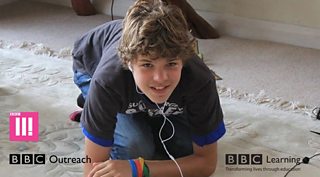
Breck Bednar
I watched the programme for the first time. The unspeakable tragedy was recounted through Breck’s online gaming friends, and mum Lorin’s vivid description of a downward spiral of powerlessness. The tragedy was heart-breaking, and every parent’s worst nightmare. Suddenly I realised the enormity of what I needed to achieve. Lorin’s words and wishful imaginings of a different outcome hung over every decision I made. I felt like I wanted to invite every teacher or child protection officer in London, to help protect other children.
The event was collaboration between BBC Three, BBC Learning, BBC Communications and the production company ‘Rare Day’. Our meetings were sensitive and delicate discussions. It was fitting that we collectively chose a panel that could bring home the main issues and learnings from this tragic story. We asked Lorin (Breck’s mum) to be on the panel. Since her son’s death she regularly speaks at schools and colleges, and set up The Breck Foundation in memory of her son, and to raise awareness of internet safety.
Lorin chose to make the programme with the BBC due to BBC Learning’s ability to commission resources around the dangers of online grooming for schools. In addition Jonathan Baggeley education officer with CEOP (Child Exploitation and Online Protection Centre) would become an important panellist, as would Kat English the director of the docu-drama. BBC editorial policy and child protection guidelines were paramount throughout the planning.
The Regent Street Cinema became my selected venue for an audience of 168 people; which included press, BBC staff, 45 teachers and youth workers. The teachers were to attend a creative facilitation workshop afterwards and view BBC Learning films and online resources. Teachers from schools Breck attended would also be there.
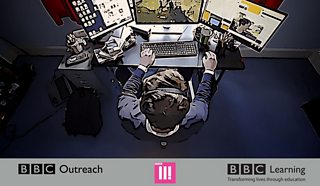
Image from 'Murder Games - The Life and Death of Breck Bednar' programme
Everything was now ready – the risk assessment signed off, the guest-list confirmed, the Blu Ray transfers and the seating plans all in place. I looked over the scripts, briefed the event volunteers about their individual roles, and conducted the final rehearsals.
The occasion was sombre. The audience was silent throughout. Tina Daheley chaired a panel discussion that moved and transfixed the audience. After the screening the teachers and youth workers attended a BBC Outreach creative facilitation workshop where they viewed BBC Learning films and resources. BBC facilitators helped them think how to take their learnings back into the classroom or into youth groups. Teachers told me afterwards that they found the session very helpful.
It was for me a privilege to produce such an important event in order to protect children from the risks of online grooming.
You can see highlights and clips from the panel discussion, interviews with Lorin and Breck's friends - Sully and Max on BBC Three You Tube, and the BBC Three One click away trail.
BBC Outreach & Corporate Responsibility brings the BBC closer to its audiences - particularly those audiences we have identified as harder to reach - with face-to-face activity, community support and staff volunteering.
