


- 5 May 08, 09:30 AM
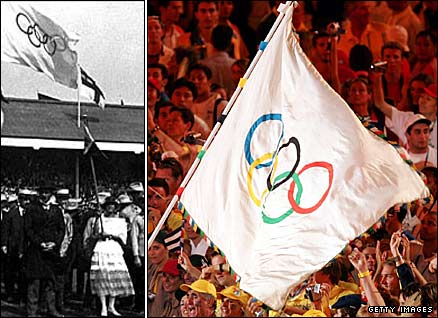
The Olympic rings are the most recognisable symbol in the world, as a survey carried out in Australia, Germany, India, Japan, Great Britain and the USA confirms.
The emblem was designed 95 years ago in 1913 by Baron Pierre de Coubertin, the founder of the International Olympic Committee.
The interlocking rings represent the five main continents of the world (the Americas being regarded as one) while the six colours (white background) appear on all the national flags of the world.
Coubertin said: "These five rings represent the five parts of the world which now are won over to Olympism and willing to accept healthy competition."
The emblem was adopted by the Olympic Movement in 1914, but as the proposed 1916 Games in Berlin were called off due to World War I, it was not used at a Games until the 1920 Olympics in Antwerp.
It may be an easily recognisable symbol, but do you think it need updating to bring it into the 21st century?
BBC Sport The Olympic Broadcaster
React to comment, analysis and opinion from BBC Sport experts at Beijing's Olympics and Paralympics.
Our bloggers in Beijing

Interactive Beijing map
Meet Monkey
Latest Photos
Clicking on any of these photos will take you to an external site.
Topics
Podcast
Download or subscribe to this programme's podcast


Fun and Games
Olympic standard
Do you have what it takes to excel at Denise Lewis' heptathlon?

The BBC is not responsible for the content of external internet sites

Comments
Sign in or register to comment.