
Our thanks to the BTO for the following blog on autumn vagrant birds.
American birds in Britain? That might sound like a long shot, given the 2,580 miles between the easternmost point of the USA (West Quoddy Head, Maine) and the nearest ‘habitable’ bit of the UK (St Kilda) – and it certainly is! However, migratory birds do end up crossing the pond on an annual basis. And it’s not just accomplished fliers such as waders (or shorebirds, as they’re known Stateside), well-adapted for long, non-stop sea crossings; comparatively tiny, ill-equipped songbirds, or passerines, end up over here too.
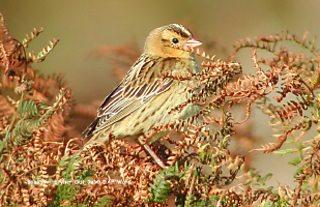
Bobolink (Image via BTO)
Setting off during September and October towards their wintering grounds in Central and northern parts of South America, these birds are at risk of being displaced by fast-tracking weather systems moving east across the Atlantic. If the systems are fast-moving enough they can ‘pick up’ passerines and literally whisk them across the ocean. Many of the birds involved are inexperienced youngsters, hatched earlier the same year. Unaccustomed to the journey ahead, they’re more likely to make bad decisions about when to set off and when to stay put for a few more days than individuals that have completed at least one migratory cycle.
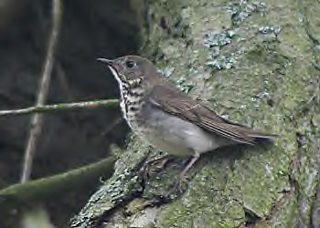
Grey cheeked thrush (Image via BTO)
Almost as if reacting to the start of Autumnwatch, a flurry of North American passerines have appeared in Britain this week, presumably delivered by hurricane Michael.
Topping the bill is a Grey (or Gray!) Catbird, a skulking and rather monotone thrush-like bird, best known for its accomplished mimicry of other species (including a cat-like mewing!). One found near Land’s End, Cornwall on Monday is only the second British record, following a bird that made it to Anglesey in early October 2001. Thousands of avid twitchers have already made the trek to the far southwestern tip of the mainland and been treated to unusually good views of this typically retiring species. Not too far away as the American vagrant flies, a Bobolink – a type of New World blackbird (not related to ‘our’ Blackbird, which is actually a thrush!) – put in an all-too-brief appearance for a lucky couple of observers on St Mary’s, Isles of Scilly the same day, and a Grey (or Gray!)-cheeked Thrush was reported on St Agnes, also on the Isles of Scilly, on Wednesday. At the opposite end of the UK, a Baltimore Oriole (a bird, not baseball player) was discovered on Barra, Outer Hebrides, also on Wednesday!
Ireland didn’t miss out either, with a Scarlet Tanager (in this case, yellow and black – again a first-year bird) appearing at Cape Clear, Cork on Tuesday, followed by a duo of Catharus thrushes at the same place the next day: Veery and Swainson’s Thrush!
