
Brett Westwood shares some fascinating facts on fungi but just remember NEVER eat wild mushrooms unless under supervision from a mushroom identification expert.
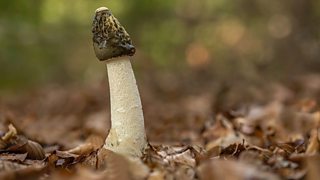
Stinkhorn by René Akkies
Because of its suggestive shape, the stinkhorn was omitted from some Victorian fungus books for fear of shocking delicate readers. This toadstool’s tip is covered with a foul-smelling substance called the gleba containing spores which are spread on the feet of flies attracted to the pong.
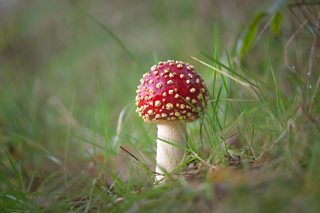
Fly agaric by Emma Varley
Fly agarics are unmistakable and often associated with birch or pine trees. They are incredibly toxic and strongly hallucinogenic and were used as an intoxicant by Siberian peoples who got an extra kick by drinking the urine of reindeer which had eaten the mushrooms.
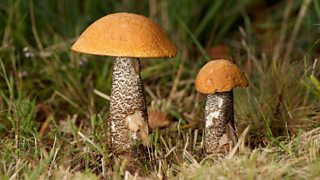
Orange birch bolete by Adrian Read
The orange birch bolete always grows near birch trees where its underground threads lock into the tree roots and provide them with nutrients such as ammonia and phosphate . In return the tree gives them simple sugars it has manufactured from sunlight. There are about 200km of fungal threads in 1 kg of woodland soil ...the wood wide web.
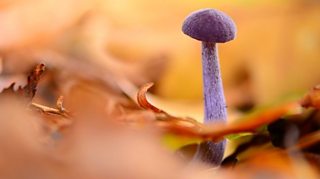
Amethyst Deceiver by Kerry Mellor
The spectacular amethyst deceiver grows in deciduous woodland and gets its name from its purple colour and variable shape. It is rich purple when wet, but becomes pale brown in dry weather.
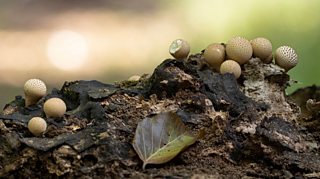
Puffballs by Peter Warne
There are many species of puffball in our woods and fields. When raindrops fall on them, they release a cloud containing vast numbers of minute spores. This habit gave rise to the scientific name Lycoperdon, meaning “wolf-fart”.
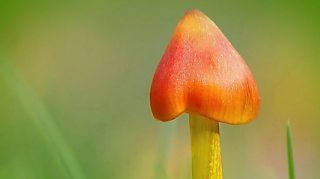
Blackening waxcap by Mark Banks
The blackening waxcap is one of several brightly coloured mushrooms which grow in meadows and on commons. They can be yellow, red and orange or even green and are very good indicators of old, high-quality grasslands rich in flowers as well as other fungi.
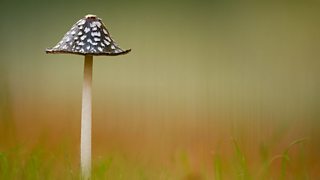
Magpie inkcap by Lesley Danford
Magpie inkcaps often grow under beeches, but also in other woodlands. Like their close relative, the shaggy inkcap, as they age, they digest themselves and turn into a black liquid which can be used as a writing ink.
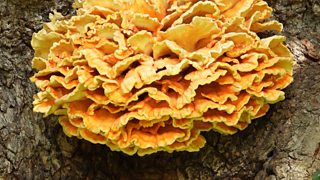
Chicken of the woods by Pete Beard
The sulphur-yellow or orange brackets of chicken of the woods fungi can be seen all year round, especially on yew, cherry and oak trees. As their name suggests they are edible, but only when young and should never be eaten if growing on poisonous yew trees and don't forget, never eat wild mushrooms unless under supervision from a mushroom identification expert.
