
A Chinook helicopter, 56 tonnes of gravel and a small islet in Portsmouth Harbour might not seem like they have a lot in common, but they were the main components in Hampshire & Isle of Wight Wildlife Trust’s recent work to restore a habitat for seabirds.
Years ago, seabirds bred in the harbour, including on Pewit Island Nature Reserve, where there was once a black-headed gull colony. However, human disturbance and habitat degradation led to the birds abandoning the area and they have not returned.
To help combat this the Trust worked with the Ministry of Defence, Day Aggregates and Tarmac on an exciting project to restore one of their breeding sites.
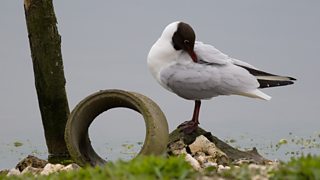
Black Headed Gull preening on the pebble shore by David Kilbey
Many of the seabirds the Trust wanted to encourage to return to the site need gravel or fine shingle to breed. The birds create a small scrape onto which they lay their beautifully camouflaged eggs. Wading birds like plover and curlew also like this shingle habitat to roost on in winter.
The location of the nature reserve the Trust wanted to restore for the seabirds made things more of a challenge. Pewit Island Nature Reserve is in a very shallow and remote section of the harbour. Making multiple trips by boat would be impractical and cause disturbance over a long time frame. This is where the Chinook helicopter came in!

Chinook helicopter making deliveries by Hampshire and Isle of Wight Wildlife Trust
The tonne bags of gravel were attached beneath the helicopter a few at a time and flown from the floating platform to the island. It took a few hours for all 56 tonnes to be safely delivered to the shore. Then it took some serious manpower to distribute the shingle by hand around the island, recreating the shingle habitat the birds need. Surveys were undertaken beforehand which confirmed there was no wildlife present that could be disturbed or harmed by the work.
Seabirds will not return straight away, and they still need a little more encouragement to breed on the shingle. Reserves Officer Chris has been busy putting out decoy birds to tempt the birds into investigating the habitat for the 2022 breeding season. The team may also need to use anti-predator fencing to keep these ground-nesting birds, their eggs and their chicks safe.
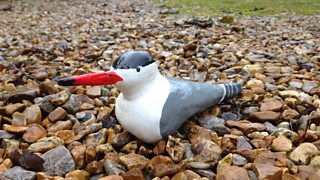
Decoy tern by HIWWT
It is hoped that common and sandwich tern might be some of the first to use the shingle to breed, as well as ringed plover and black-headed gulls. In particular, the Trust is hoping to give tern populations in the area a boost, as terns are very sensitive to disturbance their populations have declined in Britain in recent decades.
Birders can look for the terns’ forked tails and long, curving wings – giving them the nickname ‘sea swallows’. They often hover above the water before diving straight down like an arrow down to catch a fish.
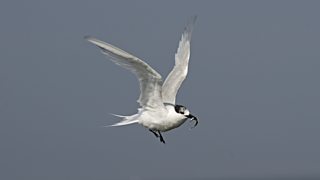
Sandwich tern with fish David Tipling 2020 VISION
Pewit Island Nature Reserve cannot be accessed by the public and boats must not be landed – this is to protect the sensitive wildlife and saltmarsh habitat found there. Porchester coastline provides the perfect viewpoint for the island and the Trust hopes that birdwatchers will soon be able to look out for seabirds and their chicks on the islet once more.
