
There are more than 3million apps available to download; some for gaming, some for saving, some for dating. And within that number there are some that are great for helping out British wildlife.
Earlier this year, we asked if you had any of six apps that are great for helping out British wildlife. One of the apps we included in our essential download list was "Bee Count" - designed to help people count the bees found their backyard, garden or local park.
Users of the app are asked to input data about bees spotted in their environment, they can submit photos too. The data forms a key part of The Great British Bee Count.
The intuitive app is great fun. You can upload photos of bees you've spotted and ID them from drawings. Through your phone's vibration settings, the designers have even gone so far as to make the app mimic a bee when you open it. And now there's some great news...
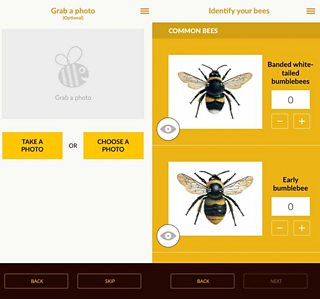
Bee count - the app used by thousands of Watchers to help British bees.
Friends of the Earth say this year more people than ever took part in the Great British Bee Count. It's estimated that just less than half of the 17,000 people who took part in this year's count did so after hearing about the app via Springwatch. Great work Watchers!
Neil Verlander, who works for organisation, told the BBC "across the UK more than 300,000 bees were counted between the 19th May and 30th June."
The bee census is backed by leading scientists and allows the organisation to establish how well the UK's population of bees are fairing against climate change, urbanisation and developments in farming practices.
"More people than ever - nearly 17,000 - took part in this year’s event, spotting over 300,000 bees, across the UK."
The data is currently being assessed by the teams behind the app, they'll then evaluate it against samples from previous years. For the first time, those counting bees were encouraged to go further afield than their own gardens; to rummage through parks, bushes and around urban brownfield sites to assess how well the essential pollinators are doing.
Those taking part in previous counts have spotted cuckoo bees, and two rare species: the shrill carder bee and long-horned bee - sightings of which Friends of the Earth say are especially useful for conservationists.
Want to help out British Wildlife?
You can download some great apps that'll fuel your passion for wildlife, and if that's not enough check out the Springwatch Wildlife SOS films on Facebook.
