
We like to think we’re pretty tuned into what goes on around our reserves. But sometimes we’re reminded that the natural world is a secretive and mysterious place. The cameras on our reserves are there to support our conservation work but they often pick up some interesting wildlife activity, and give us an insight into what is going on when animals don’t think they are being watched.
The cameras at WWT Welney are set up by Lynda Donaldson, Senior Research Officer in the Conservation Evidence department at WWT, as part of the scientific monitoring programme for Project Godwit: a partnership between WWT and RSPB which aims to secure the future of black-tailed godwits in the UK. They help us understand the pressures faced by nesting waders around the key breeding areas on the reserve and identify ways we can support them in hatching and rearing chicks. They’re attached to posts around the Lady Fen Complex, which is 300 acres of restored wet grassland next to the Ouse Washes. You can read all about the latest sightings of our headstarted godwits here.
Here are some of our favourite pics from the cameras. We hope you enjoy them!
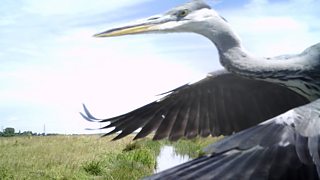
The wing span of this grey heron is so impressive it almost blocks out this whole shot. It’s not often you get such a close look at the steely eyes of this imposing bird in flight.
Copyright Lynda Donaldson/ WWT
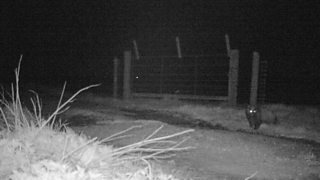
While our cameras may not capture all the activities of British wildlife, this badger frequently turns up on our screens. Not that it ever pays us or our camera any attention.
Copyright Lynda Donaldson/ WWT
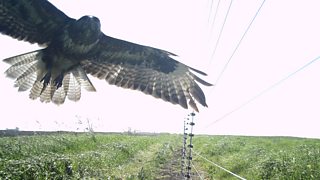
And this buzzard unwittingly gives us a fantastic view of its impressive tail feathers as it lands on a fence post with a camera attached to it. The way we manage our reserves means they are rich in biodiversity and attract all kinds of wildlife.
Copyright Lynda Donaldson/WWT
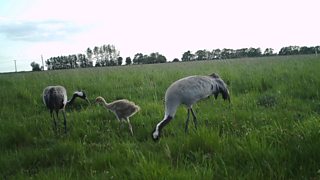
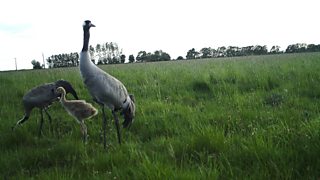
These close-up images of one of our most loved conservation species are a rare treat. We especially love this family picture of a pair of adult cranes with one of their offspring grazing close by.
Copyright Lynda Donaldson/WWT
The Fens’ population has been increasing steadily over the last couple of decades. In 2018, cranes were recorded breeding at Welney for the first time. This chick hatched on 17 April and had successfully fledged by the end of June.
Copyright Lynda Donaldson/WWT
A crane parent is always on alert when the youngsters are around but perhaps this one just got the feeling it was being watched…
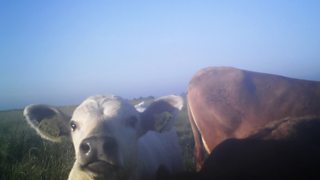
Say ‘cheese’. Most of our animals are totally unaware of the cameras we have around the reserve but others are a little more curious, like this calf perfecting his selfie pose in the summer sunshine.
Copyright Lynda Donaldson/WWT
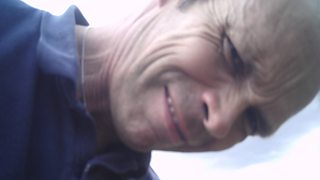
Like all technology our cameras can be a little temperamental. David Tough, Grazing Officer at WWT Welney, is wondering why the camera isn’t working properly. We think that little calf might know the answer…
Copyright Lynda Donaldson/WWT
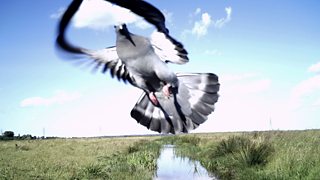
We thought this might be a guardian angel but no, it’s a woodpigeon captured at a very unusual angle as it takes off just over one of our cameras.
Copyright Lynda Donaldson/WWT
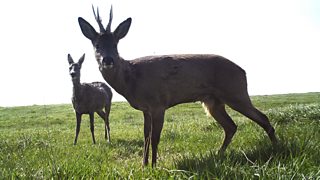
Some visitors, although unexpected, are always welcome. This pair of roe deer are enjoying the lush grass on the reserve. Our reserves are managed to provide food and habitat for a diverse range of species.
Copyright Lynda Donaldson/WWT
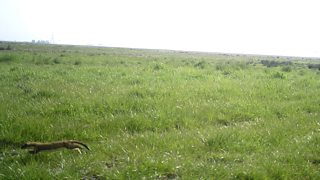
Fast and furious - it looks like this mischievous stoat tried to outrun our cameras and nearly got away with it!
Copyright Lynda Donaldson/WWT
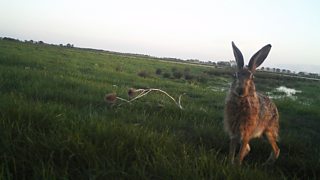
It’s always great to see the different types of species that our reserves attract and these hares playing on Lady Fen at dusk really did lift our spirits. The way we manage the land for our conservation work makes it prime real estate for all of the species that live on it.
Copyright Lynda Donaldson/WWT
And that’s all folks! While we haven’t been able to get out and see wildlife for ourselves as much as we would have liked to over the last few months, it’s been exciting to look back at all this activity on our cameras. Although the cameras have been put there to support our conservation research it’s definitely an added bonus to be able to share with you what goes on out there when we’re not around. We hope you enjoyed it!
Project Godwit is a partnership between WWT and RSPB with major funding from the EU LIFE Nature Programme, HSBC 150th Anniversary Fund, Natural England, the National Lottery Heritage Fund through the Back from the Brink Programme, Leica UK and the Montague-Panton Animal Welfare Trust.
