Bats in the Brecks
Whilst the lesser horseshoe bats in Sherbourne are busy preparing for the summer, a citizen science initiative in Norfolk and Suffolk has been mapping the area’s importance for bat populations. BTO’s Stuart Newson and Breckland Society’s James Parry explain more.
The Norfolk & Suffolk Brecks cover some 370 square miles of inland East Anglia and are rich in both cultural history and biodiversity. Coordinated by the Breckland Society, the Breckland Bat Project was conceived to help assess the importance of the area for bats within a wider Norfolk–Suffolk context and ran for five annual recording seasons (from mid-April until the beginning of October) during 2013–17.
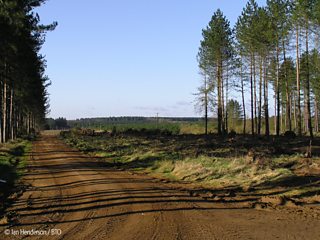
The King’s Forest, Suffolk as a typical example of breckland habitat.
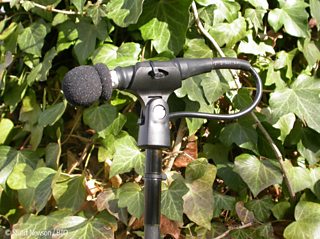
A passive bat detector, which automatically triggers to record the calls of bats, was purchased by the society and used by volunteer recorders to increase the level of bat recording across the Brecks as part of the BTO’s wider Norfolk Bat Survey.
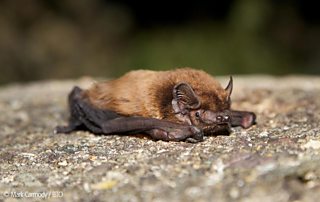
Our understanding of all bat species in the region has been improved by analysing the 200,730 bat recordings from the Brecks and a wider dataset from Norfolk and Suffolk of almost 2 million recordings. We now know that the Brecks is particularly notable for leisler’s bat, barbastelle, serotine, daubenton’s bat, brown long-eared bat, natterer’s bat and soprano pipistrelle.
The data collected by the volunteer recorders who signed up to use the detectors as part of the Breckland Bat Project are evidence of the impact that citizen science of this type and scale can have. As well as demonstrating improved levels of awareness on aspects such as bat ecology, species identification and habitat requirements, the volunteers are also now able to act as advocates for bats among the wider community as a result of their involvement.
The Norfolk Bat Survey will be live again in 2018 – to find out how you can get involved in Norfolk and neighbouring Suffolk, visit www.batsurvey.org and find your nearest bat detector!
FIND OUT MORE
The results of the project will be published in June in the Journal of Breckland Studies (www.brecks.org/jbs).
Newson, S.E. & Parry, J.V. (2018) Using large-scale citizen science to examine the importance of the Brecks for bats. The Journal of Breckland Studies 2
