
Paul Stancliffe from the British Trust for Ornithology looks at the migration of birds on the UK during October.
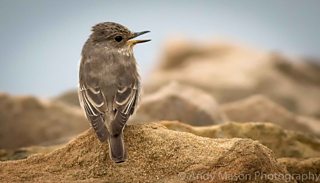
Spotted Flycatcher. Credit: Andy Mason
With mid-October approaching fast any summer visitors that are still lingering in Britain will have no choice but to get a move on; and this is what we have been experiencing during the last week. Large numbers of Swallows and House Martins have been encountered moving through migration watchpoints around the country. Other summer migrants that are making a last dash have included reasonable numbers of Reed and Sedge Warblers and a few Redstarts and Pied and Spotted Flycatchers. As October progresses observations of summer migrants will become fewer and we will start to consider the last of the year, in contrast to the birds that are now arriving to spend the winter months with us.
The last week has seen a large arrival of Pink-footed Geese, tens of thousands have been working their way south through the country. Pink-footed Geese spend the summer months in Iceland and the winter largely at a few sites in Scotland, northern England and East Anglia. Also from Iceland, Whooper Swans have been seen at several locations in Northern Britain and it won’t be too long before they too begin to head further south.
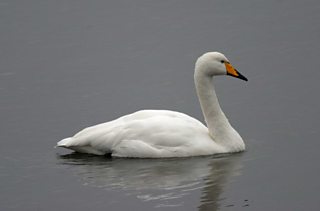
Whooper Swan. Credit: Andy Mason
The first big arrival of thrushes has been seen on the east coast; over 3,000 Redwings were joined by 32 Ring Ouzels, 49 Fieldfares and 490 Song Thrushes at Spurn Point, East Yorkshire on 5 October, and this is just the beginning. In some winters over one million Redwings and Fieldfares arrive here from Iceland and Scandinavia, although the actual numbers are largely dependent on the severity of the winter weather further north. Some of the birds pass through Britain on their way to areas even further south, such as southern Europe and North Africa.
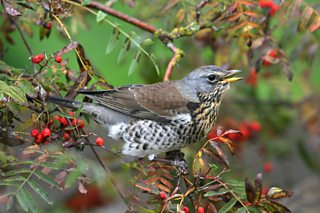
Fieldfare. Credit: John Harding/BTO
For me, the most remarkable winter visitor is the tiny Goldcrest. At 5g, the same weight as a 20p piece, it seems miraculous that this small bundle of feathers is able to make it across 500 miles of inhospitable ocean but it does so every winter in variable numbers; 43 arrived with the thrushes at Spurn, East Yorkshire on 5 October, and many more are on the move on the other side of the North Sea, during the last week nearly 500 have been ringed at Falsterbo Bird Observatory, Sweden.
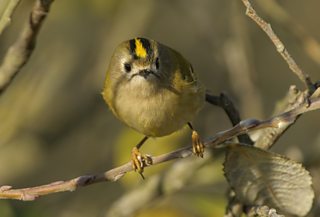
Goldcrest. Credit: northeastwildlife.co.uk
If Goldcrests are arriving it won’t be too long before we see the first Woodcock from the continent too; they often arrive together and in the past some observers found it difficult to believe that the diminutive Goldcrest was able to cross the North Sea under its own steam, believing instead that they hitched a ride on the back of the much larger Woodcock.
During the next few weeks we really do have a lot to look forward to. More thrushes, geese and swans, the arrival of more and more wildfowl, that will include such beautiful birds as Wigeon, Pintail, Teal, Goldeneye and Pochard, Short-eared and Long-eared Owls, Snow Buntings and more and, with the weather forecast to come from the east towards the end of next week we could see an arrival of all of these.
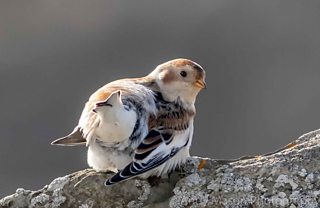
Snow Bunting. Credit: Andy Mason
