Nature and climate – twin crises with twin solutions

Wildlife Trusts
Partner organisation of the Watches
By Kathryn Brown, Director of Climate Action, The Wildlife Trusts
A thriving natural environment and a stable climate support all life on earth, including people. But we are amid twinned crises that are being caused by people; the climate is changing rapidly, and nature is in sharp decline. The solutions to addressing both are also wrapped up together. The natural environment is a critical store for carbon and makes us more resilient to extreme weather; and we need to take action on climate to protect nature from its impacts. For too long we’ve considered the natural world and the climate as separate from each other, when in reality they are a dynamic duo, which in good health and working together will offer people and planet a healthy and sustainable future.
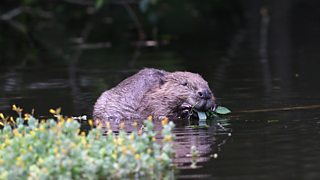
Beaver (c) David Parkyn Cornwall Wildlife Trust
Bringing back beavers - a win for climate and nature
Take beavers as an example, nature’s eco-engineers whose hard work creates wildlife rich wetlands, which in turn, support other species: from otters to water voles and kingfishers. Beaver dams help river valleys to store water and carbon in wetland soils, filter pollutants and hold back flood water. Four hundred years ago beavers were hunted to extinction in England. Now, The Wildlife Trusts are helping to bring them back to many nature reserves which are already benefitting from better water quality and more wildlife.
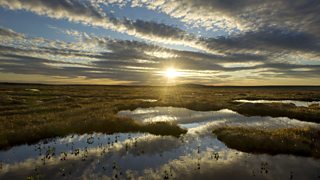
Peat bog pool system Scotland (c) Mark Hamblin 2020 VISION
Natural solutions for carbon
A hectare of seagrass may store two tonnes of CO2 a year and hold it for centuries, while providing a nursery habitat for young fish. But we have lost half our seagrass meadows in the waters around the UK since 1985. Reducing water pollution and replanting would help to bring them back to health. Well-managed Marine Protected Areas are vital for nature’s recovery at sea.
The UK’s peatland soils store around 3.2 billion tonnes of carbon but are heavily degraded. Rather than absorbing more carbon, they are releasing the equivalent of 23 million tonnes of CO2 every year. Restored peatlands will capture more carbon, reduce flooding, clean our water, and allow wildlife to thrive.
Healthy saltmarsh, grassland and woodlands also play their part in carbon capture and supporting nature as well.
Yet nature and climate are largely treated as silos with mitigation and adaptation being considered separately, but it’s important we look at them together because adaptation is fundamental to reaching net zero. We need to consider climate action in everything we do. We need to dramatically increase the amount of land and sea protected for nature, at least 30 % by 2030, to ensure that these habitats are removing enough carbon from the atmosphere and are in a good enough condition to thrive and be resilient to climate change.
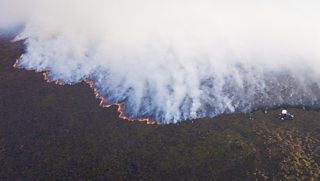
Fire at The Roaches, Staffordshire Wildlife Trust (c) Rod Kirkpatrick F Stop Press
COP26 eleventh hour for nature and climate
Our natural places are in decline and face even greater risk of degradation from the extreme climatic conditions that are already inevitable over the next 30 years. It’s becoming a vicious spiral of damage – one that needs to be stopped right now.
This week in Glasgow, the world comes together to try and keep the target of limiting global temperature rise to 1.5°C within reach. The impacts at this level of warming will still be severe, and we have already seen already catastrophic flooding in Europe, heatwaves and wildfires in North America in 2021. But warming of higher than 1.5°C will become increasingly catastrophic. We want the global climate conference COP26 to tackle the nature crisis alongside the climate emergency – or it will risk neither being solved.
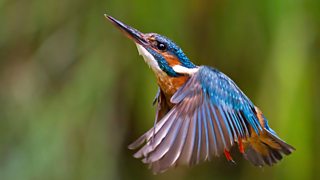
Kingfisher (c) Malcolm Brown
Turn eco-anxiety into action
We can all feel overwhelmed by the scale of the nature and climates crises and wonder how, as individuals, we can help wildlife and the climate. Every action is important; every bit of avoided warming matters. We can all make changes that count.
Some small actions that can make a big difference include reducing our own environmental footprint; reduce food waste, buy second hand, reduce our meat consumption and use only as much energy and water as we need. We can also help nature and make ourselves more resilient to extreme weather by planting more around our homes to cool the temperature and soak up floodwater.
Find out more about COP26.
Discover things you can do to make a positive change.
