
By Stuart Edmunds of Shropshire Wildlife Trust
Stuart Edmunds is chair of Shropshire Mammal Group, a recording group with over 200 members and runs Shropshire Pine Marten Project. In his spare time, he gets involved with other wildlife monitoring projects around the world, all on top of being a communications officer!
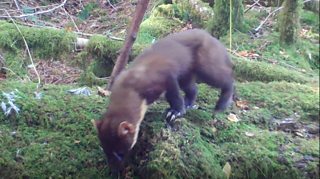
Pine martens officially call Shropshire home. This statement that still shocks me to this day, despite over 6 years passing since we first discovered them in the county. Having spent the previous 6 years running surveys to find evidence of England’s rarest mammal in Shropshire, by that fateful summer, I strongly doubted that there were martens in the county. But then the first-ever photo of a pine marten was taken by chance at a Shropshire Wildlife Trust nature reserve that I had never surveyed before. These elusive forest-dwelling mammals then started to show up on camera traps across the wider Shropshire Hills area.
The occurrences of pine martens recorded on my camera traps have increased annually. Funding applications and Crowdfunding made the purchase of extra camera traps and several pine marten den boxes possible. Den boxes would serve as places for pine martens to sleep and maybe rear young in woodlands with limited natural tree cavities or rocky crags.
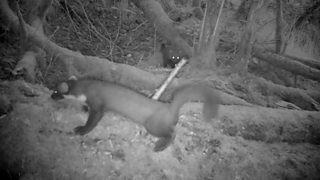
Despite the apparent growing numbers of martens on cameras, the actual field evidence of their presence is still hard to come by; no footprints found and none of the pine marten poo that usually mark trails and territories has been spotted along tracks and paths. The plus side of this lack of evidence is that it has shown that pine martens don’t behave exactly the same way when they are surviving in habitat that is fragmented and sub-optimal for a top tree-dwelling predator. The majority of the Shropshire Hills woodlands were felled in the last century, and areas which have been replanted are still relatively young compared to the ancient forests that once covered the valleys.
With this in mind, it has been a dream of mine to look at opportunities to plant more woodland corridors and connect those areas with pine martens. This has been made all the more likely thanks to the recent involvement of the National Trusts’ Stepping Stones Project, which aims to restore and connect a variety of habitats to make more space for wildlife across the whole landscape. The project has funded an additional 12 camera traps, which a team of volunteers have been trained to check at new, previously unrecorded sites. If they record a marten, we will then install den boxes to monitor and look at opportunities to plant trees and create habitat links to surrounded wooded areas.
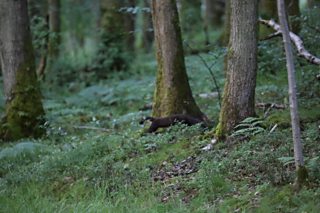
The project covers most of the Shropshire Hills Area of Outstanding Natural Beauty, which in 2021 became the epicentre of marten activity. In previous years, pine martens might wander past a camera trap once a month, but last year I was fortunate enough to locate a secret valley on private land with hundreds of acres of woodland along its length. Within weeks of installing camera traps, 4 different individuals showed up, passing by much more regularly than previous animals. And in early spring, two young pine martens began to show up on camera; the first signs that these creatures had bred here undetected.
This was great news for the species in the county and proved that there are enough wild areas for them to live in, but planting more woodlands and connecting our remaining woodlands is key to their ongoing survival. These charismatic animals were lost in Shropshire for many decades, but with some help from us, my hope is that they will have the opportunity to stay and prove that wildlife can be brought back from the brink if given the chance.
