Autumn adventures on Skomer

British Ecological Society
by Dr Siddhi Joshi, Independent Marine Scientist, British Ecological Society member
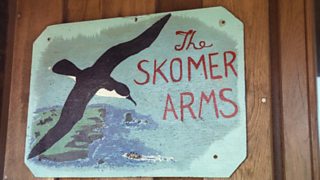
The Skomer Arms. Image by Dr Siddhi Joshi
Skomer Island is the second largest Manx shearwater colony in the world, with around half a million seabirds found on the Island during the summer. When volunteering as a resident warden for a week on Skomer Island a few years ago, we were asked to do routine tasks around the island. This was a wonderful opportunity to learn how to do day to day conservation tasks whilst the puffins were away on their annual migration to South America.
These tasks included rocky shore studies, nocturnal trips to hear the haunting call of the Manx shearwaters, managing the bracken and other habitat forming environments and taking part in the annual Skomer vole survey which has taken place on Skomer for over 39 years.
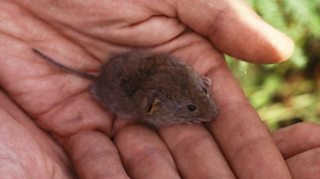
Skomer Vole- an endemic sub-species of bank vole found on Skomer. Image by Dr Siddhi Joshi
One of these tasks was preparing for the seals pupping on the beaches around the island. We had to climb down a cliff near "the Neck" part of Skomer island and collect bags and bags of large fishing rope, net and rubbish which had been washed in on the beaches. The major task was then carrying it all back up the cliffs, A big challenge!
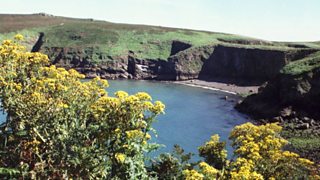
Seals pupping in the distance on Skomer. Image by Dr Siddhi Joshi
As a treat following this, we got the rare opportunity to interact with the Manx shearwater chick in the burrows around Skomer. I put my hand in the burrow, underneath the shearwater chick and got it out of the burrow! To my surprise, it pecked me as I gently disturbed it. My new fluffy friend!
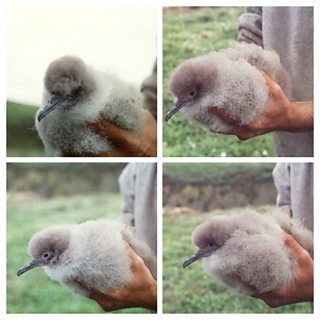
Manx Shearwater chick. Images by Dr Siddhi Joshi
Majestic gannets at sea
Later, whilst I was a PhD student in Ireland doing marine science research in Galway, I had the wonderful opportunity to take a trip aboard the Irish research vessel the Celtic Explorer, observing the cold water corals and seabed depths.
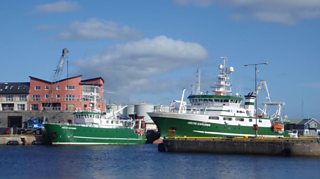
Celtic Explorer and Celtic Voyager Irish research vessels docked in Galway. Image by Dr Siddhi Joshi
My fascination with seabirds hadn’t waned and I was entranced by the majestic gannets which surrounded the ship, a regular visitor to our seas.
The large, fierce swells of the Atlantic Ocean can make taking off a battle, but gannets are perfectly adept in this hostile environment. To hunt for fish beneath the waves, gannets take plunging dives from 30 meters in the air at speeds of up to 100km/hour down to 10 m depth, a magnificent sight to behold.
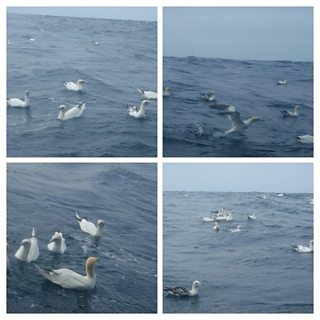
Gannets of the North Atlantic. Images by Dr Siddhi Joshi
Following my stay in Ireland and Wales, the following year I brought my family to Skomer for a day trip and to Galway in Ireland. This was an absolutely wonderful opportunity to show them the outstanding natural beauty of the Welsh and Irish coasts. On Skomer, the puffins had returned at this time and it was an invigorating experience for my family to connect with the realm of the seabirds of south west Wales and the North Atlantic.
