What is Timelapse?

Guest blogger
Guest blogger Tom Walker introduces timelapse photography.
What is Timelapse?
Time-lapse is a cinematography technique that allows us to manipulate time, it reveals things that happen slowly over several minutes, days or even months to create the illusion of time moving faster. Whilst the technique is highly effective in the world of film-making and can be a very technical process, it doesn’t have to be, and anyone with a camera or even a smart phone can give it a try.
Setup
If you’re interested in photography and own a camera then the chances are that you already have just about everything you need to get started. Film can be recorded at various frame rates but is generally played back at 25 frames per second. Time-lapse is achieved whereby the frequency at which the frames are captured is much lower than this play back frame rate. Thus the lapsing of time and as an example, 250 frames taken over 30 minutes played at 25 frames per second would give a 10 second clip.
Camera setup: For the best results we need to take control of as many variables in the camera as possible. By not allowing the camera to make decisions on shutter speeds, aperture, ISO, focus or white balance we reduce the chances of inconsistency’s in our final result.
Aperture and focus: Firstly the camera should ideally be mounted on a tripod or solid surface, any movement during the time-lapse will become very obvious during the playback. Once you’re happy with the composition of your shot turn the camera onto manual mode, focus on your subject and choose a suitable aperture. Most lenses optimum aperture is f/8 however increasing and decreasing this will change the depth of field and light allowed to the cameras sensor. For a shallow depth of field decrease the aperture value, for a greater depth of field and to increase the amount of the frame in focus change the aperture to a higher value, f/11 is a good value for general landscape shots.
Shutter speed: Next you need to consider the shutter speed that is going be most effective for the subject and desired style, the main consideration with shutter speed is motion blur. Whilst a small amount of motion blur can be created using a shutter speed of 1/30s or longer, it can be very beneficial to use shutter speeds up to several seconds in some circumstances. Subjects like moving water, people or light sources can benefit greatly from longer exposures as it adds fluidity and smoothness to the final shot. In order to achieve this it is often necessary to use a Neutral Density filter which decreases the amount of light reaching the cameras sensor and therefore requires a slower shutter speed.
ISO: As a general rule the lower the ISO value the better as it retains the quality of an image and reduces the amount of noise in the final images. However in certain circumstances it is necessary to increase the ISO to achieve a certain shutter speed or to maximise sensor sensitivity.
WB: An easy mistake to make is to leave the camera set to automatic white balance during a time-lapse. The white balance must be set to a manual value otherwise the resulting clip will suffer from a flickering effect caused by the tiny differences in white balance adjustments made by the camera.
Interval: In order to trigger the camera at a set interval an interval meter is needed, this is either built into the camera or can be inexpensive to buy. They allow us to program the camera to take a set number of frames at accurate intervals ranging from seconds to hours. The interval time is key to the outcome of your time-lapse and depends on how quickly your subject is moving and how long you’d like your clip to last. A good starting point for landscapes is a 4 second interval, if in doubt shoot more frames as you can always use less when you come to process the frames into a film clip later.
What to shoot:
The potential list of subjects that can create interesting time-lapses is endless but with Autumn fast approaching we are entering arguably the best season for time-lapse. Here are some examples of what you could get out and shoot over the coming months.
Colour change – With the onset of Autumn the United Kingdom becomes awash with stunning varieties of colour, there is no better time to be out capturing the landscape. If you’re feeling ambitious you could set up a marker and repeat the same shot multiple times to show the landscapes colour change over several months.
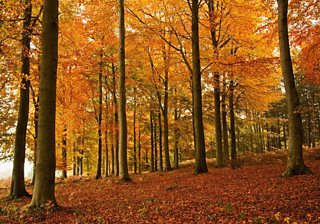
Autumn Colours by Tom Walker
Frost – With cool crisp mornings becoming a more regular occurrence, time-lapsing frost melting as the sun rises can be really effective. Choose a still windless morning for the best results and be aware of lens condensation with the air temperature change.
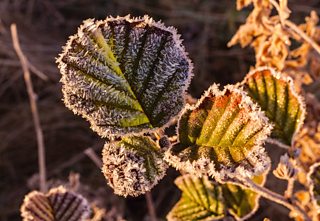
Autumn Frost by Tom Walker
Sunrise & Sunset – With the days getting shorter and sunrise and sunset times becoming a more social able hour, getting out and shooting nature’s light show can yield spectacular results. Be aware of drastic changes in light levels and compensate for this by using Graduated Neutral Density filters.
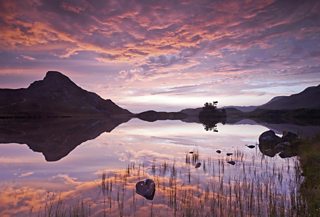
Sunrise by Tom Walker
Mist – My favourite thing to time-lapse during Autumn is mist or temperature inversions, there are few things that beat capturing the liquefied flow of early morning mist. To improve your composition it can be useful to know the landscape beneath the mist so that once the mist clears you have a pleasing frame.
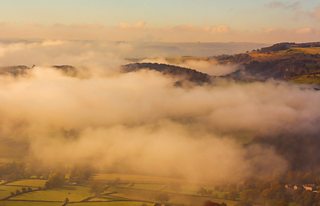
Autumn Mist by Tom Walker
Tidal – With large tidal ranges occurring during the Autumn months why not time-lapse the beaches transformation from low tide to high as it rearranges the coastal furniture. Be sure to look for the strandline mark prior to setting up to work out how high you can expect the tide to rise or fall.
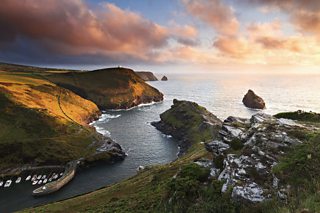
Coastal Photo by Tom Walker
Sun movement – With the sun becoming lower in the sky, autumn is a great time to show its movement throughout the day. Allow extra space in your composition in case the sun rises higher than you anticipate.
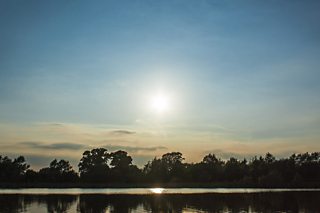
Autumn sun by Tom Walker
Rivers and waterfalls – Ever increasing rainfall transforms our rivers, streams and waterfalls with the added bonus of often being surrounded by stunning colour. Use a long exposure to increase the fluidity of the shot.
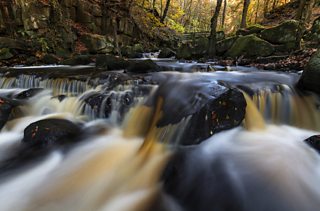
Autumn River by Tom Walker
What next?
Once you’ve mastered the basic technique you can go onto shoot more advanced time-lapses which could include:
- Astro time-lapses
- Bulb ramping
- 3 axis motion control time-lapse
- High dynamic range (HDR)
- The time-lapse holy grail, a day to night shot
- Hyperlapses
Guest blogger Tom Walker is a 23 year old Natural History cameraman and photographer. He's worked on the BBC's 'The Great British Year', 'Autumnwatch', '24 Hours on Earth' His passion is for capturing the landscape and wildlife in the best available light, often favouring the hours around dawn and dusk where the light is at its most spectacular. Here is some of his work..

Tom Walker
