
Simon Wightman is an RSPB Senior Land Use Policy Officer, and explores how working with nature could alleviate the risk of flooding.
I have never had to deal with the distress and trauma of having my home flooded and it is difficult to imagine what it must be like. For several of the communities affected over recent months this is the third time they have experienced it in the last ten years. The media and political response has, for the most part, been helpful and constructive. There has been recognition that we live in a world where these events are likely to happen more often and that our response has to reflect this.
As attention shifts to thinking about what we need to do to alleviate the risk of flooding for those communities in future, the focus must remain on the people most affected and who remain at greatest risk. We cannot expect that building more and higher defences alone will be enough but rather we have to use the full range of tools at our disposal. This means thinking again about what land is for and how the way in which we manage it affects people’s lives.
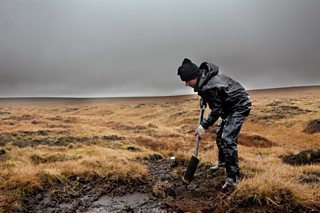
Blanket bog is being restored at Dove Stone. Credit: Ben Hall (rspb-images.com)
Our uplands have an important role to play. Most of our rain falls here and there are opportunities to slow the rate at which it flows into streams and rivers. At Dove Stone in the Peak District, the RSPB is working with United Utilities to restore blanket bog. Many decades of industrial pollution, exacerbated by periods of heavy grazing and burning, had left much of the peat soil bare of vegetation and ridden with deep gullies. There were plenty of reasons why the partners wanted to restore the bog habitat; it would be better for wildlife and would help to address some water quality issues but it might also play some role in slowing the flow of water after heavy rain. It does this not so much by acting like a sponge, a healthy blanket bog is already pretty full of water, but by vegetating the bare peat so water flows over it more slowly and blocking the gullies that channel water off the plateau.
At Haweswater and Geltsdale the RSPB is encouraging new woodland on hillsides and reconnecting canalised stream channels with their floodplains. The contribution any of these measures make to downstream flood risk might be small and the cumulative impact across a catchment is notoriously difficult to determine but they will help and they will provide many other benefits such as an attractive landscape and better habitat for wildlife.
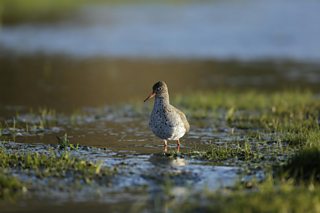
Restoring blanket bog also helps wildlife, like this redshank. Credit: Andy Hay (rspb-images.com)
Working with nature to reduce flood risk can’t just be about our uplands. We need to identify practices that contribute to increased runoff throughout a catchment and look for opportunities to hold water back. Suggesting that flood risk to communities can be reduced by more intensive ditch maintenance and speeding the rate at which water flows off land and into rivers ignores the fact that many urban floods occur when large volumes of water are channelled into a narrow space or hit a bottleneck like a bridge or culvert. There will be a place for maintaining open channels but we need to slow the time it takes for water the reach these critical points rather than speed it up. There is much we can learn from other countries such as the Room for the River project in the Netherlands.
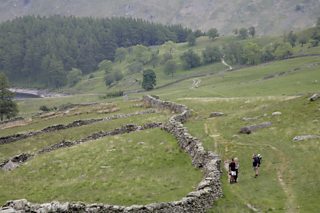
Haweswater is another place being managed to help prevent flooding. Credit: Andy Hay (rspb-images.com)
There will still be a place for engineered solutions but even here we can gain much more by working with nature. The RSPB works with the Environment Agency in managing several washlands such as in the Dearne and Aire valleys in Yorkshire and on the Ouse and Nene floodplains in the Cambridgeshire fens. A great example is Fairburn Ings in the Aire Valley. Located on the urban fringe, this nature reserve and designated washland is an old mining site with lakes and flashes formed through mining subsidence and woodland and meadow, flourishing from coal spoil heaps. The landscape has been transformed over the past 40 years and not only has it resulted in a fantastic place for wildlife, including breeding avocet and little egret in 2015, but following very heavy rain it is able to hold additional water from the Aire, reducing the downstream flood peak and protecting homes in towns such as Castleford and Knottingley. The reserve has experienced three floods since November, the one on Boxing Day being the worst flooding the team has seen. However, without Fairburn Ings’ protection, the devastation in places like Castleford would have been a lot worse. Fairburn Ings provides vital wildlife habitat, a fantastic resource for people and improved protection from flooding. This is a great example of the sort of thing that can be achieved when we look to deliver multiple benefits.
The flooding that caused such devastation over the winter requires a range of solutions but working with nature will be the key to a more resilient future.
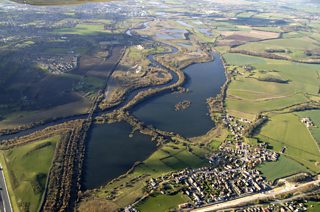
Fairburn Ings in Yorkshire holds water that would otherwise make its way into nearby towns. Credit: David Wootton (rspb-images.com)
Related content
