How to grow your own butterflies
Post categories: Springwatch
 |15:57 UK time, Tuesday, 12 June 2012
Here at Ynys-hir RSPB Reserve, we've set up our very own butterfly house.
Thanks to SPRINGWATCH researcher, Dr Emma Brennand and our camera team, we now have 20 pupae ready to emerge into beautiful butterflies.
Watch closely and you'll see them emerge live on our webcams.
This is how we did it...
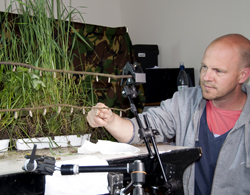
Nick Pitt setting up
Emma ordered a selection of British butterflies, comma, painted ladies and small tortoiseshell butterflies, and a package containing 20 butterfly chrysalises arrived last Thursday 7th June.
The chrysalis stage varies between species but is usually around two weeks, whilst the caterpillar inside is undergoes metamorphosis into a butterfly. In order to emerge, they need to be out of direct sunlight, at around 25 degrees and in relatively high humidity.
Our camera team created an ideal environment in a small studio here on site. There are two lights in the room, to provide both light and heat during the day, and then we switch them off at night. There is also a lot of well-watered vegetation behind them to both re-create a natural looking environment but also to keep humidity levels up.
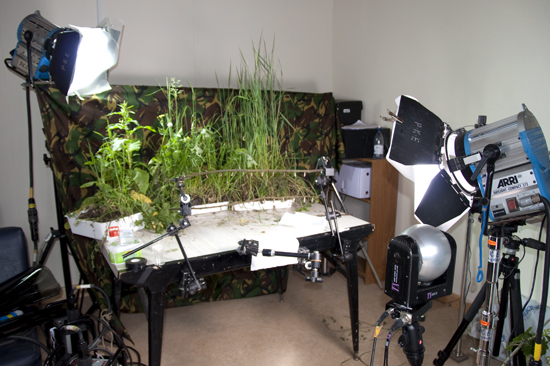
Chrysalis set up in our studio
Each chrysalis was then carefully attached to a stick with a very small blob of glue.
We lined up 5 comma butterflies and 5 small tortoiseshells to the top stick, and 10 painted ladies to the bottom.
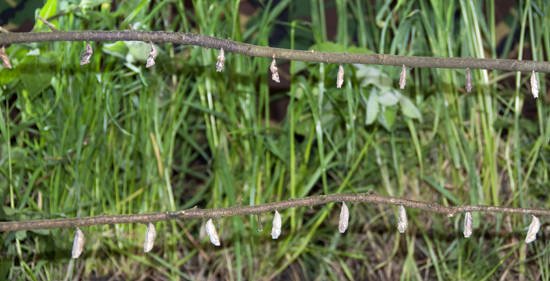
Chrysalis lined up, ready to hatch
All we can do now is sit and wait for them to begin emerging. We expect to see at least some of them to begin this metamorphosis before the last show on Thursday this week - so keep your eyes peeled to the webcams.
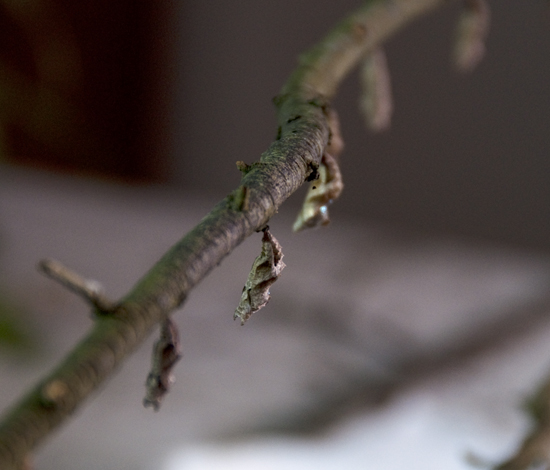
Attaching the chrysalis
How can you tell when they are emerging?
The chrysalis itself will begin to split, from the bottom, the young butterfly will climb out of the case up to the stick. As it first emerges the butterfly's wings will be very soft, and folded in against the body. This is due to having to fit inside the pupae.
So, it will then spend the next hour or so pumping blood into the wings to get them working in order to be able to fly.
Once they have emerged, just open an window and off they fly into your garden and help to maintain a healthy population of British butterflies.
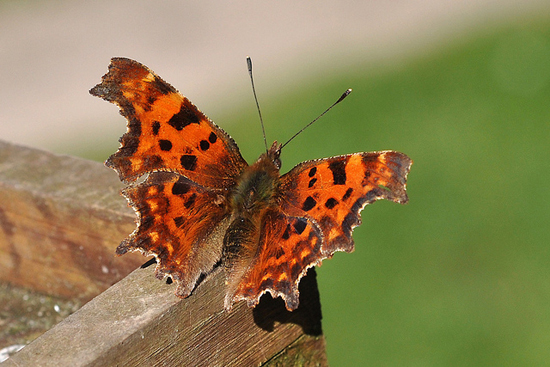
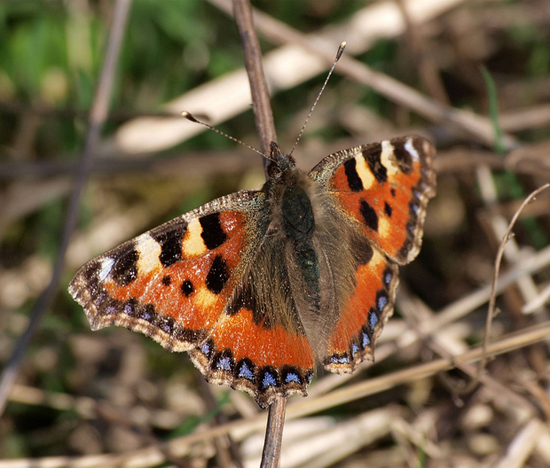
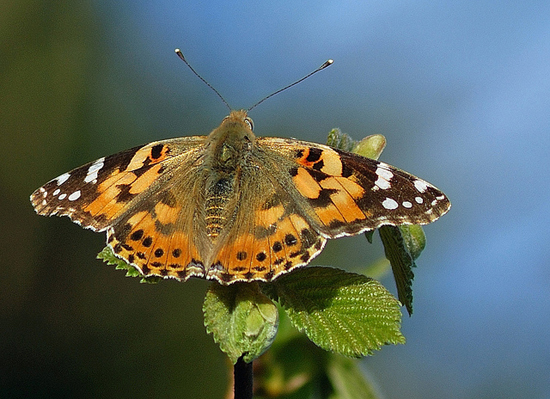
These are the beauties we hope to see any time now, thanks to your photos on the Flickr group.
Comma butterfly by GVG Imaging
Small tortoiseshell by Brianb60
Painted Lady by Paul (Gumboots) Ritchie

Comment number 1.
At 20:36 12th Jun 2012, allotmentsue wrote:Painted Lady caterpillars arrived this morning in the post at preschool. children really excited already.
Complain about this comment (Comment number 1)
Comment number 2.
At 21:26 12th Jun 2012, TerryH wrote:This is a verry good idea,however I must have missed some thing, where do you get them and approx cost.
Complain about this comment (Comment number 2)
Comment number 3.
At 22:13 12th Jun 2012, JanR wrote:My daughter Katherine (13) has carefully looked after 5 Painted Lady caterpillars. All 5 turned to chrysalis but one emerged this afternoon! I think from what we saw yesterday, that 2 more are changing now. It looks as though I can see 2 different parts of a wing! Katherine has been feeding with sugared water and brought in some garden flowers to the observatory.
Complain about this comment (Comment number 3)
Comment number 4.
At 22:44 12th Jun 2012, Frances Julyan wrote:We have hawkmoth caterpillars every year in a certain tree in the garden. Large green ones with a sort of spike at their tail. However, we kept 2 chrysalis last year which were lying in a large pot underneath the tree. We thought that they had died when we looked at them a few weeks ago - but low and behold we now have 2 hawkmoths which have emerged from them. What big and beautiful creatures they are! Wondered if anyone else has them? I'll put the photos of chrysalis and moth on flickr if anyone's interested.
Complain about this comment (Comment number 4)
Comment number 5.
At 10:21 13th Jun 2012, Helen Shute wrote:It will be very interesting see the chrysalises become butterflies but how do those that lie underground hatch out? Many moth caterpillars (and some butterfly caterpillars) bury themselves before turning into the pupae stage. Do they break out underground as butterflies, which then wriggle to the surface before drying their wings, or do the chrysalises come to life and wriggle to the surface before hatching out as butterflies?
Complain about this comment (Comment number 5)
Comment number 6.
At 10:30 13th Jun 2012, davmcn wrote:Is it acceptable to let birds eat your home grown butterflies?
Complain about this comment (Comment number 6)
Comment number 7.
At 18:58 13th Jun 2012, Yvonne wrote:Hello Springwatch,
Regarding Elephant Hawkmoths, at what stage does the caterpillar inside the chrysalis become liquid and then change into the moth?
Last summer there were 3 Elephant Hawkmoth caterpillars in the garden, I watched them change from small and green to large and brown, until they disappeared. This spring I found the chrysalis of one in a plant pot and kept it indoors until it emergered. In the garden, approx three days before, I was walking along flag stones with grass between the cracks when I heard a popping noise - i had unfortunately stood on another Hawkmoth chrysalis, all that was in it, and oozing out of it, was yellow/green liquid. The caseing of the one that hatched was papery and delicate, but the damaged one was very hard.
Kind regards,
Yvonne.
Complain about this comment (Comment number 7)
Comment number 8.
At 20:36 13th Jun 2012, Dom Walsh wrote:Hi peeps, loved your prog about butterflies. I try to encourage nettles in unsued sunny areas in my clients gardens. Butterflies wont lay eggs in more shaded areas. we try to help our lepid friends.
Complain about this comment (Comment number 8)
Comment number 9.
At 08:07 14th Jun 2012, JanR wrote:Just to update my comment from 12/06/12 - we released 2 Painted Lady butterflies this morning at about 7.45am before the children went to school as it is a lovely sunny day here. The 3rd butterfly was reluctant to leave and just stayed on my hand with her wings open in the breeze but made absolutely no attempt to fly off. We have returned her to the observatory and will check again later to see if she is keen to go. We still have 2 more chrysalis to hatch.
Complain about this comment (Comment number 9)
Comment number 10.
At 14:47 9th Aug 2012, Pashminu wrote:Wow! This is awesome. So much efforts to just take photographs!
Complain about this comment (Comment number 10)
Comment number 11.
At 11:37 26th Sep 2012, lynne wrote:i have been collecting cabbage white caterpillars for my grand daughter who is nearly two to show her the transformation of caterpillars to butterflies as i have done with all my children but i have never seen this before. two have gone to chrysalis form but two have actually given birth to more caterpillars or are they maggots from something that have used the caterpillar as a host.! can some one explain this
Complain about this comment (Comment number 11)