Your strangely coloured animal sightings
 |10:38 UK time, Monday, 5 July 2010
When Simon first asked if you'd seen a black fox, he wasn't prepared for the influx of fascinating stories about these and all kinds of animals in colours we wouldn't expect. So he put out a request for your sightings of other extraordinarily coloured animals and what a response we had...
Variations in colour are a type of polymorphism. Albino, leucistic, erythristic, melanistic and xanthic animals have variations in their genes which affect the pigmentation levels in their fur and skin.
From stunning squirrels to ginger badgers
Rachel from Scotland caught this chap on camera.
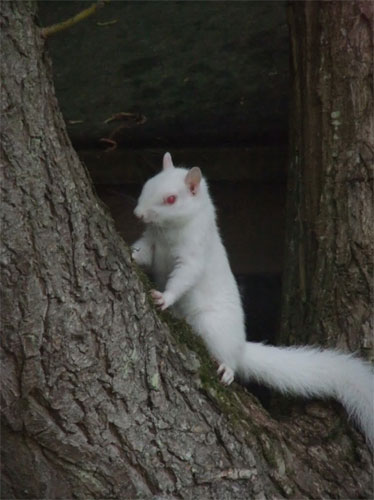
You may remember reports of darker haired mutants from Autumnwatch last year. First sighted in the UK around 90 years ago, black squirrels are actually melanistic grey squirrels which means that they have high levels of the black pigment melanin.
Nobbyk, Shaun G, Sam Forrester and Gordon Reed reported seeing black squirrels. If you've seen a black squirrel the Forestry Commission would like to know about it.
Many of you have also spotted a lighter variant of this species and albino squirrels have been reported in the news in the past. MeerkatKent, Rachel and Andy Collins have all seen albino squirrels, which can be identified by their white fur and pink eyes. It is thought that the odds of a pure white squirrel being born are one to 100,000 against!
Melanism and albinism occur across many species: many of you had seen black wild rabbits, Matthewnewsome, LancelotHogben and Draki reported white deer, Babz reported seeing a white fox, and Ian H and David Gardiner spotted near-white badgers.
The "Ghost badger" by David Gardiner
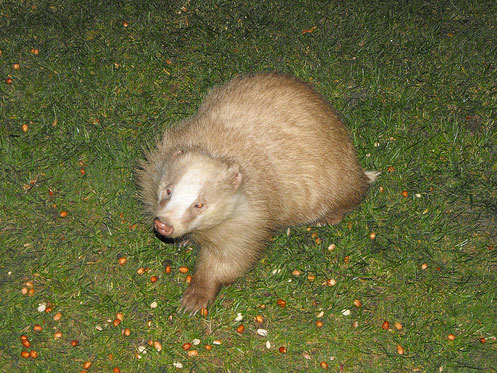
This badger is probably erythristic and Springwatch presenter Gordon Buchanan spotted a similarly ginger badger in 2009.
Colin Pickett spotted this remarkable albino mink along a sea loch in Scotland.
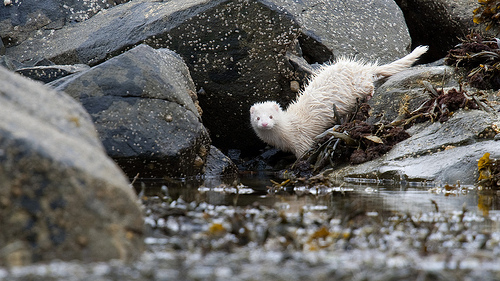
Wildliferescuer had an albino hedgehog brought in to Vale Wildlife Hospital where they have had blond hedgehogs before. Alan Titchmarsh was lucky enough to see blond hedgehogs on Alderney.
Boyall, James Lowen and Michael Southcott had all seen white red kites.
A white red kite by Michael Southcott.
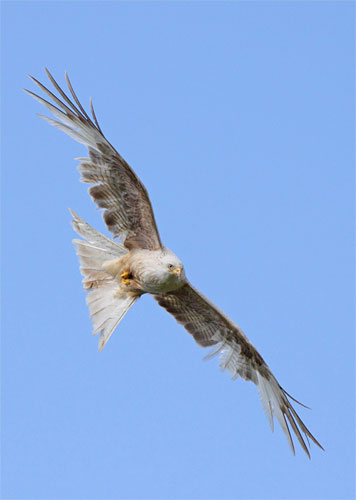
In some species such as blackbirds it is highly unlikely that pure white individuals will survive as they are so conspicuous to predators. Other albino individuals such as the albino fallow deer that Gordon Buchanan spotted on Mull can remain relatively unaffected.
Partially patched
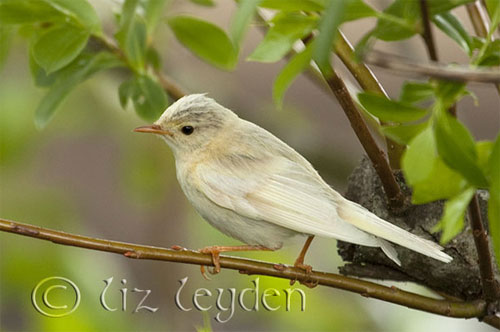
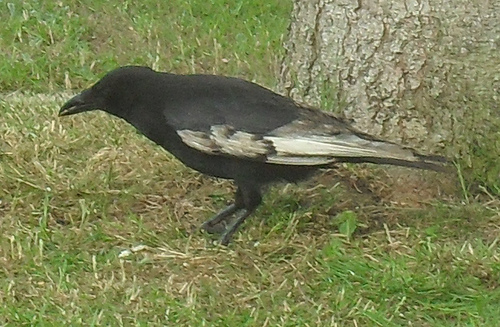
Plenty of you had also seen partially white animals. This is usually what is known as leucism which is a reduced pigmentation that can affect patches or all of the animal's body surface.
Leucistic crow with white wing tips by MrsFlutterby
We also had reports of leucistic greenfinches from LateNightSkies, and ravens and starlings with white wings, but it's not just birds and mammals that are affected.
Pretty in pink
Colourful grasshopper by Strawdot
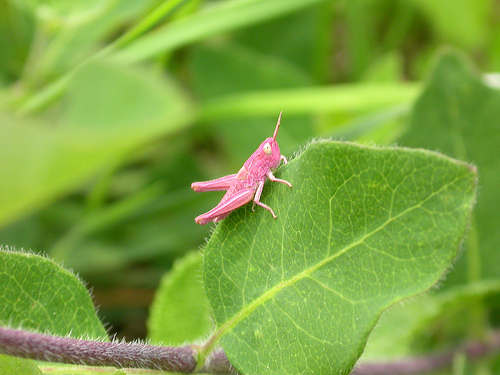 Strawdot came across this common field grasshopper which was most likely born with a genetic mutation. There have been reports like this before such as that of a pink grasshopper found in Devon in 2009.
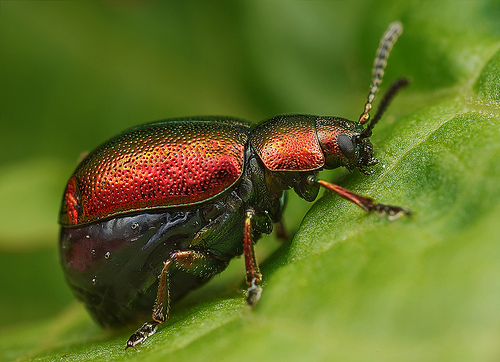
TheSteB believes this to be a red variant of a green dock beetle.
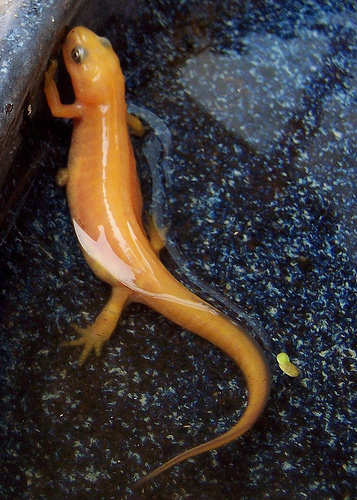
And last but not least N-ewt found this wonderful yellow newt which we think is xanthic. Xanthism is a loss of darker pigments which allow a yellow colour to be dominant.
Some of your strange sightings may have been of exotic species that have been introduced into our country from abroad or have escaped from private collections.
Thank you for all your comments and please keep them coming!


Comment number 1.
At 22:52 6th Jul 2010, donapona wrote:i saw an albino otter one night! magical . it was huge!
Complain about this comment (Comment number 1)
Comment number 2.
At 12:40 7th Jul 2010, LazyRizzo wrote:There's a leucistic (Partially white) blackbird in my home area, I've seen it several times but never managed to get a photo. Interestingly, there have been partially white blackbirds in the area for several years, could this be genetic? i.e. if two partially white birds bred would they produce partially white, or more white, offspring?
Complain about this comment (Comment number 2)
Comment number 3.
At 23:26 7th Jul 2010, JojoandHarriotte wrote:We saw a white baby deer in a field near Northlew in Devon with 4 adult females who were all normal sandy colour and feel quite privaleged.
Complain about this comment (Comment number 3)
Comment number 4.
At 22:24 19th Jul 2010, Billy Clapham wrote:I got this picture of a recent visitor to my local pond, a leucistic greylag goose! (i think!) too small and the wrong shape to be a farm goose
https://i247.photobucket.com/albums/gg131/wildbill19_photo/2010_07190144.jpg
Complain about this comment (Comment number 4)
Comment number 5.
At 13:14 20th Jul 2010, Billy Clapham wrote:That white kite is stunning! (a great photo as well)
This guy visited me at my local pond yesterday evening, who knows if he is still there, a leucistic greylag goose!
https://i247.photobucket.com/albums/gg131/wildbill19_photo/2010_07190144.jpg
Complain about this comment (Comment number 5)
Comment number 6.
At 11:50 30th Oct 2010, CLAIRE wrote:Hi, I have posted what could be a leucistic robin on the site. We saw it lots last week, but not at all this week. I hope it hasnt been picked off as it stands out. It is very shy and only comes in about 4 x a day. At first we thought it might be some sort of warbler, but it has no similar colourings. Is it perhaps a robin? Its eyes are very similar.
Complain about this comment (Comment number 6)