

Waste not, shop not
- 5 Aug 08, 11:26 AM GMT
An interesting side effect of giving up new plastic is that, so far, I am wasting less food.
This is because I, like the majority of the human race, am inherently lazy and if I can foresee that something is going to cause me extra effort, I will avoid it.
 So when I was staring at the contents of the fridge last night - half an onion, half an aubergine going puckered at the edges, the last remaining pack of plastic-wrapped chicken - I made sure that I used them all up in a curry.
Not that I would have deliberately wasted them in the past (especially not the chicken) but I may well have ended up neglecting the veg for so long that they became unusable.
But now the difficulties of plastic-free shopping are foremost in my mind. Waste food? No chance, that means having to find some more.
In fact, I went one stage further and deliberately bulked up the curry with chickpeas and some spinach (from a kindly colleague's veg patch) so that I could take another portion to work for lunch and freeze the rest.
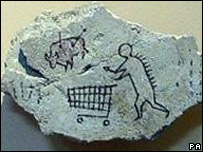
This is hardly breaking news - I'm sure Stone Age woman thought "That deer and bilberry stew will do another day" - but the point is that while I have always known this was a sensible thing to do, I haven't actually done it. Until now.
The BBC is not responsible for the content of external internet sites
My name's Chris Jeavans. For one month I am attempting to live my normal life with one main change - no new plastic. That means no bags, no packaging, no plastic to hang around in landfill. In this blog I'll keep you updated to let you know how I'm getting on.
Archive
« September 2008
| Sun | Mon | Tue | Wed | Thu | Fri | Sat |
|---|---|---|---|---|---|---|
| 1 | 2 | |||||
| 3 | 4 | 5 | 6 | 7 | 8 | 9 |
| 10 | 11 | 12 | 13 | 14 | 15 | 16 |
| 17 | 18 | 19 | 20 | 21 | 22 | 23 |
| 24 | 25 | 26 | 27 | 28 |
Being Discussed Now

Latest from BBC News blogs
Nick Robinson: |  |
Douglas Fraser: |  |
Brian Taylor: |  |
 |
Richard Black: |  |
Jonathan Amos: |  |
Christine's Blogroll
- News Editors
- Sport Editors
- Journalism Labs
- BBC Internet Blog
- Radio 4 Blog
- Peston's Picks
- Nick Robinson's Newslog
- Stephanomics
- Mark Easton's UK
- Mark Mardell's America
- Nick Bryant's Australia
- Andrew Harding on Africa
- Gavin Hewitt's Europe
- Soutik Biswas' India
- dot.Rory
- Science: Jonathan Amos
- Richard Black on environment
- Today: Tom Feilden
- Fergus Walsh's medical files
- Newsnight: Paul Mason
- Newsnight: Mark Urban
- Torin Douglas
- Will Gompertz's arts
- Phil Coomes on photojournalism
- Magazine Monitor
- Mark D'Arcy in Westminster
- NI: Mark Devenport
- Scotland: Brian Taylor
- Scotland: Douglas Fraser
- Wales: Betsan Powys
- Martin Rosenbaum on FOI
- 5 Live Breakfast
- Newsnight
- PM programme (iPM)
- World Tonight: Robin Lustig

Comment number 1.
At 12:00 5th Aug 2008, Rob wrote:Good. It’s all about Reduce, Reuse, Re-cycle, in order of importance.
Of course, saving food is where plastic boxes come in handy. They are re-usable so it OK to use them in my book, and it saves food waste.
If I get bananas, i don't put them in a bag. If I get one courgette, I don't need a bag. I seem people bagging one item, then taking it to the checkout and getting another bag. Why?
When I do get fruit and veg bags ant the supermarket, I re-use them to save half an onion or pepper, cutting down on cling film. Or I wrap my lunchtime rolls in them, reducing my use of sandwich bags.
Complain about this comment (Comment number 1)
Comment number 2.
At 12:09 5th Aug 2008, Mongoletsi wrote:Good work, it makes sense doesn't it?
I usually take my rucksack with me to the store so as to reduce plastic bags; sadly I often have to leave it at the desk to pick up on the way out! I obviously look like a miscreant rather than an aspiring eco-warrior!
Complain about this comment (Comment number 2)
Comment number 3.
At 12:13 5th Aug 2008, johnhcrf wrote:Chris,
Using food efficiently is a good thing. Since I started Zero Waste I have minimal waste which goes in the Bokashi. Birds, always hungry, will galdly accept fat/meat scraps, seeds, bread. I have yet to see a bit of food left by them.
In the maistream, where change will provide its best results, food waste collection should apply in every council area. Politicians blaming people for food waste should not deflect from this potential permanent change to home bin weight.
The Blame game, in general, is an excuse for inaction.
Complain about this comment (Comment number 3)
Comment number 4.
At 12:23 5th Aug 2008, jo_mojobanana wrote:#3 - johnhcrf
Instead of setting up even more collections for people's waste - in this case food - how about trying not to produce any?
The waste hierarchy is...
reduce - reuse - recover - recycle
Complain about this comment (Comment number 4)
Comment number 5.
At 12:37 5th Aug 2008, johnhcrf wrote:#4 jo_mojobanana
By all means reduce the amount of waste.
To Zero, I think not. There will always be fat, bone, food that's off, uneaten food on the plate, damaged fruit etc.
My idea is to deal with all eventualities in the real world. Collect the waste removing it totally from bin volume. In the process people will see the amounts they waste and adjust their behaviour accordingly. Zero Waste means taking all waste items from the bin. Plastic, the last bastion of rubbish, will evetually be processed (eg using bacteria) to provide useful byproduct.
Complain about this comment (Comment number 5)
Comment number 6.
At 12:45 5th Aug 2008, jo_mojobanana wrote:#5 johnhcrf
"In the process people will see the amounts they waste and adjust their behaviour accordingly. "
I think this is a bit idealistic. Bin collections of general waste over the past 10 years haven't spurred people into action trying to reduce the amount of waste they produce, so by separating it I think is even less likely.
I'm all for doing everything you can, but I think the impetus should be on preventing waste rather than providing people with another route to dispose of it.
By 'bin volume' I guess you mean the volume going to landfill? Just because it's not going to landfill, it doesn't mean anyone should get an easy ride on disposing of something.
Complain about this comment (Comment number 6)
Comment number 7.
At 13:19 5th Aug 2008, splendidlondon1 wrote:Hello,
I am from Argentina and I was watching the video on milk in a bag.
I admire your technology and when I am again in London I'm going to buy the milk bag container. But in the meantime I'll tell you that here we usually buy milk in a bag and just put it in a simple plastic jug especially for milk bags that covers three quarters of the bag and cut the bag open at one of the corners and that's it.
I always try to use as little packaging as possible.
Kind regards
Complain about this comment (Comment number 7)
Comment number 8.
At 13:21 5th Aug 2008, theoriginalmrsgreen wrote:Well done Chris! Steps like this are really important for reducing food waste. The whole 'food waste' issue is really 'current' at the moment with rising food prices and food shortages.
So not only do you benefit the environment by not throwing food into the landfill (which then goes on to produce methane), you're saving money - and that's always good, but you're not contributing to the millions of tonnes of food we waste in the country annually.
I bet that feels good to know you are part of the solution!
Keep up the great work and I'm sure in time, some of your favourite meals will be those created from 'scraps'!
Complain about this comment (Comment number 8)
Comment number 9.
At 13:34 5th Aug 2008, johnhcrf wrote:#6 jo_mojobanana
The issue surely is how to reduce bin volume and therefore landfill. We should encourage householders to join-in by providing the maximum support. People find it hard to reduce general waste because of our throwaway society. Superstores churn waste out like there's no tomorrow. Some food waste is a byproduct of this practice.
Again trying to pretend that blaming people for the mess is going to achieve anything is self-delusion. Better to address the issue honestly.
Anerobic digestion of food waste is already in use and should be the answer.
Complain about this comment (Comment number 9)
Comment number 10.
At 13:41 5th Aug 2008, Elpachio wrote:Just out of interest, what did you use to take the extra portion to work with you the next day?
Complain about this comment (Comment number 10)
Comment number 11.
At 14:24 5th Aug 2008, polgarademon wrote:Elpachio, it wouldn't matter if she took the food in a plastic container. The challenge is about cutting out needless plastic, predominantly packaging, not cutting plastic out of her life completely. Existing, reusable plastic, or plastic with a long life e.g. homeware, white goods etc, are not included in the challenge, nor do they need to be. Plastic is not the evil, it's our disposable lifestyle that needs looking at.
It seems a lot of people want to take pleasure in tripping Chris up, rather than giving her kudos for trying to raise awareness about our throwaway culture.
Complain about this comment (Comment number 11)
Comment number 12.
At 14:36 5th Aug 2008, nowomanisanisland wrote:I do think that a virtuous behaviour leads to other improvements of our way of coping with life.... so you began sparing plastic junk and now you think before buying food that could be thrown away a couple of days later... tomorrow you will use your imagination to recycle dresses, furniture, and so on! right, it's our disposable lifestyle that must be corrected.
Complain about this comment (Comment number 12)
Comment number 13.
At 14:41 5th Aug 2008, metherer wrote:Elpachio - might I draw your attention to something that was said in the first of this series of blogs:
"By "give up" I mean not buying anything containing plastic or wrapped in plastic. "
...
"I will, however, be able to keep the plastic I already own but even so it is going to be very difficult. "
So, Chris will have been able to use a plastic tub, if it was already owned.
Alternatively, a bowl or plate with foil on could be used. (Remembering that the foil can be recycled after the end of its useful life)
I think the reduction of plastic is an excellent aim, and one which we should all try.
Complain about this comment (Comment number 13)
Comment number 14.
At 14:43 5th Aug 2008, roughyed85 wrote:It must be difficult for you middle-class media types, but welcome to working-class thinking. We've been doing this sort of thing for ages - we just don't have the smug compulsion to brag about it.
Complain about this comment (Comment number 14)
Comment number 15.
At 14:51 5th Aug 2008, delphonic wrote:If I want a plastic bag, I'll take one. They hardly contribute a lot to so called "climate change" anyway. You're only on this planet for around 80 years so you might at least enjoy yourself and do what you want when you are here.
Look out for yourself folks 'cause no one else will do it for you.
Complain about this comment (Comment number 15)
Comment number 16.
At 14:55 5th Aug 2008, Elpachio wrote:You're absolutely right that plastics is not the evil - and this something I speak about on a monthly basis with my readers as I am editor of an international magazine for the plastics packaging industry.
The amount of work being done behind the scenes into plastics recycling would astonish you - we have 100% recycled PET water bottles now from several suppliers in this country, and Closed Loop Recycling has plans for multiple plants to produce recycled plastics in an energy efficient, environmentally aware manner.
In fact, plastics is far more environmentally friendly than it has ever been now, and lighter and thinner than ever before. Plastic carrier bags can be degradable, biodegradable and oxo-biodegradable, and bottles can be made from PLA (although there is no stream for them yet), but plastics is often a lot more "friendly" under production conditions than paper or glass, and uses far less oil than people generally think. The UK especially is making massive strides in recycling in recent times from its shockingly bad position some two years ago.
Removing plastics from our lives completely is a ridiculous idea, and replacing plastics with other solutions that have no additional benefit to the environment is folly. We can all cut back on our usage yes, but let's give the plastics industry a little bit of credit for the strides it has made in making plastics lighter, and more environmentally-friendly than ever before.
Complain about this comment (Comment number 16)
Comment number 17.
At 14:58 5th Aug 2008, Elpachio wrote:The problem in this country is the collection. I remember living in Nottingham three years ago and they invested in an all-singing all dancing recycling facility and collected "all" plastics waste.................did they recycle it into wonderful new plastics? No, they shipped it to China! Hardly environmentally friendly.
If collections improve then this material is easily recyclable and processes exist to convert them back into equally good material as virgin material - ask Closed Loop! Then plastics will go the same way as the tin can in terms of its recyclability.........don't blame plastics for government's inability to deal with it.
And remember what plastics does for you, especially in the food packaging sector, in terms of increasing the shelf life of what you consume.
Complain about this comment (Comment number 17)
Comment number 18.
At 15:07 5th Aug 2008, johnhcrf wrote:#17 elpacho
Plastic is useful. There are also less useful examples. Take combination waste - Plastic-Aluminium-Plastic. Not only does the plastic go to landfill but it also drags very useful alumininium along with it. This must be the worst example of all.
Complain about this comment (Comment number 18)
Comment number 19.
At 15:08 5th Aug 2008, Rob wrote:Hey delphonic,
I'll try to appeal to your selfish side.
The point is, when you have taken your platic bag, what then?
Chuck it away. Grab another, and another, chuck them all away.
You want a Land Fill site in your back garden? No? Best recycle them then. Or better, just reuse them.
Sorry if you're not bright enough to understand this.
Complain about this comment (Comment number 19)
Comment number 20.
At 15:36 5th Aug 2008, RJTysoe wrote:We had milk in bags in Worcester in the 80's and I suspect before then, it's nothing new.
When did we (the UK) become such a wasteful society? Be it plastic waste, food waste, making pointless car journeys or wasting electricity in the home, where did it all start?
My parents (in their late 60's) seem to understand the need to cutdown waste, but don't see it as their problem. They have 2 TVs, 2 fridges, 2 cars, 2 long haul holidays a year. Their kitchen, lounge and dining room are all lit by large numbers of incandescent light bulbs (at least 6 in each room). They leave all their electrical goods on standby all the time and can't see why this is wrong. The only way they seem to understand the message is when I point out that their own parents were never so wasteful. They would have switched the TV off at the socket (and probably unplugged it too), and only had the required lights turned on. They would have laughed at the thought of 2 fridges.
So where did these wasteful generations come from?
Complain about this comment (Comment number 20)
Comment number 21.
At 15:37 5th Aug 2008, fisher85 wrote:The only thing I use those little plastic bags at the supermarket for is things like fresh peas.
I try to store food at home in small plastic containers that can be washed and used again.
I only wish fresh food producers used less - why put a cauliflower in a printed wrapper - I know what it is! Why tray up 4 pieces of fresh fruit - if I want 4, I'll pick up 4 !
I don't know if my little bit helps - I hope so!
Complain about this comment (Comment number 21)
Comment number 22.
At 15:37 5th Aug 2008, mergepro wrote:Always use any piece of food that can be saved. Dosn't everyone do that. That's right people who don't save what food they can are better than us. oh well cheers to those who know how to survive.
Complain about this comment (Comment number 22)
Comment number 23.
At 15:55 5th Aug 2008, badsearch wrote:I would be intrigued to know how you intend to freeze the curry without plastic.
Complain about this comment (Comment number 23)
Comment number 24.
At 15:58 5th Aug 2008, Andrew wrote:I used to use the cardboard boxes that supermarkets provided for putting things in the car, rather than plastic bags. However they're now deemed a fire hazard.
RJTysoe: My grandparents generation were not wasteful. I remember my grandmother used to complain if I left her fridge open for too long if I was deciding what to take out. My grandfather still unplugs the TV before he goes to bed, and unplugs the kettle and toaster after use.
Our TV on the other hand does not actually have an off button. It has a standby button, but the only way to actually turn it off is at the plug.
From my experience, people judge things on face value too much. Sure, plastic does not degrade, but that's often a good thing. Heavy metals are an example of things which damage the environment, plastic bags don't really do anything, they just look unpleasant.
Complain about this comment (Comment number 24)
Comment number 25.
At 16:13 5th Aug 2008, luciacastrodiaz wrote:Hi Chris,
You are brave indeed, trying to live without plastics for a month. I may be a bit of a devil's advocate here, since plastics are my specialty, but i think is great that people start to realise how much we waste. I believe plastics do great jobs for us, but their main application is still packaging, which is the one we could pass without.
have a look at my blog, if you want to see some of the not-so-bad uses of plastics:
https://www.mundomaterial.eu/?language=en
i recently posted this video, winner of 2007 friends of the earth short film award, proves how silly packaging can get:
www.youtube.com/watch?v=Ykd0dvLWKQk
good luck with the experience
lucía
Complain about this comment (Comment number 25)
Comment number 26.
At 16:24 5th Aug 2008, aquarizonagal wrote:To#11polgarademon
Very well said! I think Chris is doing a great job!
To#20Rjtysoe
We are older than your parents. Lights on, I can understand. We older folk do not see as well as when were young. Good lighting prevents falls and other mishaps. Can you get CFL bulbs at a reasonable price where you live? These bulbs, last for years, use a lot less energy and provide excellent light. Maybe, as a start you could persuade your parents to use these.
The mantra at my house has always been "Waste not want not." It pains me to throw away food. Fortunately I have animals who will eat most anything and a very active composter for my garden. But I try to avoid waste, as I can remember going hungry and doing without in my youth. So, I think of all those who hunger in this world when I choose, prepare and eat my foods.
Complain about this comment (Comment number 26)
Comment number 27.
At 16:50 5th Aug 2008, AlphaTykeMark wrote:Let's not get too carried away about plastic being a recent introduction.
39 years ago I went strawberry picking as a 13 year old at a local farm in the North Riding - flimsy plastic punnets were the norm.
On the subject of milk bottles: glass requires high energy (carbon) input to make. It would make more sense to know the TOTAL CARBON FOOTPRINT of alternative forms of packaging.
Complain about this comment (Comment number 27)
Comment number 28.
At 17:03 5th Aug 2008, jo_mojobanana wrote:#9 johnhcrf
I think we're approaching the same thing in slightly different ways. I completely agree that composting/anaerobic digestion etc. for food waste is a good idea, especially if it's done in the home (or the garden). People then see what they produce and how it can be recycled to produce something else useful.
However, your comment "People find it hard to reduce general waste because of our throwaway society" is what I'm getting at. My feeling is that if everyone didn't buy so much 'stuff' then we wouldn't have such a throwaway society. Food is a perfect example and I've done it myself, go shopping, buy a load of food and a lot of it can end up in the bin because it's not stored correctly, or it goes beyond it's 'use-by' date.
And the shrink-wrapped cucumber that people like to talk about. Buy a wrapped cucumber, cut it in half and remove the plastic from one half. Put them both in your fridge for a week (at least), then tell me which half you'd like to eat after that time. Packaged fruit and veg is useful because it extends the shelf-life, especially where even the smallest portion available is too much.
Then everyone blames China for building so many coal fired pwer stations every week. Well, who buys all the stuff they make? Us. Because it's cheap and disposable. And usually plastic.
Complain about this comment (Comment number 28)
Comment number 29.
At 17:26 5th Aug 2008, aquarizonagal wrote:Chris,
I live rural so I don't have easy access to shops but I do have a garden so that helps. Meal planning and improvising as you did with the curry are things I am very familiar with. It will help a lot when you prepare meals, such as curry, soups and stews, to not be concerned about the quantity you prepare because you can always freeze the leftovers for a future meal. This is such a relief when you are very tired or have had a taxing day. You will know that dinner is already prepared.
Complain about this comment (Comment number 29)
Comment number 30.
At 17:44 5th Aug 2008, johnhcrf wrote:#28 jo_mojobanana
I am glad we can agree about anaerobic digestion. I also would like it after 100%household food waste collection. This will remove it from bin waste, forever.
As regards packaging, which does extends life. Fair point. My attitude is ZeroWastePackaging - take all veg/fruit unpackaged, in containers, keep most of it in the fridge, eat it all, no waste. Where do you see packaged veg/fruit in that scenario?
You do not need it. Superstores need it supposedly, but a lot of what they do is wrong.
I feel strongly about this. Consumers must lead the change. If I can achieve Zero Waste. Producers, suppliers, superstores
can do it as well.
Complain about this comment (Comment number 30)
Comment number 31.
At 19:20 5th Aug 2008, idontmuchbut wrote:#30:
Packaging plays a key role in delivering fresh produce from all around the world to you and your family. It extends shelf-life, therefore reducing waste as well as minimising damage.
To understand what packaging does you need to look at develoing world supply chains and the the food wasted throughout. take India where up to 60% of the food is wasted before it reaches stores. This is what plastic does for us, we just dont see it.
The sooner we realise food waste is the real issue here the better and that packaging is a key tool to reducing food waste.
Complain about this comment (Comment number 31)
Comment number 32.
At 19:51 5th Aug 2008, johnhcrf wrote:#31idontmuchbut
I do not use packaging, as it is bound for landfill. No excuses will change my opinion on this. I shop local and only buy from superstores what fits my waste attitude.
If packaging became 100% recyclable/compostable, that would be acceptable. Until then I, and other like-minds, choose the sustainable option.
Change is occurring towards this better future, the packaging industry should become part of the change rather than the problem.
Food waste can be composted. Plastic waste cannot!
Complain about this comment (Comment number 32)
Comment number 33.
At 20:50 5th Aug 2008, Teresa_D wrote:I am finding this all very interesting, but alas, the whole subject of plastic as "evil" is quite confusing.
Not too long ago I thought reusing my plastic bottles or special hiking bottle was good, but now I read they are actually putting harmful chemicals in my body.
Even putting hot left-overs in plastic to freeze is said to be bad.Some even say the wrap touching the food is a bad thing:so, bad for the environment and perhaps cancer causing????
I have become so accustomed to doing things with the modern convenience of plastic that going back to wrapping my sandwich in waxed paper seems quite primative.
I've seem conflicting opinions about the compostable plastics. Is it good or is it just releasing smaller pieces, impossible to ever remove from the environment.
I try to do what is "right" to the best of current knowledge, but I think I end up with more questions than answers.
This exercise/blog and the thoughts it has generated are good and I am following with great interest.
Complain about this comment (Comment number 33)
Comment number 34.
At 05:53 6th Aug 2008, RL wrote:Every time, when I empty an plastic bottle or ditch a plastic bag I feel like criminal myself. If suppliers stop to use plastic packaging, consumer should be able to found an alternative way around. I believe there so much we can do to help the issue. We might need a law to ban the plastic package to resolve the issue.
Complain about this comment (Comment number 34)
Comment number 35.
At 07:13 6th Aug 2008, AJS wrote:Packaging is important, but where did it say it had to be disposable?
Supermarkets take regular deliveries of fruit and vegetables from the same suppliers, so why can't they be in returnable containers?
Take a shallow plastic crate, some strips of plastic, a bandsaw and a hot-melt glue gun ..... you can make an apple crate with individual compartments for each apple , and it can be used over and over and over and over again -- all it needs is a quick jet-wash every so often. Eventually, it will work out cheaper than disposable cardboard packaging.
Oh, and making the reusable crate has also kept a dole-scrounger busy for an afternoon!
Complain about this comment (Comment number 35)
Comment number 36.
At 09:06 6th Aug 2008, pompeyduchess wrote:Your blog is really inspiring, it's really making me think, usually several times a day! I'm thinking of trying to cut down on single use plastic as a first step, so either eliminating it or finding ways to reuse it. For example, I have a friend who uses margarine tubs to store food in the freezer instead of buying other containers. Like, the other poster, I also reuse vegetable bags from the supermarket for storage or my lunchbox.
In terms of food waste, I've recently started doing an inventory of the fridge each weekend and planning my meals for the week ahead so I can use up bits of leftover food. It seems to be working well, saves the trauma of having to decide what to cook when I get home from work, I'm throwing away less food and therefore buying less as well so it's cheaper too. Everyone's a winner!
Complain about this comment (Comment number 36)
Comment number 37.
At 09:22 6th Aug 2008, idontmuchbut wrote:Where on earth do we develop the notion that 'banning' plastic packaging is the way forward. Before taking such wild and generic assumptionsin the belief that you are saving the planet you need to understand the science.
1. The main driver for recent surge in 'ethical consumerism' is a desire to 'do your bit' in response to global warmimg. Let's assume then that global warming is your driver.
2. Global warmimg is a direct consequence of greehouse gases (GHG) released into the atmosphere by man. The main (GHG) is Co2, or carbon. This is produced by man from a number of different sources such as energy and fuel consumption etc
4. To halt / reverse global warmimg we need to produce less GHG's and therefore reduce carbon. Hence, lowering carbon footprint is actually whats important here.
If lowering carbon footprint is now the given objective then where the hell do we develop the notion that banning plastic, a lightweight, low carbon, eco-efficient material would be a good idea?
Instead of focusing your well intentioned efforts upon iconic totems of excess packaging in the vain belief that you are 'doing your bit' you need to actively read, understand and act upon the levers for reducing GHG's in your everday lives. These levers are listed below:-
a. Fuel consumption - car, bike etc
b. Flights - your annual holiday uses more carbon than more than 3/4 of the rest of your annual quota
c. Energy efficiency - turning down the nations home thermostats by just 2 degrees would save more energy than the packaging industry consumes per annum.
I believe packaging accounts for less than 5% of the UK's carbon emmisions. Do you really believe that by banning plastics and switching to some other higher carbon material we are going to make any difference? The debate needs to get a proper grasp of the science and the facts before calling for wide reaching cataclismic changes that have the exact opposite to the desired effect.
This piece of journalism serves to little to take the debate into the right areas where we can all learn to accept the facts and get on with making the changes we need to in our everyday lives.
Complain about this comment (Comment number 37)
Comment number 38.
At 09:28 6th Aug 2008, Elpachio wrote:Teresa_D,
The issue of harmful chemicals in plastics is unfortunately one of those stories that rears its head every few months, along with "Wrap Rage" and "Easter Egg Packaging". It is wholly untrue.
I have covered the Bisphenol A debate (a chemical found in polycarbonate bottles such as those used for hiking bottles, etc) extensively in my magazine and spoken to leading scientists and plastics producers around the world on the subject. The quantity of Bisphenol A in such bottles is so small that its effects on humans is off the scale. There is no scientific evidence to suggest any harm exists to humans.
Leaching from plastics bottles is a popular topic among "doom merchants" but leaching of any chemical from plastics is either an exaggeration or an untruth.
Putting any hot food in a wrap is an unwise thing to do, you should always cool the food first and then wrap. No concrete evidence exists to suggest that cling film has any unwanted effect on humans.
Complain about this comment (Comment number 38)
Comment number 39.
At 09:35 6th Aug 2008, idontmuchbut wrote:#38
Absolutely right. All plastic packaging is rigourously tested under laboratory conditions and would comply with strict EU regulations before being certified as 'food safe'. It's an urban myth that plastics leach harmful chemicals into food. Usually this story is perpetuated by rather more sensationalist fractions of the media along with 'chips cause cancer', 'red wine kills you' and 'veg is bad' etc!
Complain about this comment (Comment number 39)
Comment number 40.
At 11:02 6th Aug 2008, jo_mojobanana wrote:32: johnhcrf
"I do not use packaging, (as it is bound for landfill)"
I'm sorry, you can't use this statement. Everything that is available to buy uses packaging through its supply chain, however short or long that supply chain is. What I think you mean is that you don't accept packaging into your home, which is an admirable approach and not something I think I could manage, especially as I live alone and can't eat a whole cucumber in 2-3 days, so the packaging here is useful to me. I endeavour not to buy wrapped fruit/veg/fresh food where I know I can store it appropriately until it's used.
35: ajs_dy
"Supermarkets take regular deliveries of fruit and vegetables from the same suppliers, so why can't they be in returnable containers?"
Because the start of these supply chains is all the way back in Spain, Morocco, Costa Rica, etc. and while yes, they could be put into returnable plastic packaging
Complain about this comment (Comment number 40)
Comment number 41.
At 11:08 6th Aug 2008, jo_mojobanana wrote:... mis-posted... sorry
continued:
while they could be put into returnable packaging, the loop needs to be closed so that they are returned back to where they are filled. Who would like to see ship loads of empty packaging sent half way across the world? (which could happen I suspect - are the ships that bring things in going back empty? or tdo they take other loads elsewhere?) A lot of companies do this, the major car manufacturers in the UK use returnable packaging for production parts because they have closed loops - a continuous stream of lorries/ships/etc. transporting parts from one part of the world to another, then going back again.
Bread crates are returnable because the supply chain is short and it's so much easier to manage within a small loop.
For the fruit example, I suppose you could propose repacking into returnable crates, but this increases the likelihood of damaging the fruit, plus adding cost which you would pay as a consumer. Also, the corrugated cases are usually recycled - most supermarkets recycle their packaging, and pay for the recycling through the producer responsibility legislation, as a matter of course. This recyclate ends up as, you guessed it, more corrugated board!
Complain about this comment (Comment number 41)
Comment number 42.
At 11:59 6th Aug 2008, fat_mokus wrote:The more I read columns like this the more I love the fact that I live in Ealing. Not only does the council now recycle most plastics, textiles, paper, card and metal, the food waste bins (lined with paper only under council regulations and hosed out every couple of weeks by us) mean that we can have a non-recyclable waste bin that works out to one small carrier bag-ful every 2-3 weeks. Everything else is recycled weekly and there's no food smells to worry about as the main bin doesn't contain any and the food waste bin closes down tight. Now if only we can find a suitable alternative to that small plastic carrier, we'll be well underway...!
Complain about this comment (Comment number 42)
Comment number 43.
At 12:58 6th Aug 2008, Mishaela wrote:I can see a few "little less inteligent" people here - PLEASE before you post your comment READ the article.
Comment about "plastic PC" from which is Chris typing are irrelevant as there is clearly stated she can use everything she's already got.
Now to the topic - It's definitely a good idea and even better experience. Let's be honest - most of us wouldn't do it just because we are lazy to think and too comfortable with our lifestyle full of unwanted waste.
And a few tips - Don't complain that you can't get loose veg and fruit in supermarkets. If you really want it go to street markets - they put everything in paper bags or in your bag which you can bring with you. And it's CHEAPER!
Same for milk - don't buy it from supermarkets. It's in plastic and in the end it doesn't even taste like milk should. It's full of chemicals to keep it fresh for longer but the taste is totally gone:(
And again same for meat etc. - don't shop in supermarkets, go to your local butcher. They put there less packaging and you can also get paper instead of plastic.
GOOD LUCK!
Mishaela
Complain about this comment (Comment number 43)
Comment number 44.
At 13:05 6th Aug 2008, Mishaela wrote:fat_mokus: Good for you and other people around.
I used to recycle for many years while lived in different countries but since I got to UK there's not chance for me to keep on doing it.
Every day can we hear from TV, Radio or read elsewhere, how importatnt recycling is and how is the goverment encouraging us to do so.
BUT - I moved to one of London's suburbs and the nearest recycling box is 15mins from my place and it's only for clothes and plastic.
I contacted council office 3x times (!) last year and asked them to provide green and black boxes for our block (with 9 flats) and do you think we got them? NO!
It's over half year now and still nothing, so I'm not keeping my empty bottles, washed tins and heap of papers in my flat anymore - I just "selfishly" dump it in the one container we have. Sad but it wasn't my first choice :(
Complain about this comment (Comment number 44)
Comment number 45.
At 20:54 6th Aug 2008, Elettaria wrote:I don't get the option to recycle either. To begin with, I live in a small one-bedroom flat where there absolutely is not space for extra bins for different types of rubbish, let alone any sort of composter. For seconds, I'm mostly housebound due to disability and I have to get someone else to carry my rubbish bags out for me. I haven't noticed the local Council offering any help for the sizable proportion of people who are disabled and simply aren't able to be "model citizens".
Ecological living is a great idea, but in some areas it's a luxury. I do what I can - reusable menstrual products, reusable fabric carrier bags instead of plastic ones - but there's plenty I simply cannot do, and there are also areas cut off from people for reasons of cost. A lot of these "greener options" are a strongly middle-class phenomenon.
Complain about this comment (Comment number 45)
Comment number 46.
At 12:26 8th Aug 2008, Sandy2209 wrote:This looks like it's going pretty well. But cutting plastics out completely is something many of us can't manage. To be honest buying and using plastic boxes for domestic food storage is perfectly acceptable. The boxes are used over and over again and there really isn't a sensible alternative.
What annoys the socks off me is the amount of plastic packaging - most of it in fact - that councils refuse to collect. A lot of it has no recycle code on it (I try to avoid that) but even when it does, councils will only take milk and pop bottles.
Come off it - a box in PET is exactly like a bottle in PET - just square. And the first action at the recyclers is to chop it all up.
Councils should be A) collecting every scrap of coded plastic they can and B) banning shops from selling any product in un-identified plastic packaging.
Complain about this comment (Comment number 46)
Comment number 47.
At 15:31 8th Aug 2008, jo_mojobanana wrote:#46 - sandy2209
and C) trying to cut down on the number of plastics used. Limiting to 2 or 3 where possible means less complexity for all and facilitating separation for recycling.
Complain about this comment (Comment number 47)