Mixital helps youngsters become digital makers

Martin Wilson
Head of Digital Creativity, BBC Design & Engineering
Tagged with:
With the BBC's Make It Digital season now in full swing, Head of Digital Creativity Martin Wilson discusses mixital, a platform for young people designed to simplify digital making and take it mainstream.
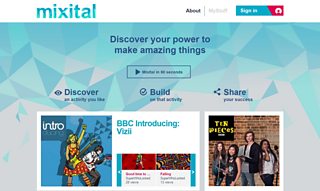
Mixital gives our audiences the tools to get creative
Creativity has always been at the heart of the BBC’s mission and last week we launched a new way for audiences to get creative with the BBC online.
As part of our new mixital platform we’ve given our audiences the tools to get creative with some of the BBC’s biggest brands. It gives them the chance for the first time to create their own content based on the shows they love. It offers users the chance to create games, stories and visualisations using characters and other familiar assets from popular BBC shows.
For example, from today fans of EastEnders can make comic-style stories to give their own take on the trial of Max Branning; fans of Strictly Come Dancing can get digital robots dancing; fans of BBC Introducing and Radio 1 can create visualisations of cutting edge music; and fans of Doctor Who can create games featuring the Doctor, Clara and a huge range of other heroes and monsters.

Fans of Doctor Who can create games featuring the Doctor
I’ve been lucky enough to have made programmes for the BBC for, well…a number of years. So I’m really excited we can now give audiences, too, the opportunity to start making their own BBC.
Creativity
Mixital is designed to be a safe, fun space to experiment, build confidence and showcase work publicly. All are essential ingredients of creativity.
In simple steps, users can move from being digital consumers to digital creators. It begins by viewing other people’s work for inspiration, leads on to re-mixing and then finally to having a go. Creations can be saved privately or shared publicly for comment and re-mixing.
The best creators will attract followers and the BBC will showcase the best creations.
Experimentation, collaboration and self-expression are essential if the UK is to grow a nation of digital creators who can manipulate the technology our lives increasingly rely on. Figures released from the Tech Partnership show the sheer size of the opportunity.
An Open Space
Mixital launches as a public beta as part of the BBC’s Make It Digital initiative.
We wanted to get this out early to test the response of users, BBC brands and partners. The feedback will shape the next stage of the project.
We designed mixital in this spirit of openness from the outset. We collaborated with a small group of advisory partners with particular expertise in this field.
Nesta conducted a nation-wide survey of attitudes into digital creativity; Freeformers ran a series of events with young people to feedback on the mixital concept and shape the design and functionality of the site; and Mozilla provided insights from their international work on the Webmaker platform. The BBC also worked closely with Nesta to integrate into mixital a tool built by Code Club. We brought this tool together with assets from BBC’s Strictly Come Dancing in a unique experiment to create ‘Robo-Dancers’. It’s an opportunity for fans of the show to create their own dancing robot.
BBC Brands
Earlier this year, Nesta’s report into young digital makers highlighted the huge appetite young people have to make digitally. But it also pointed out the gap between their enthusiasm and opportunities to actually make things.
BBC research, too, suggested the best way to bridge that gap was to provide simple tools using familiar assets that could be easily shared. In other words, offer fans new ways to engage creatively with their favourite brands.

Offer fans new ways to engage with their favourite brands
This, and BBC Make it Digital’s aim to get a new generation to be creative with digital, was the inspiration behind mixital. The journey began with CBBC’s Technobabble game maker. It was a tool that required no technical knowledge, no download and worked just as well on tablets as desktop. It inspired the creation of more than 250,000 games.
We then worked with Doctor Who to create an improved game maker that would appeal to teenagers as well as the younger CBBC audience.
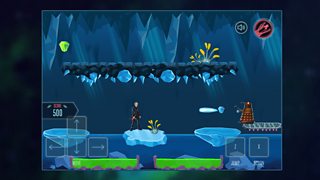
An improved game maker that would appeal to teenagers
Then we partnered with EastEnders to create the ‘Soap Factory’. This enables fans to play with their favourite characters and locations to create new story lines and twists in the plot.
We also teamed up with BBC Connected Studios to adapt the game maker into a ‘visualiser’ of music and the spoken word. We’ve collaborated with BBC Introducing on Radio 1, with Ten Pieces, the BBC’s classical music education initiative, and with BBC Arts’ Get Creative campaign to create three types of visualiser for mixital.
Next Steps
This is only the beginning.
The team of Jon Howard, Executive Product Manager; Douglas Smith, Senior Product Manager; Alex Duff, Technical Product Manager and David Ullman, User Experience will be developing mixital as we learn more about what works and, of course, what doesn’t.
We’ll be looking to develop further collaborations between partners and the BBC. And we’ll be looking to build an army of creative champions to lead the way.
A huge part of the success of the BBC Micro in the 80s was the collective drive and support from enthusiasts. Mixital wants to tap into that energy too. So, please do get stuck in and help build a creative community where everyone feels welcome.
