The Sunday Post: An American love affair

Greg Bakun
Guest blogger
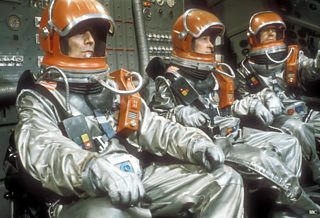
Greg is about to gorge on the box set of 1970s sci-fi series Doomwatch
When I was a boy in the 1980s, I had this secret life.
I would be whisked off to distant worlds in time and space, watch a neighbour dig up his backyard for a self-sustained existence, visit my friends in an old-fashioned stuffy department store - and I even had my first look at a topless woman working behind the cash register at the local grocer!
The funny thing was that I never left my house. I was watching television but it wasn’t the television that everyone else seemed to watch; this was fresh and inventive; sometimes dangerous and often invigorating. It opened my eyes to thinking differently about everything. This is where I started my lifelong obsession with British television.
For me, as an American, my love for UK TV started in 1984 with the Public Broadcasting System known as PBS. Not all British television broadcast in the US was shown on PBS but I think a lot of us were introduced to it this way.
Although I had seen other UK programmes before, the series that sparked my interest in UK TV was Doctor Who. I love the series, I still love it, but in my journey into British television, Doctor Who was a gateway drug.
I was asked to write about why I love British television and where it fits in from an American perspective. It’s a hard task. After all, how do you put a lifelong passion into a single blog post?
Starting with the shows on PBS, most of our UK imports would be shows that us “Yanks” could find tangible. Physical humour or slapstick could feature heavily in programmes such as Are You Being Served? A series like that can play just about anywhere in the world and go over well.
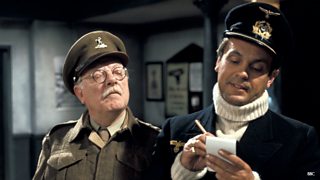
Captain Mainwaring is a firm favourite with our Stateside writer
But we would also get sitcoms that weren’t always based in physical comedy and perhaps more smartly written such as Yes, Minister or any of the Black Adder series. Probably the biggest impact on US audiences would be Monty Python’s Flying Circus. Humour may never have been played on so many different levels at one time as with Python.
In dramas we would get some of the best the UK could offer such as I Claudius, Upstairs Downstairs, Elizabeth R, Henry VIII and House of Cards. But as wonderful as all these programmes are, they create a problem with the perception of British television in the US.
It may be different now, but when I was young the view of UK TV in the US was pretty stereotypical. Generally, people thought UK TV shows were either costume dramas or outrageous British comedies.
As I started to dig deeper in my journey of exploring British television, I soon realised that the US was missing out on great shows, perhaps because they were too engraved in British culture and seen as inaccessible to the US viewing public.
I think a great example of this is Till Death Us Do Part. A reason it may be hard for the US populace to embrace this series is because it takes place right in the middle of the Swinging Sixties in London where a revolution was taking place.
The generation gap was widening and in the middle of it, on TV at least, was Alf Garnett. There was a cultural phenomenon going on in the UK and it was special to them. I think the same can be said of Dad’s Army. Although it aired over in the US on PBS, nobody can really appreciate how real the terror of the Nazis threatening to invade and the line of defence was the Home Guard - this series is intimately British. I love this comedy, I understood the horror about this period in history but I didn’t live through it nor experience it as part of our history. I was still the cultural outsider.
I am not saying the people in the US can’t understand these concepts, but often these shows were never exported to the US even though they were often remade over here, including All in the Family or the (thankfully) forgotten Dad’s Army pilot The Rear Guard.
It became an intense passion of mine to collect and watch as much British television I could no matter where I found it. In the 1990s I found myself buying special PAL equipment (TV & VCR) to watch the BBC VHS releases from the UK, shipping them over to the US which at that time was not cheap. Now, of course, so many of these programmes have been released on DVD. How has this impacted me?
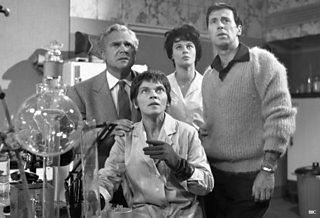
Are the cast of A for Andromeda wondering who their present day fan is?
I was able to see series that were inaccessible to us Americans. Such wonderful programmes as the Quatermass serials, A for Andromeda, Adam Adamant Lives!, Dixon of Dock Green, Softly Softly: Taskforce, and Dr. Finlay’s Casebook. These programmes and so many more are now available to everyone. In a couple of weeks’ time the complete DVD set to Doomwatch will be in my hands.
But my love goes beyond watching the shows. The reason I love BBC Genome is my admiration for the Radio Times. To me, the listings are as important as the program itself. That’s something that 99% of Americans and most US fans of British TV will never understand. The Radio Times have moved me so much that I have a big chunk of 1960s editions and most of the 1970s. But it’s so much easier to look up the listings on the Genome site!
So what is it I love about British television? I think the answer is simply…… everything! I love everything about it from the way it was made in the 1970s (videotape interiors and film exteriors) to the iconic and sadly missed Television Centre.
What I love the most about it is, though, the people I met over the years in the US who share my passion, the people in the UK who I have corresponded with, the people who work in the BBC and the characters in their programmes. These people are all friends and I couldn’t imagine my life without them.
So, cheers to Alf Garnett, Captain Mainwaring, Professor Quatermass, and Gertrude Noah!
Greg Bakun lives in Minnesota and runs From The Archive, a blog about British television.
Are you reading this post from the United States? What is your take on British TV? Like Greg, are you a massive fan? Let us know in the space below.
