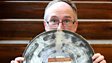
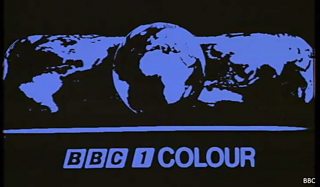
The original BBC One colour globe. The background was achieved using a concave mirror behind a model globe
Colour came to BBC One today in 1969. But as usual, it wasn't as simple as that!
Colour test transmissions had begun on the BBC television service in 1955. After the launch of colour on BBC Two in 1967, plans were made to extend it to BBC One and ITV simultaneously on 15 November 1969.
By October 1969 some BBC One shows were already being made and broadcast in colour (from London's Crystal Palace transmitter, later also Winter Hill in Lancashire). These included Dad's Army and Monty Python's Flying Circus. Some BBC Two colour programmes were repeated on BBC One, also imported US programmes and colour films, all helping to iron out any major technical issues before the big day.
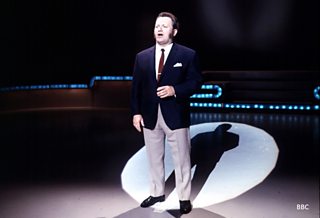
Harry Secombe starred in his own show on the first official night of BBC One in colour. His first television appearance had been 23 years and four days earlier, in BBC TV's Little Show
The schedule for BBC One for 15 November ironically started with the then-usual Saturday morning foreign language lessons in black and white, and the first colour programme, apart from continuity, was the weather forecast (followed by Casey Jones and a Charlie Chaplin film - they were really selling this colour thing...)
However, the official colour service had actually got off to a start some hours earlier, at midnight, with Petula Clark in An Evening with Petula. Before that was Colourful One, a 20 minute promotional programme showcasing some forthcoming highlights.
Later that day, colour on BBC One really got going with Grandstand, then the latest episode of Star Trek. Other Saturday evening colour highlights included Simon Dee's chat show, Dixon of Dock Green (made in black and white until the preceding episode), The Harry Secombe Show and a feature film.
After Match of the Day in colour, the evening ended in black and white with Braden's Week (forerunner of That's Life) - so the schedule ended as it had begun, in monochrome...
