
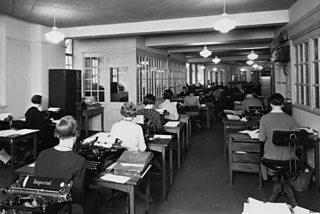
Working life
A treasure hunt through the BBC Genome listings reveals a world of forgotten jobs and working practices.
One of the great pleasures of BBC Genome is uncovering historical details and trends that tell us something about a previous or forgotten way of life. The listings’ descriptions of archive programmes can often give an insight into how society is changing, as those changes are actually happening. In our latest “treasure hunt” at BBC Genome we have looked at the world of work and how working practices and professions have changed since the 1920s.
Old trades
It is a long time since anyone was stuck in a traffic queue at rush-hour behind one of these:
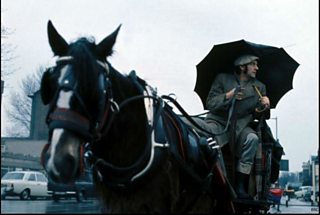
Steptoe and Son
The Rag and Bone man was once a familiar sight on the nation’s streets, collecting unwanted household materials to sell on.
In Victorian England, the “bone-grubbers” and “rag-gatherers” were itinerants who moved from place to place on foot, and were described by Victorian journalist Henry Mayhew as walking 20-30 miles per day with “a half-hundred-weight” on their backs. By the 20th Century it was a common sight to see the Rag and Bone man astride a horse and cart, as Denis Mitchell’s 1959 film on working in Liverpool shows. The Rag and Bone man’s arrival in the film was heralded with a horn to let householders know that they should prepare any “rubbish” they hoped to sell.
However, as Alan Simpson and Ray Galton’s much-loved comedy series Steptoe and Son showed, life as the Rag and Bone man was on the decline by the 1960s.
Genome throws up other examples of long gone trades. How many people would now be able to earn extra money at the weekends in the job described by this professional rat-catcher in 1936? And not many CVs nowadays would include mention of being a travelling yarn spinner.
Whistle while you work
In manufacturing industries today we are used to seeing a lot of the more repetitive processes being done by machines. But when manual labour was the norm, as this 1927 programme description explains, occupation songs were used to help workers get through the tedium of long hours of unvarying tasks and to help keep production levels up.
Sometimes the songs were used to coordinate the rhythm and timing of the movements involved in these tasks, as seen here in this programme about the working songs of women in the Harris Tweed industry in the Outer Hebrides.
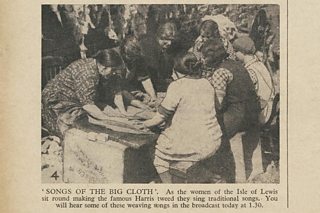
All three stages of the tweed making processes - carding, spinning, weaving, and waulking - had their own songs. Waulking (pictured above) was done to soften the cloth and it is said the quality of the cloth could be measured by the number of songs sung during the task. The Harris Tweed traditional industry survives today, even if the singing of waulking songs is no longer required.
Some things change…
Many of us now access newspapers and news information online, but this BBC Genome listing from 1929 shows how much has changed for the newspaper industries in the last 90 years.
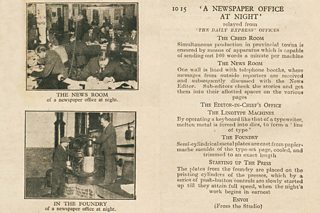
From the wall of telephone booths in the newsroom waiting for calls from around the country, to the foundry and creed room where the printed word was laid down and conveyed to the regions, it describes an industry very far removed from modern day newspaper production.
… some things stay the same
The listings demonstrate our long history of concern about the implications of changing technology, and fears of being supplanted by machines. A 1971 listing for Computers in Business tells us something about the beginnings of computer use in offices and how people felt about it. 'In my view the real problem is working out what the hell we're doing with these beasts.’
In 1978, this Horizon programme looked at the ‘sensational and frightening’ possible effect on jobs of a ‘i-inch square chip of silicon called a microprocessor, while Nation to Nation on Radio 4 in 1978 compared the effects on society of developments in silicon chip technology with those of the 18th Century Industrial Revolution which introduced seismic changes in the physical and social landscape of Britain.
A woman’s place
Genome listings clearly reflect changing attitudes to the roles of women in work throughout the 20th Century. A path from housewife to chief executive can be traced from the plethora of advice programmes on housekeeping in the 1920s to documentaries on top female executives in 2000.
Things started to change for women during World War Two when they had to either take on the jobs left vacant by men in the forces or join the armed services themselves. Seven million women were involved in the war effort and these roles were often in heavy industry, and sometimes in more niche roles such as the “lumberjills”.
The role of land girls who took over the duties of agricultural labourers during the war has been well documented in both factual programmes and drama.
The phrase first appears in the listings in 1939, two months after the start of the war. As recently as 2009 their contribution to the war effort was the subject of this successful drama.
However, even before Victory in Europe was declared on 8th May 1945, the listings reveal concerns about the role of women in the workplace, for instance a Home Service broadcast titled: Is Woman's Place the Home?, from March 1945. As the war's end drew ever nearer, women were advised to 'take stock' of their looks and think about preparing for their men coming home. In October 1945, another Home Service broadcast looked at issues surrounding women in the workplace, and in 1946, the issue of married women working was discussed as "a problem which most people will agree is far from settled yet".
The arrival of the contraceptive pill in 1961 (initially for married women only) enabled women to have fewer children and therefore become freer to go out to work. This, combined with the rise of the Women's Liberation Movement in the 1960s and 70s, the passing of the Equal Pay Act in 1970 and the Sex Discrimination Act in 1975 brought a huge shift in employment conditions for women. This can be witnessed in the listings as they again reflect the changes happening in society.
By the late 1970s we can see the idea of distinctive jobs for men and women being seriously challenged. The series A Man’s World in 1978 took on the whole concept of there being a distinct 'woman's place' in society and in this episode, women talk about working in traditionally 'non female' industries.
Coming more up to date, the series In Business shows how far the world has changed with this episode about ‘women’s work’ in 2009 which asks whether female qualities in the workplace might not only be as good as male ones – but might even sometimes be more beneficial.
The whole story of the changing role of women in the workplace throughout the 20th Century is beautifully encapsulated by the story of Bella the Welder who fought a thirty-year battle to be allowed to do a job she loved.
Can you find your job in the BBC Genome listings? Are there any other changes to working life that you have spotted?
