
The greatest show on Earth has come to an end, with glory for Team GB and thousands of hours of BBC coverage in the bag.
But there weren't always wall-to-wall, multi-channel broadcasts of the Olympic Games. In the early days of radio, there were only scant references to the event. In 1928, there was no live coverage and a sense that Great Britain was only going to compete after "doubts and difficulties" in a talk from a former sportsman.
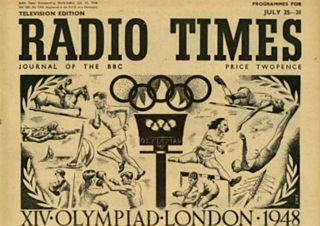
In 1936, the opening ceremony of the Berlin games was given star billing for a "description of the scene". But it wasn't until the first post-war Olympics in London that coverage of the games really came into its own.
The BBC was the host broadcaster and the event was televised for the first time. The Radio Times reflected this great occasion by creating its first Olympic front cover (above).
The home advantage was short-lived, however. For the Helsinki and Melbourne Olympics in the 1950s, television was in its infancy in the host nations, so it was back to quite limited radio coverage. An Australian games with its vast time difference and distance meant that UK listeners made do with recordings.
But the lull would not last long...
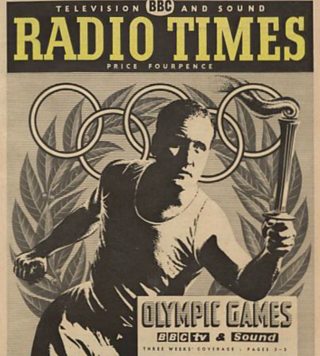
The Rome Olympics in 1960 saw coverage on BBC radio and TV reach a new level, with a striking cover for the Radio Times and a magazine packed with side panels and schedules to guide viewers. With another distant games from Tokyo four years later, recorded Olympic action was flown over the Pole by jet in an era when satellite technology wasn't yet the norm.
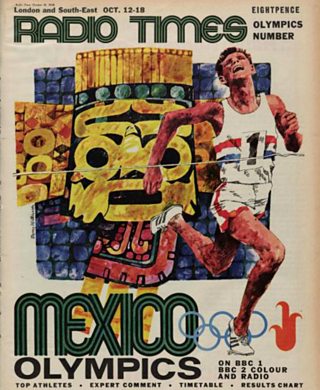
The 1968 Olympics from Mexico City was another watershed for the BBC. It coincided with the advent of colour (initially on BBC2) and the Radio Times cover mirrored this. The magazine even changed its regular title font for the occasion. This was a growing era of satellite broadcasts and schedules which dealt with a time difference similar to Rio 2016.
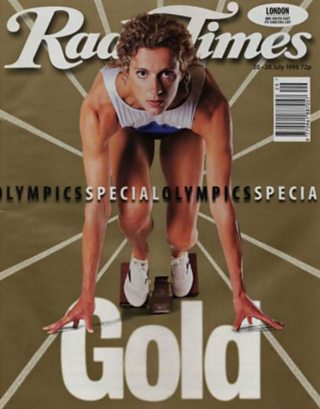
From the 1970s onwards, blanket coverage of the Olympic Games emerged. Radio Times covers switched from striking design to the sports personality, with the likes of Soviet gymnast Nellie Kim and homegrown superstars like Daley Thompson, Sir Steve Redgrave and Sally Gunnell (pictured).
A notable absence from the line-up of Olympics covers is Moscow in 1980, which was beset by a boycott led by the US. Great Britain attended but stayed away from the opening ceremony, while the Olympic flag was raised for gold medal winners.
So Tokyo 2020 beckons. How will the games be covered? More wall-to-wall coverage or a dedicated Olympics channel? Let us know your thoughts on games past and future.
