Casting Off… Extended interview with Doctor Who’s casting Director, Andy Pryor

The Doctor Who Team
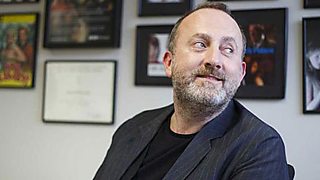
We recently included a brief interview with Doctor Who’s casting director, Andy Pryor, in our iWonder Guide to starring in Doctor Who, which you can see here. It generated a great response and we were asked if there was more to the Q&A, and could we publish it? Well, yes and yes! Here’s the complete interview with Andy talking about the casting process, Maisie Williams, choosing Doctors and much more…
Question: You’ve just received the script for the latest episode of Doctor Who, what’s your initial process in casting any new characters?
Andy Pryor: As soon as I’ve read a new script, I’ll talk the new roles through with the team, Steven Moffat, Brian Minchin and the Producer of that block (and also the Director, if they are on board at that point). Sometimes I’ll immediately have a few ideas (and often so will the team) that we’ll start discussing if it’s a question of casting someone with a little more “profile”. If it’s a bigger role like that I’ll then get a proper list together and check availabilities. We will then sit down with the list and talk it through and see if there’s anybody that we agree on offering.
This process is often very organic and sometimes at the end of that conversation we’ll have arrived at a very different conclusion than the one we started with. If the part doesn’t require a “big name!” then I will get ideas together and start auditions, bringing in a few really strong actors for each part. If the Director and Producer are available, we’ll audition them together and then show the results to Steven and Brian. More often than not, we’ll reach a consensus pretty quickly and then offer the role and start the process of contracting the actor.
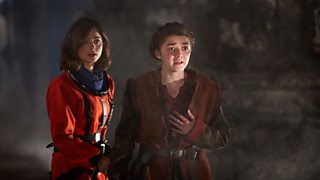
Q: Maisie Williams was cast in the role of Ashildr/ Me in Series 9 of Doctor Who – how did that come about?
AP: Steven had talked about the character in general terms for a while before he wrote her, so we’d been mulling over possibilities for some time with a fairly open mind as to type/age etc. Once we had the first script then we started to focus our thinking and one day I wondered about Maisie Williams (having loved her performance and development throughout Game of Thrones). A short while later I was speaking to Brian and completely coincidentally, he had exactly the same thought that day, so we discussed it with Steven and decided to go for it. We were thrilled that worked out and it’s a great example of an idea coming together nicely!

Q: How do you approach casting the main roles in the series – the Doctor and the companion?
AP: As far as The Doctor goes, it’s been different each time. Way back in 2004, when the series came back, it was about finding someone thrilling and unexpected, who had the skill and presence to make the part their own. We’ve retained these principles with each new Doctor, so Chris Eccleston set a really great benchmark for us in Series 1. He was someone who was familiar to a BBC1 audience but in an unpredictable way. Then as David and Russell had worked together on Casanova and as has been well documented before, Russell always said that Casanova was a great audition for the role. Then when Steven took over on the show, it was established and had a momentum of its own, which allowed us to find someone who was brilliant, experienced but not yet overly familiar to the audience. For this particular casting, we weren’t consciously looking for someone younger. A lot was made of Matt’s youth at the time but the simple truth was that he gave the best audition and completely nailed it. Then when it came to number 12, we all agreed that it felt like just the right time for Peter. He came in and read, with me playing Clara and Steven’s cat walking into shot (we did it in Steven’s living room) and that was that. He was our new Doctor.
In casting the companion, it really very much depends on what sort of character Russell and Steven have wanted to write. Generally speaking it’s been a much more involved version of what we do in casting another major guest role – thinking laterally and creatively and usually trying people out with specially written scenes initially and then recalls with the incumbent Doctor. It’s different every time and in some ways the most rewarding of casting jobs, as it’s so crucial, so key to the show, yet there are so many possibilities we can explore.
Q: There are loads of actors out there – how do you keep up-to-date with who’s good, and who might be good for Doctor Who?
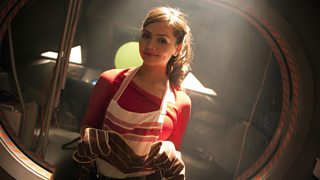
AP: Casting Directors spend a great deal of their time dealing with agents and staying up to date with who is new and how careers are developing. We also see a lot of theatre, television and film and stay abreast of as many people, new and established as we reasonably can. We work on many other projects, which has the benefit of meaning we meet a large volume of actors across the year and one job can often feed into another. For instance, I had cast Jenna Coleman in “Dancing on the Edge” for Stephen Poliakoff, in a relatively small part and loved her, so she was in my thoughts when it came to casting Clara.
Q: What’s your advice for anyone looking to get into acting, and what is the success rate like for ‘making it’?
AP: I can’t pretend it’s an easy career. The proportion of actors out of work at any given time vastly outweighs those that are working. Competition is fierce and much depends on luck. Actors face a lot of rejection, more so than most professionals. However, when it works out for you it can be a hugely rewarding career. The best advice I can give is for people to get as much experience as possible (whether that’s at school or college.) Drama school is a great route, as it offers the best opportunity to be showcased to agents and Casting Directors. Actors on the whole do really need an agent in order to hugely increase their chances of getting seen for auditions.
