

Airbus' military adventure: Is an A400M deal in the air?
"Common sense will prevail," the smiling aviation expert tells me. "They'll do a deal now, and in my opinion it will be this week."
Could it really be that soon? Could this controversial aeroplane, three years late and billions of pounds over budget, finally be settled?
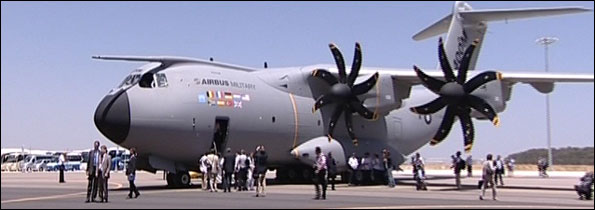
It is beginning to look like it. The gap between EADS, Airbus' parent company, and the seven European nations buying the new military cargo plane has narrowed. In an investigation I've made for Inside Out West on BBC One, Philip Lawrence, who's been watching this project from Bristol since its birth in the 1980s, tells me it will happen very soon.
"The countries have come back to EADS with a decent offer," he says, "and now the company must decide. I think they will do a deal this week."
Originally the 20bn euro budget was bust by some 11bn euros. After cuts on the programme the real gap was 7.6bn, of which EADS was prepared to take 3.2bn itself. A game of extraordinarily high stakes poker followed. Led by the French, who are particularly keen on both the plane and the 10,000 jobs it has created, the nations buying the A400M offered another 2bn euros on the pricetag.
The gap was now 2.4bn euros. Yes, 2,400,000,000 euros.
Still a rather large number, even for a European aerospace giant.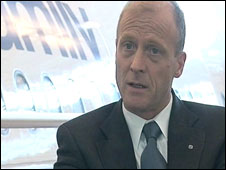 Then, in January, Airbus called the nations' bluff. Tom Enders, the Airbus Chief Exec, threatened to cancel the plane. That's right - call the whole show off. Unless the nations "came up with a contribution".
It worked. You don't easily get seven European defence ministers to agree on anything much, but they all want this plane. They think our Hercules fleet is too old, and they don't want to replace it with American C-17s or C-19s.
Another 1.5bn euros appeared; this time as export guarantees, not cash. But good enough.
As I write, the gap is now a measly 900m euros. OK, nearly £800m, but we're "in the ball park," as one analyst told me. Defence ministers meet in Spain on Thursday, and it could happen that soon.
"I think there's a good chance that we can come to an agreement." Tom Enders told the Financial Times on Friday. "But you won't see me being enthusiastic. It would be good news for suppliers and employees, but financially and resources-wise it would remain a burden for years to come."
Because this is a military plane, journalists are fond of battling metaphors. But in this deal, that misses the point. Although both sides want the other to pick up the bill, neither can afford a knock-out blow.
The nations buying the plane need Airbus. Some 10,000 jobs directly depend on the A400M programme across Europe. Former Royal Navy logistics officer Derek Forsyth, now with Sula Aerospace of Stroud, put it like this. "There would be too much damage to the industries of the UK, Germany, France, if it were stopped - and the reputation of Airbus would be trashed."
And Airbus, of course, needs the countries. There aren't too many customers for military transport planes. I'm guessing the Pentagon isn't at the front of the queue. Yes, in time the plane will sell round the world, but Europe is the home market. So this is the only deal in town.
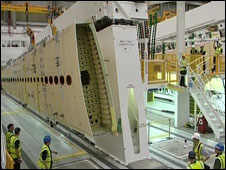 While they haggle, Filton is holding its breath. As ever they make the wings here, and when they rolled out the first completed aircraft, I went with dozens of staff on a special flight from Filton to Seville. When the plane finally took to the air last December, all 800 on the project here stopped work to watch, and applaud.
But don't expect them to crack open the champers when a deal is struck.
 Yes, Filton's teams and the thousands of other engineers across Europe will get on with making these astonishing aircraft. But Airbus will still be left with a bill of between three and four billion euros. The numbers are staggering, and I can't help worrying that aerospace workers across Europe will end up paying for it.
But the final surprise in this tale is this. A 3bn euro overspend is, well, OK actually.
"It's a big hit, yes, it's a big charge against the company's finances," Professor Lawrence tells me, "but it's one Airbus can recover from. The aerospace recession has not been as bad as feared, and the civilian planes are selling well. It's not ideal, but this is a huge programme, and Airbus can take the hit."
Two bits of video for you here, first the full 'bluff-calling' interview with Tom Enders, on BBC World in January.
In order to see this content you need to have both Javascript enabled and Flash installed. Visit BBC Webwise for full instructions. If you're reading via RSS, you'll need to visit the blog to access this content.
And second, the plane itself, in the skies over Seville, making its maiden flight in December 2009.
In order to see this content you need to have both Javascript enabled and Flash installed. Visit BBC Webwise for full instructions. If you're reading via RSS, you'll need to visit the blog to access this content.
 Hello, I’m Dave Harvey – the BBC’s Business Correspondent in the West. If you’re making hay in the markets or combine harvesting; scratting cider apples or crunching tricky numbers – this is your blog too.

Comments Post your comment