BBC BLOGS - West Country Cash

Archives for December 2009

Green or Black? Bristol's biofuel dilemma

Dave Harvey|12:48 UK time, Tuesday, 22 December 2009

If muck means brass, Avonmouth should be booming. For decades the port and its hinterland has been the mucky industrial heartland of the West. Giant oil depots, huge heaps of coal, acres of haulage. And everything, but everything, driven by carbon.

6m tonnes of coal comes into Bristol port every year

We never called it a "high carbon economy", but now that low carbon is the holy grail, an industrial zone like Avonmouth looks distinctly, well, twentieth century.

So plans for one old abandoned factory have captured people's imagination. The Sevalco plant used to make Carbon Black, the ultimate mucky industrial product. Vital to all sorts of industries, it makes car tyres black, amongst other things. I was there early in 2009 when the company closed it, costing 90 guys their jobs.
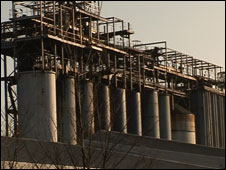
The old Sevalco works at AvonmouthWell now an entrepreneur plans to take this aging sooty factory and turn it into the ultimate green power station. The tangle of pipes will go, but the huge oil silos will remain, to be filled with vegetable oil. Enough to fry chips for all Bristol, but this oil will be burned for power. Giant turbines will turn, and 50 megawatts of electricity will feed the national grid. Without an ounce of fossil fuel, and - says the entrepreneur - with very little net carbon dioxide.

It's an attractive theory. You grow crops, which capture CO2 from the air. You crush their seeds or nuts and extract oil. You burn the oil and create electricity. You grow the next crop, and the cycle continues. Yes, there are inefficiencies: tractors on the farms and factories crushing the seeds will emit CO2. Crops will grow best in the tropics, so ships must bring the oil to Avonmouth, emitting more. But fossil fuels emit CO2 that has been trapped deep underground for hundreds of thousands of years; the fuel crops can't lose, can they?

I've been investigating the biofuel plans for Inside Out West, our documentary series. It will air in January, just days before Bristol councillors consider the plans on 20 January 2010. And this has to be one of the trickiest balancing acts they've had in a long time.

I went to a public meeting on a cold night in December, and it was packed. I counted 50 people, and there were apologies from dozens more. The opposition is implacable.

"Frankly, I'd rather see a coal power station," one activist tells me. "At least we know that's bad and needs limiting. This gives the illusion of clean energy, but is anything but."
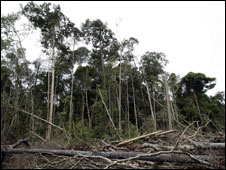
Logging in Sumatra, IndonesiaThere are three big worries. First, much of the vegetable oil is Palm Oil, grown in Indonesia and Malaysia. Vast swathes of rainforest are being cut down and logged, and then palm plantations are grown. So increasing the demand for palm oil, say the activists, is a direct invitation to rip out more rainforest.

Second, the palm oil companies are accused of clearing villagers and wildlife from the land indiscriminately. Search the web on the subject, and you soon find films featuring indigenous people ejected from their homes. Gibbons and orang-utans are shot, it is claimed, so that the march of the palm can continue.

Third, the growth in palm oil is usurping food production in poor countries. Faced with the vast profits they can make on palm oil, why would an Indonesian company plant rice?

Doesn't look so green, all of a sudden, does it?

And yet ... "We aren't using any of that oil," the man behind the new power station tells me. "We're using sustainable oil, which has nothing to do with ripping out rainforests, shooting gibbons, or starving the third world."

Chris Slack is a new player in energy. His company, W4B, lists Salisbury as its head office, and has no previous experience. They are not an oil firm trying on new clothes, but project managers who've spotted an opportunity. Mr Slack himself worked on the original FairTrade project, helping small Caribbean banana farmers find a fair price for their crop.

"To qualify for the government's renewable subsidies, we have to use sustainable oil," he continues. He has great hopes for Jatropha, a new crop that grows on scrub-land and yields huge amounts of oil. And 'Sustainable Palm Oil', he tells me, is now bought and sold like organic coffee.

Problem solved then? Sadly, no. In south Bristol, I meet a wildlife film-maker who tells me she has seen first hand plantations growing so-called "Sustainable Palm Oil".

"I've seen them shooting gibbons right there," she tells me. "Villagers say the land was cleared right through their village. And when the oil arrives here, it is stamped "sustainable". It's a piece of greenwash, nothing more."
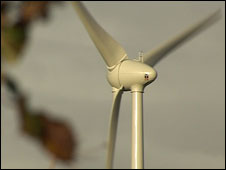
50 more wind turbines, or a biofuel plant?Mr Slack has offered an independent auditor to check the green credentials of his oil. And he points out that to make as much electricity from wind, Avonmouth would need 50 new windmills.

The arguments rage on, and I wonder if we have a new axiom for our times.

Where there's muck there's brass, maybe. But where there's green energy - there's an almighty row.

What do you think of the Avonmouth plans? Join the debate here, or if you want to be involved in the film, email me at [email protected]. And look out for Inside Out West, BBC One, Monday 18 Jan at 7:30pm.
Airbus cargo plane flies - straight into a diplomatic firestorm

Dave Harvey|15:45 UK time, Friday, 11 December 2009

"It was a bit like having a baby," smiled Paul Evans, "although it took a bit longer."

In order to see this content you need to have both Javascript enabled and Flash installed. Visit BBC Webwise for full instructions. If you're reading via RSS, you'll need to visit the blog to access this content.


Engineers, especially aircraft engineers, have a way with words. 127 tonnes of cargo plane, six years in the making, is some baby. Still, all the complicated carbon fibre development and international wiring diagrams faded away when the 700 people at Filton watched the A400M leave the ground.

"Just fantastic," continued Paul, "to see it in the air at last makes it all worth while."

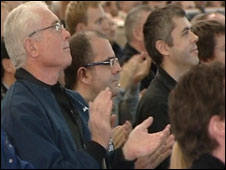
Airbus don't mess around with these events. The huge 'Wing Assembly' factory at Filton, near Bristol, had been converted into a small stadium. Giant screens showed live pictures from the test flight in Seville. Production stopped, and every member of staff got a new polo shirt emblazoned "LIFT OFF".

Filton workers applaud the take-offAs ever, Filton makes the wings. The entire assembly is made here, with components from across Europe. But the clever stuff is the carbon fibre they designed here.

The carbon fibre wings are strong enough to lift armoured cars and helicopters into the air, yet light enough to cut fuel consumption by a third. But to use the new "carbon fibre composites" in a plane this big means literally re-inventing the wings.

"It's a great day for the guys here," Tom Williams told me. He's the UK man on the Airbus board, and he always gives credit to the men and women who actually make the planes. But he knows the first battle this military plane will have to fight is in the boardroom.

A400M is late. No question about that. They thought it would fly 2-3 years ago. Then when I watched it 'Roll-out' in a grand ceremony in Seville last summer (June 2008), they said it would fly by Christmas (2008).

So why the delay? Our old friend, pan-European co-operation.

"They could have bought an engine off the shelf from Pratt & Whitney," explains local aviation expert Prof Philip Lawrence. He's watched this project for ten years, when it was the "Future Large Aircraft", and knows what held it up.

"The governments who are buying the plane insist - quite reasonably - on sharing out the work. So they set up a pan-European company to make the engine. It's a great engine, there's no problem with that, but it's definitely caused a year or eighteen months of delay."

Tom WilliamsThis is not normal business. As Tom Williams put it to me, "commercial customers don't tell us where to buy our landing gear." But even though the delays can reasonably be blamed on the politics of pleasing seven defence ministries, the bill stops with Airbus.

For some inexplicable reason the original contract signed six years ago made Airbus liable for any costs of over-running. Now the plane is in the air, serious discussions will be had about who picks up the bill. "We can't produce the aircraft unless the contract is renegotiated," Tom Williams told me, "it's just not viable for us. And the the military need this plane, right now. So something will be worked out."

The RAF can't wait. The Hercules fleet that fly out of Lyneham, in Wiltshire, is ageing. The new Airbus plane can fly lower and slower, ideal for dropping food, medicines, disaster relief. It can fly higher too, becoming a tanker for air-to-air refuelling. So they need the MoD to sort out the paperwork fast.

Sceptics out there said the plane would never fly. As recently as the spring, articles were appearing claiming the whole project was too expensive and would be scrapped. Well, today the engineers proved them wrong.

"We like solving problems, that's what we do," Paul Evans told me on the assembly line. Now we'll see if the civil servants and Airbus management are as good at sorting out the contract.

Shopping with the Chancellor

Dave Harvey|17:19 UK time, Wednesday, 9 December 2009

They've had acrobats on the roof. Catwalk models twirling in mid-air. Shoppers at Bristol's fancy new shopping centre are used to elaborate sideshows, but today they had a new treat.

BBC2's Live Pre-Budget Report Show descended on Cabot Circus, for that "let's get out of London" factor. Real reaction they wanted, from real businesses.

I suggested a few people for them, and went down to watch the fun. It's always nice watching high budget telly, and this was no disappointment. Lights, props, even a steadicam like the one on Strictly. Proper job.

The real show, of course, was in Westminster. The once dry "Autumn Statement" now turned high political theatre as Alastair Darling juggled the biggest deficit in peacetime history. So, what did our west country panel make of it?

"Not a lot, to be honest." Dr John Savage, Chief Exec of Business West, one of the main voices of collective business in these parts.

"Not much encouragement to take people on," he continued, "a few scraps here and there, but no detail on the big hole, the big gap in the budget which I fear will lead to substantial unemployment in the public sector next year."

As you probably know, a lot of people work for the government round here. A quarter of the Bristol workforce, 40% in Bath, a third in Swindon. "Public spending restraint" has a chilly sound to it in these parts. But detail on the cuts? Nothing, Dr Savage lamented.

What of the small business then? The uber-chic digital creatives that make Bristol funky? The Banksys and Aardmans of the future? The Chancellor gave "creatives" a mention, offering a £160m investments to hi-tech and creative industries.

"I felt very special for all of about 10 seconds," smiled Jaya Chakrabarti, ruefully. Jaya runs Nameless, a digital marketing firm, and she was a little, well, underwhelmed.

"Most creative businesses are tiny, micro businesses with under ten people. We're not going to be able to take advantage of the 10% on patenting, cos we're too small. And while it's nice not to have the hike on corporation tax, that's not so much a gift as a punch that never came."

What a miserable lot, Labour supporters might fume. What do they want? I should stress that I have no idea of the party loyalties of my guests, they're just people who know west country business. And their complaint wasn't that the Chancellor had done the wrong things, or not done the right things. It was more that he told us the debt would drop by £90bn or so in four years, but gave little idea how.

Stella Weekes is probably the most positive of the lot. Stella runs a big recruitment firm in Swindon and Bristol, and has seen recessions come and go.
"It was nice to see something for young unemployed people," she smiled. "They need the training, and it's making a difference already when they come in looking for work."

But even Stella has a 'but'.

"But there was nothing for the over 50s, and it's them that we're really seeing through the door every day. They need help in retraining too, but I haven't heard a thing for them."

Cabot Circus was heaving today, full of shoppers looking for Christmas bargains. Estate agents tell me houses are selling again. Airbus have just sold another 25 planes to United Airlines, the wings, as ever, coming from Filton and North Wales.

Is this the recovery? Will good business bring in the tax revenues the Treasury needs to close that gap? Or will next year be, as one man put it to me today, 'the year of the axe, the year the recession enters Chapter 2: The Public Crash'?

Beef, badgers and belching cows in Somerset

Dave Harvey|16:03 UK time, Monday, 7 December 2009

It's like the Bath & West Show without hot tubs.

Or Human Cannonballs.

The South West Winter Fair

But still plenty of rain, and beautiful, groomed and primped cattle.

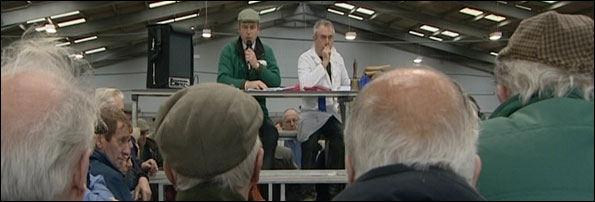
The Winter Fair is very much the Farmer's Fair. A huge shed full of the best cows, sheep and tractors in the South West, and a sea of waxed jackets and weathered faces.

It's held at Junction 24, the new livestock auction centre they built at, erm, Junction 24 of the M5. Direct people, farmers.

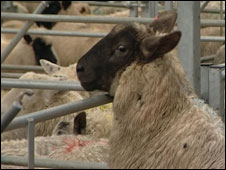
The sheep that climbedThe show itself was heaving. I was reminded again that farmers live in a parallel universe to other businesses. Auctioneers told me that 2009 had been "a good year, sometimes a great year". Prices are up, plenty of animals are coming to market. Partly because the weak pound has made British beef and lamb relatively cheaper than Irish, partly because when times get tough, food always does well.

But you'll always hear grumbling about the Three B's of Beef.

Badgers are first. Type "badgers, cattle, TB" into a search engine, and you'll see why. Bovine TB is still the No 1 headache for a beef or dairy farmer, striking apparently at random, decimating perfectly healthy herds. It's heart-breaking, and commercially disastrous. Is it the badgers' fault? Everyone here thinks so, and they want to see proper vaccinations, and culling of diseased badgers.

"Who's killing the most badgers?" the man from the National Beef Association asks me. "Not farmers, but Hilary Benn (the environment minister). He's the one allowing thousands more badgers to get ill. He should cut out the cancer once and for all."

There are several other sides to this argument, but I won't hear them here. Animal welfare charities rarely take a stall at a cattle market.

I run into the dynamic Derek Mead, known to everyone in the trade, and never short of an opinion. He set up Junction 24 and he's president of the Winter Fair. And he's talking about my second B.

Derek Mead"Brazilian beef is coming back," Derek warns a friend of his. South American beef has been largely banned in the EU following concerns over foot and mouth on the continent. But now, Derek hears, it's on the way back.

"They'll let in meat from 800 farms first, but before you know it it'll all be in. And they've got all five varieties of foot and mouth, it should be banned outright until it's clean."

Brazilian beef is also, of course, dramatically cheaper than British.

My third B that gets cattle farmers going is usually 'Bureaucrats', but today it's been usurped.

"Belching. Would you believe it?"

Christopher Thomas-Everard, Exmoor cattle man and a big noise on the National Beef Assoc, has been studying gas. As the world turns to Copenhagen for climate change solutions, emissions from cattle have attracted attention.

Methane, from either end of a cow, is much stronger than CO2 as a global warming gas. So beef and dairy farmers have been painted as worse than a belching power station. But their critics forget the grass, Mr Thomas-Everard points out.

"Just this week Sydney University has discovered that close-cropped turf, which puts down deep roots, captures more methane in a day than a cow emits in a year."

He's thrilled. A lively countryman who started farming in 1966, Christopher can't believe he's ended up an expert in, well, bovine emissions.

But they've always said a good farmer can turn his hand to anything, haven't they?

Sugar, but not much sympathy, from Sir Alan

Dave Harvey|17:11 UK time, Thursday, 3 December 2009

I was making my Christmas chutney when the call came in.

"Sir Alan's in town, he can meet you at Ashton Gate at 12.30 tomorrow."

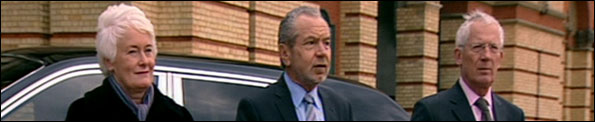
Sir Alan with Nick and Margaret in The Apprentice
I felt like the poor saps in his show, The Apprentice. Tumble out of bed at 5 am, make a hash of some impossible money-spinning challenge, then meet S'rAlan in the boardroom for a dressing-down.

And if you think he's tough on his TV wannabes, you should see him with reporters. When my colleague in Newcastle asked him about his new role as an "Enterprise Czar", Sir Alan barked: "That's a pretty nasty question...."

So, I left the cranberries to simmer quietly, and grabbed my notebook.

I arrived early at Bristol City's stadium / conference centre, and popped into Al's Tikka Grill up the road for a fortifying cuppa. Inside, everyone had a question for Sir Alan.

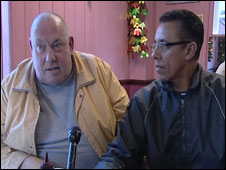
Bob Petrie and Phil Charles"Can he lend us a few bob?" laughed Bob Petrie. Bob's a glazier, been in business 42 years. "Never known it as tough as this," he told me, ruefully. And you know the villain, don't you?

"The banks just aren't playing, still," he tells me. His mate Phil tells the story best. "When a guy who's been in business 42 years goes to his bank for an overdraft, and they say no - after taking his money every week: what's it coming to?"

The trouble is, Sir Alan has form on this. He loves small businesses, yes, but in the Lords last week he used his maiden speech to hit out at 'moaning firms'.

"Government and banks can't just write out blank cheques to anyone who thinks they've got a good idea," he told their Lordships.

Hmmm. Right oh, Bob, I'll try and ask him for you....

Ashton Gate had become a fortress. Years ago, I worked in Manchester and got used to the extreme security at Old Trafford. Bristol City is much more relaxed, on match days. But today, ranks of PR people checked our IDs. A security man escorted me and Andy the cameraman to the Director's Lounge. We both know the way, but we followed politely. Everyone's on edge.

In we go then. The man from the Western Daily goes first, and asks him harmlessly enough about the small firms he's been meeting. What are they asking? What is he saying? Eventually, Sir Alan has had enough.

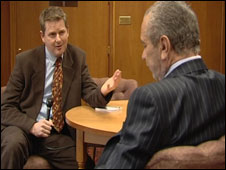
I meet Sir Alan "Look, the best way for you to find out is to come and listen in this afternoon," he splutters. "Why don't you do that?"

Because your PR people have banned us, Sir Alan, we politely explain. There's a small scene. Sir Alan looks to the PR minder. "Can they come and sit in?"

"Well the problem with press attending the sessions in the past has been..." she starts explaining.

"Right, there's a problem - just say no then," barks Sir Alan.

The well-groomed PR woman continues with polite explanation, but is interrupted.
"No, no, I've overstepped the mark, you can't come in, just tell him no."

It's almost a scene from the show. The interviews, curiously, are much less box-office.

On the recession: "We won't know we've come out until afterwards, it's not that easy to tell."

On making it in business: "Focus on what you're doing. Work out what's going well, and what's not, and do more of what's going well."

It's all a bit, well, ho hum.

Until I ask about those pesky banks.

"It's no good people just relying on anecdotes", he tells me, and I sense this might be a bit more interesting.

"The Federation of Small Businesses tell me the banks aren't lending, and said to them, I deal in facts, not anecdotes. Give me some examples. I met with them in July, and since then they've sent me four. Banks like lending to small businesses, they're full of cash. I just don't believe it."

There's more. Watch for yourself.

In order to see this content you need to have both Javascript enabled and Flash installed. Visit BBC Webwise for full instructions. If you're reading via RSS, you'll need to visit the blog to access this content.


For a man who says he's the champion of small business, he's surprisingly defensive of the big banks.

But otherwise, the man who gets TV bosses fired up was, well, about as controversial as a Bristol bank manager.

BBC © 2014The BBC is not responsible for the content of external sites. Read more.

This page is best viewed in an up-to-date web browser with style sheets (CSS) enabled. While you will be able to view the content of this page in your current browser, you will not be able to get the full visual experience. Please consider upgrading your browser software or enabling style sheets (CSS) if you are able to do so.