BBC BLOGS - West Country Cash

Archives for June 2009

Today Fishponds, tomorrow the world...

Dave Harvey|07:55 UK time, Tuesday, 30 June 2009

Graham New is a Bristolian whose fortune lies in a good dose of envy. People, mostly women but increasingly men, often wish their hair was a different colour.
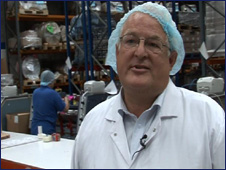
export_300609_graham_new.jpgOut of this human foible are big businesses built.

Big names like Wella, L'Oreal, Garnier and the like brew up the Honey Highlights and the Beach Blonde tubes. Less famous, but equally vital, are the little bits of tin foil they stick on your head to stop the colour leaching and protect your scalp.

And Graham New sells the foils. Procare, his firm, has pretty much cornered the market in the UK. They sell 75% of the foil used in salons. And a new gadget he's created now dispenses the foil strips in handy lengths, saving the hairdressers' fingers from annoying foil cuts.

But with the UK conquered, Mr New wants the world. So, how do you get to Oman from Fishponds? And do they want their highlights there?

They're banging the drum for export in Bristol today. Oddly, in a city built on trade, we seem to be lagging behind a bit when it comes to flogging West Country goodies all over the globe.

Of every pound earned abroad by UK PLC, just 4.8p came from companies based here. The North West does twice that.

export_300609_big_roll_still.jpgUK Trade & Investments (UKTI) is the quango paid to get firms exporting like there's no tomorrow. And they're running a special event aimed at small firms in the west in the city centre. Small companies are rarely frequent flyers, they have no budget to swan off and schmooze the Swedes or chat up the Chinese. So UKTI have brought the world to Bristol.

People from China and the Caribbean will be there, Oman, Mexico, Russia, the US, you name it. Michelle Mone, the underwear entrepreneur turned TV Pundit will offer her wisdom.

And in the audience, Graham New. "I'm hoping to learn a few tricks", he tells me. "Anything to get into a few more countries."

Oddly, it seems the recession has helped the export drive. Russell Jones, the Director of UKTI for the South West, used to find it hard going convincing small businesses in Taunton or Bradley Stoke that the global market mattered.

"Now, they all know it matters hugely", Mr Jones tells me. "They all watched the world go into recession. One part of it caught a cold, and soon the rest followed. Now no-one thinks we're an island any more."
The milk price war in black and white

Dave Harvey|17:11 UK time, Tuesday, 23 June 2009

Banking one day, milking cows the next. That's the joy of this job! And today I'm off to the centenary celebrations of the British Friesian Breeders Club.

For 100 years now dairy farmers here have bred and milked the famous black and white cows that started life in Holland. Three hundred of these farmers will gather at Ben Pullen's farm just outside Gloucester and raise a glass to their breed.

So what's the story, you may wonder? Nice jolly if you like cows but otherwise...?

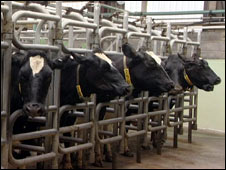
Friesian cowsWell, Mr Pullen thinks his ladies may be a secret weapon in the dairy war. For a year now the milk price has been falling, and farmers who just sell milk are getting hammered. As one put it to me in Somerset the other day: "You have to get big, get niche or get out."

Then last week, one of our biggest co-ops, Dairy Farmers of Britain, went bust - leaving 1,800 farmers without a market for their milk.

The reasons why are actually closer to banking than milking.

Over the last few years India and China have got richer, and taken to ice cream, yogurt and all things milky. By mid-2008 the price of milk had shot up and farmers here were in clover.

Then the global recession hit, and Chindia's middle classes stopped spending.

Milk products, especially whey, are used in all kinds of processed food. And in a recession, processed food sales dip.

So where do our Gloucestershire Friesians come in? Well, most of the world's milk comes from Holstein cows, bred in the US for massive milk yields. A dairyman I know near Taunton joked to me that if you put a Holstein in a field, "they gather round the gate and look longingly at the barn".

But purebred Holsteins burn out, according to Ben Pullen, the chairman of the Friesian Breeders Club. After a few years of massive milking, they just fade away.

If they are the fast food joints of the milk trade, his beloved Friesians are the slow food brigade. They live longer, graze outdoors and, yes, produce a bit less milk. Crucially their male calves can be raised for beef, unlike the Holstein boys who are good for nothing commercial, and usually shot at birth.

The secret then, is a bit of cross-breeding. Mr Pullen reckons that a Holstein-Friesian cross produces almost as much milk but lives much longer and costs you less in vets' bills.

So as they raise a glass to the black and white ladies, the Friesian breeders are challenging dairy farmers to abandon the big-milking Yanks and take life a little slower.

Are you in the dairy business? How's the turbulent world milk market affecting your trade? And does a bit of Friesian juice in your herd make the ladies live longer?

C&G: A brand without a branch?

Dave Harvey|14:35 UK time, Thursday, 18 June 2009

So the axe falls in Gloucestershire.

Five months after Lloyds TSB merged with HBOS and announced they had to cut £1.5bn from their costs, the first big cut hit home in the West Country.

Some had worried they would axe the C&G altogether. Why keep a medium-sized mortgage house when you have captured the castle, the UK's biggest lender: Halifax?

Optimists had soothed that the C&G had survived one merger (with Lloyds in 1995) and was "untainted" by the banking crisis. There is something in this. Indeed, most people don't even realise the C&G is part of Lloyds after 14 years.

Instead, the bean-counters have split the difference. Keep the C&G brand, offering mortgages and savings, but close all 164 branches. 833 full-time jobs will go. (Here's how they describe it in full.)

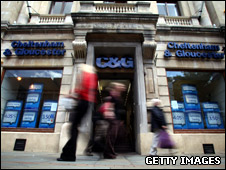
C&G branch in Westgate StWalk down Westgate St in Gloucester, and you see their point. The beautiful Georgian C&G building is just two doors from the sign of the Black Horse. When it closes in November, customers will simply walk into Lloyds 10 yards along the road.

In fact, the bank's review found that the "overwhelming majority" of C&G branches were within 400 yards of a Lloyds or Halifax.

In Broadmead, Bristol you can see Halifax, Lloyds and the C&G from the same spot. From North St, Taunton you just walk round the corner to Fore St to find the Lloyds branch.

You can imagine the bean-counters wandering round shaking their heads at all the rent, the shopfitting, the wages being doubled and trebled round the country.

Obviously there are 833 people today who have lost their jobs. 833 more credit crunch casualties. And as staff proud to work for a highly successful bank that had steered clear of the global storm, they probably feel a bit sore that they are paying the price for the gambling at HBOS.

But in Barnwood they are sighing, slowly, with unsure relief. 1,200 people there run the C&G's head office operations. They check mortgages, invent new products, dream up marketing campaigns. For now they are safe. But for how long?

Apparently only 6% of business comes to the C&G through the door of a branch. Makes sense doesn't it? You're buying a new house so, logically, you pop into a random bank with a nice logo and ask them to lend you some cash.

No, these days people scour the price-comparison sites, the papers, the brokers to find the best deal. And the C&G will still pop up even if the only building with its name on is on the outskirts of Gloucester.

Won't it?

Can a brand survive without 164 reminders of its real presence all over the UK? And is Gloucestershire a little poorer tonight, as one of the county's biggest names passes into High St history? Thoughts please...

A bigger airport for Bristol?

Dave Harvey|13:37 UK time, Thursday, 18 June 2009

So now the talking is over. At least, your chance to change the minds of airport bosses as they mull on their plans to expand Bristol International Airport is now over.

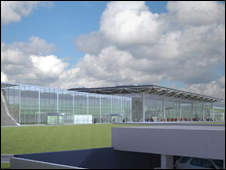
CGI image of proposed Bristol Airport terminalOn Tuesday they popped their Planning Application through the door of the council offices in Weston. Now everyone else gets six months to read and react before councillors say yea or nay.

Airport expansions are always noisy affairs. Type "Heathrow runway" into a search engine and watch your computer smoke. (Here's a pint-sized BBC summary version.)

This one is no exception, and the opposition is well organised. "Stop Bristol Airport Expansion" is a group which does exactly what it says on the tin.

"They've listened, but they've not changed anything," their spokeswoman Hillary Burn told me. "They may have changed the car parks a bit, but it won't affect the noise, the traffic or the increase in planes."

In part, she's right. When I asked the Airport Chief Exec, Robert Sinclair, what had changed after a massive public consultation, he pointed me to the car park. It has moved - on the plans - and it's a bit lower than it was. He also says they've capped night flights and noise at 2006 levels, though the opposition dispute this.

But ironically, the battle is on the ground. North Somerset councillors can stop the airport putting up a new terminal building, make them widen roads or plant trees round car parks. All of which feels like a dance round the elephant.

It's the planes the protestors don't like. Sure, they'll use arguments about car parks and buses and fuel trucks. But when the airport says they want to increase passengers from 6m in 2009 to 10m in 2019, their opponents go white with climate shock.

But here's the rub. Mr Sinclair could pile millions more passengers through his airport without asking anyone. I've seen graphs of how busy the place is now, and it's no great scoop to reveal the peak hours are early morning and tea-time. And August is busy.

Well, they can increase passenger numbers just by filling in the gaps. And adding more planes at those already busy times. The queues at security will grow, you'll have to park in Whitchurch and squat on the floor waiting for your flight. But the planes will take off. We'll probably hit 10m passengers a year without laying a single new brick.

So the plans for a bigger terminal building and a five storey car park are about comfort, not climate change. The real row is, of course, about global warming and big jets flying over tiny villages. But they can't have that argument - they have to talk about roads and noise and traffic.

So over the next six months, watch out for huge interest in the traffic flows of Barrow Gurney and the Air Quality Count in Winford.

Here, we can have the real debate. Should Bristol, a city with a measure of green pride, buck the trend and cap its airport? Or if people are flying anyway, doesn't it make sense at least to fly local and cut the car journey? And what about those cute North Somerset villages: can 10m people get to the airport on an essentially rural road network?

Meantime, here's what Lulsgate looked like when they opened it back in 1957.

In order to see this content you need to have both Javascript enabled and Flash installed. Visit BBC Webwise for full instructions. If you're reading via RSS, you'll need to visit the blog to access this content.


BBC © 2014The BBC is not responsible for the content of external sites. Read more.

This page is best viewed in an up-to-date web browser with style sheets (CSS) enabled. While you will be able to view the content of this page in your current browser, you will not be able to get the full visual experience. Please consider upgrading your browser software or enabling style sheets (CSS) if you are able to do so.