
Minibeast Adventure with Jess comes to CBeebies from Easter Monday (21st April) at 10:30am, ready to introduce your little ones to the incredible wildlife they can find very close to home. We had a chat with presenter Jess to find out more about this brand new show...
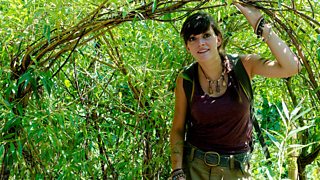
Hi Jess, can you tell us a little about Minibeast Adventure with Jess - what's the idea behind the series?
With so much technology around these days, children are generally spending less time outside and taking less notice of the amazing creatures we have right on our doorsteps. We've made this series to introduce children to twenty of the most common and interesting ones - and to encourage them to get outdoors and look for minibeasts themselves.
Each programme focuses on one particular minibeast - and all of the animals we feature can be found near where you live. Up in my treehouse, we have a close look at the creature, discover some of its special features, then we talk about how and where we might find it. Then, the children and I head off on a Minibeast Adventure to see if we can spot the creature in the wild. I absolutely love how excited the children get - they spot so many fascinating things, ask such interesting questions and are always amazed by what they find when they look closely.
Have you always been interested in insects?
Yes! My greatest childhood memories are of being in the woods with my dad, picking up logs and searching for minibeasts underneath. I was always fascinated by their little hidden worlds, amazing life-cycles and strange bodies. My interest grew as I learned more about them at school, and fuelled my desire to study Zoology at university. Through my degree, I learned lots about all sorts of different animals from the UK and abroad, but I never lost that passion for heading into my local woods at the weekend and lifting some stones to see what's about.
Why did you want to make Minibeast Adventure with Jess?
I have always loved being outdoors, getting muddy, searching for bugs, climbing trees and burning off all my excess energy! I think it's natural for children to love being outside, and given enough opportunity they make real connections with the natural world. Yet today's children spend so much time indoors - perhaps not knowing what they're missing. There are minibeasts out there for us to discover in our parks or gardens which are every bit as interesting as dinosaurs or lions and tigers, but so few children get the opportunity to go out there and find them.
When you take young children outside to look for minibeasts, it's so exciting to watch their reactions - you'll see this in the series: they make such intelligent and interesting observations and love learning more about the creatures they find. It's such an engaging way to teach children about the world - and exploring outdoors will really feed their natural curiosity. It's a great family activity, and even if you're a bit hesitant, most local parks or ecology centres will hold special children and family days with experts and equipment on hand to help you.
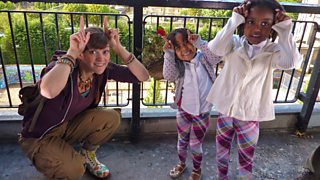
Can you tell us a bit about the location for the programme?
We start every show in my treehouse den, where I keep my minibeasts and various pieces of kit for watching them closely. Filming in the treehouse was incredible! It was set in the grounds of Amberley Castle, West Sussex which was absolutely idyllic - and most importantly, full of minibeasts! The gardens were the perfect place for bug-hunting, and the production team and I spent a lot of time peering under leaves and stones, finding amazing caterpillars, beetles and bugs.
There is also a huge pond below the treehouse where we watched dragonflies, water boatmen and pond skaters. We were really lucky, and had good weather the whole time we were filming - but the point of the show is that you don't need a fabulous garden or a bright sunny day to find yourself some minibeasts. We see this when we go off on Minibeast Adventures, when we visit children's own gardens, balconies, parks, ecology centres and patches of wasteland - in ALL kinds of weather! Wherever you live, you'll be able to find minibeasts.
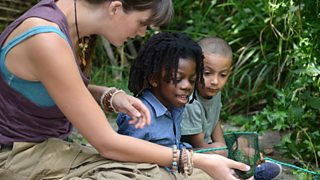
Do you have a favourite moment from filming the show?
One of my favourite moments was probably trying to catch flies - it was so difficult because they're so fast, but so satisfying when we finally caught them! We laughed a lot that day.
Another great moment was when the twins that we were filming with for our ladybird episode found some ladybird larvae after a really long hunt for adult ladybirds. I'd been looking all morning and not found any myself - so we were all very excited by that discovery.
There was another really memorable moment when little Judith was watching the close up camera shots of a slug she'd found and suddenly spotted the slug's breathing hole. She was so incredibly excited about what she saw, and, being deaf, immediately started to sign to tell me about her discovery.
What do you hope that children will learn from Minibeast Adventure with Jess?
The main thing I'd like children to learn is that there's a world of incredible creatures right on our doorsteps, and that searching for them is great fun! I hope the programme will encourage children to spend time outdoors, and build meaningful connections with nature that will last for their whole lives. Minibeasts are a great way for children to start to develop an understanding of nature, which I'm sure is why they feature in the KS1 curriculum. KS1 Science specifically sets out to 'develop a sense of excitement and curiosity about natural phenomena' - and that's exactly what you see happening with the children in the series. Within each show, children start learning to observe, test, record and classify data, see life-cycles in action and consider the varying habitats in their local environment. Above all, though, I hope that the series will help kids to get outside, be active and care about the environment. Our children will one day be the guardians of our planet's welfare, and if they've never had the opportunity to appreciate the wonder of the natural world, they're much less likely to want to protect it.
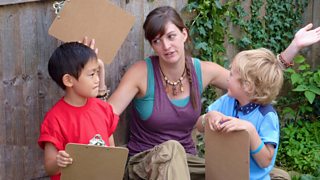
Finally, what's your favourite minibeast?
Well, that's a very difficult question! The thing I love most about minibeasts is that despite being so small, they are all vitally important and have specific roles to play in the wider ecosystem. That said, if I were forced to choose, my favourite would probably be one of the less loved species like spiders or earwigs - they get such a bad press, and need all the fans they can get!
