Magic Hands: Using BSL with your child

Mollie
CBeebies Grown-ups
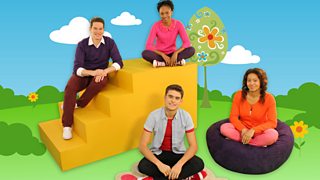
Magic Hands is a show featuring poetry for children translated entirely into British Sign Language. So we thought it would be interesting to hear from a parent of a child who is deaf and find out about their experience using BSL and what they think of Magic Hands.
Can you tell us a little bit about yourself and your little one?
Can you tell us a little bit about yourself and your little one?
My name is Louise and I am a mother to two deaf children Matthew who is 9 and Sophie who is 7. I was born into a deaf family and was the only hearing person in the family. My first language is BSL, I am known as a CODA (Child Of Deaf Adults). I currently work as a freelance sign language interpreter; I have been interpreting for the last 5-6years and qualified in 2011. My son Matthew became deaf at 15 months and my daughter Sophie became deaf at the age of 2 this is due to a progressive gene in the family. They both attend a mainstream school and use both sign and speech. We all communicate through sign language and speech. Both my children communicate with each other using sign and speech also.
How do you and your daughter use BSL in your day-to-day lives?
My daughter and I tend to use BSL on a daily basis more so without her hearing aids, she uses sign and speech at school but it is very English based!
How did you go about teaching BSL to your daughter?
I have always signed with Sophie especially at a young age, I remember filming her at about 2 and she signed all the animal signs i.e. duck, rabbit, dog etc. I also used a signing puppet that you can get from a specialist store which really helped.
Have you and your family enjoyed watching Magic Hands?
It is a big change watching Magic Hands as we have always had "Mr Tumble" which Sophie loves watching but, Something Special actually uses Makaton, not BSL. Although a lot of the signs in Makaton are based on BSL they are quite different - BSL is a language in its own right where as Makaton is a communication system designed to support people with communication difficulties.
My daughter loves watching Magic Hands and finds it amazing to see sign names that the presenters have created for themselves. Also the way poems have been portrayed in BSL which is entertaining but, I wouldn't say it is educational, as the way it is presented is very visual and not signed word for word.
I think it also reinforces her knowledge of BSL as she questions me on some of the signs that are used, which I think is good as she is aware that her signs may be different to other people's as we sometimes use family signs.
What do you think the two of you get out of the programme? Do you think it’s helped your daughter develop her BSL?
It's an interesting programme and shows that poems can be signed in BSL and in a visual way which is important for deaf children to see that there are deaf people that CAN be on TV and present the same way as hearing people.
My daughter has questioned me on some signs that have been used. She is in awe every time it is on and does not like being interrupted. She enjoys the range of graphic designs used which is colourful and incorporated into the signing of poems.
If you could give one piece of advice to parents who are trying to use BSL with their child what would it be?
To use online resources and DVDs. I also used to use Flash cards with different signs on and a finger spelling chart which I use to put up on the wall and go through each letter of the alphabet on a daily basis.
Do things as a family using sign language so you are all involved. Incorporate it into daily life so that way you are always signing to your child.
The NDCS offer a lot of support to parents and I have found them useful in the past especially with resources for after school clubs.
I’d also advise parents to learn BSL as soon as they find out that their child is deaf. It is so important that a child is able to communicate with their parents. It saddens me that some parents refuse to learn sign language which in turn will affect the way their child grows up as they need to have communication.
