Gaza Strip: communication saves lives
Mohammed Abu Asaker’s neighborhood in the Gaza Strip was bombed in 2009. His personal experience is helping him train journalists and humanitarian workers about the importance of practical information for people affected by conflict.

Mohammed Abu Asaker’s neighborhood in the Gaza Strip was bombed in 2009. His personal experience is helping him train journalists and humanitarian workers about the importance of practical information for people affected by conflict.
Radio Gaza FM has a huge social media following. Its regular posts of cute wrestling cats and playful puppies provide light relief in this conflict-affected region.
This sugary social media coating belies the station’s ongoing struggle to stay on air. Regular electricity cuts and fuel shortages have threatened its closure on numerous occasions. When an anonymous bomb threat forced staff to evacuate, the eerily empty station managed to keep broadcasting by playing popular music tracks on a loop.
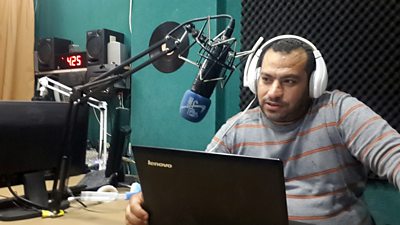
It is within this context that seasoned presenter Mohammed Masri finds himself working.
I met Mohammed while conducting “preparing for Lifeline” a special training course that helps local media and aid organisations share practical information in a humanitarian crisis. BBC Media Action adapts the training for use across the world – from earthquakes in Nepal to the Ebola response in West Africa and those affected by conflict – yet the overall message is always the same ‘communication saves lives.’
“Lifeline training helps us think about how we can we can broadcast news, as well as share information which will actually help people like finding food, shelter and medical facilities,” says Mohammed. "Lifeline programming is about helping communities bind together in adversity, sharing solutions to their problems and expressing their needs."
During a training session, delegates asked themselves; ‘If a family needs to flee their home, what useful information can a radio show provide them?’
For most people in the room – including me – these scenario-based exercises can be painfully real.
When the conflict escalated in Gaza in 2009 it wasn’t safe for me to go to work. Heavy shelling meant a simple visit to the shop for food, water or medicine might result in serious injury or death.
Practical information
I spent many sleepless nights with my family. We were so scared. Bombs were dropping overhead as we lay in our beds. Listening to the radio through an old battered Nokia phone – and accessing the internet through a battery-powered Wi-Fi router – we could only get information about casualty counts and the latest political talks. At a time when we feared for our lives, we really needed practical information like where to find our nearest shelter, health services and aid distribution points.
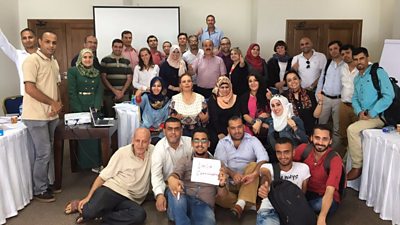
It makes me very happy to see radio producers like Mohammed and representatives from humanitarian organisations – including Oxfam, UNOCHA and UNICEF – working together to improve communication with people in the midst of crisis. Contacts made in the room that day will help create a more joined-up response in future – and help more people survive.
Along with light-hearted social media, music and news, local stations like Radio Gaza FM can provide practical information too. In a place like the Gaza Strip – people really need it.
Lifeline programming guides and an online course are available on the BBC Media Action iLearn website.
Related links
Read our Lifeline guides for media and humanitarians
Take the Lifeline online course
Read about an evaluation of Lifeline preparedness work in Myanmar and Nepal.
Follow us on Twitter, Facebook and Instagram
Go back to the BBC Media Action website
Latest Palestinian Territories stories
More stories from Palestinian TerritoriesSearch by Tag:
- Tagged with Palestinian TerritoriesPalestinian Territories
- Tagged with Middle East and North AfricaMiddle East and North Africa
- Tagged with StoriesStories
- Tagged with Resilience and humanitarian responseResilience and humanitarian response
- Tagged with RadioRadio
