
Is the middle class the key to Africa's future?
The African Development Bank has published a report claiming that 1 in 3 Africans is a member of the middle class. The report suggests that Africa's strong economic growth over the past two decades is a result of an emerging middle class and that this group is critical to the continent's positive political development.
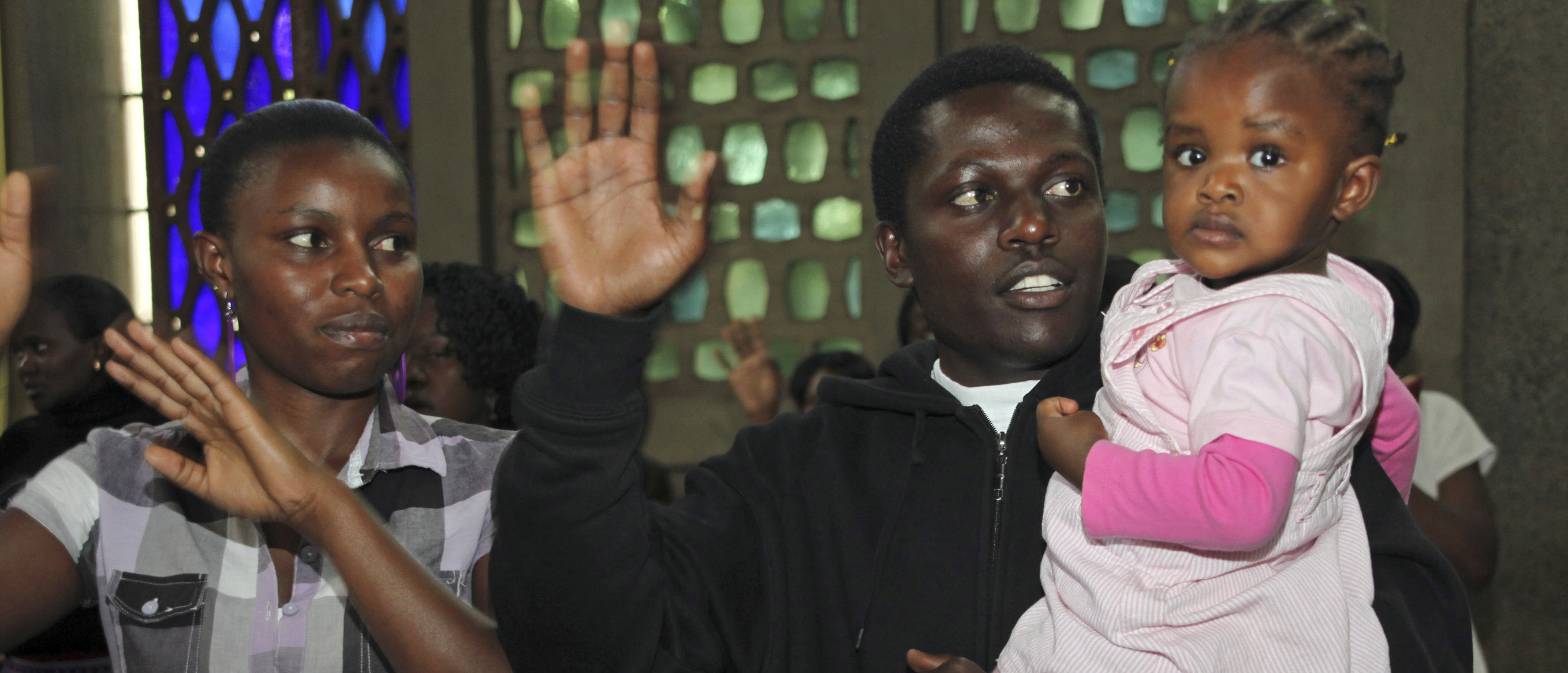
But what is the middle class? The bank defines the middle class as those who spend $2-$20 a day. Members of the African middle class are likely to be people who have a salaried job or who own a small business and who have fewer children. They may pay for private health care and education.
Do you feel part of the middle class in Africa? What does a growing middle class mean for governance and democracy on the continent? Does having the ability to spend more than $2 day make you truly middle class? How have living standards changed around you in the last five years?
If you would like to debate this topic LIVE on air on Thursday May 12th at 1600 GMT, please include a telephone number. It will not be published.


Comment number 1.
At 03:25 12th May 2011, yemti ndienla wrote:most if not all of africa's middle class are out of the continent running away from repressive detectoral regime of corrupt leaders. what can they do without jobs? those who are supposed to be middle class and at home have no jobs, no future etc... the idea of middle class is mear literature in africa
Complain about this comment (Comment number 1)
Comment number 2.
At 15:39 12th May 2011, Adokters wrote:Some people of the working class have a salaried job and have the ability to spend more than $2 day but still consider themselves not to be in the middle class. More than 50% of the amount spent in a day is just on transportation alone. How can such a person feel to be part of the middle class in Africa? No way.
Complain about this comment (Comment number 2)
Comment number 3.
At 15:51 12th May 2011, Magoda wrote:In my country Mozambique, is not easy to see who is in the middle class. The poverty is high and there some people who on daily basis spend more than the amount mentioned by ADB, but it’s a fake spent. The middle class in Africa, specifically in Mozambique, is a mixture, as those who reach this status quickly and easily can become poor for many reasons. I don’t think that the possibility to spend more than $2,00 a day is a sin quo non condition.
Complain about this comment (Comment number 3)
Comment number 4.
At 19:00 12th May 2011, Manuel Yeboah wrote:I would rather want to see a lot if not all Ghanaians and Africans at large having acess to the basics in life such as safe water, food, clothing, shelter, good sanitation, etc than a third of the population spending between $2 to $20 a day. This all makes for nice statistics but the truth is middle class creation and sustainance in Africa is far from reality until there is aggressive and sustainable industrialisation on the continent then perharps we may see the effects of a large middle class in democracy and governance.
Complain about this comment (Comment number 4)
Comment number 5.
At 20:57 12th May 2011, Kingsley O wrote:A vibrant middle-class is the future of any country/continent not just Africa.
History has shown us that an egalitarian society or communism where everyone is supposedly equal, is just a pie in the sky. It has not worked. This is evident by the collapse of communism around the world. And any society where a handful citizens are extremely rich while the masses are wallowing in abject poverty, has not, and will never work either. In my opinion, African Developmental Bank's study showing that people spending $2 -$20 a day, are middle-class is flawed. In Nigeria for example, even the poorest of the poor, spend an average of $2-$20 a day or every other day, on mobile phone credit or recharge alone. To be considered middle-class, I think the spending per day should be around $100-$200 if not more.
Complain about this comment (Comment number 5)
Comment number 6.
At 22:19 12th May 2011, kabenge swaleh wrote:These are just members of the “middle class” NOT the middle class per say. Most of these so-called middle class members tend to emerge based on tribe, region or ethnic grounds. If being a middle class is defined on these bases then the word “middle-class” becomes redundant.
KABENGE SWALEH
Complain about this comment (Comment number 6)
Comment number 7.
At 23:32 12th May 2011, AKPAN wrote:I'm no economist, but you don't have to be one to realize just how idiotic this report is. Take their very definition of the term "middle-class," which supposedly means anyone who spends between $2 and $20 a day - range of figures so wide as to be utterly meaningless. At any rate, if $2 is such a large sum, why do multilateral agencies often define the desperately poor as those who live on $1 a day or less? Does that extra $1 make really determine the difference between abject poverty and middle-class living standards?
As for the ability to afford private healthcare and education, the authors clearly have no idea how ordinary people live their lives in a place like Nigeria, where government has never considered itself responsible for providing such basic rights - thus forcing people to resort to private provisions which often turn out to be of abysmally poor quality, in any event.
Complain about this comment (Comment number 7)
Comment number 8.
At 11:28 13th May 2011, vinod wrote:Middle Class is the hope for all countries,not only Africa.Because these people understand the pain of poors,as they were there before.Also hopes of richers also they have.They always work hard to keep themselves balanced.They are the real backbones of all countries.They pay more to taxes also.
Complain about this comment (Comment number 8)
Comment number 9.
At 13:27 13th May 2011, African Farmer wrote:The middle class is the backbone of every society. The middle class runs society's institutions. The middle class is mainly made up of the educated technocrats. Examples of the middle class include doctors, dentists, nurses, school teachers, university teachers, graduate engineers, civil servants, scientists, managers, bankers, commercial farmers etc.
Of course, the middle class is key to Africa's future.
Complain about this comment (Comment number 9)
Comment number 10.
At 22:23 13th May 2011, Bwireh wrote:Africa's middle class has taken a back seat in Africa's progress as they rarely participate in any locally initiated programs to uplift Africa.
Complain about this comment (Comment number 10)
Comment number 11.
At 11:15 14th May 2011, Wil wrote:A very optimistic yet inaccurate report from the African Development Bank which in my opinion has done more than the other two major International Financial Insitutions (IMF and World Bank). Though ADB is itself financed largely by the other 2 it does however have a better understanding of the "best to fit mechansims" to employ. It has a more practical approach to the problems that pertain at grass root level not to mention a better record in elleviating poverty in proportion to funds spent.
The majority of Africans by and large are still living in the rural areas and out of these UN Statistics division state 80% are living in abject poverty. How does that translate into 1 in 3 Africans now in the middle class? One does'nt even need to go by the statistics, if one was to travel to any Sub-Saharan African country, even the more economic astute nations of Southern Africa and you will see that most people are living in poverty.
What I as an African see happening is an alarming growth in western consumerism from people living in the urban areas, whereby many Africans are living beyond their means. This creates an artificial economy very much as was the case in the US before the Prime Mortgage crisis.
Africa needs to increase production of finished goods and stabilise its agricultural industry. The latter is of major importance as the world population grows and inorder to truelly improve the lives of the majority rural. Poor support to this key industry has sadly always been overlooked, only if the agricultural industry is seriously supported will Africa then begin to have a real middle class, its plain and simple help the poor help themselves so they can stand on their own and agriculture is still the main employer of Africa's majority.
Complain about this comment (Comment number 11)
Comment number 12.
At 13:49 14th May 2011, AKPAN wrote:And lest we forget, it was middle-class attitudes that landed us all in the mess we're still in right across the continent soon after independence. I refer in particular to their superciliousness, their arrogant self-regard, and sense of entitlement - all of which naturally make them unable/unwilling to address the basic needs of our people. So, I hope that this report is as flawed as it seems, for a growing middle class is the last thing we need. On the contrary, we need infrastructure, effective and independent state institutions, law and order - all of those absolutely indispensable pre-conditions for investment and jobs for our longsuffering peoples. Everything else represents a distraction, at best, and otherwise, an impediment to this goal.
Complain about this comment (Comment number 12)
Comment number 13.
At 15:31 14th May 2011, James Nyikole wrote:Africa's middle class can be a source of domestic capital growth if they have the tendance of saving at least 60% of their earning. They can also create jobs if they invest their savings into productive economic activties around the country. These economic activities created by the middle class will shape the social and economic policies of their Countries and so it will be good for democracy and governance. This can be the case if the population is acquinted with the social change the private sector is making. James Nyikole, Juba, South Sudan
Complain about this comment (Comment number 13)
Comment number 14.
At 17:55 15th May 2011, Ngor Ngor Matem wrote:Middle class is not the key to Africa's future because, it can encourage corruption, leaving other people who are not in middle class dying and suffering, only it promote tribalism and dictatorship.
Complain about this comment (Comment number 14)
Comment number 15.
At 18:48 15th May 2011, Wairimu Kuria wrote:The middle class is the secret to success everywhere. They are the people most concerned with social and political stability, good schools and security. That's why the disappearing middle class in the US is such a concern
Complain about this comment (Comment number 15)
Comment number 16.
At 20:07 15th May 2011, Nelson A wrote:I find it absolutely shocking that this report considers anyone that can afford to spend more than 300 naira a day ($2) to be middle class. Anyone that can afford a loaf of Agege bread and some beans is middle class? That is what $2 a day (300 naira) will buy you - a single meal a day. Hovering above the poverty line should not be mistaken for comfort.
What is happening Africa in my experience is that you have two emerging and diverging classes: the rich and the poor. Take Lagos for example, a city on the upswing. It is essentially becoming divided into two – Lagos island and the mainland. The island is populated by the rich, richer and uber rich whilst the mainland (though recently purged of large sections the poor thanks to a 3000 naira – “go back to your village” payoff from recently re-elected Governor Fashola) is largely consistent of those struggling with life. Of course you have some areas on the mainland like Magodo which buck this trend but that is a gated community for the uber rich with Lagos/Victoria island characteristics.
Things are certainly improving but a 30% middle class is pure fantasy.
Complain about this comment (Comment number 16)
Comment number 17.
At 11:39 16th May 2011, AsaahMokoro wrote:In 2009, when I last went to Cameroon, I was surprised at how well off people back home are. They still think the better life is in Europe and America but this is due to ignorance. The political impact of a growing middle class will be unprecedented in sub-Saharan Africa once the people start realising that they would be even better off if they got rid of corruption and incompetency, represented by the political systems in place.
Complain about this comment (Comment number 17)
Comment number 18.
At 16:17 17th May 2011, African Farmer wrote:To No 12: AKPAN
Infrastracture, good governance, law and order etc depend on the existence of a middle class. You need civil engineers to build roads, railways, bridges, sea ports etc. You need architects to design bridges, buildings of all kinds. You need bankers to arrange the financing of the infrasracture projects. Then you need good managers to manage the building of the infrastracture and to maintain it in good repair.
Engineers, architects, bankers and managers are examples of the middle class.
I agree the definition of middle class chosen by the AfDB is simplistic. Is a drug dealer, who can afford to spend USD 100 per day, a member of the middle class? Clearly not.
Africa's future depends on a growing middle class. A growing middle class is going to demand better governance from the political class. It is going to demand better schools for their children. It is going to demand better healthcare for their families. It is going to insist on good maintenance of the roads. It is going to demand a more reliable supply of electricity and water etc.
Clearly, your definition of middle class differs from mine.
Complain about this comment (Comment number 18)
Comment number 19.
At 16:59 17th May 2011, Adokawooya wrote:I think the concept of middle class as known in the west is misrepresented in Africa.What we have in Uganda for example are the rich and the poor with no clear divide.The so called rich are mostly those connected with the political elite with no real value addition to the economy.The few who are of working class are living off consumer credit to meet needs like school fees,rent and even cars from various banks,micro-finance institutions etc.
What is interesting is that when there is a change of government,some people and a sizable number suddenly become very poor.I have seen former honorable MP's who cant afford tax fares!!!
Complain about this comment (Comment number 19)
Comment number 20.
At 19:37 17th May 2011, yemti ndienla wrote:Africa’s middle class would have been key to continent’s future were they not oppressed, marginalized, etc.. Where are those who could have been proud to go by the title? They are either in the desert running for freedom, in jail, abroad, or roaming the streets of their various countries as jobless youths or mad people. How can even those who are home rise to the middle class when corrupt leaders refuse to relinquish power? How?
Complain about this comment (Comment number 20)
Comment number 21.
At 19:43 17th May 2011, pmwebesa68 wrote:Why is Africa always viewed with double standards? In which world does spending $2 per day or roughly $ 60 per month make anyone belong to a middle class? Even if you stretch the amount to $ 20 per day we are still talking of $ 600 per month.
I know that there are very many people in Sub-Saharan Africa (SSA) who will consider that spending $ 600 per month is alot but what type of Africa are we talking about? Are we including rent, upkeep (fuel & car maintenance, shopping, etc..), education, leisure.
In conclusion, the definition of middle class should have a minimum of universality, we should be able to compare the middle class in Africa to what is in other regions.
Complain about this comment (Comment number 21)
Comment number 22.
At 21:08 17th May 2011, Ewenet Hagere wrote:First of all, who are the so called "middle class" in Africa? How many of them earn their status legitimately. The middle class being the key for Africa's future is, based on a liberal capitalist ideology otherwise known the Washington Consensus which basically promotes privatisation and consumerism at any cost. The belief is that the more those who have spend, there is the likely effect it would miraculously trickle down to the poor. Not quite. what it does is create a corrupt economy where exploitation of the poor by the rich is widen. That is what we see in Africa today. Accelerated by aggressive globalisation, there is growing abuse of the poor by the rich. People are throwing out of their houses and villages to make way for so called "investors". Acres of land is being leased to "investors" at the expense of the hungry farmer. I hate to think where all these lead to but not a rocket science to predict. The key to Africa's future in my view is accountable governance. Having governments which educates its people and respect their human right. It is also a must they have functioning institutions. perhaps it is naive of me to think this way but African should be allowed by these international institutions such as the World Bank and IMF to find what works for them, instead of being instructed to cut and paste capitalism.
Complain about this comment (Comment number 22)
Comment number 23.
At 06:22 19th May 2011, AKPAN wrote:To AFRICAN FARMER: I've got to say you've offered a very clever rebuttal to my post, which would have been quite persuasive, except that every single instance of misrule on the continent of Africa (whether military, civilian or mixed) has had at its core, the so-called middle-classes as ministers, senior civil servants, provincial governors, etc., most of whom have been the kinds of learned professionals you've referred to. But never mind, because my post wasn't about their education or professional expertise (or what they could possibly contribute towards our people's emancipation), but about their known attitudes towards the rest of society - the very worst aspects of those pre-Victorian values inherited from our colonial 'masters', which were intended to ensure that every citizen had his/her "place" fixed for all eternity within society.
Complain about this comment (Comment number 23)