
Should African governments downgrade HIV/Aids?
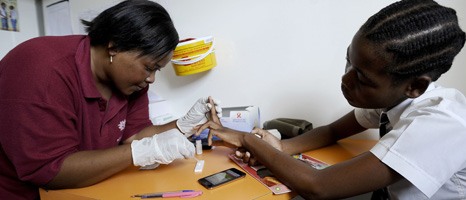
The UNAIDS Deputy Executive Director, Paul De Lay, says they are concerned about the long-term sustainability of access to affordable HIV treatment and wants governments to step up efforts to ensure more people have access to medicines.
Critics,however argue that HIV/ Aids has stabilised in most regions and prioritising its funding is hurting other public health issues.
One blogger has written ''the Aids industry is now booming and more people are making a living from HIV than actually dying from it.''
Do you agree? What is the situation in your country? Does HIV/Aids take a huge chunk of your health budget? How does funding for other health issues compare?
If you would like to debate this topic LIVE on air on Wednesday 16 March at 1600 GMT, please include a telephone number. It will not be published.


Comment number 1.
At 04:17 16th Mar 2011, Kade wrote:I believe the money is being spent on the wrong priorities. There is little or no money spent on research, only on purchase of ready-made drugs which may or may not be optimized for care of their own people.
I believe it is only when African countries encourage local manufacture of the antiretrovirals or suitable alternatives that takes into context the different genetic buildup of its people can the cost of HIV/AIDS become reasonable, both in terms of cost and efficiency.
Complain about this comment (Comment number 1)
Comment number 2.
At 09:02 16th Mar 2011, patrickris wrote:[Personal details removed by Moderator]HIV/AIDS funding is taking a toll on Nigeria's Health budget.To suggest or even ask African governments to downgrade this dreaded disease will not be in the interest of both the infected and affected. No matter how much is spent on the treatment of the HIV/AIDS it should not be viewed as a waste of resources. This option I so much believe is better than leaving those with this disease to die. More and more sensitization is needed to let people know more about this disease.
Complain about this comment (Comment number 2)
Comment number 3.
At 10:16 16th Mar 2011, GODFREY MUKOLA wrote:I want to start by commending some african countries for the efforts they have put to try to fight hiv/aids. however i still feel much is yet needed to be done. just today morning i had of shocking stories from my neighbours, in kenya, where some youths were confessing of recycling condoms & using polythen bags as a way of preventing hiv/aids. the major problem in africa as far as hiv/ aids is concerned is in the rural areas. much has not been done in these areas
Complain about this comment (Comment number 3)
Comment number 4.
At 11:28 16th Mar 2011, Adokters wrote:Whatever it is, issues about HIV/AIDS must be given the priority. The reason being that HIV/AIDS still has no known cure although there are some drugs to manage its effect on humans. Once it has no cure it must be given the utmost priority till a solution is found to this disease.
Complain about this comment (Comment number 4)
Comment number 5.
At 13:03 16th Mar 2011, Howard Ayo wrote:Lets turn back to malaria, malnutrition and other waterborne infections....sometimes i believe HIV/AIDS figures are just extrapolated to meet the demands for a given objective. Sorry but honestly people have built houses, expanded buisiness and many more with these grants allocated to prevention and treatment of HIV/AIDS. In Uganda, 2010/2011 health budget reduced from 10.4%(2009/2010) to 8.7% (% share of budget). A total of 628.1 billion was allocated to the sector but research indicates increasing HIV/AIDS prevalence in the country alongside other diseases. The question should be "is it leadership or communty's failure to demand accountability"......priority should just be shifted to other diseases like malaria which is number one killer in the country.
Complain about this comment (Comment number 5)
Comment number 6.
At 16:20 16th Mar 2011, Monychol Akop Deng wrote:This comment was removed because the moderators found it broke the house rules. Explain.
Complain about this comment (Comment number 6)
Comment number 7.
At 16:42 16th Mar 2011, Sun wrote:This comment was removed because the moderators found it broke the house rules. Explain.
Complain about this comment (Comment number 7)
Comment number 8.
At 16:54 16th Mar 2011, rutabling wrote:This comment was removed because the moderators found it broke the house rules. Explain.
Complain about this comment (Comment number 8)
Comment number 9.
At 16:55 16th Mar 2011, Gabriel Eshun wrote:This comment was removed because the moderators found it broke the house rules. Explain.
Complain about this comment (Comment number 9)
Comment number 10.
At 23:56 16th Mar 2011, kemetalkebulan wrote:This comment was removed because the moderators found it broke the house rules. Explain.
Complain about this comment (Comment number 10)
Comment number 11.
At 00:54 17th Mar 2011, Beamie Moses Seiwoh Jr wrote:This comment was removed because the moderators found it broke the house rules. Explain.
Complain about this comment (Comment number 11)
Comment number 12.
At 09:22 17th Mar 2011, John wrote:This comment was removed because the moderators found it broke the house rules. Explain.
Complain about this comment (Comment number 12)
Comment number 13.
At 12:28 17th Mar 2011, akmuhumuza wrote:This comment was removed because the moderators found it broke the house rules. Explain.
Complain about this comment (Comment number 13)
Comment number 14.
At 15:58 21st Mar 2011, George Oyeho wrote:This comment was removed because the moderators found it broke the house rules. Explain.
Complain about this comment (Comment number 14)
Comment number 15.
At 07:38 23rd Mar 2011, paxsnath wrote:i think that the HIV issue is still a major problem and cuts across various aspects of the african communities. although it is true that african governments seem to be over spending on this one problem, it is with good reason. i am a doctor and i have worked in urban settings and rual settings in africa and to be honest, many people are in need of information and other interventions if this disease is to be halted in its tracks. a lot of information has and is being disseminated but other interventions are also necessary e.g job creations, women and youths empowerment,and such to deal with the root issues that i believe are key to the continuance of the epidemic.
however, i think the one area the african governments need to maximise their efforts is in empowering the future generations by teaching the children on ways to prevent its transmission. this also needs a large chunk of the funds but for a good cause and i believe it will help even more than only focussing on the adult population that is difficult to change anyway.
Complain about this comment (Comment number 15)
Comment number 16.
At 18:34 24th Mar 2011, Amaya wrote:“Critics, however argue that HIV/ Aids has stabilised in most regions and prioritising its funding is hurting other public health issues.”
It is wrong to cut effort because it is stabilised. This is deadly disease we do not yet have cure for it. One more new case of AIDS should be viewed as too many. Compliance is what always drags us backward. We have to build on the success and move forward not backward. Any cutback on any of the activities that are working is nothing less than passing death sentence on young African who are vulnerable. Please stop entertaining this idea. I believe there is long ways to go before we cut-back on any work related to AIDS. Let us not forget that there is no cure for this disease.
There is still a lot that should be done to help those who are living with the disease. Prevention should also be an ongoing task to maintain the stability we are talking about.
Complain about this comment (Comment number 16)
Comment number 17.
At 17:35 30th Mar 2011, Nchang wrote:Humbly I cannot say exactly the proportion of the national budget that the various HIV/AIDS programmes are consuming. The unfortunate situation is that the prevalence is on the increase despite all fights. Further, for some time now, the anti-retrovirals have not been recieved in the Shisong treatment Centre in Kumbo-Cameroon. This is further increasing the number of defaulters from treatment.
However in my humble opinion, in order to cub expensis, employment rates should be incresed, wages and salaries should be raised, so as to reduce Poverty which is the sole cause of the scortch.
Complain about this comment (Comment number 17)
Comment number 18.
At 09:49 7th Apr 2011, hellokittyuuu wrote:No,I don't think so.Sometimes the government's attitude stand for the public whether people will accept the HIV patients or not.But should STD be criticized?Also the government?Or even the public?No,nobody should be criticized.No one want to have STD,we all hope we have the healthy body to eat the favirate food all over the word and make our dream come true.STD make the plan changed.Should we complain?Yes,we complain the fate is unfair and our unfortunately.Of course if it is effiective,I don't combat it.If you are interested ,stdchatting.com will welcome your coming.
Complain about this comment (Comment number 18)