
Have the Millennium Development Goals changed your life?
As the United Nations hosts a summit on the progress of the Millennium Development Goals, BBC Africa Have Your Say is asking if they have had any impact on your life.
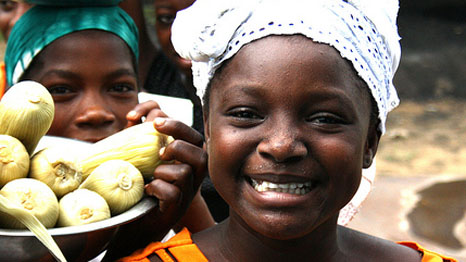
In 2000, United Nations member states set 8 Millennium Development Goals (MDGs) which were aimed at reducing poverty. Now with only five years until the 2015 deadline set for achieving the goals, the UN Secretary-General Ban Ki-moon has called on world leaders to accelerate progress towards the MDGs.
Is your country on track to succeed? Is it good to have set goals for your country? What have the MDGs achieved where you are?
If you would like to debate this topic LIVE on air on Tuesday 21 September at 1600 GMT, please include a telephone number. It will not be published.


Comment number 1.
At 17:49 20th Sep 2010, Rudy Haugeneder wrote:Are Africans eating better? Not yet and perhaps not for a long time to come.
Climate change is rapidly and badly affecting the world's food growing regions and that, despite some Millennium Development Goals almost being met, means these accomplishments will soon disappear -- especially in worst-hit places like most of Africa, China and India.
And when that happens, and it will, very soon, the poverty and disease that prompted the Millennium Development Goals will be seen as the good times.
Doubt it? Ask a serious international commodity analyst how much of the world's grain belt, for example, has been inked "red" for current and future disasters.
You are likely to be shocked.
Complain about this comment (Comment number 1)
Comment number 2.
At 19:53 20th Sep 2010, Kolawole Ajao wrote:MDGs will only work if Africa is excused of all the debts it owes the West. The United Nations, though with original quest for peace, has failed in all of its key manifestos, most especially in Africa.
. [Personal details removed by Moderator]
Complain about this comment (Comment number 2)
Comment number 3.
At 20:18 20th Sep 2010, AKPAN wrote:These "goals" (whatever they are) were never going to be realized. They were just some of those zillions of woolly-headed initiatives that the UN has become so good at producing, aimed essentially at justifying the countless sinecure positions that exist within it.
In any event, reductions in poverty or maternal/child mortality levels can only be achieved by governments. And those that take these matters sufficiently seriously do not need the UN to set any goals for achieving them: Botswana and Singapore, for example, did so simply by sheer single-minded determination. By contrast, countless "initiatives" and "goals," both homegrown and externally-agreed, have failed to provide even pipe-borne water to most of Nigeria's 150 million people - that's if you accept this as that country's population because as it happens, we still can't even organize a credible census, 50 years after independence.
Complain about this comment (Comment number 3)
Comment number 4.
At 21:57 20th Sep 2010, onmonyageorge wrote:I don't know about other countries, but as far as Nigeria is concern, despite what you hear in the media and the MDGs office, they haven't done much in the direction towards meeting the goals of the MDGs. It is a sad fact but Nigeria will not meet the dateline. Nigeria will not even be close to meeting up the dateline. As an expert in the field of development I know Nigeria has politicize the MDGs. Made it an avenue for friends and family of the elites to make money. Too bad!
Complain about this comment (Comment number 4)
Comment number 5.
At 23:02 20th Sep 2010, Mzalendo wrote:My beloved country Tanzania has just won MDG Award according to BBC because of it's progress in education. How ever it is the content that counts. While we have almost 100 per cent of pupils in school they are still illiterate even after completing primary education. There is no quality. So it is like lying to ourselfs and to the whole world that we are making progress, when in fact we are still ignorant. The people who decided to give Tanzania Award for education are also ignorant of reality of education in my country.
Complain about this comment (Comment number 5)
Comment number 6.
At 00:03 21st Sep 2010, Andrew Ogbu wrote:Since as a little boy have been hearing about the mellennium development goal in Nigeria.I remember then the slogan goes thus, "House for all by 2000,""Food for all by 2000."And when it became obvious that the goal would not be attained by 2ooo,it was shifted to 2015.Now with 2015 just by the corner,they talk about 2020.So,as far as am concern I have not seen any impact that the MDG has made to Nigeria or to Africa at large.Instead we keep sinking deeper into poverty and underdevelopment.[Personal details removed by Moderator]
Complain about this comment (Comment number 6)
Comment number 7.
At 04:08 21st Sep 2010, adah john wrote:No significant impact have been made in the lives of the comon Nigeians. the country is not even in the track to succeed in one aspect
of live. political gladiators and economic sabotours have always nib the
developmental progams at the bud. even foriegn aid to fastrack and accelerate MDGs always land in the door step of corrupt nigerians who
claimed to be leaders. The government of Nigeria lack willl power to impliment MDG programs to achieved the expected development specify by UN.This is evidence prevalence of crime, people live in abject penury, high mortality rate,insecurity, lack of basic amenities,unemployment, corruption, threat of major epidemic, high level of illitracy amongst others. [Personal details removed by Moderator]
Complain about this comment (Comment number 7)
Comment number 8.
At 06:22 21st Sep 2010, omeje wrote:Thank God for this very picture you have post on this page with that no body needs to tell you if MDGs is working or not.What impact can we see today about MDGs in the society:our children hawking on street? poverty wildly written on face of many Africans .Street begging .No job. War in most of African countries. Many basic amenities are not seen for people.
I wonder the type of machine with highest speed limit that UN Secretary General will use to achieve that goal within five years which its foundation we have not seen put on the ground.
sylvester
Complain about this comment (Comment number 8)
Comment number 9.
At 06:46 21st Sep 2010, omeje wrote:This comment was removed because the moderators found it broke the house rules. Explain.
Complain about this comment (Comment number 9)
Comment number 10.
At 09:32 21st Sep 2010, Sunday Laari wrote:Goals setting is basic, whether it is an individual, government or an organisation. Does it mean prior to year 2000, the governments of Africa for instance did not have goals on infant mortality, poverty reduction,...? I belief, the millennium development goals are not new to any one, and for that matter our governments. What has made the attainment of the goals elusive, has been corruption in all ruling governments. Until we get politicians of integrity, any money voted for the achievement of the goals will remain a mirage.
Having said that, my country Ghana has made progress towards ending hunger. We have abundant and affordable grains literally every where in the markets. If government subsidized fertilizer hadn't been diverted to other neighbouring countries, Ghana would have been a net exporter of grains by now.
Complain about this comment (Comment number 10)
Comment number 11.
At 09:53 21st Sep 2010, Maxedmire wrote:Really We Are Very Happy To Achieve Some Our Goals Since 2000 Millennium
I Live In Somalia -Mogadishu- We've Tired To Get Peace And Stability in Our Country Otherside Business And Ecnomics Are Really Devoloped Without Central Government Such As Telcominication ,International Banking,And So On, in 2000 We Couldnt Use Mobile Phones. If You Are You Will Surprised Evern Kids They Have Own Mobiles..
Complain about this comment (Comment number 11)
Comment number 12.
At 15:04 21st Sep 2010, Carolyn Miller wrote:[Unsuitable/Broken URL removed by Moderator]I am the Chief Executive of the aid agency Merlin. We specialise in health, saving lives at times of crisis and helping to rebuild shattered health systems. We work in fragile states, many of which are in the midst of, or emerging from, conflict. Shockingly 22 of the 34 countries least likely to achieve the MDGs are in the midst of, or emerging from, conflict. The high rates of death and disease in these countries, mean that the Millennium Development Goals will not be reached without more investment, both in training more health workers and providing protection for health workers working on the front line in some of the world’s toughest places.
We have recently released a campaign paper called “A Grave New World” which argues that without focusing on the people delivering the health care in countries who bear a disproportionate burden of death and disease; any attempt to meet the targets will be short lived.
We have a momentous opportunity this week to focus on those countries most behind on MDGs and save hundreds of thousands of lives.
Complain about this comment (Comment number 12)
Comment number 13.
At 15:16 21st Sep 2010, payedoe wrote:I wonder whether the UN took into consideration various factors that could hampered the achievement of this goal before setting the time frame. Some of the factors that are hindrances to the achievement of this goal are as follows: corruption, illiteracy,dictatorship, injustice,bad governance etc. For us here in Liberia, it seems like we are going nowhere. I wonder when this goal was been mentioned, Liberia was taken into consideration as country that exist on planet earth.We are 100 years away from achieving this goal.Nothing has been achieved here based on those factors I stated above.For us, let us leave ours with GOD ALMIGHTY who will only need to help us out.
Complain about this comment (Comment number 13)
Comment number 14.
At 17:25 21st Sep 2010, Wonderfulethiopia wrote:Definetely Ethiopia will meet the MDG by 2015. Even, we will reach at some targets before the deadline. I said this, because one my country has proved that by achieving terrific results in social service coveages, infrastructure developments and a two digit economic growth for the last seven consecutive years. second, we have already planned and started to implement a five years growth and transformation plan with targets like stop receiving food aid from donors by eliminating hunger, achieving all other MDG targets,and etc.
Complain about this comment (Comment number 14)
Comment number 15.
At 18:21 21st Sep 2010, George Oyeho wrote:MDG concept may sound new but all governments across the world, however poor or skilled, operate on plans. Assumption that MDG will speed the change in developing world is false because those selling the concept are committing the same countries allegedly being helped into debts they may never be able to pay. On the other hand, the countries offering the loans intend to create employment to their own. As a result, only about a quarter of the loans end on the project. With this position, the rich developed world are using acedemia intellectuals to model development for their benefit.
The planning and policy direction for the MDG are developed at the ivory towers both in the developed world and host countries. I would want the the advocates to walk any one to a village that was engaged in the MDG process from conception to implementation. What shared responsibilities were agreed upon with the villagers? What was their take, commitment and ownership on the initiatives? All I have heard from villages I visited out of limelight the message is clear, "we were brought this development but it is leaving us dry with dead soil". I interpret this to mean the green revolution brought chemical fertilizers that depleted soil nutrients and after five years they benefactors may not produce food on the same land for a long time. The second challenge is the management of the initiative that is held by the project officials. This to me should have been a community function. How about monitoring and evaluation? How do you implant the values and criteria without being built into the benchmarks? This is the challenge MDG designers should work on, otherwise it may never be a reality despite the amount of money we pump into it.
Complain about this comment (Comment number 15)
Comment number 16.
At 18:30 21st Sep 2010, Maiwadas wrote:The impact of the MDGs is clearly not being felt in Nigeria. I was an MDGs volunteer corper during my compulsory service year and in the course of my duties in a small town in one of the southern states in my country, i was astonished to discover that even some enlightened individuals are not aware of the efforts the UN is putting in Nigeria as regards Poverty Reduction et al through the MDGs. I think awareness by the targeted beneficiaries is paramount to achieving the goals and most of them are rural dwellers. Meanwhile, at the current pace, it will be easier for a camel to go through the eye of a needle than those goals to be achieved by 2015 in Nigeria.
Complain about this comment (Comment number 16)
Comment number 17.
At 20:15 21st Sep 2010, Andy Ateli wrote:MDG was a mere political statement set in place by UN to mock or challenge Africa.There is nothing put in place to facilitate this target and we all know it's never going to be met not even in the next 30years because Africa,especially Nigeria gets worse everyday.Nigeria re-velopes rather than developes if am allowed to use that word.
Complain about this comment (Comment number 17)
Comment number 18.
At 20:17 21st Sep 2010, johnsky2010 wrote:It is unfortunate that a specific UN programme must be established before African governments can wake up to their responsibilities. Some are pointing to schools, health care delivery, roads, pipe borne water, etc as achievements under the MDGs, what are the roles and functions of these governments in the first place? The MDGs ought to be the icing on the cake for the average African. however, the past ten years of the MDGs has not produced the cake, when would it be iced?
Complain about this comment (Comment number 18)
Comment number 19.
At 21:20 21st Sep 2010, Echai Uchiba wrote:Well if the UN wants to have an evaluation of the MDG operation,I sincerely beg them to do but street sampling rather than basing on reports from governments.Only five of the African countries governments can give a realistic evaluation be it good or bad. I say so because this issue is business African leaders will claim how they have done this and that only woe the UN and charity organisations to pump in more money for their families and elite friends. Why can UN not also see into it that Africans should learn to change governments or presidents.When an individual confiscates power for 10 years or more, there is a possibility for bad governance. In Europe and US each does his best by trying to satisfy the whole nation because if not he has only one mandate or resigns; that is why they keep up going ahead.In Africa,if you want schools,nominations etc your region must vote and support the ruling party else nothing.More than 60% Africans benefit nothing from MDG program and 30% live beneath a dollar per day.Long live Cameroon
Complain about this comment (Comment number 19)
Comment number 20.
At 12:51 22nd Sep 2010, African Farmer wrote:The MDGs are a con and a distraction. They are the sort of thing that are dreamed up by international civil servants to justify their ample salaries.
The UN, the World Bank, the IMF and the West are only interested in numbers. For example, success in education is measured by the number of children enrolling for primary school. The greater the enrollment numbers, the bigger the success of the policy.
The success in education is achieved by cramming as many as 100 children per class. These children are taught by a single poorly trained teacher doing her best. She is poorly paid and poorly motivated. The children share between them 10 exercise books, if they are lucky.
These children are being decieved. They are not getting an education. They are attending play school. At the end of primary school, they still find themselves unable to read and write. These children are being given false hopes.
I heard of one brave African who wanted to set up a school which would provide quality education to primary school pupils. He wanted to have a maximum of 20 pupils per class. He aproached the World Bank for funding. He was told that he had to increase the class size to a minimum of 50 pupils to qualify for World Bank funds.
Need I say more. Numbers, not quality, is what the MDGs are all about. If the UN went in for quality, the MDGs would never be met. Not in a thousand years without fundamental changes to the world economic system.
The MDGs are a trick. They are meant to distract us from demandind fundamental change to the world economic system.
Complain about this comment (Comment number 20)
Comment number 21.
At 13:16 22nd Sep 2010, Prince NKEMELAI wrote:well first of all good work to those who put the goals in place.secondly im barely employed as in my country you can do anything to earn a living and in most cases the salary does not even come.its even at times difficult to legally go about your employer.all the same if we cannot run the system, life is in the hands of hope.
Complain about this comment (Comment number 21)
Comment number 22.
At 17:34 22nd Sep 2010, Jude Agho wrote:Countless aids to African countries would not eradicate poverty or achieve economic sustainability. Most of this aids including MDGS are presented as neo-colonialism packages and in the long run will always serve the interest of the West. Most develop countries score economic credit points (which they later trade e.g carbon financing units) trying to eradicate poverty or diseases in a small loosely populated African Village. These is often painted in their media as esoteric success stories. A particular conundrum is why do African leaders still belief in the West. Lets take a brief look at history. Over the last 500 years a source-sink relationship is what we all know about our interactions with the west. Initially it was forceful and presently its in the form of complex trade agreements, treaties that places the continent deficient. I cannot understand how we expect MDGS experimentation to be successful when the theories, design where written in some Harvard or London economic schools. African economies are inter-twin with native cultures and therefore require designs from prominent African thinkers who are left in the loop because they speak a language which is not theirs with an ascent. We need a complete overhaul of every national sectors including educational systems, legislation, and even language. Its funny how an African graduates from a University with a BA in American Literature when the Americans themselves can't locate the African country he studied. We've tried unsuccessfully to imitate the west. Its high time we develop our own systems and solve our own problems or return to basics. Compare African countries and other South Asian countries like malaysia or S. korea who gained independent about the same time. Also compare their interactions with the west. I know the present African leaders used to be stooges to their colonial masters and still think they're office boys doing errands for the master. A new generation will definitely come and bridge the neo-colonial mentality
Complain about this comment (Comment number 22)
Comment number 23.
At 21:55 22nd Sep 2010, ayukenow wrote:The MDGs are a great efford put forth by the United Nations to try an effect change. In some countries, these goals are now realities but in others they are just distance dreams that may never be realized.
When we talk about the eradication of poverty and hungry,we are also talking about education,employment oppotunities, land management and usage, gender equality, empowerment of the underrepesented, mortality rate for mother and child, as well as development.
The eradication of hunger in most African countries would only be a dream and not a reality because afforestation is not practice, land reclamation from the desert is yet to see the daylight. Environamental suatainability is yet to be practiced making hunger a current problem with serious implications for the future.
If you look at the MGDs, you will see that if hunger and poverty are not tackled, the other goals can't be realized in the sense that if a child is hungry(often from poverty)s/he is not thinking about education or lesson plan. When families are hungry or poor, they are forced to make decisions that determine the type of lifes some of it members may end experiences. Often mothers and daughters suffer the most, because daughters are forced to work and get married ( in order to better the Family's sons)at a younger age, which will lead to early childborn and might result to them and their unborn children dying. With respect to the mothers, they are force to labor in the fields and their husbands might leave them and their offsprings if conditions becomes worst.
I don't think that forgiving the debts of most African countries would make a different to the outcomes of the MDGs, since mismanagement and corruption have become part of how business is done. Nonetheless, if the people in-office can get their affairs on track and tack corruption and elimenate the ME mentality and think about the subjects they are charged to look after, then there is hope that the MDGs might come to fruition but not in 2015 as projected by the United Nations.
Complain about this comment (Comment number 23)
Comment number 24.
At 23:48 23rd Sep 2010, JAMES OKOLIE-OSEMENE wrote:I have been more enlightened through The MDGs and have succeeded in training many youths on Poverty eradication and Eradication of diseases such as HIV/AIDS & dangers of risky behaviours. As a Knowledge Development Facilitator in the MDGs Advocacy Project, I believe that the programme is progressing but their is need for serious and urgent work to be done in the areas of Education and Poverty reduction/eradication. Nigeria, for instance is seriously improving health facilities, environmental sustainability and gender equality. But much needs to be done in funding of education, unemployment and rising poverty. I believe there will be Positive Change if Stake holders put hands together to do something concrete.
Complain about this comment (Comment number 24)
Comment number 25.
At 13:41 26th Sep 2010, Zaphan wrote:Goal number one talks about eradicating hunger. For me here in Kenya, my family depends on farming but just accessing farm inputs like fertilizer is a big problem. They are too expensive for us to afford. Achieving the MDGs l think my country should first ensure that the farmers who are the backbone of the have easy access to farm inputs and information.
Complain about this comment (Comment number 25)
Comment number 26.
At 21:16 26th Sep 2010, Mzalendo wrote:This comment was removed because the moderators found it broke the house rules. Explain.
Complain about this comment (Comment number 26)
Comment number 27.
At 12:16 10th Oct 2010, adeola shittu wrote:i just concluded a programme of community posting,its disheartening to know that Nigeria is no where near achieving these goals.a question to ask apart from the working class,is the general populace aware of this programme?
Complain about this comment (Comment number 27)
Comment number 28.
At 17:56 29th Oct 2010, adeola shittu wrote:A new challenge emerges with each new day, as youths ability to move forward and be optimistic in all our dealings will bring about positive change to our lives and to the world at large BELIEVE is the watch word
Complain about this comment (Comment number 28)